

4X Cofounder 📈 Business Advisor & Mentor 📖serial writer🧄garlic farmer 👫married☝️dad to 👦👦👦👸 believer. Views are my own.
Philadelphia, PA
Joined June 2009
- Tweets1.8K
- Following376
- Followers680
- Likes1.4K








Ryan Derfler retweeted

Here's a plug-and-play AI Agent that automates the creation of UGC videos for your brand using Gumloop and Arcads.
– Starts from competitor product research
– Analyzes video ads w/ Gemini 2.5 flash
– Craft ad scripts tailored to your brand
– Generates quality AI videos on demand
– Stores & refines successful strategies for future campaigns
Follow + Repost + Reply “UGC Agent” and I’ll DM you the full workflow (100% free, no email opt-in).

Ryan Derfler retweeted

Isaiah 40:31 CSB
[31] but those who trust in the Lord will renew their strength; they will soar on wings like eagles; they will run and not become weary, they will walk and not faint.
bible.com/bible/1713/isa.40.…

Ryan Derfler retweeted

Philip Yancey’s friend who is a recovering alcoholic once told him:
"When I'm late to church, people turn around and stare at me with frowns of disapproval. I get the clear message that l'm not as responsible as they are.
When I'm late to AA, the meeting comes to a halt and everyone jumps up to hug and welcome me. They realize that my lateness may be a sign that I almost didn't make it. When I show up, it proves that my desperate need for them won out over my desperate need for alcohol."
Ryan Derfler retweeted

SAQUON JUST HIT A REVERSE HURDLE ⁉️
OMG. 🤯
(via @NFL)
Ryan Derfler retweeted

25 lessons from Rory Sutherland:
1. A flower is a weed with an advertising budget.
2. Consumer research is great at telling you what people did, it's terrible at telling you what people will do.
3. To reach intelligent answers, you often need to ask really dumb questions.
4. Highly targeted advertising merely finds customers: less well-targeted advertising can actually create customers.
5. Trust grows at the speed of a coconut tree and falls at the speed of a coconut.
6. The opposite of a good idea can also be a good idea.
7. The best ideas do not emerge within disciplines, they emerge at the intersections between them.
8. Never call a behavior irrational until you really know what the person is trying to do.
9. Solving problems using rationality is like playing golf with only one club.
10. If we allow the world to be run by logical people, we will only discover logical things.
11. The trouble with market research is that people don’t think what they feel, they don’t say what they think, and they don’t do what they say.
12. What gets mismeasured gets mismanaged.
13. The human mind does not run on logic any more than a horse runs on petrol.
14. Not everything that makes sense works, and not everything that works makes sense.
15. Google understood that if you're just a search engine and nothing else -- people assume you're a very, very good search engine.
16. It is much easier to be fired for being illogical than it is for being unimaginative. The fatal issue is that logic always gets you to exactly the same place as your competitors.
17. Evolution is like a brilliant uneducated craftsman: what it lacks in intellect it makes up for in experience.
18. Test counterintuitive things only because no one else will.
19. Once you free yourself from the need to arrive at a solution through logical steps, the world becomes messier, but the solution space becomes 20x bigger.
20. For a business to be truly customer-focused, it needs to ignore what people say. Instead it needs to concentrate on what people feel.”
21. It's not enough to be right, you have to be persuasively right.
22. Don’t design for efficiency. Design for laziness.
23. We need to move from a world that solves for averages to one that solves for individuals.
24. All big data comes from the same place: the past. Yet a single change in context can change human behavior significantly.
25. If you never do anything differently, you'll reduce your chances of enjoying lucky accidents.

Ryan Derfler retweeted

The public still doesn’t understand even a tiny fraction of the power of the censorship government-industrial complex.
As predicted, my companies and I came under relentless attack the moment the censorship of this platform was lifted.
How far will they go to stop me?

Ryan Derfler retweeted

"God does not need your strength; he has more than enough on his own.
He asks your weakness, he has none of that."
— Charles Spurgeon
Ryan Derfler retweeted
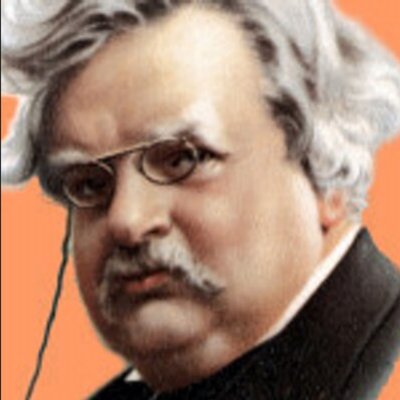
Some say religion is the opium of the people. I should say irreligion is the opium of the people. I should say that, in every fact and phase of history, religion had been necessary as the stimulant of the people.
Ryan Derfler retweeted

“Occasionally, weep deeply over the life you hoped would be. Grieve the losses. Then wash your face. Trust God. And embrace the life you have.” @JohnPiper


Ryan Derfler retweeted

If you're under 45 years old, here is your optimal wealth management strategy*
1) Put a fixed amount every month into $VTI (a low cost, total stock market index fund)
2) Don't sell until retirement, even if you're scared or the market is down
Or, you could pay an advisor 1% of your total assets every year for 30 years to tell you a complicated version of the same thing.
*Unless you have a large liquidity event or substantial inherited wealth
Ryan Derfler retweeted

As a son or daughter of the living God, you should be known for your love, kindness, and compassion, rather than your anger.
You should be known as an encourager.
You should be known for your kind, helpful words.
You should be known by your family and friends for building people up, rather than tearing them down.
You should be known for your self-control, even under stress and pressure.
You should be known for your hopeful, positive outlook on life.
In a room full of depressed, cynical people, you should stand out like a light in the dark place. That’s what Jesus meant when He said, “You are the light of the world—like a city on a mountain, glowing in the night for all to see” (Matthew 5:14, nlt).
It’s not a matter of trying to do and be all these things, it’s simply a matter of letting Jesus shine through your life.
Ryan Derfler retweeted

I recently learned about Stockdale, a prisoner of war in Vietnam who endured eight years of torture- not only surviving, but strengthening those around him.
"Who didn't make it?" He was asked in an interview. "The optimists. The ones who said, we will be out by Christmas. We will be out by Easter." And then they died of a broken heart when the next Christmas or Easter came and went while they were still in captivity. The hopeful (but false) message failed to produce the endurance needed to survive.
In 2023 I took a deep dive into OT greats- Jeremiah, Isaiah, Ezekiel. In those books, some of God's most severe punishment are reserved for the false prophets who softened or minimized the coming judgment or current captivity. "God will spare you from the siege." "Don't plant gardens or build houses, we won't be here long." God promised to "set his face against them," which often involved their complete destruction.
Upon first glance, it's overly harsh. After all, these prophets were speaking words of comfort to people living in terror or under a foreign tyrant. Isn't that what leaders should do? Try to calm our fears?
God, and Stockdale, say no. Good leaders, especially the variety who speak for God, will never soft-pedal harsh reality.
Stockdale's philosophy almost perfectly captures the message of the real Old Testament prophets:
"Confront the brutal facts of your reality while maintaining a confidence that you will win in the end and turn the events into the defining moments of your life. Which in retrospect you would not trade."
Being "optimistic" or "hopeful" in anything other than God's clearly-defined plan and truth is not a Christian virtue. It's a characteristic of a false-prophet, and leads to not only personal suffering, but national suffering.
On the other hand, those exiles who accepted the harsh reality of God's judgment spoken through the true prophets were preserved and strengthened. Captivity was a "defining moment" in Israel's history, and had a purifying effect as evident in the renewal recorded in Nehemiah and Ezra.
2024 is going to be crazy. A sober assessment of cultural and legal forces makes clear that we are headed for rough national waters. God expects His people to "confront the brutal facts of our reality while maintaining a confidence that the Lord will win in the end."
Even if "conservative" or "Christian" leaders seek to comfort their followers by telling them to "relax," rather than "repent," we must clearly and boldly speak truth.
Ryan Derfler retweeted

A 35-year longitudinal study asked how parents pass on their spiritual and religious convictions.
The study found 2 surprising results:
First, “having a close bond with one’s father matters
even more than a close relationship with one’s mother.”
In other words, fathers have influence, whether they want to or not.
Second, the relationship with the father must be warm and close.
A father can be a pillar of the church, a moral exemplar, and have perfectly correct theology, but if he is perceived as cold and distant, the child will not follow him--will not adopt his religious convictions.
amazon.com/Families-Faith-Re…
Ryan Derfler retweeted

As a Christian and an astrophysicist, I'm often asked what I think about the Star of Bethlehem.
Through astrometry, we can track the motions of stars and planets to the point that we know very accurately where they were thousands of years ago. So, is there evidence that a star guided the three wise men to Bethlehem?
I honestly haven't looked into it much. Here's why...
1. Throughout the Bible, we're given examples of God's intervention through natural-looking signs and wonders: columns of cloud and fire to guide the Israelites, a burning bush, waters pushed back by a strong wind, destruction of cities by a rain of fire, plagues of frogs and insects, and so on.
This is God's M.O. For whatever reason, it suits his purpose to make his intervention through the forces of nature. It makes sense to me that God would therefore use something that looked like a star to guide people to Jesus in Bethlehem.
2. The star of Bethlehem need not have been an actual star (or bright planet). The God of the universe, who commands the forces of nature, can make a star-like object appear in the sky at will, just as he made columns of fire and cloud appear to guide his people. The relevant part to me is that the star's appearance is consistent with God's M.O. - he uses natural-looking phenomena to intervene with earthly events.
If someone has evidence through astrometry that a bright-looking object, like a star or a planet or an alignment of planets, appeared in the sky over Bethlehem around the inferred date of Jesus' birth, then that's really interesting and I would have a comment about that. But if there's no such evidence, it just doesn't concern me.

Ryan Derfler retweeted

Christianity is measured by how it treats the poor, the vulnerable, the marginalized, and the oppressed.
Not by its relationship with the rich.
Not by its influence over the powerful.
It is measured by how it treats the poor, the vulnerable, the marginalized, and the oppressed
Ryan Derfler retweeted

We don’t build the kingdom of God.
• we announce it.
• we seek it.
• we receive it.
• we bear witness to it.
• “we build for it” (N.T. Wright)
The King builds it.
#ChristtheKing
Ryan Derfler retweeted

Peter Thiel describes a startup category that is continually underestimated
In the clip below, Peter Thiel explains why he believes “complex coordination” is a company category that’s continually underestimated.
“The question we always focus on is ‘can this company become a monopoly?’”
He then lists several things that can make a company a monopoly:
Super fast distribution on a very thin product (e.g. Twitter)
A technological advantage that is continually built upon: you come up with something new and steadily improve (e.g. enterprise SaaS software)
A truly brilliant breakthrough (e.g. Bitcoin)
However he argues that complex coordination—where you take a lot of little pieces and coordinate them into something new—is continually overlooked as a way to create a monopoly:
“This is the thing that’s maybe 180 degrees antithetical to the Lean Startup ethos. It’s complicated. You have to put all the pieces together in just the right way. I think this is on some level what really drove Apple as an innovative company in the last decade… What was new about the iPhone? There was no single component that was new. It was just that you put all of these things together in just the right way… and once you built it, it was actually super hard for people to replicate. You had an advantage for many years. You could get network lock in—in terms of the app community or the brand.”
He also points to Tesla and SpaceX as examples:
“There’s no component to the Tesla that’s actually that new. It’s just that you put all of the pieces together. You re-engineered the whole distributor network. It was this complex coordination that made it work. There’s like this lost art of accounting where you figure out how much things cost and add them all together. And Elon has discovered this lost art of accounting which no other people practice.”