

boxes-and-wires scientist
UK/France
Joined September 2016
- Tweets713
- Following1.1K
- Followers692
- Likes2.2K

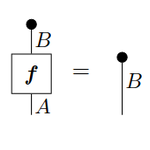




🚀 Call for Submissions – SYCO 13! 🚀
Join us in London (April 24-25) to share your work on category theory, logic, & more.
✅ Easy submission (papers, WIP, theses...), no proceedings
📅 Deadline: 14 March 2025 (this Friday!)
🔗 Details here: cl.cam.ac.uk/events/syco/13/


Zooming out a bit (a lot!), it looks like the so-called "strong programme" of David Bloor, Barry Barnes and others in the sociology of scientific knowledge is what I'm after. Will need to dig to see whether any of them has looked at maths or other deductive sciences specifically

Yes! Bloor's *Knowledge and Social Imagery* (which was apparently quite controversial) has a strong focus on logic and mathematics
press.uchicago.edu/ucp/books…

What are good books/articles about the sociology of mathematical research? As in, the study of the social factors that influence (the formation of) research communities, guide their activity and how they produce mathematical knowledge?
Just released a small update to this paper, with more examples of diagrammatic reasoning in action.
arxiv.org/abs/2305.08768
Thanks for all the suggestions. We could not include all of them yet, but will certainly consider them for future versions.

Curious about string diagrams and wondering where to start? Fabio Zanasi and I wrote an introduction designed to onboard CS students into our own research and offer a glimpse into current research on the topic.
arxiv.org/abs/2305.08768
This is a first draft--feedback welcome!

Curious about string diagrams and wondering where to start? Fabio Zanasi and I wrote an introduction designed to onboard CS students into our own research and offer a glimpse into current research on the topic.
arxiv.org/abs/2305.08768
This is a first draft--feedback welcome!
Robin Piedeleu retweeted

In this pre-print on “Causal Models in String Diagrams”, senior scientists Robin Lorenz and Sean Tull of @QuantinuumQC's Oxford-based Compositional Intelligence team, led by @coecke, describe a graphical language for classical causal reasoning.
arxiv.org/abs/2304.07638
Robin Piedeleu retweeted

I think few people realize that there was no compositional theory of digital circuits. 🤪
We fixed that. The sticking point was always "combinational feedback". But a little bit of domain theory can crack that nut.

We've also updated our earlier work with David Sprunger on developing said compositional theory of digital circuits: now it is clearer, more precise, and has even more diagrams! arxiv.org/abs/2201.10456
Here is a follow up post on causal inference:
piedeleu.com/posts/diagramma…
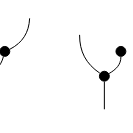
I derive the solution to @yudapearl's "new napkin problem" (as found in The Book of Why) without the do-calculus, using string diagrams.
I've been trying to teach myself basic causal inference using string diagrams (of course). I wanted to write a thread about it, but it got a bit too long, so I wrote a blog post instead:
piedeleu.com/posts/diagramma…

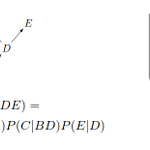
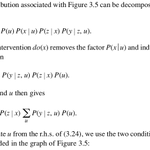
Hmm... After reading Chap. 3 of *Causality*, I'm just realising now the diagrammatic proof in my previous tweet (and blog post) is the translation of @yudapearl 's derivation of the frontdoor formula (without do-calculus):


I've been trying to teach myself basic causal inference using string diagrams (of course). I wanted to write a thread about it, but it got a bit too long, so I wrote a blog post instead:
piedeleu.com/posts/diagramma…
I've been trying to teach myself basic causal inference using string diagrams (of course). I wanted to write a thread about it, but it got a bit too long, so I wrote a blog post instead:
piedeleu.com/posts/diagramma…
Robin Piedeleu retweeted
We are hosting a mini workshop on string diagrams in programming languages at the @HuaweiUK Coffee House in the University of Edinburgh @BayesCentre
Program is here:
linkedin.com/feed/update/urn…
Robin Piedeleu retweeted
I also find the analogy of consciousness as software (running on some sort of biological hardware) misleading and circular. All software is dependent on the prior reality of consciousness; without it there would be no software to speak of, just meaningless physical events
When reading the "Philosophical Pass" below, I wonder why "relationships" between A and B are an asymmetric notion? Is there a symmetric version of cat. th., that places domains and codomains on equal footing? @StringDiagram, I think this is a question we asked ourselves long ago


The paper is up: arxiv.org/abs/2211.16484


Our MFPS paper *A Complete Diagrammatic Calculus
for Boolean Satisfiability*, with Fabio Zanasi and Tao Gu is on the arXiv: arxiv.org/abs/2211.12629

We also show how we can also encode propositional logic programs (LPs). This is not a surprise since LPs are Horn clauses under the hood. But the encoding is still interesting because the trace plays a particular role: