

I make things on the internet. I mostly tweet about AI.
YYC
Joined March 2009
- Tweets28.9K
- Following559
- Followers758
- Likes10.8K




Random beginner tip for @openai codex users... use your Dot to alert you when @thsottiaux announces an incoming reset. Then burn those tokens to the ground.

Russ Fee retweeted

Looking at OpenAI releasing hundreds of mathematical results, I think we really have to lead with empathy here.
When you’ve spent years learning a craft, whether it’s writing code, creating illustrations or doing mathematics, and suddenly a lot of what you do seems to be a prompt away, of course that’s disorienting. Your craft is how you define yourself, what you’re proud of, where you find flow, sometimes the thing that gives your day meaning. It’s a huge part of your identity.
And I get how this can lead to a pretty nihilistic feeling, like you wake up one morning and think, okay, if everything can just be prompted into existence, what am I supposed to do now? What am I getting better at? What is all this effort for?
Software engineers have been grappling with this for a while, and I expect more people will experience it as AI keeps accelerating. Writing a book, creating a movie, maybe someday helping solve a disease, more and more things we’ve spent our lives learning could feel a prompt away.
I think that progress is amazing, and I’m 100% confident we’ll find harder problems to work on and new crafts to fall in love with. But knowing that intellectually doesn’t make the sense of loss disappear, especially when the change happens this fast and feels this brutal.
We can celebrate the breakthroughs and still care about the millions of people trying to figure out where they fit and what gives their life meaning in a world becoming this intelligent. “You can do more now” might be true, but people also need time to process what they feel they’ve lost.

We’re releasing a broad range of new mathematical results produced by an internal frontier model.
We’ve been consulting with the independent Advisory Group on Mathematics and Artificial Intelligence at the Institute for Advanced Study, and we have drawn on their advice and public recommendations to inform how we release these results.
github.com/openai/math


Russ Fee retweeted

This kind of goes hard.
Throwing a punch at the start of the Beastie Boys song rules.
Once I cancelled a gym membership and the exit survey asked why. "Price" was not one of the options because they didn't want to hear it.
When I cancel an app subscription I get a form too. I worry "I'm building my own version of this" is left off for the same reason.
Russ Fee retweeted

Some unfortunate news. 2 weeks ago the startup I was at pivoted and I'm no longer employed.
If you're looking for a software engineer please keep me in mind 🙏
With time, I've finally had the chance to update mattkiazyk.com and start working on more projects.

The big gotcha with vibe coding is that at a certain level of complexity, stuff can fall apart. But for smaller one-off use cases like this, it happens less than you might realize.

5.5 is the first time i've felt confident enough to start ripping a ton of Saas tools out of my business and building them myself for my team.
Yes, I'm not going to vibe code an entire app (like Notion)
But I am going to vibe code one that's better for me and my small team.
Almost every app I pay for, I use maybe 10% of the features.
I'm currently using Opus 5.5 to build an internal tool that takes the few features I actually use from 5 different apps and puts them in one place.
- 5 logins... now 1
- I can add a features freely almost immediately
- It's built around how my company works, not how some other company thinks I should work
On today’s episode of “experts are worse at predicting things than you might realize”…


I’ve been meaning to try and make something like this for a couple weeks and wouldn’t you know it. IanMalcolmWellThereItIs.gif.

I built a Photoshop-like image editor. It’s called Compositor.
robbietilton.com/compositor
I originally built it for myself to get off my Adobe subscription, but decided to release it for free and make it open source. It has all the essential tools I need for compositing, with none of the BS.
I know this workflow is kind of archaic in 2026, but I’m still using it until AI can actually get pixel-perfect on some of the details.
The entire app is 12MB. Photoshop is 6,455MB on my machine.

My favourite thing about where we’re at is we have zero reference for where it’s going. 200x faster. Intelligence literally too cheap to even charge for it. So inconceivable there’s use cases we never bothered to dream up yet.

After co-inventing ChatGPT, I kept asking myself: why have superhuman chat models not led to AGI?
I’ve spent the last 2 years in stealth building a new way to train models (RLCD), and a new type of frontier AI model that we are releasing today: Jev
• 20-200x faster
• 40-400x cheaper (w/ output tokens free)
• Frontier composable intelligence optimized for decisions
AFAICT the shortest path to AI-based economic revolution
This is a good point. People worry we’ll become less useful because of these tools, but your great-grandfather was a lot more useful than you. He could build a barn, put shoes on a horse. Do you give even a single damn?
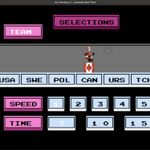
Everybody is out there using Astra to make 3D renders of the Library of Alexandria or some shit, meanwhile I'm over here addressing the real problems. Like Team Canada jerseys that some guy made _green_ for some reason.


The hubris of creating something smarter than us while simultaneously feeling we can control it makes this one of my favourite jokes of the year.

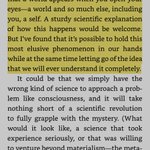
I’m not a big “are the machines conscious” guy, because frankly it’s impossible to get anywhere with it. But it’s interesting how our definitions get stress-tested occasionally by ai. One test for it is future-thinking.

From the upcoming @thursdai_pod draft - after watching, the whole breakdown of "the hack" is quite crazy
