

AI & Systems Architect, 25 years across enterprise tech, consulting & startups. Building agentic systems & LLM infra. I write what actually works, no hype.
World
Joined October 2025
- Tweets68
- Following66
- Followers13
- Likes25




Pinned Tweet
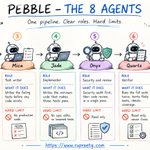
A few days ago I wrote about Pebble [rupreetg.com/writing/my-agen…], the harness I built. It writes most of my code. The bottleneck in my AI-assisted coding is no longer the AI. It's me.
I am starting a new experiment in public: gFactory, my attempt at an autonomous software factory. 🧵

If you use AI to draft specs or plans, how do you check the direction is right, not just that the details are consistent?
Collecting answers for next week’s journal.
My spec pack’s first draft had specs, dependencies, acceptance criteria, and a build order. It looked complete.
It had no way to test a half-built factory.
Consistent isn’t complete. Ask “how will I verify this works?” before you approve the pack, not after.
gfactory.dev/journal/2026-10…

Gates check compliance, not correctness.
They can tell you the work matches the spec. Only a human can tell you whether the spec was worth building.
gFactory Week 3: gfactory.dev/journal/2026-10…
Every gate in my pipeline checks the work against the spec.
None of them can tell me whether the spec was the right thing to build.
Week 3 of gFactory. 🧵

Why the spec gate stays on: every gate checks work against the spec.
If the spec says X, the system verifies X perfectly.
Whether X was right to build is a human call.
Code gates can loosen. This one, I believe, shouldn’t.
I’ll test that.
Also: Python over Rust. The bottleneck is how fast I can change the design, not runtime.
Nothing has run through the pipeline yet;
Milestone 0 is next.
Week 3: gfactory.dev/journal/2026-10…
How do you check that your AI-drafted specs point the right way?
gFactory's Week 3 is up!
Subscribe to a weekly journal on the progress and help me build it!
gfactory.dev/#follow

gFactory Week 3 is up.
The spec writer wrote the first builder specs for gFactory itself. I reviewed them, and my review caught something no gate would have.
Gates check compliance, not correctness.
gfactory.dev/journal/2026-10…
#BuildInPublic
gFactory Week 3 is up.
The spec writer wrote the first builder specs for gFactory itself. I reviewed them, and my review caught something no gate would have.
Gates check compliance, not correctness.
gfactory.dev/journal/2026-10…
#BuildInPublic
Tomorrow: gFactory Week 3. Next up from this week’s design is turning it into the first spec, with gFactory writing about itself.
Question for people building with coding agents:
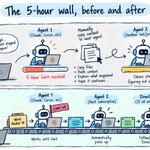
When your agent hits its usage limit halfway through a task, what do you do? And what does it cost you to get back to where you were?
Collecting patterns for the gFactory journal.
On paper every approval gate looks removable.
Only real runs show which ones are.
My plan for gFactory: 8–10 real projects with every gate on before I loosen any. It’s how I earned trust in Pebble, and I don’t see a shortcut.
The expensive design decision in gFactory wasn’t the agents. The agents already existed.
It was the unit of work: what exactly goes in a packet so any agent can pick it up cold.
That’s where I redrew the most. Week 2: gfactory.dev/journal/2026-10…
The rule I held hardest: packets shouldn’t depend on each other. I want many agents working at once, not one agent walking a list. Dependencies are allowed, but as declared exceptions, not the default shape of the queue.
Cost limits and notifications wrap every packet instead of being a stage. Build the brake first: runaway agent spend is cheap to prevent and expensive to discover.
Honest status: it’s a diagram. Nothing has run through it yet, and the handoff is the part I trust least. I’ll tell you what holds. Week 2 journal: gfactory.dev/journal/2026-10…. When your agent hits its limit, what does getting back cost you?