

Professor for theoretical physics at @lmu_muenchen. Theoretical biophysics, non-equilibrium statistical physics, and machine learning.
Munich, Germany
Joined December 2016
- Tweets417
- Following281
- Followers843
- Likes965


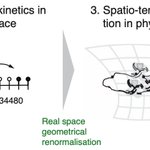
New preprint: Many modern image generators use diffusion or flow matching, gradually transforming noise into data along a prescribed schedule. We introduce the concept of fibres to develop model-aware schedule that significantly improves image generation. doi.org/10.48550/arXiv.2609.…

New preprint: Rejuvenation is done by dynamically inducing factors that remodel the epigenome. With first author Matteo Ciarchi we show that key features of rejuvenation experiments can be explained by biophysical properties of DNA and chromatin. 1/n
doi.org/10.64898/2026.08.27.…


Check out the very nice News and Views by Mikhail Rotkevich and Maria Pia Cosma on our recent article in Nature Physics. Very creative use of broccoli to represent our work 😂.
News and views:
nature.com/articles/s41567-0…
Article: nature.com/articles/s41567-0…

Steffen Rulands retweeted

My lab is recruiting a Postdoctoral Associate in informatics to investigate the epigenome of pediatric brain tumors. To join our team of motivated and professional molecular biologists and bioinformaticians, apply here: jobs.bcm.edu/job/Postdoctora…
Steffen Rulands retweeted

During development, cells acquire their identity—a process that depends on epigenetic modifications such as methylation. Now, a statistical physics analysis of methylation helps explain embryonic symmetry breaking.
nature.com/articles/s41567-0…
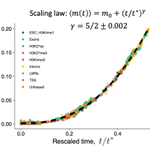
New paper out in Nature Physics: we show that the embryonic epigenome forms according to universal physical rules. nature.com/articles/s41...
Using this framework, we could predict epigenetic changes that precede gene silencing up to two days before corresponding changes became detectable at the mRNA level.

It also shows how combining theoretical physics with genomics can reveal self-organisation processes in vivo that would otherwise remain inaccessible. Thanks to first author @OlmedaFabrizio , the lab of Wolf Reik, Simon Walker, Ioannis Kafetzopoulos and all other authors.
Steffen Rulands retweeted

🚨 New paper from our lab just published in Nature🚨bit.ly/46G8ggV
Discover how 🌱 tumour formation is shaped by tissue context from the very beginning.
Fantastic team led by @GSkrupskelyte, Eduardo Rojo, Harikrishnan Ajith

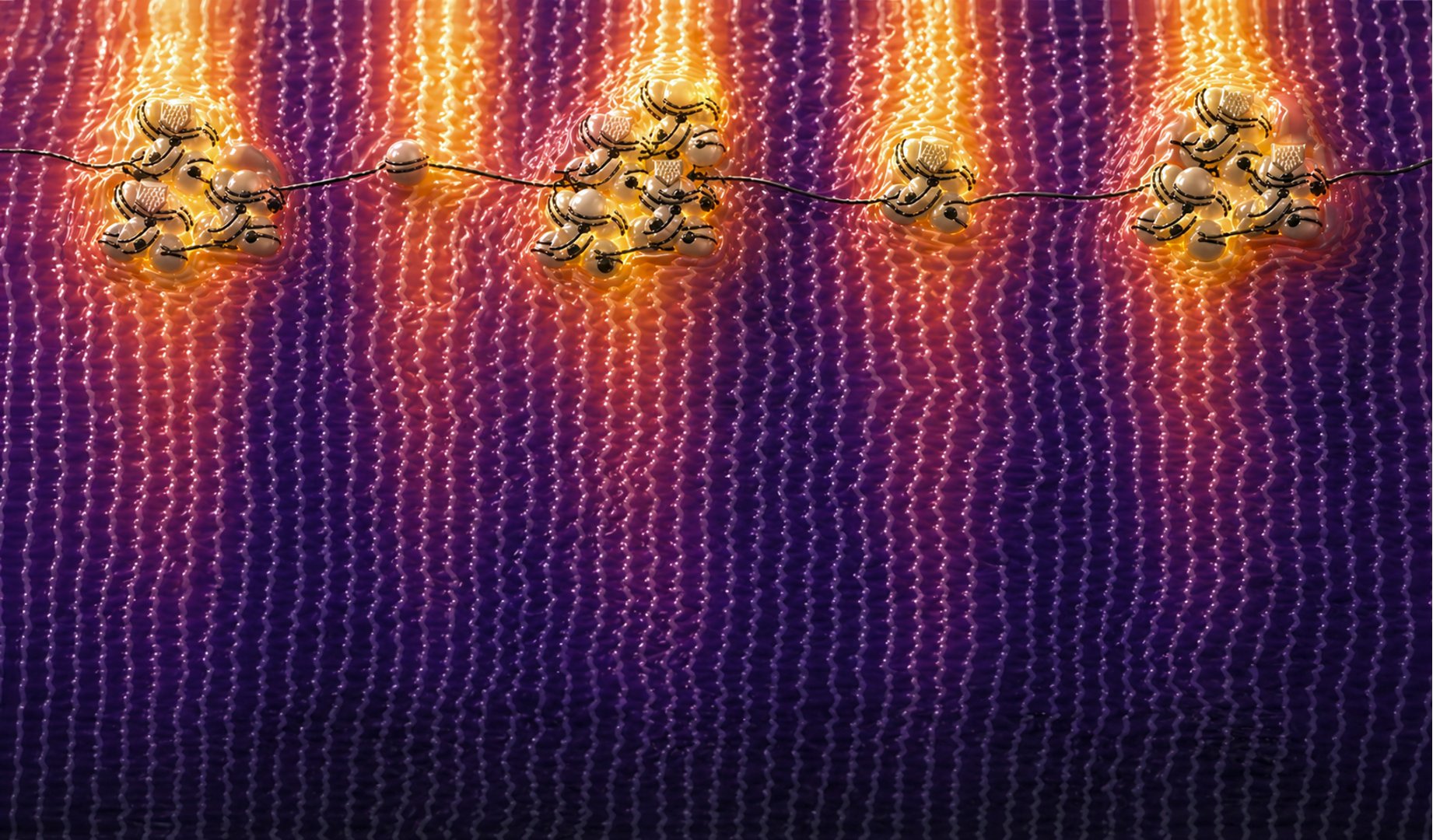
There is a strange phenomenon in epigenetics, where cells use energy to cycle chemical DNA modifications. Nobody knows what such oscillations are good for. We show that chromatin-mediated interactions lead to complex spatial and temporal patterns. journals.aps.org/prxlife/abs…
