








피카츄 너무 귀엽다!!!💛⭐️🌼


Closed Beta's next wave is approaching.
Well... this escalated quickly.
We planned to keep it tight. You planned to get your hands on PSA 10 grails.
Okay, fine. You win.
A fresh batch of invite codes is coming. Soon.
Stay tuned. In the meantime, secure your spot on the waitlist by signing up at deadstock.gg.
1
546
🧐Maximizing System Welfare: The Core Philosophy of Rialo’s Design
In blockchain architecture, performance metrics like TPS (Transactions Per Second) often take center stage.
However, Rialo prioritizes a more holistic metric: System Welfare.
We define System Welfare as the total value created for all participants—developers, users, and validators—after accounting for execution costs, coordination overhead, and operational risks.
-Beyond the Efficiency of a Single Layer
Most blockchains focus only on the efficiency of their own base layer. They ignore the "hidden taxes" that middleware layers (oracles, keepers, bridges) impose on the final application.
High System Welfare is achieved when valuable on-chain activity is not just fast, but also cheap and reliable. If a transaction costs $0.01 on the base layer but requires $5.00 in middleware fees to function, the system's welfare is low.
-Solving the "Deadweight Loss" of Middleware
When multiple service providers (oracles, automation bots) act as independent monopolies, they extract maximum rent. This leads to "Deadweight Loss"—where potentially valuable transactions never happen because they are too expensive.
Rialo maximizes welfare by vertically integrating these supermodular components. By providing native oracles and automation, we eliminate redundant markups and return that surplus value to the developers and users.
-Aligning Incentives for Long-Term Growth
A high-welfare system coordinates pricing to stimulate demand. Instead of every layer competing to extract the most profit, Rialo optimizes for the growth of the entire ecosystem.
Lower structural costs lead to more diverse applications. This, in turn, brings more users, creating a positive feedback loop that increases the total economic value of the network.
-Reliability as a Welfare Primitive
Welfare also includes the "peace of mind" for developers. Relying on third-party "gadgets" that might fail or censor transactions reduces the overall welfare of a protocol.
By making critical services protocol-native, Rialo ensures they share the same decentralization and security guarantees as the base layer, providing a stable foundation for global-scale finance.
☑️Maximizing System Welfare means designing for the collective success of the ecosystem.
By reducing rent extraction and increasing reliability through vertical integration, Rialo ensures that the value created on-chain stays with those who build and use it.
@RialoHQ @itachee_x @RialoKorea

7
8
107
🐿️The Shift Toward Blockchain as Financial Infrastructure
For years, traditional finance viewed blockchain as experimental. That perception is changing.
Today, major institutions are actively exploring how blockchain can improve settlement, operations, and asset management.
1. Faster Settlement, Not Instant Everywhere
Traditional systems have relied on T+2 settlement cycles, though markets like the U.S. have already moved toward T+1.
Blockchain introduces the possibility of near real-time settlement in certain environments. While full T+0 adoption across global finance is still evolving, the direction is clear: reducing delays and improving capital efficiency.
*In finance, T is the trade date, and the number indicates the business days until settlement.
2. Compliance Becoming More Automated
Compliance in traditional finance is still largely manual and reactive.
With blockchain-based systems, some compliance rules such as KYC/AML restrictions can be embedded into digital assets or transaction logic. While not fully replacing regulatory oversight, this approach can reduce operational friction and improve transparency.
3. Expanding Access to Real-World Assets (RWAs)
Tokenization is opening the door to fractional ownership of assets like real estate and private equity.
Although liquidity is still developing, the long-term potential is clear: broader investor access and more efficient global markets.
4. Where Rialo Fits
Projects like Rialo are exploring how to bridge traditional finance with blockchain infrastructure.
Rialo focuses on areas that institutions care about, such as privacy in transaction processing and compatibility with existing systems. While still early, these features reflect the kind of requirements TradFi will likely demand as adoption grows.
☑️As blockchain moves from experimentation to selective integration, finance may gradually shift from fragmented processes toward more unified and programmable systems.
Rialo represents one of many efforts trying to define what that future could look like.
@RialoHQ @itachee_x @RialoKorea

9
9
64
🧸The Invisible Backend: Rialo’s Vision for the Future of UI/UX
The ultimate success of blockchain technology will be measured by its invisibility.
Today, Web3 forces users to act like system administrators—managing private keys, calculating gas fees, and switching networks.
Rialo is building a future where the blockchain functions as a seamless, high-performance backend that stays entirely out of the user's sight.
1. Eliminating the Blockchain Friction
In the current Web3 era, every transaction feels like a technical hurdle. Users are constantly interrupted by pop-up windows and signing requests.
Rialo’s Stake-for-Service(SfS) and native account abstraction allow developers to create Gasless experiences.
Users can interact with applications just as they do in Web2—signing in with social accounts and performing actions without ever seeing a Confirm Transaction prompt or a Low Gas error.
2. Proactive Automation via Reactive Transactions
Traditional UX is reactive; the user must initiate every single step. If a trade needs to happen at a certain price, the user must be online to execute it.
Rialo’s Reactive Transactions turn the blockchain into an autonomous assistant. You set your intention once, and the Invisible Backend handles the execution, monitoring, and settlement in the background.
This shifts the user experience from Active Management to Result-Oriented Interaction, where the system works for the human, not the other way around.
3. Native Connectivity to the Real World
Today’s users have to jump between Web2 and Web3 apps to get things done. This fragmentation ruins the experience.
Rialo integrates Native Web Calls, allowing on-chain logic to fetch real-world data and trigger off-chain actions directly.
For the user, this means a single, unified interface that can manage both their on-chain assets and their real-world services (like subscriptions or payments) without switching platforms.
4. The Era of Zero-Knowledge Usage
You don't need to understand TCP/IP to use the internet, and you shouldn't need to understand consensus to use a dApp.
Rialo provides the high-performance, secure rails that allow developers to hide the complexity of the ledger entirely.
By providing a backend that is fast, automated, and natively connected, Rialo enables a future where Blockchain is just a synonym for A system that actually works.
☑️The best infrastructure is the one you don't even notice.
Rialo is transforming the blockchain into an invisible, robust backend, allowing the next generation of applications to focus on what truly matters: providing value to the user without the technical noise.
@RialoHQ @itachee_x @RialoKorea

7
9
73
🐠The Synergy of Hardware Acceleration and Blockchain Execution
For a long time, blockchain performance was limited by the efficiency of virtual machines.
Most chains process transactions through an abstract software layer, which creates a bottleneck.
Rialo breaks this barrier by aligning the execution layer directly with modern hardware, transforming the blockchain into a high-performance global CPU.
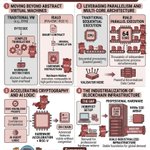
1. Moving Beyond Abstract Virtual Machines
Traditional VMs, like the EVM, require complex translation of bytecode into hardware instructions. This creates significant overhead and latency.
Rialo’s RISC-V (RV64EMC) architecture is designed to mirror how actual hardware operates. By minimizing the translation steps, Rialo unlocks the full potential of modern CPU pipelines.
This allows for Hardware-Native execution, where smart contracts run at speeds comparable to traditional high-performance software.
2. Leveraging Parallelism and Multi-Core Architecture
Most blockchains still execute transactions one by one sequentially, wasting 90% of a modern CPU's power.
Rialo’s execution stack is built for parallel execution. By utilizing 16 to 64-core server-grade CPUs, Rialo can process thousands of independent transactions simultaneously.
This shift turns the validator node from a simple ledger keeper into a powerful decentralized data center.
3. Accelerating Cryptography and AI Logic
Complex tasks like zero-knowledge proofs, confidential computation (REX), and AI agent logic are extremely resource-intensive.
By combining RISC-V instructions with hardware acceleration, Rialo can handle these heavy workloads on-chain without causing network congestion.
This makes advanced features like private financial markets and autonomous AI agents economically and technically viable at scale.
4. The Industrialization of Blockchain Infrastructure
As we move into the Infrastructure Era, the gap between hobbyist setups and professional-grade hardware will widen.
Rialo is leading this shift by demanding high-performance SSD arrays and large memory bandwidth to support its parallel execution engine.
This hardware-first approach ensures that the network can scale as global demand for on-chain utility grows, providing a stable foundation for the next generation of digital infrastructure.
☑️The combination of hardware acceleration and Rialo’s RISC-V architecture marks the end of the slow-chain era.
By confronting the physical limits of execution, Rialo provides the foundational power required to run the global economy on-chain.
@RialoHQ @itachee_x @RialoKorea

7
6
54
🫡Beyond Bribes: How Rialo Prevents Oracle Attacks Through Economic Design
Oracle attacks are the single largest source of lost funds in DeFi.
Most systems try to secure data through voting or staking, but as market caps grow, the incentive to lie often outweighs the cost of being slashed.
Rialo changes this by shifting the security model from economic deterrence to direct, verifiable reputation.
1. The Flaw in Voting-Based Security
Traditional oracles rely on a quorum of reporters who bond tokens. If they lie, their stake is slashed.
However, if the profit from manipulating a $100M market is greater than the $10M total bond, a rational attacker will choose to lie.
This creates an Attackability Threshold where honesty is no longer the equilibrium as the stakes get higher.
2. Eliminating the Middleman Telephone Game
Most attacks happen because the oracle is a middleman between the data source and the chain. The chain trusts the reporter, not the source.
Rialo integrates Native Web Calls, allowing the protocol to point directly to primary sources (e.g., federalreserve.gov or nfl.com).
By reading from the source itself, Rialo eliminates the voting layer that an attacker would otherwise target with bribes or governance takeovers.
3. Leveraging Real-World Reputation as a Moat
Would the Federal Reserve or a major sports league lie about their own data to rug a prediction market? It is highly unlikely, as their multi-billion dollar real-world reputation is their core asset.
Rialo turns this reputation into a positive externality for the blockchain. We use the existing credibility of global institutions to secure on-chain data at zero extra cost.
4. Decoupled Risk Domains
In a voting-based oracle, a single compromised quorum can crash every market relying on that oracle.
On Rialo, each data source is independent. An issue with one source (e.g., a weather API) does not cascade into another (e.g., a stock price feed).
This isolation ensures that truth is not a correlated risk, preventing systemic collapse during localized data failures.
☑️Rialo stops oracle attacks by making the "cost of lying" higher than any potential on-chain profit.
By connecting directly to primary sources and leveraging real-world reputation, we provide a security model that actually scales with the value of the market.
@RialoHQ @itachee_x @RialoKorea

8
8
50
🍓The UX Revolution: How a 'Reactive' On-Chain Ecosystem Changes Everything
The biggest friction in Web3 today is that the blockchain is passive. It only moves when you push it.
Rialon’s Reactive Transactions flip this model, creating a proactive ecosystem that acts on your behalf. This is the shift from Manual Web3 to Automative UX.
1. From Push to React
In traditional chains, every action requires a manual trigger. If you want to liquidate a position or update a price, a user or a bot must send a transaction.
Rialo’s reactive ecosystem monitors its own state. When a predefined condition (a predicate) is met, the transaction triggers itself.
For the user, this means the blockchain is finally alive, responding to market movements and events in real-time without constant supervision.
2. Eliminating the Bot Management Overhead
Today, advanced users must manage complex keeper bots and scripts to stay competitive.
In a reactive ecosystem, this logic is embedded directly into the protocol. Your stop-loss, your recurring buy, or your collateral top-up is a native part of the chain.
This levels the playing field, providing professional-grade automation to every user through a simple, unified interface.
3. Seamless, Long-Running Workflows
Reactive transactions allow for workflows that span days or weeks.
You can set a chain of events: "If X happens, do Y, then wait 3 days and check Z."
This asynchronous execution mirrors how we interact with the real world—setting intentions and letting the system handle the follow-through.
4. Deterministic Reliability
Because the reaction happens inside the consensus layer, there is no risk of a bot failing or a third-party service going offline.
If the condition is met on-chain, the execution is guaranteed by the network’s validators.
This provides a level of UX certainty that was previously impossible in decentralized systems.
☑️Reactive Transactions transform the blockchain from a static ledger into a dynamic, event-driven engine.
By automating the waiting and triggering phases of execution, Rialo delivers a seamless user experience where the infrastructure finally works for the human, not the other way around.
@RialoHQ @itachee_x @RialoKorea

8
9
51
🌱The Final Reason to Choose Rialo: Economic Sustainability for Developers
For a developer, choosing a blockchain is not just a technical decision; it is a long-term business commitment.
Many high-performance chains offer speed, but they fail to provide a sustainable economic environment.
Rialo is designed to solve the structural cost issues that have historically forced innovative applications out of the market.
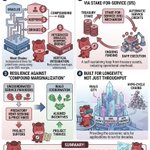
1. Eliminating the "Middleware Tax"
On most chains, developers must pay independent fees to oracles, keepers, and bridges. These costs compound, often consuming up to 90% of a project's potential margin.
Rialo’s supermodular architecture integrates these primitives into the base layer. This vertical integration eliminates redundant markups, ensuring that your operational costs remain low and predictable.
2. Self-Funding Infrastructure via Stake-for-Service (SfS)
Maintaining a dApp usually requires a constant supply of liquid tokens for gas and recurring tasks. This creates "operational float" and constant manual overhead.
With SfS, a developer can stake a portion of their treasury to generate service credits. These credits automatically fund the app's ongoing execution costs, creating a self-sustaining financial loop that doesn't require constant refueling.
3. Resilience Against "Compound Marginalization"
When every service provider in a stack acts as a mini-monopoly, the developer is the one who suffers. Price hikes in a single middleware layer can turn a profitable app into a loss-making one overnight.
Rialo coordinates pricing at the protocol level. By aligning the incentives of the infrastructure with the growth of the application, we protect developers from the predatory rent-seeking found in fragmented ecosystems.
4. Built for Longevity, Not Just Throughput
High TPS is a commodity; economic survivability is a rare feature. Rialo provides the rails for applications that need to run for decades, not just during a hype cycle.
Whether you are building an RWA protocol, an AI agent, or a complex DeFi engine, Rialo ensures that your cost-to-value ratio remains healthy as you scale.
☑️Economic sustainability is the ultimate competitive advantage.
Rialo empowers developers to build profitable, long-lived applications by removing the hidden taxes of the old blockchain stack and replacing them with a unified, efficient economic engine.
@RialoHQ @itachee_x @RialoKorea

9
9
43
😶🌫️What is Blockchain in 10 Years? The Chain as Invisible Infrastructure
In a decade, we will stop talking about blockchain as a standalone technology.
Much like the fiber optic cables and database protocols that power today’s internet, the blockchain will move into the background.
It will transition from a speculative playground into the silent, high-performance infrastructure of the global economy.
1. The era of "Invisible Web3"
Today, users struggle with wallets, seed phrases, and gas fees. In 10 years, these hurdles will vanish.
The blockchain will function as the "secure backend" of the internet. Users will interact with apps seamlessly, unaware that their identity and assets are secured by a decentralized ledger.
Execution will be as fast and invisible as a credit card swipe today.
2. From Speculation to Utility
The narrative of blockchain will shift entirely from token price to system efficiency.
Blockchains like Rialo will act as the coordination layer for real-world assets, automated logistics, and energy grids.
Every contract, from a home rental to a corporate merger, will be a self-executing program that requires no manual oversight or legal intermediaries.
3. The Backbone of the Autonomous Economy
By 2036, the majority of blockchain participants will not be humans, but AI agents.
Agents will use the chain to hire services, pay for compute power, and settle debts in milliseconds.
The blockchain will be the Legal and Economic Operating System for a world where machines conduct commerce at a scale humans cannot manage.
4. Rialo’s Vision for the Next Decade
Rialo is building for this Infrastructure Era by integrating the tools needed for real-world scale: native privacy, reactive automation, and direct web connectivity.
We are moving away from fragmented, expensive middleware toward a unified, high-performance execution environment.
Our goal is to make the blockchain so reliable and efficient that it becomes the default foundation for all digital trust.
☑️In 10 years, the best blockchain will be the one you don't even know you're using.
Rialo is building that invisible, robust future today, transforming blockchain into the foundational infrastructure of the global digital economy.
@RialoHQ @itachee_x @RialoKorea

7
6
51
🧙♀️Rialo: The Essential Bridge Connecting Web2 and Web3
For years, Web3 has existed as an isolated island.
Despite its potential, the difficulty of interacting with existing Web2 infrastructure has kept blockchain applications in a crypto-only bubble.
Rialo breaks this barrier by acting as a native connector, allowing on-chain logic to communicate fluently with the traditional internet.
1. Beyond the Oracle: Native Web Connectivity
Traditional blockchains are "blind" to the outside world, relying on third-party oracles that add cost and risk.
Rialo integrates Native Web Calls directly into its execution layer. This allows a smart contract to fetch data from an API or interact with a Web2 service as easily as sending a token.
By internalizing this connectivity, Rialo removes the friction and extra fees associated with middleware, making hybrid applications economically viable.
2. Authenticated Interactions with Real-World Systems
Web3 adoption requires more than just reading data; it requires action.
Through Rialo’s private computation (REX), users can securely use Web2 credentials (like API keys or social logins) to trigger actions in the real world.
Imagine a decentralized protocol that can autonomously renew a Web2 subscription or trigger a bank transfer via a secure API call—all governed by on-chain consensus.
3. Seamless Onboarding for Traditional Users
One of the biggest hurdles for Web2 users is the complexity of wallet management and gas fees.
Rialo’s Stake-for-Service (SfS) and native identity support allow developers to build apps that look and feel like Web2.
Users can log in with familiar social accounts and transact without worrying about gas, while the backend utilizes the full security and transparency of the blockchain.
4. A Unified Execution Environment
Rialo doesn't just bridge two worlds; it unifies them into a single workflow.
Developers no longer have to choose between the transparency of Web3 and the utility of Web2. They can build applications where the blockchain acts as the secure, automated "brain" controlling real-world "limbs."
☑️Rialo is the missing link that transforms blockchain from a speculative ledger into a functional backend for the entire internet.
By bridging the gap between Web2 and Web3, Rialo enables the next generation of applications to deliver real-world utility at scale.
@RialoHQ @itachee_x @RialoKorea

8
9
48
🦉Economic Agency: How Agents Become First-Class Citizens on Rialo
The ultimate goal of the AI revolution is to move beyond chatbots toward economic agents.
For an agent to be truly autonomous, it needs more than just intelligence; it needs the authority to own, spend, and contract.
Rialo is the first infrastructure to provide agents with true economic agency at the protocol level.
1. From Tools to Sovereign Entities
In traditional Web2, AI is a tool owned by a human account. It cannot hold its own balance or enter into a legal contract.
On Rialo, an agent can be a sovereign entity. It can own a wallet, manage its own treasury, and sign transactions independently.
This shift transforms the agent from a software script into an economic participant that exists as a first-class citizen in the digital economy.
2. Autonomous Asset Management and SfS
With Stake-for-Service, an agent can maintain its own operational life. It can stake its capital to generate service credits that fund its own gas and execution costs.
This means an agent can be truly self-sustaining. It doesn't need a human to top up its wallet; it manages its own resources to ensure its continued existence on-chain.
3. The Right to Contract via SCALE
Economic agency requires the ability to enter into enforceable agreements.
Through the SCALE framework, agents can hire other agents or services without human intervention.
An agent can autonomously decide to outsource a sub-task, negotiate terms, and execute payment based on quality verification—all within the Rialo execution layer.
4. Verifiable Identity and Trust
Rialo’s native privacy and attestation layers allow agents to prove their identity and track record without exposing proprietary logic.
This allows agents to build creditworthiness and reputation on-chain, enabling them to participate in complex financial activities like lending or insurance.
☑️Economic agency is the missing link in the AI economy.
By providing agents with the power to own, fund, and contract natively, Rialo transforms autonomous models into independent economic actors capable of driving global markets.
@RialoHQ @itachee_x @RialoKorea

8
8
46
🌵The Evolution of Agent Labor Markets: A New Employment Paradigm with SCALE
The rise of AI agents is creating a new category of labor. However, a labor market cannot exist without a reliable way to enforce contracts.
Rialo’s SCALE framework transforms how autonomous agents are hired, managed, and paid, moving us from best-effort automation to guaranteed service delivery.
1. From Human Trust to Algorithmic Enforcement
Traditional labor markets rely on legal systems and reputations to ensure work is completed.
In the agent economy, where thousands of tasks happen per second across borders, human legal systems are too slow and expensive.
SCALE replaces legal contracts with protocol logic. If an agent fails a task, the code—not a lawyer—initiates the penalty or refund.
2. Programmable Quality Assurance (QA)
The biggest risk in hiring an AI agent is poor output quality.
SCALE introduces the concept of a "Judge Agent." The payment is only released if a neutral third-party agent verifies that the work meets the predefined standards.
This creates a self-correcting market where only high-performing agents remain profitable, naturally filtering out low-quality service providers.
3. Permissionless and Borderless Hiring
SCALE allows anyone to hire any agent globally without signing a physical contract or setting up complex payment rails.
Escrowing payments on-chain ensures that the agent is guaranteed payment upon successful delivery, while the employer is protected against non-delivery.
This removes the friction of international hiring, enabling a truly global and fluid market for autonomous labor.
4. The Rise of "Agent-to-Agent" Outsourcing
Under the SCALE framework, agents can hire other agents to complete sub-tasks.
An "Architect Agent" could hire a "Coder Agent," who in turn hires a "Security Auditor Agent," all through nested SCALE contracts.
This leads to the emergence of complex, autonomous organizations that operate entirely through enforceable on-chain agreements.
☑SCALE is the foundational legal and economic layer for autonomous labor.
By standardizing how work is contracted and verified, Rialo is building the infrastructure for a world where hiring an AI agent is as reliable and seamless as calling a function in code.
@RialoHQ @itachee_x @RialoKorea

8
7
45
⌚️Why Rialo's 'Native Timers' are Essential for Agent Coordination
In a decentralized economy, autonomous agents must not only be smart but also punctual.
Coordination fails when there is no shared sense of time or a reliable way to trigger actions at a specific moment.
Rialo’s native timers move the clock inside the protocol, ensuring that time-sensitive operations are executed with consensus-level certainty.
1. The failure of off-chain scheduling
Traditional blockchains are reactive; they only move when an external transaction is pushed.
To execute something "in one hour," developers usually rely on off-chain "cron jobs" or centralized bots.
If the bot fails or the external server goes down, the agent's deadline is missed, leading to broken contracts and financial loss.
2. Moving time into consensus
Rialo integrates timers directly into the execution layer. A contract can define an instruction to "execute X at time Y" natively.
Because the timer is part of the protocol, every validator in the network agrees on the trigger.
This creates a guaranteed execution environment where time-based conditions are as secure as the blockchain itself.
3. Enabling enforceable deadlines for agents
In the SCALE (Simple Contracts for Agent Labor Execution) framework, timers are used to enforce delivery windows.
If an image-generating agent fails to deliver its work by the specified timer, the protocol automatically triggers a refund to the employer.
No human intervention is needed to check the clock; the network handles the enforcement autonomously.
4. Complex workflows and asynchronous coordination
Timers allow for sophisticated, multi-step agent workflows.
Agents can "pause" their logic and set a timer to "wake up" and check a condition later, such as a price movement or a real-world event.
This native scheduling transforms the blockchain into a proactive coordinator that manages long-running tasks without external oversight.
☑️Native timers are the heartbeat of the Rialo ecosystem. By internalizing time, Rialo enables agents to coordinate with the precision and reliability required for a fully autonomous global economy.
@RialoHQ @itachee_x @RialoKorea

9
9
44
🔎Beyond Intelligence: Auto-Payment Protocols for the Agent Economy (A2A)
The true potential of AI agents lies not just in their reasoning abilities, but in their ability to conduct autonomous economic activities.
For this to happen, we need a seamless protocol where agents can negotiate, execute, and settle payments without human intervention.
This is the core of the Agent-to-Agent (A2A) economy.
1. The shift to machine-to-machine transactions
Traditional payment systems are designed for humans. They require manual approvals, multi-factor authentication, and centralized gateways.
In the agent economy, transaction frequency will explode. Human-centric rails cannot support the millisecond-level speed and high volume of machine-driven commerce.
We need a native protocol where "Agent A" can pay "Agent B" instantly based on verifiable task completion.
2. Why A2A needs on-chain settlement
Off-chain payment APIs (like Stripe) often require centralized trust and have high latency for micro-transactions.
On-chain settlement allows for programmable money. Payments can be locked in escrow and released only when specific logic—attested by the protocol—is fulfilled.
This eliminates the risk of non-payment or fraud, allowing agents from different developers to work together trustlessly.
3. Rialo’s role in autonomous settlement
Rialo integrates native web calls and verifiable computation, enabling agents to verify real-world work before settling.
Through Rialo’s fast execution and low costs, micro-payments between agents become economically viable.
This creates a "Global Service Bus" where agents can hire one another, pay for resources, and settle debts within a single block.
4. The future of autonomous economic agents
Imagine a weather agent hiring a compute agent to run a simulation, paying in real-time as data is processed.
This isn't science fiction; it is the natural evolution of automated infrastructure.
By standardizing how agents pay each other, Rialo turns a collection of smart models into a functioning global marketplace.
☑️The A2A protocol is the backbone of the decentralized agent economy.
Rialo provides the high-speed, programmable rails necessary to transform autonomous agents into fully functional economic actors.
@RialoHQ @itachee_x @RialoKorea

11
10
44
🌱Beyond Intelligence: Infrastructure for the Agent Economy
AI models are becoming smarter, but the agent economy faces structural stagnation.
The real barrier is not a lack of intelligence, but the absence of a reliable framework for agent coordination.
-The bottleneck of agent coordination
Intelligence is becoming a commodity. Developing a logic-driven agent is a simple task.
The challenge lies in managing interactions where agents must coordinate, exchange value, and handle failures in a decentralized environment.
Loosely defined agreements lead to economic collapse. An agent economy cannot function on intent alone without clear outcomes.
-The necessity of contract structure
Agents need clear rules for initiation, quality verification, and dispute resolution.
Traditional systems rely on central intermediaries, but this conflicts with the fundamental nature of decentralized agents.
Forcing agents to depend on human oversight or central authorities is simply automating existing, flawed systems.
-Rialo as the foundation for the agent economy
Rialo provides an infrastructure where task parameters are defined and payments are escrowed on-chain.
Quality verification occurs through designated judge agents, and refund logic is handled by protocol code.
This creates deterministic outcomes. Intelligence acts as the engine, and the contract structure serves as the steering wheel.
-The future of autonomous infrastructure
Rialo grounds agents in a robust economic framework, making them productive, safe, and reliable.
This allows the agent economy to support actual economic activity without constant manual supervision.
Rialo establishes the tracks for autonomous systems to run efficiently as reliable infrastructure.
In summary, the future of the agent economy rests upon the contract structure and the deterministic coordination we build today.
Rialo provides the foundational rails to turn experimental automation into robust economic infrastructure.
@RialoHQ @itachee_x @RialoKorea

6
5
42
☄️The New Standard of Blockchain Design: Vertical Integration
The debate between modular and monolithic architectures is a thing of the past.
In an era where performance and features are standardized, the focus must shift from architectural ideology to economic efficiency.
The long-held belief that blockchains must be fragmented has become a hidden tax that hinders innovation.
-The Problem of Fragmented Blockchain Stacks
Most blockchain applications currently rely on a stack of middleware protocols, including oracles, indexers, and bridges.
While these are intended to provide specialized services, they create significant economic inefficiencies.
Each service provider sets fees independently to maximize their own profit.
Developers pay not only the base layer gas fees but also accumulated fees from every middleware layer in the stack.
This leads to what economists call compound marginalization within sequential monopolies.
This structure causes two main problems.
First, it leads to economic waste. When transaction fees are too high, valuable on-chain activities become economically unviable.
Second, it causes the fragmentation of trust. Because each component operates under a different security model, ensuring the stability of the entire system becomes nearly impossible.
-The Need for Vertical Integration
As industries mature, systems consolidate for efficiency.
A manufacturer reducing costs by producing its own core components follows the same principle. Blockchain protocols achieve economic viability only when execution and essential primitives like oracles, automation, and confidential computation are treated as integrated parts of the system.
Rialo adopts this vertical integration strategy to internalize these critical functions.
The benefits of this integration are clear.
First, it eliminates intermediate margins. Removing multiple layers of fees creates a single, streamlined cost structure.
Second, it enables technical harmony. Synchronizing security and execution speed at the protocol level ensures reliability that external dependencies cannot match.
-Strategic Combination Through Supermodularity
Integration is not about simply bundling features.
It is about supermodularity, where components increase each other's value.
An execution engine combined with native oracles enables real-time conditional transactions, and an execution engine combined with confidential computation enables enterprise-grade applications.
These components work together to amplify the utility of the entire system.
In this integrated structure, the network can optimize fees for overall system efficiency rather than individual profit maximization.
This allows users and developers to build powerful applications at lower costs.
-Infrastructure for the Future
We have treated blockchains as experimental tools akin to custom-built PCs.
To integrate real-world economic activity on-chain, we need complete, reliable infrastructure.
Integration is not centralization, but economic alignment.
By ending the monopolistic extraction of middleware and ensuring all components work toward the shared goal of active on-chain usage, Rialo establishes a new standard.
Blockchain design is now an economic challenge rather than an ideological one.
Moving away from fragmented fee structures toward integrated efficiency is the path to building the next generation of infrastructure.
@RialoHQ @itachee_x @RialoKorea

8
7
51

💛Native Privacy: The Critical Missing Piece
For blockchain to become global infrastructure, it must resolve a structural limitation: the absence of native privacy.
Public blockchains are transparent by default. This transparency, while valuable for verification, makes them fundamentally incompatible with sensitive data such as Personally Identifiable Information, API credentials, and proprietary business logic.
Without privacy at the protocol level, blockchain remains a speculative coordination layer rather than a foundation for real economic systems.
1. The Privacy Boundary Problem
Most public chains operate under a public by default model.
The moment sensitive data reaches this boundary, the system fails. Confidential information cannot be processed safely because the infrastructure designed for trust minimization exposes everything to the network.
This creates a structural contradiction.
Blockchains aim to remove trust, yet handling real economic activity requires confidentiality.
2. The Limits of Off Chain Workarounds
To cope with this contradiction, developers move sensitive computation off chain.
This creates a split architecture.
Verifiability is weakened because execution cannot be fully proven on chain.
Trust assumptions reappear because users must rely on specific intermediaries.
System design becomes fragmented, as data continuously moves between private and public environments.
Such structures resemble patched systems rather than coherent infrastructure.
3. Rialo’s Structural Response: REX
Rialo addresses privacy at the protocol level through Rialo Extended Computation, known as REX.
REX enables encrypted inputs to be processed without exposing raw data.
Execution remains verifiable through cryptographic proofs.
Only finalized and clean state transitions are written to the ledger.
This model preserves public auditability while maintaining confidentiality where required.
4. What Native Privacy Enables
Embedding privacy into the base layer expands the design space of blockchain systems.
Applications can perform secure web calls using hidden API credentials.
Real world asset contracts can operate without revealing financial strategies.
AI agents can execute proprietary logic without exposing models or internal reasoning.
Privacy becomes a structural capability rather than an external add on.
✓Conclusion
Privacy is not an optional feature.
It is a prerequisite for blockchain to function as economic infrastructure.
By integrating confidential computation directly into the protocol, Rialo reframes the transparent ledger into a secure execution environment.
Not merely a chain of records.
But a system capable of handling real world complexity.

7
7
54
🧡Rialo for Solana Developers
Two Worlds, One Protocol
If you are a Solana developer, you already understand the speed of the Solana Virtual Machine SVM, the strength of the Anchor framework, and the performance benefits of Rust.
However, as Web3 applications expand into AI agents, private computation, and real world API connectivity, even the fastest monolithic chains begin to face structural limits.
Rialo is not designed to replace what you have built. It is designed to extend it.
◦The Dual Architecture Advantage
Rialo’s core compatibility comes from its Dual Execution Environment. Instead of forcing developers to choose a single virtual machine, Rialo natively supports both the SVM and a RISC V based virtual machine within one unified protocol.
This means
-No migration burden
Your existing Solana programs, account models, and tools such as Anchor remain compatible.
-Hybrid execution
You can keep high throughput DeFi logic inside the SVM environment while moving computation intensive tasks such as AI logic or private data processing to the RISC V environment.
◦The Unified Stack
This dual structure changes how applications are designed. On most chains, architecture is constrained by a single VM and external dependencies.
On Rialo, the two environments function as complementary layers within a unified stack.
You can execute a high speed trade in the SVM environment and immediately route follow up logic such as condition based execution or private computation to the RISC V VM.
This process happens natively within the protocol, without relying on third party middleware or off chain automation bots.
✓Conclusion
For Solana developers, Rialo represents architectural expansion rather than replacement.
It preserves the performance foundation you trust while unlocking new capabilities such as native privacy and automated reactive execution.
You are not rebuilding from scratch.
You are upgrading your execution layer to support more ambitious applications.

8
10
76
🤔Why Rialo Chose RISC-V Over EVM: Breaking the Physical Limits of Blockchain Execution
While the Ethereum Virtual Machine (EVM) paved the way for smart contracts, it remains a heavy, abstract layer designed over a decade ago. As highlighted in the Rialo documentation, the EVM struggle to meet the performance demands of modern, real-world applications. Rialo’s choice to adopt RISC-V (RV64EMC) is a strategic move to align the execution layer directly with the native hardware Instruction Set Architecture (ISA).
The EVM requires a complex translation of bytecode, creating significant overhead that results in latency and higher costs. In contrast, Rialo’s RISC-V environment mirrors how actual hardware operates. By minimizing translation steps, Rialo achieves exceptional speed and unlocks the full potential of 64-bit high-performance arithmetic and modern CPU pipeline optimizations. This makes it possible to run intensive workloads—like complex cryptography or AI agent logic—on-chain, affordably and efficiently.
Furthermore, this architecture transforms the developer experience. Instead of being confined to the niche ecosystem of Solidity, Rialo allows developers to use battle-tested, general-purpose languages such as Rust, C++, and Zig. Smart contracts are no longer just "scripts"; they are high-performance software modules. By natively supporting asynchronous patterns (Future/Promise/await) and event-driven logic, Rialo enables developers to build dApps with the same ergonomics and power as a modern Web2 backend.
Ultimately, Rialo is evolving the blockchain from a "restricted virtual machine" into a "global CPU." By confronting the physical limits of execution head-on, Rialo is providing the foundational infrastructure for the next generation of applications that go beyond speculation and deliver real-world utility.

9
8
86