
@rtousb
Account based inColombia
About this account
- Account based in
- Colombia
- Connected via
- Colombia App Store
Account-level information from X, not a live location or the device used for a specific post.
Médico colombiano. Intensive care.
Colombia
Joined September 2016
- Tweets777
- Following943
- Followers146
- Likes2.1K





Rafael tous retweeted

Continuous vs Intermittent RRT in AKI
✍️ Initial IHD was associated with higher mortality and was not demonstrated to be noninferior to CRRT in critically ill patients with AKI requiring RRT
@NEJM
nejm.org/doi/full/10.1056/NE…


Rafael tous retweeted

I created LearnCoronary (learncoronary.com), an interactive tool designed to help general cardiology fellows and other early-career learners better understand coronary angiography and the spatial relationships between different angiographic views.
#cardiotwitter @OpenAI
Rafael tous retweeted

Critical Physiology Series #90
Refeeding Syndrome: When Nutrition Becomes a Metabolic Stress
A malnourished ICU patient finally receives nutrition.
Then phosphate falls, potassium and magnesium decline, edema appears, and cardiac or respiratory function deteriorates.
Think refeeding syndrome (RFS).
The physiology
During prolonged starvation:
↓ insulin → ↑ glucagon → glycogen depletion → lipolysis + proteolysis
The body adapts to using fat and ketones while intracellular stores of phosphate, K⁺, Mg²⁺ and thiamine progressively decline.
Serum concentrations may initially look deceptively normal.
Then carbohydrates arrive.
Glucose ↑ → insulin ↑ → rapid cellular uptake of glucose + phosphate + K⁺ + Mg²⁺
Simultaneously, metabolism switches back toward carbohydrate oxidation and ATP synthesis.
This creates an enormous phosphate requirement.
Hypophosphatemia → ↓ ATP + ↓ 2,3-DPG
Consequences may include:
diaphragmatic weakness
respiratory failure
myocardial dysfunction
arrhythmias
neurological dysfunction
Hypokalemia and hypomagnesemia further increase electrical instability.
At the same time, carbohydrate metabolism consumes thiamine. Deficiency can impair pyruvate oxidation:
pyruvate → lactate
producing neurological dysfunction, cardiac failure and lactic acidosis.
Insulin also promotes sodium/water retention → edema and fluid overload.
Who is at risk?
Think:
very low BMI or major weight loss
little/no intake for several days
alcohol-use disorder
malabsorption
cancer/cachexia
eating disorders
prolonged fasting
baseline low phosphate/K/Mg
Critical illness itself complicates prediction.
Diagnosis
There is no perfect universal definition.
ASPEN defines RFS by a fall in phosphate, K⁺ and/or Mg²⁺ within 5 days of calorie reintroduction:
10–20% → mild
20–30% → moderate
«30% and/or organ dysfunction → severe**»
Do not diagnose RFS from hypophosphatemia alone. Sepsis, CRRT, insulin, respiratory alkalosis and catecholamines can produce similar abnormalities.
Prevention and management
Before feeding:
assess risk + phosphate/K/Mg + fluid status
Give thiamine before or with carbohydrate delivery in high-risk patients.
Start nutrition cautiously and advance according to risk and biochemical response.
Monitor frequently:
phosphate
K⁺
Mg²⁺
glucose
fluid balance/weight
ECG
respiratory and cardiac function
Replace electrolyte deficits aggressively but safely.
If RFS develops, reduce caloric delivery temporarily while correcting abnormalities, then progressively increase nutrition.
In critically ill adults who developed RFS, protocolized caloric restriction improved survival in a randomized trial.
Recommended lectures 📚
da Silva, 2020, doi.org/10.1002/ncp.10474
Doig, 2015, doi.org/10.1016/S2213-2600(1…
Borriello, 2025, doi.org/10.3390/nu17111866
McKnight, 2019, doi.org/10.1007/s11894-019-0…

Rafael tous retweeted

Meta-analysis: In adults with and without #ChronicKidneyDisease, intensive blood pressure lowering reduced major cardiovascular events by 15% per 10-mm Hg lower systolic blood pressure.
ja.ma/4hO14Ea

ALT JAMA Cardiology original investigation: \"Intensive vs Standard Blood Pressure Lowering in People With and Without Chronic Kidney Disease: A Systematic Review and Meta-Analysis.\" Authors include Fotini Iatridi, Alistair J. Roddick, Natalie Staplin, and others.


Rafael tous retweeted

Landmark clinical trials shaping contemporary guideline-directed medical therapy for heart failure see@ ow.ly/e1j750ZTnw6
@EJHFEiC @AmrAbdin10 @GiuseppeGalati_ @HanCardiomd @EJHFEiC @JanBiegus @ppponikowski #HFA_ESC @hvanspall @FudimMarat @gcfmd @MarcoMetra @GianluSava

Rafael tous retweeted
💡New Evidence in Heart Failure: 2026 Update, see comprehensive UPDATE @ ow.ly/7YhP50ZRltV
@EJHFEiC @AmrAbdin10 @GiuseppeGalati_ @HanCardiomd @EJHFEiC @JanBiegus @ppponikowski #HFA_ESC @hvanspall @FudimMarat @gcfmd @MarcoMetra @GianluSava

Rafael tous retweeted

Nuevo paradigma: El Síndrome de Estrés Dialítico Repetitivo desafía la visión toxico-céntrica. La hemodiálisis intermitente causa una carga hemodinámica cíclica, induciendo shock microcirculatorio y aturdimiento multiorgánico. Renal Failure. DOI:10.1080/0886022X.2026.2727734

Rafael tous retweeted

كثير من المتدربين بالمستشفى عندهم مشكلة بكتابة النوتات للمرضى ، وضحت لكم بالصورة اهم الامور بكتابة النوت بطريقة صحيحة 👇🏼
وللعلم فيه طريقتين لتوثيق النوت بالمستشفيات:
١- SOAP
٢- ADIME
هذا قالبي الخاص بكتابة النوت سويت لكم هايلايت لأهم النقاط وتقدرو تستخدمون نفس الترتيب


Rafael tous retweeted

🚨 Si te roban el iPhone, puedes ver la CARA del ladrón y su UBICACIÓN EXACTA.
Actívala AHORA antes de que la necesites: 👇
Rafael tous retweeted

How to conduct a systematic literature review in 1 hour?
1. Go tohttps://answerthis.io/home-2?fpr=muhammad61 and log in
2. From the left menu, click on systematic review
3. Enter the topic of your systematic review
4. AnswerThis will write the systematic review for you

Rafael tous retweeted

American Society of Hematology 2026 guidelines for diagnosis of iron deficiency
ashpublications.org/bloodadv…

Rafael tous retweeted

ATENCION!!! guia 2026 @WHO de #MALARIA🩸🦟 494 páginas📖 para q encuentres lo que necesitas!🔍
👉🏻Prevención🕸️
👉🏻Diagnóstico🔬
👉🏻Tratamiento💊: No complicada, recurrente🔄, grupos de riesgo (👧🏾🤰🏻🧳), malaria severa🛌
Guárdala para cuando la necesites!🗂️
🆓🔗who.int/publications/i/item/…

Rafael tous retweeted

En mexicanos🇲🇽 con presión arterial sistólica elevada ~127 mmHg, la ↓ por cada 20mmHg, se asoció a ↓ los siguientes riesgos:
•↓24% muerte renal
•↓24% ser diagnosticado con enfermedad renal crónica y albuminuria
Más protección aún en aquellos sin diabetes
AJKD 2026
doi.org/10.1053/j.ajkd.2026.…

Rafael tous retweeted

🫁 Cómo valorar la excursión diafragmática con ultrasonido?
📍 Se utiliza el hígado como ventana acústica para identificar el hemidiafragma derecho.
En modo M:
• Durante la inspiración, el diafragma se contrae y se desplaza hacia el transductor ⬆️
• Durante la espiración, se relaja y se aleja ⬇️
• La distancia entre la posición al final de la espiración y el pico inspiratorio corresponde a la excursión diafragmática.
⚠️ En esta imagen, el desplazamiento es poco profundo y la curva aparece aplanada: hallazgos compatibles con movilidad diafragmática reducida.
Pero atención… una excursión baja no confirma por sí sola debilidad muscular. Debe interpretarse considerando esfuerzo inspiratorio, posición, soporte ventilatorio y contexto clínico.
#POCUS #Ultrasonido #Diafragma #MedicinaCrítica

Rafael tous retweeted

🚨 بدلاً من مشاهدة Netflix الليلة... اقضِ ساعتين فقط مع هذا الفيديو! ⏳🧠
الكورس الكامل لـ Claude AI الذي يعلمك كيفية بناء وأتمتة أي شيء!
الأشخاص الذين سيشاهدون هذا الكورس الليلة، سيستيقظون غداً بمهارة جديدة كلياً.
شاهده واحفظه عندك الآن! 🧵👇 nitter.cf/TechByArti/status/2098…
Rafael tous retweeted
The 3 reasons why AI won't reduce clinician jobs:
—Jevon's paradox (more efficiency, more use)
—"Lump of labor" fallacy (the type of work changes)
—Tasks ≠ Skills
@NEJM @DhruvKhullar
nejm.org/doi/full/10.1056/NE…

Rafael tous retweeted

🔰Interpretación de las curvas del ventilador mediante la taxonomía de los modos ventilatorios🫁
📖Chatburn Respiratory Care. 2026.DOI: 10.1177/19433654251395626.
☕ No trate la pantalla antes de revisar al paciente, el tubo y el circuito.
☕ La mejor sincronía no necesariamente requiere más sedación. Primero corrija trigger, flujo, ciclado, PEEP, soporte y causas metabólicas del drive.
☕ La meta moderna es triple: Protección pulmonar, protección diafragmática y confort neurorespiratorio.💎💎💎
☝🏻🤓 No basta con observar presiones, volumen corriente y frecuencia respiratoria es necesario reconocer qué variable controla el ventilador, qué patrón debería producir en condiciones ideales y qué alteración de la mecánica o del esfuerzo muscular explica la deformación observada.☢️
🧐La curva anormal no constituye por sí sola un diagnóstico.. representa una señal fisiológica que debe relacionarse con el modo ventilatorio, la mecánica, el esfuerzo, el circuito y la situación clínica.
🔷️1️⃣ Fundamento fisiológico: La ecuación de movimiento
▪️Pvent+Pmus=E × V + R × V + PEEP
Donde:
●Pvent: Presión generada por el ventilador.
●Pmus: Presión generada por los músculos respiratorios.
●E: Elastancia del sistema respiratorio, equivalente a 1/C
●V: volumen por encima del volumen de equilibrio.
●R: resistencia al flujo.
●V: flujo.
●PEEPauto : Carga umbral producida por atrapamiento aéreo.
☝🏻🤓Esta ecuación divide la presión requerida en tres componentes:
🔸️Carga elástica E x V ➡️Presión necesaria para distender pulmón y pared torácica.
🔸️Carga resistiva R X V ➡️Presión necesaria para vencer la resistencia al flujo.
🔸️Carga umbral : PEEPauto➡️ Presión que debe superarse antes de iniciar flujo inspiratorio
☝🏻🤓Interpretación de alto impacto
🫁La presión de vía aérea no representa exclusivamente estrés pulmonar. Durante flujo inspiratorio incluye presión resistiva,durante ventilación asistida, además, puede ocultar la contribución de Pmus Por ello, una presión de vía aérea aparentemente segura no excluye un esfuerzo inspiratorio excesivo ni una presión transpulmonar🫁 potencialmente lesiva.❌️
🔷️2️⃣. La primera pregunta no es ¿qué anomalía veo?, sino ¿qué controla el ventilador?🧐
☢️Ventilación controlada por volumen.🫁
☝🏻🧐El ventilador predetermina volumen y flujo. Cuando cambia la mecánica, la modificación se expresa principalmente en la curva de presión.
☢️Mayor resistencia → aumenta principalmente Ppico
⚠️Mayor elastancia o menor compliance → aumentan Pplat y Ppico.
📌El volumen corriente permanece relativamente constante mientras no se alcancen límites de presión.
☢️Ventilación controlada por presión🫁
☝🏻🧐El ventilador predetermina la presión inspiratoria. Las variaciones de la mecánica aparecen principalmente en las curvas de flujo y volumen.🫁
💢Mayor resistencia → disminuye el flujo inicial y se prolonga la constante de tiempo.
💢Menor compliance → disminuye el volumen corriente.
💢Mayor esfuerzo inspiratorio → aumenta flujo y volumen, aunque la presión programada no cambie.
🔷️3️⃣. Taxonomía funcional de los modos ventilatorios
☝🏻🧐Los nombres comerciales son insuficientes. El artículo identifica cientos de denominaciones que pueden reducirse a un número mucho menor de patrones fisiológicos.
🔦Para comprender un modo deben reconocerse:
🔺️1. Variable de control: presión o volumen.
🔺️2. Secuencia respiratoria: ventilación mandatoria continua, mandatoria intermitente o espontánea continua.
🔺️3. Esquema de targeting: set-point, adaptativo, servo, óptimo o inteligente.
🔺️4. Variables de fase: qué inicia, limita y termina la inspiración.
📌Set-point: El operador fija directamente presión, volumen o flujo.
📌Adaptativo: El ventilador modifica automáticamente la presión para alcanzar un volumen objetivo, como en PRVC.
🧐☝🏻En los modos adaptativos, un mayor esfuerzo puede elevar inicialmente el volumen y provocar que el ventilador reduzca después la presión de asistencia. Esta reducción automática 👇🏽


Rafael tous retweeted
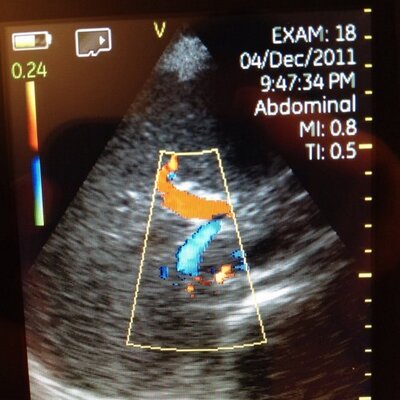
New IBCC chapter on CT scan for patients with a history of contrast allergy 😁
Some key points:
☢️ If contrasted CT is emergently necessary (e.g. stroke, trauma) just get it. Full stop.
☢️ If the contrast allergy reaction occurred before 2000 it's likely due to oudated high-osmolal contrast dye. You don't need to worry about this, just get the scan. (Canadian guidelines)
☢️ Define the severity of the prior reaction. Unless it was *severe* and resembling an allergy (e.g. anaphylaxis, vital sign abnormalities) you don't need to really worry about it.
☢️ Antihistamines *do* probably reduce the risk of mild contrast reactions (e.g., urticaria). If you want to give a dose of oral nonsedating antihistamine that's fine (eg cetirizine 10 mg PO). Antihistamines don't save lives or prevent anaphylaxis. And you don't need to give a big bomb of IV diphenhydramine.
☢️ The best available data suggests that pre-scan steroids don't prevent severe reactions. Canadian guidelines say not to give steroids. Historically the American Allergy guidelines have also recommended not giving steroid. The most recent American College of Radiology plus American Allergy consortium guidelines (below) say to "consider" steroid (figure below). That means exercise your best judgement about risks vs benefits.
☢️ If you do decide to give steroid you can give a single dose of 200 mg IV hydrocortisone or 40 mg IV methylprednisolone 4-8 hours before the CT scan. You don't need to give multiple doses of steroid. You don't need to wait a billion hours before the scan. Hydrocortisone probably makes the most pharmacokinetic sense because it's relatively short-acting and has low CNS penetration (less delirium).
☢️ Changing to a different formulation of contrast dye DOES probably help *if* you can get this done. Unfortunately patients often don't know what type of contrast dye they received previously. Also, most hospitals only have access to a couple types of contrast dye. So this works better in theory than reality.
☢️ No matter what you do there is always a nonzero risk that the patient may develop anaphylaxis after CT scan. This should be treated aggressively with epinephrine per usual. There's no way to get the patient to zero risk. Trying to get to a zero-risk situation will actually cause delays and harm.
#1/2 (link in next post)

