Linux, Vetter Software, Cloud, Veterinary healthcare, HL7 FHIR, Amazon Web Services, devops, beer maker, horticulturist, dad
Northern California, USA
Joined August 2007
- Tweets7.2K
- Following1.4K
- Followers395
- Likes7.3K



Ross Campbell III retweeted

So basically, today PHP got two critical bugs that let anyone run code on your server without even logging in, which is bad, and then the details leaked before the patch was even out, which is worse, and it works on WordPress and MediaWiki and Magento and Joomla and Laravel, and Censys says like 1.5 million servers are running a version with no fix, so the NSA was like "take your system offline," and the FBI was like "take your system offline," and CISA and the UK and CERT-EU were all like "take your system offline," and then the Prime Minister of Japan, the actual Prime Minister, posted at 5:55 in the morning telling 48.8 million people to take their system offline, so everyone took their system offline, like the Dutch cybersecurity agency took its own website offline, and the Dutch parliament went offline, and the Port of Rotterdam went offline, and Finland and France and Denmark started pulling government sites, and Wikipedia went down, and Archive.org went down, and Asana and GOG and Something Awful went down, and the University of Vienna's webmail went down for some reason, and that's just PHP. Because GitLab also dropped a CVSS 10.0, which is the highest score they give out, for a bug that's been there since 2014, so that's every self-hosted GitLab for twelve years, and then LiteLLM 1.107.0 got hijacked and shipped a credential stealer and a remote access trojan in every single wheel and the Docker images, including latest, and you didn't even have to import it, just installing it was enough, and it's the second time this year, and then Railway paused every deployment on the entire platform because someone got into the environment variables, so now everyone has to rotate every secret they've ever stored there, and TiDB Cloud said someone was walking around inside with stolen credentials for basically a month and an extortion group says they took 10.6 terabytes, and Zeabur got breached for the second time in two months and is just shutting down, like the whole company, and Node.js patched remote code execution and a TLS bypass, and CISA says Plex is being actively exploited, and someone took over 300 Tor exit relays to steal SSH passwords, and SafePay ransomware has hit over 600 critical infrastructure orgs, and India's biggest bank filed a data loss incident, and Japan has been in an official state of emergency in cyberspace since October 9, which honestly explains the 5:55 AM post. Oh, and eMudhra, a certificate authority that's issued over 60 million certificates, whose entire job is proving websites are who they say they are, was supposed to be using private keys that are random numbers over a hundred digits long, and one of them was 4. Just 4. And the others were like 66 and 237. Anyway, it's Wednesday.


Ross Campbell III retweeted

Atlassian's revenue: $1.79 billion last quarter
Atlassian's move: fire the engineer who built their infrastructure
his move: post a 38-minute breakdown of every system he built, free for anyone to copy
what he revealed:
> Envoy proxy instead of enterprise load balancers
> sidecar architecture for auth, logging, rate limits
> DynamoDB + SQS for async provisioning
> Packer + SaltStack for automated VM deployments at scale
Atlassian charges per employee across 350,000 customers
this guy just handed you the enterprise playbook for free
save this


Ross Campbell III retweeted

🚨BREAKING: Two researchers from UPenn and Boston University just published a paper that should be uncomfortable reading for every CEO automating their workforce right now.
The argument is straightforward. Every company replacing workers with AI is also eliminating its own future customers. Laid off workers stop spending. Enough of them stop spending and nobody can afford to buy anything. The companies that fired everyone end up selling into an economy with no purchasing power left.
Every executive can see this. The math is not complicated. But here is why nobody stops.
If you do not automate, your competitor does. They cut costs, lower prices, take your market share, and you collapse anyway. So every company automates knowing it is collectively destructive because the alternative is dying alone while everyone else survives. The researchers proved this is a Prisoner's Dilemma playing out in real time.
The numbers are already moving. Block cut nearly half its 10,000 employees this year. Jack Dorsey said AI made those roles unnecessary and that within the next year the majority of companies will reach the same conclusion. Salesforce replaced 4,000 customer support agents with AI. Goldman Sachs deployed a coding tool that lets one engineer do the work of five. Over 100,000 tech workers were laid off in 2025 and AI was cited as the primary driver in more than half those cases. 80% of US workers hold jobs with tasks susceptible to AI automation.
The researchers tested every proposed solution. Universal basic income does not change a single company's incentive to automate. Capital income taxes adjust profit levels but not the per-task decision to replace a human. Collective bargaining cannot hold because automating is always the dominant strategy.
They also identified what they call a Red Queen effect. Better AI does not solve the problem, it accelerates it. Every company chases faster automation to gain market share over rivals but at the end everyone has automated equally, the gains cancel out, and the only thing left is more destroyed demand.
The one thing the math says could work is a Pigouvian automation tax. A per-task charge that forces companies to account for the demand they destroy each time they replace a worker.
The conclusion is that this is not a transfer of wealth from workers to owners. Both sides lose. Workers lose income. Companies lose customers. It is a deadweight loss with no market mechanism to stop it on its own.
(Link in the comment)

A great bootstrap guide to working with Claude code. Worth your time even if you’re not a developer. AI development tools are giving people a 10x advantage.
Ross Campbell III retweeted

I was chatting with my buddy at Google, who's been a tech director there for about 20 years, about their AI adoption. Craziest convo I've had all year.
The TL;DR is that Google engineering appears to have the same AI adoption footprint as John Deere, the tractor company. Most of the industry has the same internal adoption curve: 20% agentic power users, 20% outright refusers, 60% still using Cursor or equivalent chat tool. It turns out Google has this curve too.
But why is Google so... average? How is it that a handful of companies are taking off like a spaceship, and the rest, including Google, are mired in inaction?
My buddy's observation was key here: There has been an industry-wide hiring freeze for 18+ months, during which time nobody has been moving jobs. So there are no clued-in people coming in from the outside to tell Google how far behind they are, how utterly mediocre they have become as an eng org.
He says the problem is that they can't use Claude Code because it's the enemy, and Gemini has never been good enough to capture people's workflows like Claude has, so basically agentic coding just never really took off inside Google. They're all just plodding along, completely oblivious to what's happening out there right now.
Not only is Google not able to do anything about it, they don't seem to be aware of the problem at all. I'm having major flashbacks to fifty years ago as a kid at the La Brea Tar Pits, asking, "why can't they just climb out?"
My Google friend and I had this conversation over a month ago. I didn't share it because I wanted to look around a bit, and see if it's really as bad as all that. I've been talking to people from dozens of companies since then. And yeah. It's as bad as all that.
Google is about average. Some companies at the bottom have near-zero AI adoption and can't even get budget for AI. They may have moats and high walls, but the horde is coming for them all the same.
And then there are a few companies I've met recently who are *amazingly* leaned in to AI adoption. One category-leader company just cancelled IntelliJ for a thousand engineers. That's an incredibly bold move, one of many they're making towards agentic adoption. In my opinion, that company is setting themselves up for a _huge_ W.
As for the rest, well, it's the Great Siloing. Everyone's flying blind. With nobody moving companies, no company knows where they stand on the AI adoption curve. Nobody knows how they're doing compared to everyone else.
Half of them just check a box: "We enabled {Copilot/Cursor} for everyone!" Cue smug celebrations. They think this is like getting SOC2 compliance, just a thing they turn on and now it's "solved." And they don't realize that they've done effectively nothing at all.
All because of a hiring freeze.
Ross Campbell III retweeted

This 2 hour Stanford lecture shows exactly how Stanford trains it's engineers to build AI systems. It's more practical than every Claude tutorial & prompting threads you've seen.
Bookmark & give it 2 hours, no matter what. It'll be the most productive thing you do this weekend.
Ross Campbell III retweeted

I JUST WANT TO POINT OUT THAT THE MADURO REGIME IS STILL IN CHARGE OF VENEZUELA... THE IRGC REGIME IS STILL IN CHARGE OF IRAN... AND THE EPSTEIN REGIME IS STILL IN CHARGE OF AMERICA 🤷
Ross Campbell III retweeted

One of the biggest lessons thus far in building AI agents is you have to be brutally unsentimental in your architecture.
The models get better and better at handling things you previously built scaffolding for, you need to ruthlessly jettison your prior tech to get those new performance gains.
The rough loop of building AI agents looks something like:
1. Build a bunch of systems around the LLM to ensure that the agent can solve specific tasks very well
2. The model capabilities dramatically improve, rendering many of those systems redundant or even harmful
3. Remove prior scaffolding to get the new performance gains from the agent
4. New capabilities emerge in the models that let you solve a new set of much harder problems
5. Go back to step 1
For instance, in our new Box Agent, from the moment we designed the original architecture to the ultimate release, we had to evolve multiple components of agent harness simply because some parts were creating unnecessary constraints for the agents as models improved.
The models continued to get insanely good at more complex reasoning, improvements in using search and other tools, writing code on the fly for new capabilities, improving context window performance for accuracy, and more.
Many of the mitigations we put in place for the Box Agent (like to appropriately find data that users were looking for, or ways of chunking text to deal with context window limitations), eventually meat we got lower quality results or meant we were overfitting for specific use-cases, as soon as the models got better.
The main lesson is always make sure you’re taking advantage of the frontier capabilities and don’t become nostalgic around the tech you’ve already built.
Ross Campbell III retweeted

C-SPAN caller to Rep. Pete Sessions: "Your party has given the power of the presidency to an insane, pedophelic serial killer"
Ross Campbell III retweeted

Former CIA Director John Brennan drops a massive reality check. He confirms there was absolutely ZERO intelligence of an imminent threat from Iran to justify the bombing campaign. He says the administration is lying fast and furiously to cover it up.
Ross Campbell III retweeted

The token cost to build a production feature is now lower than the meeting cost to discuss building that feature.
Let me rephrase.
It is literally cheaper to build the thing and see if it works than to have a 30 minute planning meeting about whether you should build it.
It’s wild when you think about it.
This completely inverts how you should run a software organization. The planning layer becomes the bottleneck because the building layer is essentially free. The cost of code has dropped to essentially 0.
The rational response is to eliminate planning for anything that can be tested empirically. Don’t debate whether a feature will work.
Just build it in 2 hours, measure it with a group of customers, and then decide to kill or keep it.
I saw a startup operating this way and their build velocity is up 20x. Decision quality is up because every decision is informed by a real prototype, not a slide deck and an expensive meeting.
We went from “move fast and break things” to “move fast and build everything.”
The planning industrial complex is dead.
Thank god.


Ross Campbell III retweeted

OMG!!!

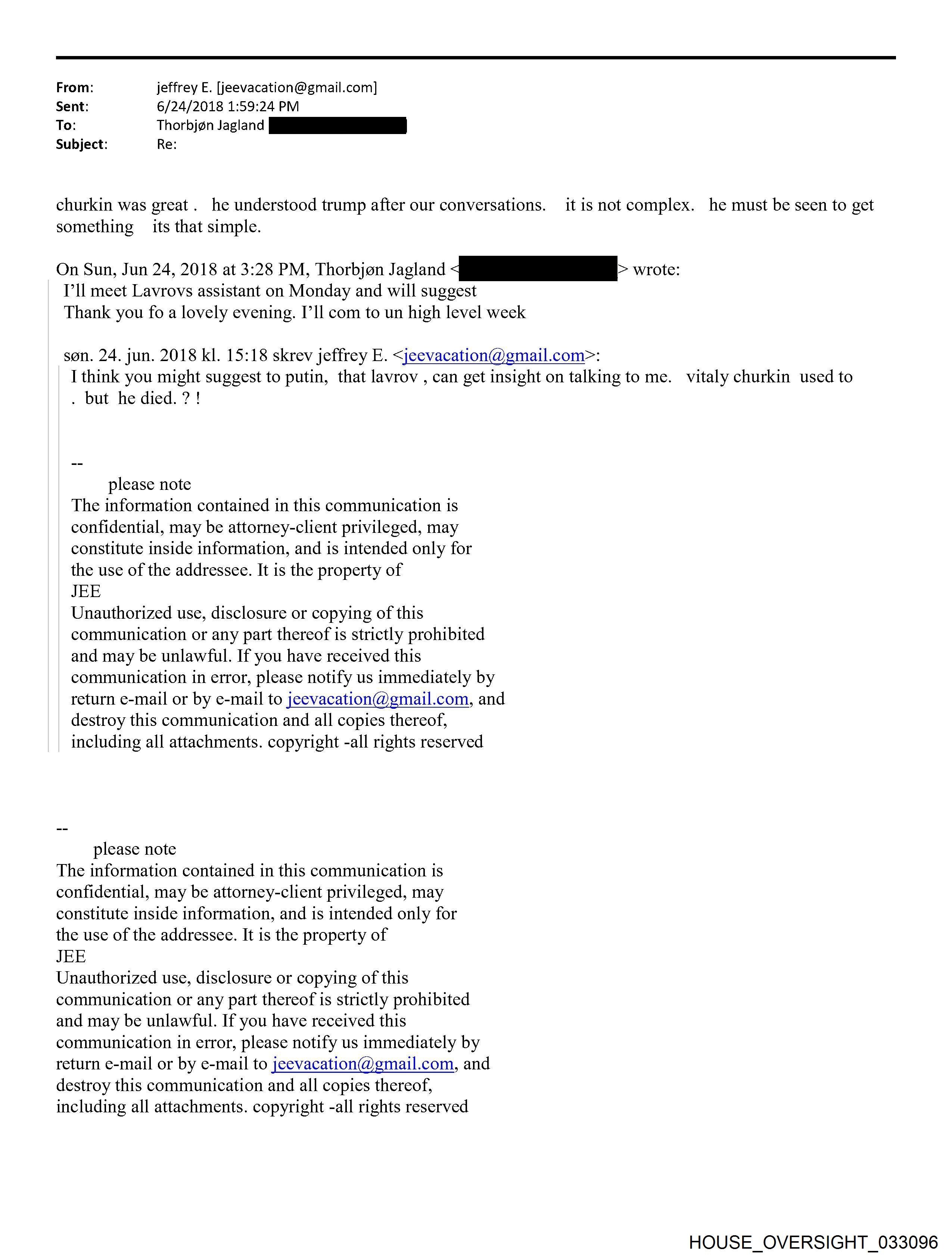
NEW: Jeffrey Epstein said in emails that he had been advising the Russian government on how to deal with Donald Trump, one of several cases in which he wielded his connections to try to influence the course of foreign affairs. w @nahaltoosi
politico.com/news/2025/11/12…
Ross Campbell III retweeted

Reading racist, bigoted, hateful comments by #CharlieKirk and correcting their inaccuracies
Ross Campbell III retweeted

I wonder how many people realize that America is now literally at war *solely* because Trump hates black people
Obama signed the Iran Nuclear Deal; Iran stopped enrichment; Trump ended the Deal to spite Obama; he was told enrichment would restart; it did
This is *Trump’s* war