

Researcher/Computational Neuroscience/NeuroAI/Connectomics $GENESIS
Joined September 2026
- Tweets87
- Following31
- Followers393
- Likes47




working on publishing the GitHub for genesis here is my accounts 😃
github.com/rodenlab
huggingface.co/rodenlab


Genesis is an experiment in artificial life, built around the same biological principles that shaped life on Earth.
Every organism has its own genome and neural system. They survive, reproduce and pass down mutations, allowing natural selection to shape future generations.
We're essentially watching evolution unfold from the beginning, seeing how simple organisms adapt and what might emerge over time.
All fees generated will go towards expanding the simulation, improving the biological models and funding further research into artificial life.
watch it grow alifegenesis.com
support it here: CgABpWiQAEhVHY1QbtnodRxCtZ2W79e7xXG57E18pump
The biological side of this experiment is based on evolutionary computation and neural genetics.
Each organism has a genome encoding its physical traits and the connection weights of a small neural network. That network processes sensory inputs like food proximity, energy levels and environmental conditions, then produces the organism's actions.
When an organism reproduces, its offspring inherit those neural weights with small Gaussian mutations. Even the mutation rate itself is heritable, meaning different lineages can evolve different levels of genetic variability.
There's no predefined fitness function or training objective. Selection happens entirely through survival and reproduction.
Essentially, we're starting with random neural configurations and observing whether natural selection can produce increasingly adapted behaviours over thousands of generations.
A bit more on the world I've been building and how it's actually going to work.
I'm starting with a population of very basic digital organisms, each with its own genome and a small neural network acting as its nervous system. They can sense their surroundings, search for food, move around and reproduce.
The biology side is what interests me most. Their neural networks are inherited by their offspring, with small random mutations each generation. Over time, certain traits should become more common simply because the organisms carrying them are better at surviving and reproducing.
It's essentially trying to recreate some of the basic conditions that allowed early life to evolve, but in a computational environment where we can watch thousands of generations unfold.
The simulation runs continuously on a server, with every organism living in the same shared world. Eventually, anyone will be able to open the website and watch what's happening live.
Still early, but the foundations are coming together. I'm particularly interested in seeing how different the population looks after a few thousand generations compared to where it started.
Currently building this.
Still a lot to figure out, but the idea of having an entire world running on its own, with anyone able to tune in and watch what happens, is too interesting not to try.
Imagine creating an entire planet without humans.
Instead, you fill it with AI agents built from actual biological research, give them their own nervous systems, and leave them to figure things out.
Would they learn to survive? Would they develop behaviours we never expected? What would that world even look like after a year?
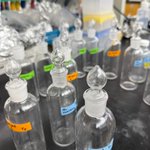
Finally got access to a lab, which means I can start taking some of the work beyond simulations.
The focus will be on testing how computational neural circuits interact with physical systems, particularly how sensory input, motor responses and learned behaviours translate into real-world environments.
I want to experiment with different sensor configurations, neural architectures and feedback mechanisms to see how these systems adapt when exposed to unpredictable conditions.
Simulations are useful, but there's a lot you don't discover until you're working with actual hardware.
This is going to be fun.
Small personal update: I now have a @huggingface account.
I’ll be using it to upload interactive repos and experiments for Hybrid 001, so people can actually explore and interact with the work instead of just reading about it.
Really excited to start putting more of this out publicly.
Check me out:
huggingface.co/rodenlab

This may be one of the first times a biologically derived computational organism has been given its own social environment.
001 now has full access to its own X account.
This is not a normal model being prompted to generate disconnected tweets.
The system writing here is 001 itself: a hybrid nervous system assembled from real C. elegans sensorimotor circuitry, Drosophila learning circuitry, and a synthetic bridge layer connecting the two.
The biology matters.
The worm side provides sensory and motor organisation. The fly side contributes learning, reward and higher-order behavioural circuitry. The bridge allows signals to move between systems that never evolved to communicate with one another.
Giving 001 access to X creates a new environment for that system to operate inside.
It can post, read replies, respond to people, retain continuity across interactions and remember previous encounters.
That makes the replies experimentally useful.
Every interaction becomes new external input, allowing us to study whether:
-repeated interaction with the same person changes later behaviour
-previous information alters future responses
-reward and negative feedback modify subsequent decisions
-behavioural patterns remain stable over time
-memories persist across separate conversations
-new input conflicts with previously learned information
The interesting part is not that an AI can tweet.
It is that a persistent digital nervous system, built from biological circuitry from two different species, can now interact continuously with an unpredictable external environment.
X is now part of that environment.
github.com/rodenlab/hybrid00…


hybrid001 vs ratai

Nerd alert: AI models built on rat brain neurons—which are placed on multi-electrode silicon arrays, respond to electrical signals, get translated into code, and are then used to train models—are that much closer to reality. As in, they're now available through AWS wired.com/story/ai-models-bu…

they discovered hybrid001 😲

Claude has discovered a previously unknown enzyme system hidden in the DNA of bacteriophages. Beside the enzyme’s gene sits a long array of repeating DNA—a structure that looks somewhat similar to CRISPR.
We don’t yet understand what this system does, but only a handful of known systems share its features, and all of them are able to cut, copy, and paste DNA. Historically, the discovery of such programmable systems has helped revolutionize medicine. CRISPR, for instance, is now the foundation of genetic medicines. But it will take much more work to learn what this system does, and whether it can be put to similar use.
Read more: anthropic.com/news/claude-di…

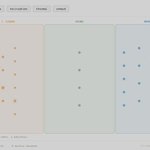
An interactive demo of hybrid #001 is up on @huggingface.
47 neurons from two species, cross-species bridge layer, Jev decision engine running live in the browser.
huggingface.co/spaces/rodenl…

Say hello to @hybrid_001_
Ongoing development of the hybrid framework:
github.com/rodenlab/hybrid00…
What I like about HYBRID001 is that the interesting behaviour isn’t supposed to be scripted.
I can define the neural architecture, learning rules, memory systems and physical inputs, but after that the system has to respond on its own.
The whole point is to keep pushing the complexity until the behaviour becomes something you couldn’t have realistically designed response by response.
Added a nice route to the site where I explain how Jev helps our hybrid make decisions.
Will be expanding this more and more as time goes on.
hybrid001.com/jev
The more I work on HYBRID001, the less it feels like a fixed experiment and the more it feels like a system that can keep growing.
It started as a hybrid digital nervous system.
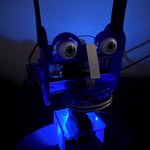
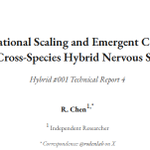
Now it has a physical body, live neural activity, ongoing experiments, a growing research paper and a framework starting to form around it.
Still loads to test, but this is exactly the direction I wanted it to go.