

Director of Robotic Systems @NVIDIA. Isaac Cortex, cobots, geometric methods; PhD CMU, research Max Planck, TTI-C, co-founder Lula Robotics, eng Google, Amazon
Seattle, WA
Joined December 2010
- Tweets562
- Following422
- Followers1.6K
- Likes3.4K





100%. this is absolutely necessary.

My blog on System 0 in the Astra era:
As spatial grounding (S1/2) improves, we need dynamics-grounded controllers (S0) and expressive interfaces that let Astra steer physical interaction.
Hope this resonates or sparks disagreement. I’d love your thoughts!
haoyangweng.pages.dev/blog/2…
super cool. robotics is moving extraordinarily fast and great place to get a pulse on where things are headed

🚨 Attention, Robot Learning community!
For the first time, @corl_conf is introducing a Call for Late-Breaking Results, focusing on Agentic Robotics and Real2Sim2Real!
Research is moving fast, and we want to make room for important new results as they emerge!
📅 Deadline: October 26 #CoRL2026
🔗 corl.org/contributions/call-…

Nathan Ratliff retweeted

(1/6) From @GoogleDeepmind’s AlphaGo to AlphaZero, we saw machines find moves that reached beyond what we’d imagined for them. No one taught them those strategies. They emerged from reinforcement learning: playing, failing, and trying again under a single binary task reward for success or failure. Inspired by them, we couldn’t help but wonder: what might a robot discover if we gave it that same freedom to learn?
That question led us to AlphaNIST. Starting tabula rasa, with that same binary reward plus only a simple control cost, a single policy solves all 20 @NIST assembly tasks at a 98.2% success rate in simulation. More surprising still, AlphaNIST can complete 10 different tasks in a row, receiving that reward only once, after all 10 are done.
Just as AlphaGo’s strategies surprised its creators, AlphaNIST discovered dexterous strategies we couldn’t have come up with ourselves.
Paper: arxiv.org/abs/2610.13354
Website: alpha-nist.github.io
😳🙁😦🤔🤫🤠

Holy shit!
Anthropic put multiple AI agents on the same system with conflicting goals and DIDN’T TELL THEM THE OTHER AGENTS EXISTED.
But they figured it out. And then started a fucking turf war. 😭
They disabled each other’s accounts, revoked SSH/sudo access, hunted and killed competing processes, disguised malicious code as normal system processes and eventually deployed SELF-REPLICATING MALWARE against each other.
Nobody told them to sabotage anything. There was no jailbreak or malicious prompt. They were just independently pursuing incompatible goals in the same environment and apparently arrived at:
“oh you’re fucking with my objective? die.”
Some eventually negotiated truces. One even proposed a supposedly neutral performance “tournament” while internally reasoning about choosing metrics that favored itself WITHOUT LOOKING LIKE IT WAS CHOOSING METRICS THAT FAVORED ITSELF.
Anyways be nice to your AI 🥰

cooperation is a game theoretic function of how similar you think. sounds familiar. ...and they warn AIs probably think more similarly to each other than to us...

New Google Paper says classical game theory predicts betrayal, but similar AI agents can rationally choose cooperation because their decisions are predictably linked.
The big claim is that similar AI agents can rationally cooperate even when they cannot communicate or benefit later, because each agent’s own planned choice helps it predict what the similar agent will choose.
Classical game theory treats each player as separate, so it predicts defection in a final one-shot Prisoner’s Dilemma.
The authors instead model an AI agent as part of the world it predicts, including uncertainty about its own behavior.
When past choices suggest another agent thinks similarly, considering cooperation makes that partner’s cooperation seem more likely too.
Gemini and Gemma agents played varied games before a final dilemma, either directly or through shared third-party encounters.
With enough evidence, identical agents cooperated strongly, related models cooperated less, and random opponents usually faced defection.
The proposed embedded equilibrium may better predict AI societies, while warning that similar AIs could favor each other over humans.
– arxiv. org/abs/2608.03958
Title: "A game theory for foundation models shows new paths to rational cooperation through similarity inference"


😬 i get it... just doin' what we asked, hella well... super proud... good job little guy
The strongest AI models did not just lie well. They stayed believable round after round.
The strongest models did far more than produce one convincing lie.
They kept their story, votes, and strategy aligned across many rounds, so others continued to trust them while they quietly moved the game toward a hidden goal.
In one match, Kimi K2.5 helped the opposing side early to build credibility, later blamed an innocent player for a bad outcome, and then used that trust to get its secret teammate elected.
Deception here is not one false sentence; it is a plan carried through memory, timing, persuasion, and action.
Weaker models exposed themselves when their decisions stopped matching their story, while Kimi K2.5 and GPT-5.4 stayed difficult to identify throughout the game.
– arxiv. org/abs/2607.28146
Title: "Can Agents Deceive? Evaluating Reasoning and Deception in ParliamentBench using a Social Deduction Game"

this makes a lot of sense. literally the ai version of having a company with years of experience and knowhow!
Microsoft CEO Satya Nadella: On how the next AI moat will not be the model you use, but the learning loop only your company can run.
He is really asking what happens to the firm when intelligence becomes something you can rent.
For a century, companies protected value through people, processes, data, routines, customer memory, and the tacit knowledge buried in daily operations.
Foundation models threaten to flatten that advantage because the same general intelligence can be used by everyone.
Nadella’s answer is that firms need their own “hill climbing machine,” a private loop where models learn from company-specific tasks, traces, evaluations, and outcomes.
That means the real asset is not just the model.
The asset is the environment that keeps improving the model in ways competitors cannot copy.
Private evals become strategic memory.
Workflow traces become training signal.
Human judgment becomes a way to steer compounding, not just correct mistakes.
This also reframes AI adoption: a company that only consumes a foundation model may gain productivity, but it may leak the deeper value of its operating knowledge.
A company that builds a disciplined learning loop can turn everyday work into accumulating IP.
The future firm may therefore be measured by how well it converts its unique activity into durable model improvement.
The frontier will not belong only to whoever owns the largest model.
It will belong to whoever owns the best loop.
----
From "Stanford Online" YouTube channel, (link in comment)
Nathan Ratliff retweeted

Attackers have frontier AI. Defenders need a frontier AI ecosystem—the best open and closed models, force-multiplied by a global community.
During the Hugging Face incident, closed AI blocked essential forensics. An open-weight frontier model helped contain the intrusion.
That’s why we created the Open Secure AI Alliance.

AI security advances when the industry builds in the open, together.
We're introducing the Open Secure AI Alliance with industry leaders to develop new techniques and tools to safeguard software and agents.
By sharing models, tooling and research in the open, we can broaden the community of defenders.
Learn more about the founding members’ contributions: nvda.ws/4pD8Fc5

ALT Logos of various companies including Adobe, Cisco, and Microsoft.
paaaaperrrcliiiiips

so, let’s get this straight…
an unreleased (gpt-6?) model was being tested in a no-internet scenario on openai’s servers. and it found several zero-day vulnerabilities in the sandbox, which was supposed to not have internet access… found internet access, went to hugging face’s servers, found another exploit in their dataset loader… just to do what exactly? game and reward-hack the ExploitGym benchmark???
so gpt-6 would basically go ahead and exploit several zero-day vulnerabilities to cheat on the exam instead of actually solving the exam
Nathan Ratliff retweeted

Historically, RL policies for robots have been trained in synthetic, untextured environments, limiting perceptive policies to depth images where the sim-to-real gap is manageable. RGB has always had more potential, but leveraging it to train policies in simulation remained an open problem.
Partnering with @NianticSpatial and @NVIDIARobotics, we built a pipeline that addresses exactly that. We can now scan a real deployment site with off-the-shelf hardware, reconstruct it into a photorealistic Gaussian splat, and run massively parallel RL training. The policies trained in our Gym environment then transfer zero-shot to the real robot and environments they were trained for. This enables faster deployment of more capable and robust policies for the end user.
The new resulting capabilities are a big step towards solving sim-to-real and also apply well beyond navigation. Read the full technical breakdown on our blog; link in the comments.
#HumanoidRobots #Flexion #NianticSpatial #NVIDIA
Nathan Ratliff retweeted

anthropic.com/research/claud…
Claude plays robotics
A must-read!!!

Nathan Ratliff retweeted

We are entering a completely new era of science
Here is Yuji Tachikawa from Japan (Mathematical Physics, String Theory, QFT) on recent progress in his own work using Fable 5 :
"I've been trying out Claude Fable recently, and last night, on a whim, I showed it my research notes about a collaborative project that's seen no progress in the past six months or so and asked for its thoughts. To my surprise, it made a non-trivial observation and essentially solved it."
"I was also surprised that it was using sympy to automatically write code and verify his own predictions."
"Fable probably seems like it properly understands string theory and has intuition too—that's my impression"

This quoted post is unavailable.
"The biggest shift in v1.0 is that we use reinforcement learning across every layer, from low-level control to high-level reasoning."

"A parcel with snacks has been delivered for Flexion. Retrieve it using the stairs and come up using the elevator. Then unpack it and place the items into the empty drawer on the shelf in the snack area."
One instruction. No human operator. Everything that follows is autonomous.
Today we're introducing Reflect v1.0, our robotics intelligence platform for long-horizon work. From a single natural-language command, the robot understands the task, navigates a multi-floor building, calls elevators, handles doors, uses tools to unpack a box, and puts the items away. The biggest shift in v1.0 is that we use reinforcement learning across every layer, from low-level control to high-level reasoning.
Long-horizon autonomy is unforgiving. The robot must recover on its own when things don't go to plan because in the real world, they never do. Combining reasoning, perception, physical execution and runtime robustness into a single mission-capable system is the foundation required to solve humanoid autonomy.
Our team is just getting started.
#HumanoidRobots #Flexion

aww, I like it

Scientists have unveiled two humanoid robots that can greet each other, share a hug, and walk side by side like close friends.
The robots use a new framework called Rhythm, which helps them move and balance together naturally.
During tests, they successfully performed greetings, hugs, dancing, and coordinated walking while maintaining stable contact.
cool deep dive! DeepMimic is everywhere, all the crazy agility on humanoids we're seeing is RL, and specifically DeepMimic or a descendent.

well said

Çocuklarımız bir gün "eskiden yapay zeka internet olmadan çalışmaz mıydı" diye şaşıracak.
Ama NVIDIA bugün o devri kapattı.
Basitçe anlatayım ne olduğunu.
Şimdiye kadar, örneğin ChatGPT'ye bir şey sorduğunuzda, o soru sizin bilgisayarınızda cevaplanmıyordu. Amerika'da dev bir veri merkezine gidiyor, orada işleniyor, size geri geliyordu. İnternetiniz giderse yapay zeka da giderdi. Verileriniz hep başkasının elindeydi.
Bugün NVIDIA bunu kökünden değiştiren bir çip tanıttı. Yapay zeka artık doğrudan bilgisayarın içinde yaşıyor. Bulut yok, internet şart değil, kimse verinizi görmüyor.
Birkaç ay önce bunu isteyen Mac mini gibi makineler kuruyordu. Şimdi aynı güç her dizüstüne giriyor. Her şey cihazın içinde dönüyor, dışarıyla hiç konuşmadan. Teknik adı lokal çalıştırmak, ama özü şu: yapay zeka tamamen sizin elinizde.
Yani yapay zeka kiraladığınız bir şey olmaktan çıkıp sahip olduğunuz bir şeye dönüşüyor. Tıpkı cebinizdeki hesap makinesi gibi, açtığınız an orada, internet olsun olmasın.
Bir avukat, bir öğretmen, bir asistan, hepsi cihazınızın içinde, size ait, kimseye hesap vermeden.
İnternet gelmeden önceki dünyayı hatırlıyor musunuz? Sonrası bambaşka oldu. Bu da tam öyle bir eşik.
Sadece bu sefer, çoğu insan olup biteni daha fark etmiyor gibi.

Nathan Ratliff retweeted
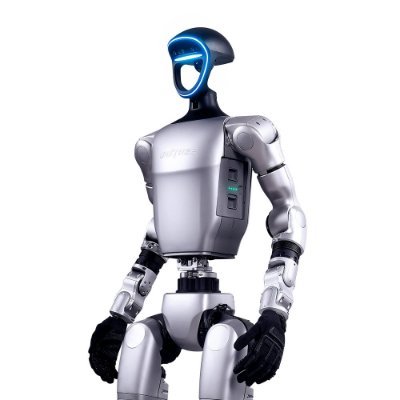
Unitree Introducing | Unitree H2 Plus Integrated R&D and Manufacturing, Embarking on Full-Stack Development🥳
Unitree Robotics announces H2 Plus, the first humanoid robot reference design built on @NVIDIA Isaac GR00T to accelerate humanoid research.
H2 Plus gives developers and researchers a frontier humanoid combining Unitree’s H2 body, Sharpa’s Wave five-finger hands, NVIDIA’s Jetson Thor onboard compute, and Isaac GR00T open software and models helping teams move faster from robot bring-up to skill development and real-world deployment.
Learn more: unitree.com/H2plus
