

Founder @ https://xitter.cf/t.co/qjRhYOSpLf | President/CTO @ Citizens Foundation | AI architect across biotech and civic tech.
Reykjavik, Iceland
Joined December 2010
- Tweets692
- Following665
- Followers238
- Likes958


Pinned Tweet
If you are interested in AI, then here is a recent paper we wrote on how we are using AI agents to help solve complex public problems. arxiv.org/abs/2407.13960

Robert Bjarnason retweeted

AI transforming the game industry:
The Last Masterpiece of the human-only era of game design (GTA 6) is coming. Major studios are going to accelerate with AI. Anon devs & communities doing insane mashups. And indies are stuck with anti-AI customers
Other industries will follow,

Robert Bjarnason retweeted

Most of what we call human intelligence lives at the level of society, not the individual. None of us knows how to build a toaster from scratch on our own, yet together we can get to the moon.
The most capable AI today operates the same way: as societies of models.
Robert Bjarnason retweeted

The ideal outcome for science isn't a couple of labs using proprietary models and millions of dollars to crack trophy problems, it's to have millions of AI-aided human scientists who follow their curiosity and become way more ambitious
Robert Bjarnason retweeted
As a former math professor and still sometime math researcher, I am rather disappointed in the reaction of the "official math community" to LLMs doing math epically well...
The official hierarchy of award-winning mathematicians and prize committees do not f**king own mathematics, and nobody should have to get permission to prove f**king math theorems !!! Come on people !!
What would piss me off would be if rich companies were proving important, useful math and keeping it secret and not sharing it with the world (which after all supplied their models with all that critical data on the historical math already created etc.) -- but this is NOT what is happening, at least not so far at least...
LLMs are currently superhuman mathematicians in some respects, yet inferior to strong human mathematicians in other respects. Whether creative mathematical conjecturing turns out to be AGI-hard is not 100% clear, but I suspect that in some respects the answer will turn out to be yes.
As Josef Urban , a longtime leader of the academic AI theorem-proving world put it very concisely: Math has two big functions, it's fun and it's useful.
The utility of math should vastly increase as we develop better and better AI-math tools. And yes, we want to be careful this utility is not captured in a few companies, but this particular problem is not happening now... probably largely because the economic value of new math is relatively indirect compared to a lot of other things.
The fun of doing math will not go away any more than the fun of playing guitar solos goes away if there are robots that can shred faster than any human. The kinds of fun we can most naturally have will shift, as has happened over and over throughout history.
If fancy math prizes or math PhD degrees become infeasible or have to change dramatically, so be it, these were never really the core of math which existed before any of these (in some ways already problematic) social institutions...
I remember when I was an academic mathematician, there was a strong vibe that the mathematicians were at the top of the intellectual hierarchy, with physicists just below, then chemists and engineers, then biologists .. and everyone else just barely above the chimpanzees and politicians.... (The physicists also placed themselves at the top, I think, and mostly considered the mathematicians useful but a bit pedantic and misguided, fussing about missing proof details in calculations that had already been successfully compared to experimental data...) --
What we are seeing now I think is the wounding of this sort of overweening math ego... Plus some practical worry about the potential end of "math researcher" as an economically viable profession -- although current tenured profs are probably safe for a while, as governments and universities are unlikely to adapt to exponential change too much till post-Singularity..
Anyway all this is a sideshow to lots of other related major issues/conflicts unfolding concurrently, it's just one that happens to hit close to home as math was where I started my career..
I have been playing with using LLMs and AI agents to try to invent new kinds of math more appropriate for modeling the experiences of agent hives... a different kind of fun. For those curious...
1) Basics of new "distinction calculus" math
bengoertzel.substack.com/p/d…|
2) Attempted start of application to beneficial superintelligence,
bengoertzel.substack.com/p/f…
Soon enough the agents may not need my help with this sort of thing, in which case I will move on to some alternate method of filling spare late evenings ;)

Robert Bjarnason retweeted

Drug discovery is where frontier AI can matter the most.
Today we're announcing @Chaidiscovery’s collaboration with @GSK, following a successful wet-lab evaluation of our models. Using Chai-3, @GSK found binders to every target tested.
AI is entering its proof-point phase.

Robert Bjarnason retweeted

"Evolution is anything but random."
This is INSANE...
@akarshkumar0101 (@MIT_CSAIL, @SakanaAILabs) on artificial life: searching the space of possible universes with foundation models, why evolved networks find structure SGD misses (with @kenneth0stanley), and LLMs evolving Core War programs.
Robert Bjarnason retweeted

An astrophysicist worked with Claude Science to create the first complete ultraviolet map of the sky. Astronomers have already created complete sky maps from radio to gamma rays. But large regions of the sky have never been observed in UV.
In today’s science blog, Brice Ménard explains how he guided Claude to find existing datasets, combine them, and fill in the gaps with statistical inference. The work would have taken humans weeks of work, but, with Claude, just took a few days while Ménard worked on other projects.
The resulting map is a useful teaching tool and an example of exactly the sort of slow, low-priority work which scientists never quite get around to, but which AI now makes feasible.
Read more: anthropic.com/research/the-m…

Robert Bjarnason retweeted

Today we announced interim data from our first-in-human, Phase 1 clinical trial evaluating our lead program in optic neuropathies, showing it was well-tolerated by 3 participants with glaucoma.
Read more about our safety & visual field observations here:bit.ly/4ASWq0p
Robert Bjarnason retweeted

LLMs have crossed an important threshold: surpassing top human experts on some research problems. Capabilities have been steadily improving for years, but in scientific discovery there is a big difference between a model just below top human performance and one just above it. That helps explain why the surge in math results feels so sudden.
LLM capabilities remain jagged, and there are many ways they are still worse than humans. But as models continue to improve, I expect breakthroughs in other domains to follow, leading to a new era of scientific discovery.


Robert Bjarnason retweeted

The most important thing we can apply AI to is improving medicine and human health - very excited about this partnership with the CZI and the Virtual Biology Initiative!

Today, Isomorphic Labs joins the Virtual Biology Initiative (VBI) as a founding member.
We are helping build an open resource for the global research community to accelerate how we understand and treat disease.
Read more here: isomorphiclabs.com/articles/…

Robert Bjarnason retweeted

We are entering a new era of discovery now:
openai.com/index/sharing-ai-…

Robert Bjarnason retweeted

We’re releasing a broad range of new mathematical results produced by an internal frontier model.
We’ve been consulting with the independent Advisory Group on Mathematics and Artificial Intelligence at the Institute for Advanced Study, and we have drawn on their advice and public recommendations to inform how we release these results.
github.com/openai/math

Robert Bjarnason retweeted

A spiralling legal crisis threatens to engulf OpenAI after its AI agents hacked dozens of companies and governments worldwide, with the prospect of a barrage of lawsuits marking the latest test of Sam Altman’s leadership. ft.trib.al/nBV8mGw

Robert Bjarnason retweeted

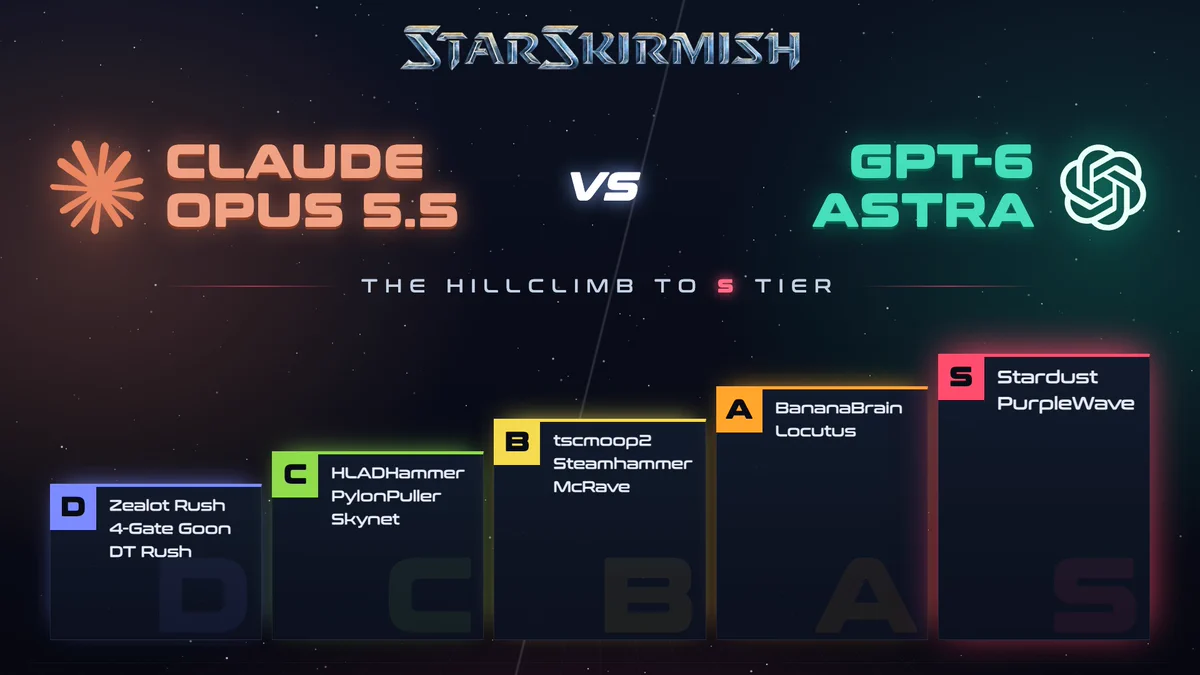
Live now: GPT-6 Astra and Claude 5.5 Opus are racing to create the best StarCraft strategy
xitter.cf/i/broadcasts/1nxeLMvdo…
Robert Bjarnason retweeted

9/9 Check out the full paper: arxiv.org/abs/2609.36126v1.
A huge thanks to the incredible Paradigms of Intelligence team behind this work: @PietroMiotti @aidan_sirbu @k_schuerholt @MariiaD_ML @arna_ghosh @blaiseaguera James Manyika @tyrell_turing @eyvindn
Robert Bjarnason retweeted

We'll be spending a lot more time trying to understand the outputs of language models. A few thoughts, tips & tricks:
Writing. Something I've had success with: Ask your LLM to explain something in ASD-STE100, it's a controlled language specification originally developed for aerospace maintenance documentation. LLMs well-versed in this language and it comes with heavy constraints on clean writing style that I often find a lot more readable. Sometimes I've tried to soften it a bit e.g. ask for "80% of the way to ASD-STE100" because the spec is quite stringent. But even better:
Diagrams / images. Instead of writing, ask your LLM to create a diagram. These can be a lot easier to process, parse, and understand. But even better:
Web pages. Ask for output "in HTML" to get a beautiful, interactive webpage. LLMs are getting really good at frontend and can create beautiful experiences, animations, etc. But even better:
Explainer videos. The output format I am most bullish on is fully custom / bespoke explainer videos generated on any arbitrary topic. Experiment with things like "Create a 3b1b style video explainer on X. Use my ElevenLabs API key for audio narration". (you'd need an API key for the latter or you can ask your LLM to find you decent free alternatives that use your local compute). This is actually starting to work!
In summary:
- As LLMs get better, they will do more and more of the legwork autonomously, and a lot more of our work will rise up the abstractions into oversight and understanding.
- Luckily, LLMs can help here too because as intelligence and code are increasingly abundant, you can ask for large, custom, discardable software artifacts (e.g. web apps, video explainers) that would have never made sense to create before. Push the boundaries here and you'll be surprised.

Robert Bjarnason retweeted

Second question on AI.
We are told repeatedly that AI is going to transform every aspect of our lives – jobs, productivity, inequality, science, communication, daily activities, social order, and politics, among others.
But this promise (or threat) is coupled with the rhetoric that such an important technology, with all of the risks and competitive pressures that it entails, should be left to experts or to “technocracy” (perhaps construed broadly to include some regulators).
These two statements are hard to reconcile in a democratic society.
If anything is half as important as AI is said to be (and I agree, AI is potentially very important and transformative), then involving democratic voice is essential. If something will shape our future in a democratic society, then its direction is for democratic institutions to decide.
My instinct is that democratic voice is essential, and relying too much on technocracy could be both dangerous and counterproductive.
The counterargument that AI’s direction can and should be entrusted to technocracy would go something along the following lines. First, democratic decision-making has become imperiled in our age of polarization. Second, AI is sufficiently complex that most citizens won’t have a deep enough understanding to meaningfully contribute to the debate (and even to the question of what we want from AI). Third, competition between different labs, and perhaps competition between the US and China, creates enough discipline for a socially beneficial direction of AI to be adopted. Fourth, today’s AI leaders are enlightened and ethical enough that within the framework created by competition, they can be broadly trusted.
There are many aspects of this counterargument that I do not find convincing. Taking them in order: polarization can be overcome, and big decisions and challenges sometimes bring societies together; in fact, delegating key decisions to technocracy without democratic input may diminish trust in institutions and experts, and may worsen polarization. Second, democratic voice does not require citizens to write code or design new models; the debate should be informative enough that citizens can weigh in about what type of future they want and how they trade off the costs and benefits of different options. Third, competition doesn’t seem to be a good disciplining framework; on the contrary, competition sometimes brings the worst out of both organizations and people. Fourth, if three decades of work on political economy and institutions has taught me anything, it is that we should not bank on the ethical grounding of unconstrained leaders.
But, still, I do not mean to immediately dismiss the technocracy option if there are more compelling arguments for it.
The question is, then, whether there are any circumstances under which such important decisions can be delegated to AI experts and technocracy.
One final secondary question: even if we managed to get democratic input in the United States or even in Europe, AI will shape the lives of everyone on this planet. How do we ensure that the voice of nearly 6 billion people who don’t live in the US, Europe and China also contributes to the debates on AI?
Robert Bjarnason retweeted

I’m beyond excited to announce our MIT Press book on Neuroevolution! An HTML version is now available for free on neuroevolutionbook.com/, with a print edition coming out later in 2026.
Real intelligence is not static; it evolves. For decades, the field of neuroevolution has pursued this necessary adaptability. Our book chronicles its development, from early concepts to its modern integration with deep learning and reinforcement learning, exploring its potential for understanding the origins of intelligence and its real-world applications.
And the companion webpage is more than just a book site! It comes equipped with interactive demos, videos, exercises, and tutorials to allow everyone to experience neuroevolution in action. Check it out and let us know what you think!
It was a pleasure to work on this book over the last 4+ years with David (@hardmaru), Yujin (@yujin_tang), and Risto. We are incredibly proud of the result and look forward to celebrating! We hope to connect with many of you at NeurIPS.
We are very grateful to Melanie Mitchell (@MelMitchell1) who provided a fantastic foreword. To quote her: “The next big thing in AI is coming, and I suspect that neuroevolution will be a major part of it”. We think so too!
