



Roberto Navarrete retweeted
Un 21 de noviembre de 1973, la URSS se negó a jugar el partido de vuelta en el Estadio Nacional de Chile, en las eliminatorias del mundial de futbol, después de que el genocida Pinochet convirtiera el estadio en un centro de tortura y exterminio.
La FIFA, aún con las gradas manchadas de sangre, se negó a anular el partido y expulsar a Chile, todo lo contrario, le dio el partido perdido a la URSS por 2-0 y otorgó la victoria al regimen criminal de Pinochet.
La imagen fue dantesca, los jugadores de Chile marcando un gol ante un rival fantasma, por mera formalidad, con un cartel que decia "la juventud y el deporte unen hoy a Chile"... una juventud que fue masacrada por las calles por el carnicero de Pinochet.
La misma mafia de la FIFA que hoy se niega a expulsar a "Israel" de sus competiciones por el genocidio en Gaza, también apoyó el golpe de estado en Chile, toda la vida siempre al servicio del blanqueo de los crímenes del fascismo y el imperialismo.
Roberto Navarrete retweeted

Today, in 1910, started the Mexican Revolution. It was led by the Mexican peasantry and agricultural workers, the oppressed indigenous and the angry outsiders. It eventually created leadership amongst people such as Pancho Villa (below) and Emiliano Zapata. They conducted the first modern peasant revolution that opened a cycle that includes the Chinese Revolution of 1911 that overthrew the Qing Dynasty, and then the revolution against the Tsarist rule that led to the October Revolution of 1917.
From Puebla today, a salute to those Mexican revolutionaries who opened a door.

Roberto Navarrete retweeted
People of the European Union, pay attention. The rule of law, that the EU supposedly stands for, is now sidelined, habitually, by EU functionaries. Without recourse to any court.
Today they sanction - that is, de-person, eight EU citizens. They closed our (DiEM25's) bank account - without an explanation or right to appeal.
Who will stop them from sanctioning you tomorrow?

By my own count, if one includes these latest sanctions, the EU has now sanctioned 8 European citizens for speech:
- 3 German citizens: Alina Lipp, Thomas Röper and Hüseyin Doğru
- 3 French citizens: Xavier Moreau, Adrien Bocquet and Sylvain Afoua (aka Egountchi Behanzin)
- 1 Lithuanian citizen: Ernest Mackevičius
- 1 Irish citizen: Chay Bowes
The sanctions include freezing these people's assets and making it a crime for anyone in the EU to pay them, hire them or even lend them a single euro.
They also include a travel ban, which leads to some absurd situations: Doğru - based in Germany - was invited by some members of the EU parliament to Brussels to plead his case but he couldn't go due to the travel ban. As one of the MEPs who invited him - and made 40 phone calls to try, unsuccessfully, to get him cleared to come - put it: "It really was like something out of a Kafka novel" (berliner-zeitung.de/article/…).
And, probably worst of all, all of this was decided without any charge, trial or court ruling - simply as a unilateral decision of government ministers. Yesterday's sanctions, for instance, were decided at the Foreign Affairs Council meeting of EU Foreign Ministers and were simply signed by Kaja Kallas alone on behalf of the Council (eur-lex.europa.eu/legal-cont…).
Put it all together, and this violates at least half a dozen of what the EU keeps saying are the fundamental values and principles it supposedly fights for:
1) Separation of powers: here we have government ministers - members of the executive branch of their countries - acting as prosecutor, judge and jury
2) Presumption of innocence (Article 48 of the EU’s own Charter of Fundamental Rights): they’re punished without guilt ever being established, and without being given a chance to plead their case before the decision
3) Right to a fair trial (Article 47): there was no trial at all, let alone a fair one
4) Freedom of expression and of the media (Article 11): they were sanctioned - explicitly so - for what they said and published. For instance, in these latest sanctions, Chay Bowes was sanctioned for, among other things, the speech crime of "participat[ing] in the spreading of anti-Western and anti-Ukraine disinformation at the UN Security Council" (eur-lex.europa.eu/legal-cont…). Sanctioned in part for a speech at the UN, a forum that exists precisely so that clashing views on international matters can be heard, quite the message to send from the EU...
5) Freedom of movement (Article 45): they're under a travel ban
6) Right to work and to property (Articles 15 and 17): their assets are frozen and nobody may employ or pay them
You can think whatever you want about these 8 people. But ask yourself this: even if you are pro-Ukraine, pro-EU, anti-Russia and you view these people as malignant Russian operatives... what is the EU fighting for here, exactly?
This is more profound than you may think: we're speaking about the very foundation of modern European civilization, built on the very idea that political power alone cannot decide what is true.
I'm not exaggerating. What we’re witnessing is a return to the pre-Enlightenment playbook, when monarchic or religious authorities defined the truth, deviations from it were called heresy, and heretics were excommunicated - cut off from the community, so that no one could trade with them, employ them or help them. In Europe's darkest times, heretics were even famously burned at the stake - like Joan of Arc or Giordano Bruno.
It took literal centuries of religious wars and debates, and the likes of Voltaire, Kant and Mill, to replace it with a basic idea: that no single power, however legitimate, gets to be the final judge of what is true, and that you answer for your words only before a court, under laws written via a process separate from the power that does the accusation.
You can find countless works of European literature on this very matter. Take Spinoza, excommunicated in 1656 by the Portuguese-Jewish community of Amsterdam, with a decree ordering that "no one should communicate with him" nor "accord him any favor". He went on to write the Theological-Political Treatise, one of the founding texts of the Enlightenment, with an entire chapter arguing that "in a free state every man may think what he likes, and say what he thinks." Or Mill, two centuries later in On Liberty, Chapter 2: "All silencing of discussion is an assumption of infallibility." Or Kafka’s The Trial, the story of a man accused by an authority nobody can quite locate, of something nobody will explain.
How is what Europe is presently doing anything other than going back to that very system, under new appellations? The authority: government ministers. The heresy: "disinformation". The excommunication: assets frozen, banned from travelling and nobody may pay them, hire them or lend them a single euro.
It’s basically Spinoza’s excommunication decree on EU letterhead, with a bit of Kafka sprinkled in given that the man invited to the European Parliament to contest his punishment couldn’t attend because of the very punishment he wanted to contest.
You don’t have to like these 8 people, or even care about them, to see the problem. Heck, this system was developed precisely for the people nobody likes: consensual ideas never needed protecting.
No, the real question here is this: do you want Europe to be the heir of Spinoza - or of Voltaire, or of Galileo, or of any of the countless Europeans who suffered or even died for thinking differently - or of their persecutors?

Roberto Navarrete retweeted

Tiene razón Iglesias de que mucha gente, incluida no poca dentro de la izquierda, no movió un dedo para ayudar a Lula en su injusto encarcelamiento. En mi caso, fui a visitarlo a la cárcel en Curitiba y me reuní con todos los compañeros que allí estaban apoyando. En los momentos difíciles es donde se demuestran las convicciones.

Roberto Navarrete retweeted

Today the authoritarian EU sanctioned me, no recourse to defend myself, no hearing, no evidence.
They want to bully me into silence, they want to deny you your God-given right to hear dissenting opinions, they want to kill freedom of speech.
Their allegations against me are utterly baseless, their insinuations are false, they are terrified of the Truth
I will fight this assault on our right to dissent with every fibre of my being, I will not be silenced, I will not take the knee for the enemies of free thought, reason and Democracy
Roberto Navarrete retweeted

By my own count, if one includes these latest sanctions, the EU has now sanctioned 8 European citizens for speech:
- 3 German citizens: Alina Lipp, Thomas Röper and Hüseyin Doğru
- 3 French citizens: Xavier Moreau, Adrien Bocquet and Sylvain Afoua (aka Egountchi Behanzin)
- 1 Lithuanian citizen: Ernest Mackevičius
- 1 Irish citizen: Chay Bowes
The sanctions include freezing these people's assets and making it a crime for anyone in the EU to pay them, hire them or even lend them a single euro.
They also include a travel ban, which leads to some absurd situations: Doğru - based in Germany - was invited by some members of the EU parliament to Brussels to plead his case but he couldn't go due to the travel ban. As one of the MEPs who invited him - and made 40 phone calls to try, unsuccessfully, to get him cleared to come - put it: "It really was like something out of a Kafka novel" (berliner-zeitung.de/article/…).
And, probably worst of all, all of this was decided without any charge, trial or court ruling - simply as a unilateral decision of government ministers. Yesterday's sanctions, for instance, were decided at the Foreign Affairs Council meeting of EU Foreign Ministers and were simply signed by Kaja Kallas alone on behalf of the Council (eur-lex.europa.eu/legal-cont…).
Put it all together, and this violates at least half a dozen of what the EU keeps saying are the fundamental values and principles it supposedly fights for:
1) Separation of powers: here we have government ministers - members of the executive branch of their countries - acting as prosecutor, judge and jury
2) Presumption of innocence (Article 48 of the EU’s own Charter of Fundamental Rights): they’re punished without guilt ever being established, and without being given a chance to plead their case before the decision
3) Right to a fair trial (Article 47): there was no trial at all, let alone a fair one
4) Freedom of expression and of the media (Article 11): they were sanctioned - explicitly so - for what they said and published. For instance, in these latest sanctions, Chay Bowes was sanctioned for, among other things, the speech crime of "participat[ing] in the spreading of anti-Western and anti-Ukraine disinformation at the UN Security Council" (eur-lex.europa.eu/legal-cont…). Sanctioned in part for a speech at the UN, a forum that exists precisely so that clashing views on international matters can be heard, quite the message to send from the EU...
5) Freedom of movement (Article 45): they're under a travel ban
6) Right to work and to property (Articles 15 and 17): their assets are frozen and nobody may employ or pay them
You can think whatever you want about these 8 people. But ask yourself this: even if you are pro-Ukraine, pro-EU, anti-Russia and you view these people as malignant Russian operatives... what is the EU fighting for here, exactly?
This is more profound than you may think: we're speaking about the very foundation of modern European civilization, built on the very idea that political power alone cannot decide what is true.
I'm not exaggerating. What we’re witnessing is a return to the pre-Enlightenment playbook, when monarchic or religious authorities defined the truth, deviations from it were called heresy, and heretics were excommunicated - cut off from the community, so that no one could trade with them, employ them or help them. In Europe's darkest times, heretics were even famously burned at the stake - like Joan of Arc or Giordano Bruno.
It took literal centuries of religious wars and debates, and the likes of Voltaire, Kant and Mill, to replace it with a basic idea: that no single power, however legitimate, gets to be the final judge of what is true, and that you answer for your words only before a court, under laws written via a process separate from the power that does the accusation.
You can find countless works of European literature on this very matter. Take Spinoza, excommunicated in 1656 by the Portuguese-Jewish community of Amsterdam, with a decree ordering that "no one should communicate with him" nor "accord him any favor". He went on to write the Theological-Political Treatise, one of the founding texts of the Enlightenment, with an entire chapter arguing that "in a free state every man may think what he likes, and say what he thinks." Or Mill, two centuries later in On Liberty, Chapter 2: "All silencing of discussion is an assumption of infallibility." Or Kafka’s The Trial, the story of a man accused by an authority nobody can quite locate, of something nobody will explain.
How is what Europe is presently doing anything other than going back to that very system, under new appellations? The authority: government ministers. The heresy: "disinformation". The excommunication: assets frozen, banned from travelling and nobody may pay them, hire them or lend them a single euro.
It’s basically Spinoza’s excommunication decree on EU letterhead, with a bit of Kafka sprinkled in given that the man invited to the European Parliament to contest his punishment couldn’t attend because of the very punishment he wanted to contest.
You don’t have to like these 8 people, or even care about them, to see the problem. Heck, this system was developed precisely for the people nobody likes: consensual ideas never needed protecting.
No, the real question here is this: do you want Europe to be the heir of Spinoza - or of Voltaire, or of Galileo, or of any of the countless Europeans who suffered or even died for thinking differently - or of their persecutors?

Roberto Navarrete retweeted

Britain cannot credibly claim that it is imposing sanctions on Israeli settlements while letting contracts continue through the back door.
This is outrageous and frankly insulting to the public. We need proper sanctions on Israel, now.
aljazeera.com/news/2026/11/1…

Roberto Navarrete retweeted
After more than 3 years of genocide, it is beyond belief that the British government has still not ended all arms sales and military cooperation with Israel.
Roberto Navarrete retweeted

This is winter in Gaza because Israel had blocked the entry of not just aid, but essentials for life.
Tents are not allowed in because the poles are considered dual use.
950k need new shelters. Hundreds of thousands are at high risk of flooding.
Palestinians in Gaza need life essentials to enter. This is collective punishment and a crime in intl law.

Roberto Navarrete retweeted

La derecha quiere acabar con las conquistas del pueblo. Pero hay que ser claros: en México hay un pueblo consciente y empoderado que las defiende. Por eso, la derecha aquí la tiene muy difícil. Por nuestra historia, por el presente y futuro… aquí no.
Roberto Navarrete retweeted

A Palestinian family from Yatta, Hebron District, 1921. What horrors and tragedies they and their descendants have had to face...

Roberto Navarrete retweeted

El otro día vino Milei a España para decir que el socialismo es fascismo.
Pero no vamos a permitir que Milei defina el socialismo.
Y si nos llaman zurdos, les diremos que estamos muy orgullosos de serlo.
Roberto Navarrete retweeted

Let's be precise about what the Epstein network actually was.
Not a "sex scandal." Not a tabloid story about a weird billionaire and his famous friends. Not a trafficking case in the sanitized, clinical language that makes it sound like a logistics problem.
It was a blackmail infrastructure for the ruling class.
Epstein didn't accumulate powerful men by accident. He accumulated them by design.
The private island. The private jet logs. The hidden cameras. The underage girls.
This was an intelligence operation.
A systematic, decades-long project to compromise the people who run governments, banks, media companies, universities, and courts.
And when he was arrested the second time, when it was finally impossible to make it disappear:
He died in federal custody.
Suicide, they said.
In a cell where the cameras malfunctioned.
With guards who had both fallen asleep.
After his previous suicide attempt had already put him on watch status.
The medical examiner hired by his brother found evidence consistent with homicide. The official medical examiner ruled it suicide.
And the name list, the full, unredacted list of everyone Epstein brought to that island and those houses and those parties, remains sealed.
Protected by the same judicial system that is supposed to protect you.
This is not a conspiracy theory.
The documents, the flight logs, the depositions, the testimony, all of it is real, much of it is public, and what it shows is a power structure that protects itself from accountability at every level.
The people on that list run your country.
They run your media.
They run your courts.
They are still running everything.
And they will call you a "conspiracy theorist" for noticing.

Roberto Navarrete retweeted

The US started a war of aggression against Iran on Feb 28th.
US-Israeli strikes have killed thousands of Iranians.
The US empire has been at war for 90+ percent of its history. NONE of its wars since WW2 have been "defense".
Words have meaning. But to US neocon war propagandists, they are merely another weapon to wield and spin in the quest for full-spectrum dominance.

Roberto Navarrete retweeted
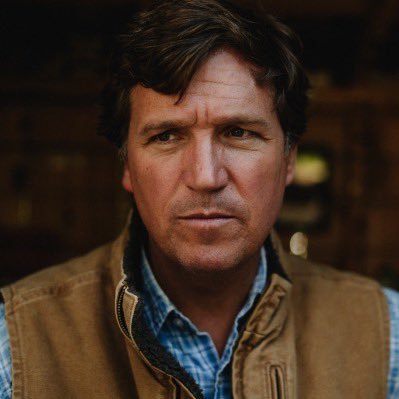
Under pressure from Israeli prime minister Benjamin Netanyahu, the Trump administration may be within days of launching a nuclear strike on Iran. The target would be Pickax Mountain in central Iran, where Israeli intelligence claims the Iranian government has restarted its nuclear enrichment program. No conventional weapon in the American arsenal can penetrate 300 feet of solid granite to destroy the tunnels where enrichment is supposedly taking place. The only military option is a nuclear strike. Netanyahu has been pushing hard for one. “Bibi calls Trump about it every day,” says an informed observer.
Netanyahu is cornered and desperate. After last week’s election results, he can’t form a government unless Trump intervenes directly in Israeli politics and brokers a deal with other parties that gives Netanyahu 61 seats in the Knesset. Otherwise, he is out as prime minister and on his way to ignominy, investigations and possibly jail. Netanyahu must stay close to Trump. He needs this war.
To that end, he’s applied maximum pressure to his closest allies in the administration, including Secretary of Defense Pete Hegseth and CENTCOM commander Brad Cooper. Both oppose a negotiated settlement to the war they’ve so grievously mismanaged; both are pushing to restart major combat operations. Secretary of State Marco Rubio and CIA director John Ratcliffe are also following Netanyahu’s lead, as are leaders of the Democratic Party. In a recent meeting on the subject, former president Barack Obama said he opposes the current Iran peace deal being drafted in Doha.
The rest of America’s longtime allies in the Middle East are terrified by the prospect of more war. On September 27th, Netanyahu flew secretly to Abu Dhabi to enlist the UAE in his lobbying effort for a final attack on Iran. The Emiratis refused. After eight months of conflict, Gulf economies are teetering. So are global energy and fertilizer markets. They won’t recover soon. Globally, there are a total of about 850 supertankers used to transport oil from producers to the rest of the world. In October alone, 11 of them were badly damaged in Hormuz. At this pace, a global depression is imminent. A nuclear strike would radically accelerate the destruction. Fallout from a ground explosion at Pickax Mountain would contaminate the Persian Gulf, poisoning the water supply for 100 million people.
And those are just some of the immediate consequences for the region. The rest of the world is every bit as exposed. No country other than the United States has ever used a nuclear weapon in war. Some would like to. An American nuclear attack on Iran would set a new precedent. The Russians have already told at least two other governments that an American nuclear strike on Iran would free them to use nuclear weapons against Ukraine. Pakistan and India would be tempted to do the same against each other, as would North Korea against Seoul. After the first nuclear strike, World War Three is inevitable. That war would be short and final.
We’ve been sleepwalking toward this moment for months. Since February, the administration has quietly rewritten America’s nuclear doctrine to make first use of so-called “battlefield nukes” easier and therefore more likely. No one in Washington in either party seems bothered by this. Now we’re on the brink of it.
Close observers say Trump is likely to decide by next weekend whether or not to use nuclear weapons. That would be November 7, six days from now. To his credit, he’s hesitating. At the moment, Trump is listening to his vice president, JD Vance, and to his envoy and friend Steve Witkoff, both of whom argue a deal with Iran can be made.
They’re right, though it won’t be simple. The Iranians are famously frustrating to negotiate with under any circumstances, and elements of that government have become more radical since Ayatollah Ali Khamenei and his family were killed in February. After decades of isolation, even relatively moderate Iranian leaders seem confused by how decisions are made in the West. (There is a widespread belief in Tehran, for example, that the United States government controls Israel.) But overall, people who have spoken to decision-makers in Iran say there is consensus there that more war is bad for everyone and a deal is worth making.
One group that hasn’t been consulted so far is the global population — the hundreds of millions of people who will be killed along with their children if Trump is pushed by Netanyahu into launching a nuclear strike next week. Now would be the time for them to speak up.
Roberto Navarrete retweeted
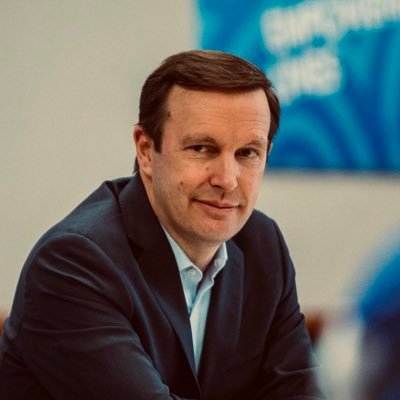
Trump is reportedly planning to restart war with Iran after the election.
Some of us have been briefed on the war plan. And while I cannot disclose any details, I can say this: the plan is insane. It will not achieve objectives and will set off a new cycle of escalation.
Roberto Navarrete retweeted

El señor Zelenski debería mirar bien estas imágenes… Es el líder de la Revolución cubana, Fidel Castro, recibiendo a miles de niños ucranianos que sufrieron exposición a radiación en el accidente de Chernobyl… fueron recibidos en Cuba y tratados integralmente durante más de 20 años sin ningún costo, como un deber humano con el pueblo soviético.
Ayer, Zelenski, en “agradecimiento” por aquel gesto, votó en la ONU a favor de que se mantenga el bloqueo cruel y genocida contra mi país… La miseria humana no tiene límites!
Roberto Navarrete retweeted
They will tell you Mao’s China was isolated and paranoid and turned inward in ways that impoverished its people.
They will not tell you that the isolation was substantially enforced from outside.
American-led embargo. Exclusion from the United Nations until 1971. Diplomatic non-recognition. The systematic attempt to strangle an economy of 600 million people because their government had been chosen without American approval.
When the isolation produced poverty, the poverty was cited as evidence of communism’s failure.
The embargo that enforced the isolation was not cited at all.
This is the same logic applied to Cuba, to Vietnam, to Iran, to the DPRK.
Impose the conditions that make development difficult.
Point to the difficulty as proof that the political system doesn’t work.
Use that proof to justify maintaining the conditions.
It is a clean loop.
It requires only that the people inside it never look at what’s producing what.
Roberto Navarrete retweeted
The most honest statement ever made about Cuba policy came from a State Department memo in 1960, written before the sanctions were fully implemented.
The memo, written by Deputy Assistant Secretary of State Lester Mallory, stated that the U.S. should pursue a policy to bring about hunger, desperation, and overthrow of the Cuban government.
Not: respond to "Cuban repression."
Not: protect Cuban human rights.
Not: promote democracy.
Hunger. Desperation. Overthrow.
This memo is declassified. It is in the historical record. It is not disputed.
It means that every subsequent year of sanctions, every subsequent citation of Cuban poverty and dysfunction as evidence of socialist failure, every subsequent American official expressing concern for the welfare of the Cuban people:
All of it happened downstream of a documented decision to deliberately produce hunger and desperation in that population.
This is not a conspiracy theory.
It is a declassified government document.
The conspiracy was the policy.
The theory was written in plain English by an American official in 1960 and has been implemented faithfully for 66 years since.
What they wanted to prove, they engineered the conditions to prove.
And then they called it evidence.

ALT U.S. Deputy Assistant Secretary of State Lester D. Mallory's secret memorandum recommended economic measures to bring about "hunger, desperation and overthrow of government" in Cuba. Declassified U.S. State Department memorandum, 6 April 1960, FRUS Document 499.