

@rmn
Account based inUnited States
About this account
- Account based in
- United States
- Connected via
- United States App Store
Account-level information from X, not a live location or the device used for a specific post.
the Mel Brooks of memory leaks. ex @stockx, @stocktwits, @roverdotcom @hedra_labs currently: production infra for robots @ https://xitter.cf/t.co/GZ1XwvurF3, @a16z @speedrun
DC and SF
Joined November 2007
- Tweets4.2K
- Following2K
- Followers1.1K
- Likes50K




MEV

Yep! A batch data processing pipeline usually has several LLM operations, and the API approach makes one call per row per operation, with each call served independently. If you know all the requests up front, you can plan the whole job, like reordering requests within an operation to share KV cache, running the most selective filter first, and reusing each document's KV cache across operations. Also beyond planning, you also want to change execution — eg if you know which requests in a batch share a prefix, you can use different attention kernels that read the shared KV from HBM once, instead of once per request

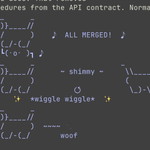
started asking the agent to draw a little Shih Tzu in the terminal when they finish working. dog means done.
tiny improvement to workflow. huge improvement to my day.

we are cookin'

Just shipped 3D reconstruction for egocentric data in Munari!
For egocentric data, scoring quality can be much harder when the camera moves with the human. Viewpoints shift, hands disappear behind objects or out of frame, and motion alone doesn't tell you whether a task was done well.
We now visualize trajectories and pathways to help teams see which demonstrations are actually useful for teaching robots.

Teaching robots to do work starts with understanding how humans do the job.
We’re launching Munari to score robotic demonstrations and help operators collect better training data.
Super fun work pushing video models into the real world, with all the infra that takes.
Introducing Munari: data and operator quality scoring for robotics.
Robotics teams need training data, but collection operations often lack a consistent measure of the quality of their demonstrations. Thousands of paid operator hours, with limited feedback on how to make the next hour better.
We’re changing that with operator and episode quality scoring. Munari lets you:
➤ Evaluate every human demonstration against your definition of good
➤ Turn those scores into actionable feedback that improves how operators collect data
➤ Measure progress across sessions and track quality fluctuations over time
This creates a feedback loop that compounds: collect, score, coach, and measure what improves. Operators learn from each session, teams refine their collection process, and the same human hours produce more usable training data.
This measurement layer is the first step toward training models for reliable deployment. Making sure data teams understand what good looks like and how to consistently produce it.
Our longer-term vision is to help teams benchmark and collect the right data for a specific job, environment, and robot. Knowing what you want to deploy can guide what you collect and how you evaluate it.
Better data collection. Better robots.
We’re already live with early partners and now opening a few more spots for pilot customers.
If you’re collecting data or deploying robots, we’d love to chat!

just shipped 3D visualization of robot trajectories, optimal paths, and historical traces in @MunariAI , making it easier to inspect teleoperation data and catch quality issues before training new policies and models
hmu if you are collecting data at scale and want to try this and our automatic data and human operator QC

policy team: collect as much data as possible
data seller: 400 hours of bad egocentric data
policy team: NO NOT LIKE THAT
ABC-130K has operator IDs on ~130k episodes. The paper uses them for style. I haven’t seen anyone ask if those operators were actually any good.
We scored kinematics on each episode. Same task, people come out all over a 0-10, and you often can’t tell watching at normal speed. Then we train on the whole pile anyway.
paper: arxiv.org/abs/2606.27375
data: huggingface.co/datasets/XDOF…

paper: arxiv.org/abs/2606.27375
data: huggingface.co/datasets/XDOF…
Every robotics company says data quality matters, but very few objectively evaluate the human operators responsible for collecting that data.
Behind every training set are a LOT of humans working to collect enough episodes. Each with different speed, smoothness, precision, hesitation, and recovery ability. All of it flows straight into the model through a single gate, pass or fail. But operator quality isn't binary, and someone had to put a score on it.
So we did.
Today we’re launching a demo of what we've been building at Munari. We score episodes on the kinematics that separate a “good” demonstration from a “bad” one, roll them up to a 0-10 score per episode and per operator, and put it in a easily queryable view to analyze findings.
Our demo looks at ABC-130K, XDOF's open bimanual teleop dataset: roughly 130,000 episodes that ship with anonymized operator IDs nobody has published a look at. The paper reports scale, task diversity, and policy results. Nothing about the people who made it.
What's interesting is how two episodes of the same task, in a clean dataset, can still sit far apart on the scale. At normal playback speed you often can't tell which is which. But when you drill in, you can uncover significant variance. And it’s clear that certain operators are better equipped at these tasks than others.
For us, kinematic quality is a starting point, not the final rubric for what makes good training data. That answer is different for every company and every policy, which is why we built our scoring to be adapted, reweighted, and validated against what data actually improves your policy.
And of course, please reach out if you want to connect or share feedback! Demo linked below.
🔥
Every robotics company says data quality matters, but very few objectively evaluate the human operators responsible for collecting that data.
Behind every training set are a LOT of humans working to collect enough episodes. Each with different speed, smoothness, precision, hesitation, and recovery ability. All of it flows straight into the model through a single gate, pass or fail. But operator quality isn't binary, and someone had to put a score on it.
So we did.
Today we’re launching a demo of what we've been building at Munari. We score episodes on the kinematics that separate a “good” demonstration from a “bad” one, roll them up to a 0-10 score per episode and per operator, and put it in a easily queryable view to analyze findings.
Our demo looks at ABC-130K, XDOF's open bimanual teleop dataset: roughly 130,000 episodes that ship with anonymized operator IDs nobody has published a look at. The paper reports scale, task diversity, and policy results. Nothing about the people who made it.
What's interesting is how two episodes of the same task, in a clean dataset, can still sit far apart on the scale. At normal playback speed you often can't tell which is which. But when you drill in, you can uncover significant variance. And it’s clear that certain operators are better equipped at these tasks than others.
For us, kinematic quality is a starting point, not the final rubric for what makes good training data. That answer is different for every company and every policy, which is why we built our scoring to be adapted, reweighted, and validated against what data actually improves your policy.
And of course, please reach out if you want to connect or share feedback! Demo linked below.
ramin retweeted

Every robotics company says data quality matters, but very few objectively evaluate the human operators responsible for collecting that data.
Behind every training set are a LOT of humans working to collect enough episodes. Each with different speed, smoothness, precision, hesitation, and recovery ability. All of it flows straight into the model through a single gate, pass or fail. But operator quality isn't binary, and someone had to put a score on it.
So we did.
Today we’re launching a demo of what we've been building at Munari. We score episodes on the kinematics that separate a “good” demonstration from a “bad” one, roll them up to a 0-10 score per episode and per operator, and put it in a easily queryable view to analyze findings.
Our demo looks at ABC-130K, XDOF's open bimanual teleop dataset: roughly 130,000 episodes that ship with anonymized operator IDs nobody has published a look at. The paper reports scale, task diversity, and policy results. Nothing about the people who made it.
What's interesting is how two episodes of the same task, in a clean dataset, can still sit far apart on the scale. At normal playback speed you often can't tell which is which. But when you drill in, you can uncover significant variance. And it’s clear that certain operators are better equipped at these tasks than others.
For us, kinematic quality is a starting point, not the final rubric for what makes good training data. That answer is different for every company and every policy, which is why we built our scoring to be adapted, reweighted, and validated against what data actually improves your policy.
And of course, please reach out if you want to connect or share feedback! Demo linked below.