

Interest in Biosciences drives me. Currently involved in the healthcare program for diabetics Highly interested in the socio-politics
Amritsar
Joined December 2013
- Tweets1.1K
- Following220
- Followers36
- Likes2.8K


Rishamdeep Singh retweeted
Lest you forget!
“An Agniveer and a regular soldier can serve in the same section, occupy the same trench, man the same weapon and face the same bullet. Yet their pay during service and their death and disability compensation are substantially different. This is difficult to defend militarily, morally or institutionally.

Take a look!
The case for Agnipath 2.0 — India needs a cheaper military, not a cheaper soldier theprint.in/opinion/the-case…

Rishamdeep Singh retweeted

Airtel is offering internet services across the country. From our experience in Jangpura New Delhi, I can safely say that they are conning people into buying high speed internet when they normally supply very low speed internet on that connection. When you make a complaint, they will speed up the internet for a short while, and then it comes back to its low speed. Their service is also very poor. Seems we will have to change our connections and service provider.
Rishamdeep Singh retweeted
Read this story of this brave young man; grieve for what has been done to our country; & on our 80th Independence Day, let us pledge to do whatever we can to reclaim our country and our Republic from the purveyors of hate

Rishamdeep Singh retweeted

from the India Cable:
Kafka in Delhi
Naseeruddin Shah and Ashok Lal
A well-known parable tells of a man who approached the Buddha and hurled a barrage of insults at him. The Buddha listened in silence, smiling gently. Frustrated by the lack of reaction, the abuser demanded to know why his vitriol had failed to provoke a response. The Buddha replied: “If I choose not to accept your gift of abuse, to whom does it belong?” The moral is clear: on an individual level, we hold the power to render an insult impotent by simply refusing to internalise it. [1]
Modi, however, is no Buddha. In his politics, a healthy dose of personal indignation and fierce rhetoric is to be expected. What is far less acceptable is his self-righteousness and moral grandstanding.
The protestors at Jantar Mantar, and across the country, are the primary casualties of this unforgiving ecosystem with Modi as the central symbol. It has deeply fractured the public psyche. As the political scientist Professor Suhas Palshikar has observed, this environment has stripped the youth of hope, rendering their aspirations seemingly meaningless. The reality has become starkly Kafkaesque; much like the faceless, unyielding bureaucracy in Franz Kafka’s The Trial, the current state machinery remains entirely disconnected from the moral realities of its citizens. The resulting lack of institutional accountability does not deter dissent or rehabilitate the public; instead, it inflicts a state of profound psychological exhaustion.
This leadership nurtures an ecosystem which operates as a well-oiled machine of institutional indignity, targeting individuals and entire communities with casual cruelty. Opponents are patronisingly dismissed with labels like ‘Pappu’, while women are subjected to deeply misogynistic public barbs—such as the infamous “50-crore girlfriend” remark or the derogatory framing of a political widow. It aggressively demonises foundational national greats like Nehru and Gandhi, while reducing the complex identities of the Muslim community to a monolith of “anti-nationals” and “terrorists,” systematically chipping away at their right to religious practice. By deliberately erasing the Mughal dynasty from history syllabi, the state seeks to deprive the country of understanding how a diverse, vast, and multi-religious empire was held together through complex institutional and cultural negotiation—while simultaneously stripping the Muslim community of its rightful sense of historical belonging and pride in the nation.
Yet, the most profound insult to the nation came from Modi himself during his official visits to China and South Korea in May 2015. He claimed that before his arrival in 2014, people “felt ashamed of being born Indian” and routinely wondered “what sin they committed in their last life to be born in India.”
What can one say about a leadership that sincerely believes that insulting its own historical greats, sections of its people, and inventing a mythological past somehow glorifies its present? It perfectly mirrors what Adlai E. Stevenson famously said of Richard Nixon: “The kind of politician who would cut down a redwood tree and then mount the stump to make a speech for conservation.”
The current regime believes that public education lies outside its political syllabus. Instead of addressing the systemic rot of recurring paper leaks, unyielding unemployment, and institutional decay, the state treats the rightful aspirations and questioning minds of Gen Z as a mere law-and-order crisis. Parliament’s recent passage of the anti-paper leak bill rests on a comforting but historically flawed assumption: that legal severity is an effective deterrent to crime. Legal deterrents were already firmly in place when these rampant leaks occurred. Given the government’s dubious track record of punishing the truly guilty, this new bill simply adds insult to structural injury.
Ultimately, a truly civilised society is defined not just by its laws, but by its linguistic environment. In the classical tradition of Hindostani tehzeeb, language was a shield of dignity; even insults were delivered elegantly, avoiding humiliation. Within that organic social fabric, common swear words are frequently tossed around without malice, serving ironically as informal badges of endearment and shared intimacy. The current political ecosystem, however, has perverted this dynamic. It weaponises formal language to systematically strip citizens of their dignity, while feigning polite outrage at any retort.
When today’s students lash out, their raw, unpolished words are not an exercise in vulgarity; they are the desperate vocabulary of the dispossessed. It is the language of profound anguish and structural helplessness, spoken by a generation trapped in a Kafkaesque trial. By mistaking their exhaustion for defiance and their cries for sedition, the state does not protect decorum—it merely exposes its own profound moral vacuum. By treating every independent thinker as a traitor and every institutional failure as a foreign conspiracy, the ecosystem may succeed in silencing the room—but it will mistake that heavy, terrified silence for peace. True strength does not lie in a sovereign who demands total submission while crying foul at the first sign of critique. It lies in a system confident enough to listen, secure enough to accept its flaws, and wise enough to know that a nation is built by empowering its citizens, not by insulting them.
Naseeruddin Shah is an actor and Ashok Lal an author and playwright.
Rishamdeep Singh retweeted

I did not to go to the Supreme Court today to hear its order in the SIR case.
As a litigant in this case, and as someone who was given the honour of addressing the court, I should have been hopeful, anxious, or at least curious. I was not. The case was decided long ago. We were only waiting for the transcript and its fine print.
The course of this case was settled in August last year. Having heard arguments against SIR for three days, the court moved away from examining the constitutionality of SIR and effectively converted itself into a Consumer Forum, focused on grievance redressal and arbitration, rather than constitutional principles.
The case was effectively decided when the apex court allowed the ECI to rush through the Bihar elections without first deciding the matter, and without requiring the ECI to rectify even the most glaring defects in post-SIR rolls.
There was little left of this case once the ECI proceeded with the second and then the third phase of SIR, while the Hon’ble Court leisurely heard arguments about its constitutionality. SIR had become a fait accompli. Any remaining doubt disappeared when the Hon’ble judges observed in open court that no one would be allowed to obstruct SIR.
The final nail in the coffin of this petition was hammered during the hearing of another petition before the same Bench, when an Hon’ble judge remarked that millions denied their right to vote need not fret, since they could vote in the next election. At that moment, the court abdicated its constitutional responsibility.
Shorn of legalese, the simple truth is that the highest court of a constitutional democracy has already authorised the disenfranchisement of millions of citizens — at least 59 million so far, could go up eventually to 100 million.
It was inconceivable that the court would now declare SIR unconstitutional and annul all post-SIR elections. The lawyers were waiting for the the exact legal reasoning deployed to arrive at a conclusion that was already known. Such legal gymnastics did not interest me. Some friends were looking for some crumbs in the hope that the court might at least wish to save face, if not save the voters. Eventually that too did not happen. Polite noises apart, the Court has handed over a carteblac to the ECI to do what it pleases with the voters list.
ADR vs Union of India (2026) is to our times what ADM Jabalpur vs Shivkant
Shukla (1976) was to the previous assault on our democracy. We must hope that the SIR judgment does not mark the crumbling of the last constitutional wall, as ADM Jabalpur once did. We must believe that one day this constitutional abdication by the guardian of the Constitution will be recognised for what it was. And reversed.
Jai Hind!
Rishamdeep Singh retweeted

On 6 February 2026, a search for “India” in the #EpsteinFiles on the U.S. Department of Justice website returned 484 pages of results. Each page contained 10 documents. We know this because a dedicated team was sifting through files on each page and systematically cataloguing documents of interest from each page number.
Today, if you repeat the process, only 478 pages will show up. This means 6 pages, roughly 60 files, have disappeared from the search results.
The only development that took place in-between is the one-sided, pro-U.S. trade deal.
So the obvious question is unavoidable:
Was an anti-India trade deal the price paid to make scandalous material disappear?
Did the government trade away India’s interests just to rescue its rapidly collapsing reputation?
And notice something else - the BJP, usually unnecessarily loud, has gone eerily silent on the Epstein disclosures. What is the party trying to hide behind that wall of silence?
Rishamdeep Singh retweeted

I usually avoid targeting celebrities because they’re easy prey, and it’s better to focus on real accountability.
But when the same bunch starts heaping praises on RSS - an organisation that fuels hatred in my country and divides our people then your conspicuous silence on some glaring issues will be called out.
• Why do you stay silent when people are lynched for how they look or what they eat?
• Why do you never say a word when young girls are raped and their criminals are shielded by power?
• Why do you stay silent when bigotry and hatred are endorsed by those in highest offices?
• Why do you not speak when farmers are crushed?
• Why do yo not speak when Manipur burns with violence and women are subjected to unimaginable torture?
• Why are you silent when convicts in the Bilkis Bano case are garlanded and celebrated?
• What happened to all your sharp jokes on inflation and price of petrol?
• Why are none of you bothered by the relentlessly falling Rupee?
• Why don’t you speak on deaths by contaminated water?
• Why does choking pollution never bother you?
• Why do you not get angry when young men die by falling in open ditches due to criminal negligence?
• Actually why don’t you ever speak up even when one of your own is vilified?
If you can’t speak up on issues that truly matter - at least don’t glorify those who enable and benefit from this suffering.
Silence in the face of injustice is a choice, but amplifying hate is NOT.
Rishamdeep Singh retweeted

I call upon all readers to widely share this cartoon. “I want this government to be criticised. Criticism makes democracy stronger”, @narendramodi once claimed. But this cartoon in The Wire by ‘56 Productions’ has obviously unnerved the Dear Leader because he got @AshwiniVaishnaw to order its blocking on Instagram, where it had gone viral!
So please share, download and circulate in your groups and lists.
Under the IT law, the government has to inform a publisher in advance, except in the case of an emergency. The fact that The Wire was never informed means laughter and satire have become an Emergency matter for Modi.

Rishamdeep Singh retweeted
A brave bench of the SC had imposed timelines to ensure that Governors do not sit indefinitely on Bills passed by States. Stooge governors were doing it to stall State legislation which the Modi govt didn’t like.
Today, a CB of the SC overturned that & said that no timelines can be imposed & there cannot be a deemed assent to a bill. A very retrograde judgement for our Federal democracy.
In fact, the SC should have enforced the timelines for the govt to respond to SC collegium recommendations for judicial appointments, & should have ordered deemed assent. This laxity on the part of the SC is allowing the govt to destroy the independence of the judiciary.
Rishamdeep Singh retweeted
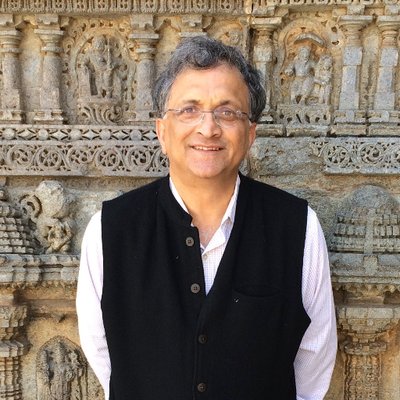
Professor Francesca Orsini is a great scholar of Indian literature, whose work has richly illuminated our understanding of our own cultural heritage. To deport her without reason is the mark of a government that is insecure, paranoid, and even stupid.
thewire.in/rights/globally-r…

Rishamdeep Singh retweeted

First of all, PF should be made optional for all salaried employees who choose the New Tax Regime. PF is a dead investment. There are far better and more flexible investment opportunities outside this outdated scheme.
It’s absurd that companies still forcefully deduct 12% of basic pay as employee PF and another 12% as employer contribution, locking away 24% of basic pay in an account that barely grows. And all this, without any tax benefit under the new regime.
This is nothing short of daylight robbery on salaried employees. The government must step up and allow complete exemption from PF contributions for anyone opting for the New Tax Regime. Let people decide how to invest their own money, not some outdated system stuck in the 1980s.
@officialepfo @narendramodi
Rishamdeep Singh retweeted

New EPFO rules introduced by the @narendramodi government in the name of “simplification” are nothing short of looting the hard-earned money of the salaried middle class.
— 25% of the contributor’s amount cannot be withdrawn and will remain locked until retirement.
— The period for availing premature final EPF pension withdrawal has been increased to 36 months, up from 2 months earlier.
— For any partial withdrawal, the waiting period has been extended to 1 year, instead of 2 months earlier.
The Modi government should immediately roll back these rules!
Rishamdeep Singh retweeted

Who buys cheap Russian oil?
➡️ Ambani
Who makes massive profit exporting it?
➡️ Ambani
Who gets hit with 25% US tariff?
➡️ People of India
Who’s mixing 20% ethanol into fuel?
➡️ Gadkari
Who’s benefitting from it?
➡️ Gadkari & Sons™
Who’s losing because of it?
➡️ People of India
Why are fuel prices still high despite ethanol & cheap Russian oil?
➡️ You’re anti-national for asking
Who’s under DOJ probe in the US?
➡️ Adani
Why doesn’t Modi utter a word about Trump?
➡️ Because… DOJ probe
Who do Modi & BJP blame for all of this?
➡️ Nehru & Rahul Gandhi
Rishamdeep Singh retweeted

Before 2014,
Amitabh Bacchan used to tweet against Price Hikes
Ajay Devgan used to tweet against Price Hikes
Baba Ramdev used to tweet against Price Hikes
Sri Sri used to tweet against Price Hikes
Several celebrities used to fearlessly tweet against Price Hikes
Now they are all silent because the government is violent.
Rishamdeep Singh retweeted

When used correctly, Google is the most powerful tool on Earth.
But let’s face it—most people don’t know how to make the most of it.
Here are 7 Googling tips you never knew: ⤵️

Rishamdeep Singh retweeted

In 1917, Russia was collapsing. The Tsar had abdicated, World War I was bleeding the country dry, and revolution was in the air.
Then, suddenly, Vladimir Lenin—Russia’s most radical revolutionary—returned from exile.
How? Germany smuggled him back... (bookmark this):

Rishamdeep Singh retweeted
Lok Sabha
Speaker took us back 49years reminding us about the Emergency
Forgot about the present :
An undeclared Emergency
Far more:
toxic
vicious
where almost all Institutions are in
ICU
At least learn from history!
Rishamdeep Singh retweeted

#Archives | Instead of acquiring land directly from its owners, the Ram Janmabhoomi Teerth Kshetra went through several intermediaries, who would first purchase the land at the market price and then immediately sell it to the trust at an exorbitant markup.
caravanmagazine.in/religion/…

Rishamdeep Singh retweeted

Mr @narendramodi since you are in my city today, care to tell us all why you have MOCKED PARLIAMENT AND TURNED IT INTO A DEEP DARK CHAMBER 👎🏻

Rishamdeep Singh retweeted

For 40 years, Amit Shah has been at Narendra Modi’s side – his confidant, consigliere and enforcer.
Today he is India’s second-most powerful man, and he is reshaping the country in radical ways theguardian.com/world/articl…
