
Research Lead @Databricks. Previously @Meta GenAI, Google Brain @GoogleAI, @MSFTResearch, @MIT_CSAIL @IITKgp
Mountain View, CA
Joined June 2009
- Tweets132
- Following107
- Followers1.1K
- Likes192


Pinned Tweet
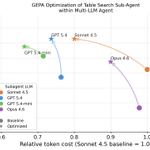
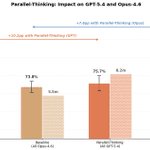
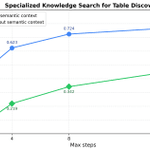
Super excited to share some of our research on making Genie the best data agent. Data Agents open up a new research frontier for solving complex, real-world enterprise challenges. I was recently discussing with a colleague whether there are still interesting research challenges for Coding agents, and while I believe there are still many challenges there (a topic for another day!), I wanted to highlight some of the unique research challenges for Data Agents and how we tackle them to get up to 3x accuracy improvements on top of coding agents!
databricks.com/blog/pushing-…

Rishabh Singh retweeted

Databricks is investing in New York for the long haul. Very excited to continue growing our AI research lab in NYC, now one of the largest in the city!

New York is becoming one of Databricks’ biggest AI hubs. 🗽
We’re expanding at 5 Bryant Park to ~120,000 square feet across five floors, including a dedicated Engineering and Research floor.
With teams building technologies behind Genie, Unity Gateway and CustomerLake, our momentum in NYC is only growing.
Rishabh Singh retweeted

Over the course of the past year, my research team at @databricks has completely shifted from manually running every experiment to having a swarm of agents run experiments for us. As a result, the training workloads of my research team have skyrocketed and continue to rise.
Fortunately, we have a very scalable GPU infra named AIR. Through AIR, our agents can easily provision GPU endpoints for training models of various sizes (<1B to 1T+) and monitor their status.
The agent swarm + AIR give us an infinite amount of execution power, so our focus has shifted towards defining crystal-clear goals and reviewing the outcomes. Our models come out more quickly, the quality goes up, the speed increases, and new products also get launched more quickly…
AIR is now available for all @databricks customers to use. We dogfood our own product first ;) Now you should be able to unleash your AI research team with infinite execution power as well.


Rishabh Singh retweeted

Introducing Muse Wonder, our new family of frontier models with state of the art performance for personal and professional agentic work.

Rishabh Singh retweeted

All seven Databricks co-founders began our journey together at UC Berkeley. We started the company in a room in Soda Hall, moved to a small office on Addison Street, and spent our first few years in Berkeley before eventually heading to SF. Two of our co-founders are still on the faculty.
Today we announced Databricks Field at California Memorial Stadium, our first collegiate athletics sponsorship.
Berkeley shaped everything about how this company thinks, and this is our way of investing in the next generation of students and builders who'll do their best work on that campus.
Go Bears!
databricks.com/company/newsr…

Rishabh Singh retweeted

Today we rolled out Astra to every engineer at Databricks (N=~3500). Some notes that may be helpful to others:
1. Astra unambiguously out performs our previous highest-end models (Opus 5, Sol 5.6) on highly complex tasks, especially those related to high level system design or long range horizontal tasks.
2. Engineers given Astra increased overall coding spend by around 60% compared to baseline.
3. It is not clear Astra meaningfully improves on medium/low complexity coding tasks compared to earlier models. We suspect those tasks are mostly saturated (i.e. perfectly executed) by existing models.
4. We learned above by piloting Astra with around 200 users to gain signal on both quality and cost. We use Unity Gateway to do cohort-based experiments for all new models.
5. We give engineers a sub-budget specific to Astra to encourage them to use Astra selectively on complex tasks while preferring lower cost models for everyday tasks. Our engineers are able to mix-and-match tools and models within their overall budget envelope (we also allow for increased budgets through various mechanisms). These budgets are defined in Unity Gateway and regularly revisited.
Note: We do not have robust comparisons of Astra-vs-Fable because we have net yet rolled out Fable widely due to data retention policies.
Rishabh Singh retweeted
We evaluated GPT 6 Astra at @databricks and it claims the new SOTA on our OfficeQA Pro & Pro V2 benchmarks, using our Genie harness. It also improves significantly from gpt 5.6 sol on the $ per task. Throughout our benchmarks, it shows a clear step up on data reasoning and document understanding for enterprises.
It also has become my daily driver on @omnigent_ai. It is a great model to collaborate with and get things done reliably.
Congrats to @OpenAI. The model will come to our Unity Gateway and smart routing soon!

Rishabh Singh retweeted

Claude Fable 5.1, @AnthropicAI's most capable model, is available as a day 0 release on Databricks!
Claude Fable 5.1 joins Claude Opus 5, Claude Sonnet 5, and 30+ open-source and frontier models on Databricks.
With Unity Gateway, you can now connect Claude Fable 5.1 to your coding agents and get smart routing, centralized cost controls, and observability in a single pane of glass: docs.databricks.com/aws/en/r…
Rishabh Singh retweeted
Databricks Co-Founder and CEO @alighodsi has been named to the 2026 TIME100 AI list!
TIME highlights Ali in their AI leaders category saying, “as AI agents change how organizations work, Databricks is giving those agents access to secure, governed enterprise data on which to operate."
Congratulations to Ali and all of this year’s #TIME100AI honorees!
View the full list: time.com/collection/time100-…


Rishabh Singh retweeted
We are excited to share @databricks 's new AI Extract achieves the new frontier at complex document processing tasks! It addresses a few key customers' pain points:
- Process documents with 500+ pages that exceeds 1M tokens
- Large, nested schema with 1k+ of objects
- Complex schema that requires frontier reasoning
Here is how we achieved it:
- In-house custom model for document extraction that is trained for complex real-world examples and optimized for serving large volume of workloads
- Custom agent harness that is designed for long document extraction. It decomposes large extraction jobs, executes smaller tasks in parallel, and reconciles them into one final structured output.
This is the methodology behind many of our work: identify key large workloads of enterprise customers, build in-house models + harness to address it, and ship to the customers through a close collaboration between the research + product!

Rishabh Singh retweeted

This was a super cool event at Data + AI Summit, probably the first live competition for AI researchers and agents! Check out the video and congrats to the winning teams from Stanford, UMass Amherst and Yale! m.youtube.com/watch?v=MNkmRt…
Blog on winning ideas: databricks.com/blog/evaluati…

Rishabh Singh retweeted

Introducing GLM-5.3: Built to Code. Ready for Cyber Defense.
- Top-tier coding and agentic capabilities, achieved through post-training on the 743B base model
- A major leap in cybersecurity, setting a new standard among open models
Tech Blog: z.ai/blog/glm-5.3

Accurate and comprehensive enterprise knowledge context is key to what make an AI agent truly useful for enterprise tasks. We have been supercharging Genie with more and more automated context curation with Genie Ontology, and are seeing excellent results. databricks.com/blog/pushing-…

I got this question so many times today. "How can you grow 80% at $7B?"
The true answer is that we're finally seeing a breakthrough with AI agents starting to work in the enterprise.
The AIs have been super smart for a while, but have lacked basic context that's in people's heads, or in some SaaS system-or-record. A lot of organizations are deploying FDEs to capture this context, or Ontology, and feed it to the AI. This is labor intensive and expensive. We just automated that with Genie Ontology.
Once you have that enterprise context graph, an AI agent like Genie becomes magical. I find myself no longer waiting for answers from my CRO, CFO, CMO, CHRO etc, I just keep queuing up questions on the phone while sitting in meetings. It'd frankly addictive.
Our customers are starting to do the same, over 70% of all queries on the platform are now generated by Genie agents. This fuels more questions to the platform, which drives consumption, which drives revenue. That's the simple answer.
Rishabh Singh retweeted
Smart Routing is now available in Unity AI Gateway on @databricks to improve coding agent quality and cost! Read how we built it to make it task-aware and preserve good cache hit rates. With so many frontier models coming out every week, this can really improve both cost and quality.
Introducing Smart Routing in Unity AI Gateway.
Stop overpaying for AI. Smart Routing matches each coding task to the right model and harness based on what the task needs, so higher-cost models can differentiate on intelligence while lower-cost models differentiate on cost and performance.
Match frontier quality and cut task costs by 30%+.
databricks.com/blog/smart-ro…
Rishabh Singh retweeted

Grok 4.6 reaches #1 on @databricks

We worked with @spacexai to evaluate Grok 4.6 on the latest OfficeQA Pro V2 from @DbrxMosaicAI. It achieves the SOTA performance with @databricks's Genie harness!
The model is strongest on our document understanding and data reasoning tasks, and it is a very efficient driver!


Rishabh Singh retweeted
We worked with @spacexai to evaluate Grok 4.6 on the latest OfficeQA Pro V2 from @DbrxMosaicAI. It achieves the SOTA performance with @databricks's Genie harness!
The model is strongest on our document understanding and data reasoning tasks, and it is a very efficient driver!
Rishabh Singh retweeted
Excited to share that we've acquired ElectricSQL, the team behind PGlite. Agents need super fast Postgres and this team built an amazing WASM (WebAssembly) implementation of postgres that runs in your browser, but can sync back with Postgres instances asynchronously. Exactly what blazing fast AI agents today need. Excited to supercharge our 𝐋𝐚𝐤𝐞𝐛𝐚𝐬𝐞 𝐏𝐨𝐬𝐭𝐠𝐫𝐞𝐬 offering with these capabilities.
databricks.com/blog/electric…

Rishabh Singh retweeted
The latest testing from our research team found that data agents can improve accuracy and lower cost at the same time.
We evaluated Genie Code against three leading general-purpose coding agents on 401 tasks distilled from real internal usage. Each agent used their own harness, the latest models from leading frontier labs, Databricks MCP, and had the same 20-minute task budget.
Genie Code was both the most accurate agent we tested and the cheapest, delivering a correct answer at less than half the cost of other agents. Genie Code achieved the highest accuracy at 76.6%, and the lowest mean cost at $0.55 per task.
The advantage came from context. Semantic search, persistent memory, and workspace understanding helped Genie Code avoid the inefficient exploration that drove more errors, timeouts, and higher costs for general coding agents. databricks.com/blog/why-fron…

Rishabh Singh retweeted
Full post here:
databricks.com/blog/managing…

Rishabh Singh retweeted
My cofounder Patrick talked to top tech companies about how they control their AI spend and summarized his findings. Highly recommended reading.

Today @databricks we're publishing a detailed analysis of techniques we used to drastically reduce our internal AI spend while aggressively growing adoption. Savings come from layering in several techniques, which combine to drive unit costs down as much as 90% in some scenarios. Tl;dr, the wins come from:
1. Shifting defaults to more efficient models, including OSS models such as GLM. Maximum intelligence models simply aren't needed for many coding tasks, and "good enough" models are quickly becoming very cheap. We shift traffic between models using Unity AI Gateway. Approximate savings: 50% or more.
2. Using smart routing to automate model selection. Routing can further squeeze efficiency by dynamically selecting the model or harness that can most efficiently execute a particular task. Our task-level routing leverages @omnigent_ai. Approximate savings: 30%.
3. Providing user visibility and adaptive budgeting. Every user can see how much they spend, and users receive hints on how to contain spend. Heavy spenders encounter progressive friction as they ratchet spend above certain levels. Approximate savings: 10%.
4. Managing context bloat by pruning tool call results and tuning harness settings. Extraneous context costs $$ and delivers no value. Tuning cache settings also help lower average token costs. Approximate savings: 10%.

A comprehensive article on how we are managing AI Coding costs at Databricks! Very excited about the research directions on of using meta-harness and smarter routing across both harness/models and managing caching effectively for best performance and cost.
Today @databricks we're publishing a detailed analysis of techniques we used to drastically reduce our internal AI spend while aggressively growing adoption. Savings come from layering in several techniques, which combine to drive unit costs down as much as 90% in some scenarios. Tl;dr, the wins come from:
1. Shifting defaults to more efficient models, including OSS models such as GLM. Maximum intelligence models simply aren't needed for many coding tasks, and "good enough" models are quickly becoming very cheap. We shift traffic between models using Unity AI Gateway. Approximate savings: 50% or more.
2. Using smart routing to automate model selection. Routing can further squeeze efficiency by dynamically selecting the model or harness that can most efficiently execute a particular task. Our task-level routing leverages @omnigent_ai. Approximate savings: 30%.
3. Providing user visibility and adaptive budgeting. Every user can see how much they spend, and users receive hints on how to contain spend. Heavy spenders encounter progressive friction as they ratchet spend above certain levels. Approximate savings: 10%.
4. Managing context bloat by pruning tool call results and tuning harness settings. Extraneous context costs $$ and delivers no value. Tuning cache settings also help lower average token costs. Approximate savings: 10%.