

Arcana | Idio, crowding, risk, & performance
New York, NY
Joined November 2021
- Tweets620
- Following870
- Followers13.6K
- Likes204







Rich Falk-Wallace retweeted


We asked 25 top VCs:
If you could invest in any venture fund started in the last 5 years, what would it be?
There was one resounding answer @conviction

Rich Falk-Wallace retweeted

Where Institutional Dollars Are Actually Headed
Rich Falk-Wallace (Arcana) breaks down the biggest structural shift in where institutional capital is headed – beta-one and beta-zero products – and why SMAs are exploding as the vehicle of choice.
Full episode: @richfalkwallace (CEO of @ArcanaAnalytics ) on building investment infrastructure, product philosophy, and where AI actually fits in: xitter.cf/PitchThePM/status/2098…
#PitchThePM #HedgeFunds #AssetAllocation #SMA #WallStreet

Why Stanley Druckenmiller Seeded Rich to Build the Next Bloomberg! | Rich Falk-Wallace, Arcana CEO
In 2019, Ken Griffin, the Founder & CEO of Citadel was looking for the best risk takers on the street. He landed on one of Viking’s top Analyst’s Rich Falk-Wallace to be a PM at Citadel’s Surveyor Capital.
So what’s next after being a PM at Citadel at 29?
For the past 5 years Rich has been building Arcana, for the world’s top hedge funds and asset managers to make smarter decisions, faster. His goal, like Steve Jobs, is to delight his customers.
In the episode, we dig into the secular growth of beta zero products, the rise of separately managed accounts (SMA’s) and alpha capture, and how human investment signals can complement quantitative systems.
“How did you convince Stanley Drunkenmiller to be your seed investor?”
“The problem of portfolio construction is way closer to solved than that last mile of, ‘What’s a good idea?’”
“the allocation of dollars in public markets is headed towards beta one or beta zero products.”
“SMA type products are growing massively in every direction. And that comes from both allocators of every kind, sovereign wealth funds, endowments,”
We cover:
● Rich’s passion for building technology with a Steve Jobs-esque customer first mentality
● Why industry experience can give fintech founders an edge
● Why great financial technology is won in the details, with products that feel intuitive and delightful to use.
● The shift toward beta-one and beta-zero products and the growth of separately managed accounts.
● How Arcana helps managers and allocators analyze risk, attribution and repeatability while simplifying portfolio analysis.
● The role of mock portfolios, conviction tracking and alpha capture in evaluating analysts and turning signals into portfolios.
● How Arcana uses AI in development and its products while staying customer-first about where AI belongs.
Highlights:
(0:27) Rich’s journey from distressed credit and public equities into financial technology
(2:20) Why timing, experience and energy pushed him to make the entrepreneurial leap
(4:07) Why domain expertise helps — but nobody has a “right to win”
(8:43) What it takes to earn backing and why product obsession matters
(11:07) Arcana’s “platform maximalist” approach to software, APIs, MCPs, Excel and LLMs
(14:35) “If you think something is easy, it’s because you’re the buyer”
(17:11) Why founders need to forget how hard something is and focus on the customer experience
(19:56) Learning to love the incremental process of building
(22:38) Finding product-market fit and the shift toward beta-one and beta-zero products
(26:52) Why separately managed accounts are growing explosively
(28:11) What an SMA is and how it differs from a commingled fund
(31:03) How Arcana helps allocators analyze risk, performance and repeatability
(34:20) Mock portfolios, analyst tracking and creating better feedback loops for investment talent
(40:58) Alpha capture and turning human conviction signals into systematic portfolios
(45:45) How Arcana uses AI internally to build software
(47:32) Measuring the ROI of AI and token spending
(49:58) MCPs, on-platform AI and giving different investors different ways to access the same insights
(54:51) Is Arcana a software company or a data company? Why Rich sees it as both
(59:17) Rich’s philosophy of delighting customers and continually improving the product
💡 This episode is powered by @Fiscal_ai - Delivering Modern Financial Data Infrastructure
Pitch The PM Links: 📩 Subscribe to our Substack for research updates and new high-conviction episodes from top PMs, and our Job Board: pitchthepm.substack.com/
Doug Garber on LinkedIn for daily market color: linkedin.com/in/doug-garber-…
Rich Falk-Wallace links: Rich Falk-Wallace on LinkedIn: linkedin.com/in/rich-falk-wa…
Arcana: arcana.io/
Rich Falk-Wallace retweeted

I made a list of great startups to join. It's called the Breakout List.
The list has 92 companies. These are the 20 with 25 or fewer employees:
- Hone (@moritz_stephan, @CarloWillem, @oqbrady)
- Normal (@ansonyuu, @hudzah)
- Standard Intelligence (@G413N, @devanshpandey)
- Tacit Labs (@ninklefitz, @AmDroste)
- American Terawatt (@atroyn, @rslparker, @aranibatta)
- Conduit (@clemvonstengel, @riopopper)
- Convergent (Omkar Savant, Vivek Katara, @debnilsur)
- Core Automation (@MillionInt, @_arohan_)
- Engram (@dan_biderman, @EyubogluSabri, @realJessyLin)
- Instinct (@noahrshinn)
- Keenable (@styskin, Matthias Petri)
- Lumaril (Mark Elliot, Ben Duffield)
- Neion Bio (@Dimkell, Sam Levin)
- Pangram Labs (@max_spero_, @bradley_emi)
- Quadrillion (@echinaceous)
- Re (@karnsaroya, @AnandDhillon, @thecliffwhite, @benaneesh)
- Ricursive (@annadgoldie, @Azaliamirh)
- Sail Research (@neilmovva, @blintzbase)
- Trajectory (@rronak_, @michaelelabd, @QuantumArjun)
- Watney Robotics (Sean Cheong, Ryan Gannon)
Picks from Elad Gil, Charlie Songhurst, Keith Rabois, Mike Vernal, Alana Goyal, Sonya Huang, Ramtin Naimi, Marc Bhargava, Cory Levy, Aashay Sanghvi, Konstantine Buhler, John Luttig, Varun Gupta, Ray Tonsing and Avichal Garg.
Disclosure: I'm a small investor in American Terawatt, Convergent, Standard Intelligence and Trajectory (in this post), and in Factory, Physical Intelligence and SF Compute (elsewhere on the list). I didn't vote.
The full list is on Breakout List.

Rich Falk-Wallace retweeted
Breakout List, all picks (3 of 4):
101-250 people:
- Fractile (@goodwin_ml)
- Higgsfield (@alexmashrabov, @codentropy, @Mahi)
- Modal (@bernhardsson, @akshat_b)
- Neros (@soren_ma, @OHichwa)
- Nominal (@CameronLMcCord, @brycestrauss, @jrshoch)
- OLIX (@jamesdacombe)
- OpenEvidence (@DanielNadler, @zackmziegler)
- Rogo (@GabeStengel, @johnwillettrogo, @TumasRackaitis)
- Rox (@ishanmkh, @shriram_s, Diogo Ribeiro, Christopher Re, @Avanika15)
- Serval (@jakeserval, Alex McLeod)
- Socket (@feross)
- State Affairs (@evanburns, @JamieLightShed)
- Valar Atomics (@isaiah_p_taylor)
- Vapi (@jordan_dearsley, @nikhilro_)
- Verse Medical (@dhaivatsays)
- WorkOS (@grinich)
- XBOW (@oegerikus)
250+ people:
- Arcana (@richfalkwallace, @sivavisakan)
- Base (@ZachBDell, @JLopas)
- Baseten (@tuhinone, @amiruci, @saltyph, @defpan)
- Cambridge Aerospace (@StevenRHBarrett, Chris Sylvan, @DerJunaid)
- Cognition (@ScottWu46, @stevenkplus1, @walden_yan)
- ElevenLabs (@mati, @dabkowski_piotr)
- Etched (@UbertiGavin, @robertwachen, @czhu1729)
Rich Falk-Wallace retweeted
@richfalkwallace, former Citadel PM and CEO of @ArcanaAnalytics , explains why anything worth paying for is harder to build than it looks and why the best products feel simple only because someone did the hard work behind the scenes.
Full episode on Pitch The PM. xitter.cf/PitchThePM/status/2098…
#Arcana #Fintech #Entrepreneurship #Startups
Why Stanley Druckenmiller Seeded Rich to Build the Next Bloomberg! | Rich Falk-Wallace, Arcana CEO
In 2019, Ken Griffin, the Founder & CEO of Citadel was looking for the best risk takers on the street. He landed on one of Viking’s top Analyst’s Rich Falk-Wallace to be a PM at Citadel’s Surveyor Capital.
So what’s next after being a PM at Citadel at 29?
For the past 5 years Rich has been building Arcana, for the world’s top hedge funds and asset managers to make smarter decisions, faster. His goal, like Steve Jobs, is to delight his customers.
In the episode, we dig into the secular growth of beta zero products, the rise of separately managed accounts (SMA’s) and alpha capture, and how human investment signals can complement quantitative systems.
“How did you convince Stanley Drunkenmiller to be your seed investor?”
“The problem of portfolio construction is way closer to solved than that last mile of, ‘What’s a good idea?’”
“the allocation of dollars in public markets is headed towards beta one or beta zero products.”
“SMA type products are growing massively in every direction. And that comes from both allocators of every kind, sovereign wealth funds, endowments,”
We cover:
● Rich’s passion for building technology with a Steve Jobs-esque customer first mentality
● Why industry experience can give fintech founders an edge
● Why great financial technology is won in the details, with products that feel intuitive and delightful to use.
● The shift toward beta-one and beta-zero products and the growth of separately managed accounts.
● How Arcana helps managers and allocators analyze risk, attribution and repeatability while simplifying portfolio analysis.
● The role of mock portfolios, conviction tracking and alpha capture in evaluating analysts and turning signals into portfolios.
● How Arcana uses AI in development and its products while staying customer-first about where AI belongs.
Highlights:
(0:27) Rich’s journey from distressed credit and public equities into financial technology
(2:20) Why timing, experience and energy pushed him to make the entrepreneurial leap
(4:07) Why domain expertise helps — but nobody has a “right to win”
(8:43) What it takes to earn backing and why product obsession matters
(11:07) Arcana’s “platform maximalist” approach to software, APIs, MCPs, Excel and LLMs
(14:35) “If you think something is easy, it’s because you’re the buyer”
(17:11) Why founders need to forget how hard something is and focus on the customer experience
(19:56) Learning to love the incremental process of building
(22:38) Finding product-market fit and the shift toward beta-one and beta-zero products
(26:52) Why separately managed accounts are growing explosively
(28:11) What an SMA is and how it differs from a commingled fund
(31:03) How Arcana helps allocators analyze risk, performance and repeatability
(34:20) Mock portfolios, analyst tracking and creating better feedback loops for investment talent
(40:58) Alpha capture and turning human conviction signals into systematic portfolios
(45:45) How Arcana uses AI internally to build software
(47:32) Measuring the ROI of AI and token spending
(49:58) MCPs, on-platform AI and giving different investors different ways to access the same insights
(54:51) Is Arcana a software company or a data company? Why Rich sees it as both
(59:17) Rich’s philosophy of delighting customers and continually improving the product
💡 This episode is powered by @Fiscal_ai - Delivering Modern Financial Data Infrastructure
Pitch The PM Links: 📩 Subscribe to our Substack for research updates and new high-conviction episodes from top PMs, and our Job Board: pitchthepm.substack.com/
Doug Garber on LinkedIn for daily market color: linkedin.com/in/doug-garber-…
Rich Falk-Wallace links: Rich Falk-Wallace on LinkedIn: linkedin.com/in/rich-falk-wa…
Arcana: arcana.io/
Rich Falk-Wallace retweeted
Why Stanley Druckenmiller Seeded Rich to Build the Next Bloomberg! | Rich Falk-Wallace, Arcana CEO
In 2019, Ken Griffin, the Founder & CEO of Citadel was looking for the best risk takers on the street. He landed on one of Viking’s top Analyst’s Rich Falk-Wallace to be a PM at Citadel’s Surveyor Capital.
So what’s next after being a PM at Citadel at 29?
For the past 5 years Rich has been building Arcana, for the world’s top hedge funds and asset managers to make smarter decisions, faster. His goal, like Steve Jobs, is to delight his customers.
In the episode, we dig into the secular growth of beta zero products, the rise of separately managed accounts (SMA’s) and alpha capture, and how human investment signals can complement quantitative systems.
“How did you convince Stanley Drunkenmiller to be your seed investor?”
“The problem of portfolio construction is way closer to solved than that last mile of, ‘What’s a good idea?’”
“the allocation of dollars in public markets is headed towards beta one or beta zero products.”
“SMA type products are growing massively in every direction. And that comes from both allocators of every kind, sovereign wealth funds, endowments,”
We cover:
● Rich’s passion for building technology with a Steve Jobs-esque customer first mentality
● Why industry experience can give fintech founders an edge
● Why great financial technology is won in the details, with products that feel intuitive and delightful to use.
● The shift toward beta-one and beta-zero products and the growth of separately managed accounts.
● How Arcana helps managers and allocators analyze risk, attribution and repeatability while simplifying portfolio analysis.
● The role of mock portfolios, conviction tracking and alpha capture in evaluating analysts and turning signals into portfolios.
● How Arcana uses AI in development and its products while staying customer-first about where AI belongs.
Highlights:
(0:27) Rich’s journey from distressed credit and public equities into financial technology
(2:20) Why timing, experience and energy pushed him to make the entrepreneurial leap
(4:07) Why domain expertise helps — but nobody has a “right to win”
(8:43) What it takes to earn backing and why product obsession matters
(11:07) Arcana’s “platform maximalist” approach to software, APIs, MCPs, Excel and LLMs
(14:35) “If you think something is easy, it’s because you’re the buyer”
(17:11) Why founders need to forget how hard something is and focus on the customer experience
(19:56) Learning to love the incremental process of building
(22:38) Finding product-market fit and the shift toward beta-one and beta-zero products
(26:52) Why separately managed accounts are growing explosively
(28:11) What an SMA is and how it differs from a commingled fund
(31:03) How Arcana helps allocators analyze risk, performance and repeatability
(34:20) Mock portfolios, analyst tracking and creating better feedback loops for investment talent
(40:58) Alpha capture and turning human conviction signals into systematic portfolios
(45:45) How Arcana uses AI internally to build software
(47:32) Measuring the ROI of AI and token spending
(49:58) MCPs, on-platform AI and giving different investors different ways to access the same insights
(54:51) Is Arcana a software company or a data company? Why Rich sees it as both
(59:17) Rich’s philosophy of delighting customers and continually improving the product
💡 This episode is powered by @Fiscal_ai - Delivering Modern Financial Data Infrastructure
Pitch The PM Links: 📩 Subscribe to our Substack for research updates and new high-conviction episodes from top PMs, and our Job Board: pitchthepm.substack.com/
Doug Garber on LinkedIn for daily market color: linkedin.com/in/doug-garber-…
Rich Falk-Wallace links: Rich Falk-Wallace on LinkedIn: linkedin.com/in/rich-falk-wa…
Arcana: arcana.io/

Excited for this one. Join us!

NEW EVENT: AI Investing Forum, NYC Sep 17th
Since our first AI webinar nearly two years ago, I have had the opportunity to have many conversations with builders at the intersection of investing & AI.
It has been a fascinating project and a fun endeavor for me personally (I love teaching young investors, but the 56th time explaining a P/E ratio doesn't particularly scratch my itch for adventure).
And my conviction is growing that we are at a key inflection point for AI in the investment process due to three evolving & reinforcing curves:
1) Capability: of frontier models, shifting from answer engines to work engines, and the Fable/Sol/Kimi diffusion moment that is currently happening (particularly around quantitative & Excel read/write capabilities)
2) Economics: of inference, and the ability to create ambient & persistent digital analysts leveraging open-source models with routing to frontier intelligence only where necessary (i.e. I don't need Fable to extract numbers from an 8-K). Throw latency / run-time improvements into this bucket.
3) Connectivity: of institutional-grade context, both external & internal, via the maturation of the MCP pathway, innovation of headless RMS systems, facilitating structures like knowledge graphs & ontologies, and the reducing friction around local model hosting & post-training that appears on the come. Enhanced by much better frontier model adherence to granular Skills.
(It seems obvious to me for as well that the direct LLM approach for investors is structurally flawed and a very exciting application layer for investors is set to emerge, as it has in the legal profession, but that's a tweet for another day).
For a lot of the last ~24 months, my unsatisfying counsel to funds that have sought it is that the best decision on implementing AI could be "wait and watch", stay nimble & ready to lift & shift, for risk of getting run over by Sutton's Bitter Lesson. Nearly every early adopter of AI in Investing has obsoleted early systems (generally with scar tissue of wasted time, money & wasted investor attention/credibility). I believe the time to "wait & watch" is nearing its end, and it is nearing the time to "build aggressively".
In that spirit, I am founding a new business called Forward Fundamental to take what I'm good at (decomposing investment process, codifying investor taste & investor training and enablement) and help facilitate the emergence of the harness / application layer for investors (more on that later), leaning into our podcast Invest With AI, and working with leading vendors to collaborate on some exciting events & strategic partnerships.
With that said, I am very excited to announce the AI Investing Forum, presented by Fundamental Edge and sponsored by AlphaSense.
The AI Investing Forum is an off the record opportunity to hear from four leading builders at the intersection of AI & Finance:
> Jack Kokko, CEO of AlphaSense
> Dan Bookstaber, Head of Product at Freestone Grove Partners
> Rich Falk-Wallace, CEO of Arcana (fmr Viking/Citadel)
> Alex Izydorczyk, Partner at NX1 (fmr Coatue)
I will kick off the event with a short "State of AI in Investing" presentation then guide the speakers through fireside discussions.
While I expect that portion of the evening to be exceptional, I am really excited to get a group of builders together post firesides for networking, idea sharing & connection. I hosted a small AI mixer over the summer and we had overwhelming demand. It was an exceptional event, and it gave me the bug to think bigger and do more.
So, here we go.
This will be an invitation only event where you can request an invitation. Strong bias is towards attendees actively building AI processes on the asset management side, though we will consider all invitation requests. Thanks to the generosity of AlphaSense, this is a free event.
If this is interesting, please register / request invitation via the link in replies.
Thanks and hope to see you there!
Brett

Rich Falk-Wallace retweeted

NEW EVENT: AI Investing Forum, NYC Sep 17th
Since our first AI webinar nearly two years ago, I have had the opportunity to have many conversations with builders at the intersection of investing & AI.
It has been a fascinating project and a fun endeavor for me personally (I love teaching young investors, but the 56th time explaining a P/E ratio doesn't particularly scratch my itch for adventure).
And my conviction is growing that we are at a key inflection point for AI in the investment process due to three evolving & reinforcing curves:
1) Capability: of frontier models, shifting from answer engines to work engines, and the Fable/Sol/Kimi diffusion moment that is currently happening (particularly around quantitative & Excel read/write capabilities)
2) Economics: of inference, and the ability to create ambient & persistent digital analysts leveraging open-source models with routing to frontier intelligence only where necessary (i.e. I don't need Fable to extract numbers from an 8-K). Throw latency / run-time improvements into this bucket.
3) Connectivity: of institutional-grade context, both external & internal, via the maturation of the MCP pathway, innovation of headless RMS systems, facilitating structures like knowledge graphs & ontologies, and the reducing friction around local model hosting & post-training that appears on the come. Enhanced by much better frontier model adherence to granular Skills.
(It seems obvious to me for as well that the direct LLM approach for investors is structurally flawed and a very exciting application layer for investors is set to emerge, as it has in the legal profession, but that's a tweet for another day).
For a lot of the last ~24 months, my unsatisfying counsel to funds that have sought it is that the best decision on implementing AI could be "wait and watch", stay nimble & ready to lift & shift, for risk of getting run over by Sutton's Bitter Lesson. Nearly every early adopter of AI in Investing has obsoleted early systems (generally with scar tissue of wasted time, money & wasted investor attention/credibility). I believe the time to "wait & watch" is nearing its end, and it is nearing the time to "build aggressively".
In that spirit, I am founding a new business called Forward Fundamental to take what I'm good at (decomposing investment process, codifying investor taste & investor training and enablement) and help facilitate the emergence of the harness / application layer for investors (more on that later), leaning into our podcast Invest With AI, and working with leading vendors to collaborate on some exciting events & strategic partnerships.
With that said, I am very excited to announce the AI Investing Forum, presented by Fundamental Edge and sponsored by AlphaSense.
The AI Investing Forum is an off the record opportunity to hear from four leading builders at the intersection of AI & Finance:
> Jack Kokko, CEO of AlphaSense
> Dan Bookstaber, Head of Product at Freestone Grove Partners
> Rich Falk-Wallace, CEO of Arcana (fmr Viking/Citadel)
> Alex Izydorczyk, Partner at NX1 (fmr Coatue)
I will kick off the event with a short "State of AI in Investing" presentation then guide the speakers through fireside discussions.
While I expect that portion of the evening to be exceptional, I am really excited to get a group of builders together post firesides for networking, idea sharing & connection. I hosted a small AI mixer over the summer and we had overwhelming demand. It was an exceptional event, and it gave me the bug to think bigger and do more.
So, here we go.
This will be an invitation only event where you can request an invitation. Strong bias is towards attendees actively building AI processes on the asset management side, though we will consider all invitation requests. Thanks to the generosity of AlphaSense, this is a free event.
If this is interesting, please register / request invitation via the link in replies.
Thanks and hope to see you there!
Brett
Rich Falk-Wallace retweeted

VICTOR NIEDERHOFFER WILL BE MISSED
In today's newsletter, I wrote about the time I unexpectedly was put on the official agenda of one of his parties, and how I witnessed firsthand the incredibly devoted community had built in real life and online.
RIP to a true New Yorker.


Rich Falk-Wallace retweeted

On this day in 1192 Richard the Lionheart fought the battle that sealed his legend, holding off Saladin's whole army with a tiny force and a wall of spears. It was the last act of the Third Crusade. Days earlier Saladin had stormed the port of Jaffa and nearly taken it, and Richard, hearing the town was falling, had raced down the coast by ship and, rather than wait to land properly, leapt into the surf and waded ashore sword in hand to rally the defenders and drive the Muslims back out.
Then, on the morning of 5 August, Saladin struck back. Learning how few men Richard actually had, he threw around 7,000 troops at the king's camp in a surprise dawn attack. Richard, badly outnumbered, formed his handful of knights and spearmen into a tight, bristling line, spearmen kneeling with their butts planted in the ground and crossbowmen firing over them in disciplined volleys. Wave after wave of Saladin's cavalry crashed on that hedge of spears and could not break it.
At the height of the fight Richard did the almost suicidally bold thing that made his name. He mounted up and charged out with a small band, riding the length of the enemy line to steady his men, so exposed and so fearless that even his enemies were awed. The story goes that Saladin's brother al-Adil, watching Richard fight on after his horse was killed under him, was so struck by his courage that he sent the king two fresh warhorses as a gift in the middle of the battle, a gesture of chivalry between bitter foes.
Saladin's army, unable to crack the line or shake the king, finally pulled back. Jaffa was Richard's greatest victory and the last battle of the crusade. Neither side could win outright, and within weeks the two men made peace, the Treaty of Jaffa, leaving Jerusalem in Muslim hands but guaranteeing Christian pilgrims safe access to the holy city. Richard sailed for home soon after, his crusade over, his reputation as the finest warrior-king of his age made permanent on that August morning.

Rich Falk-Wallace retweeted

"No quant is going to arb a totally new environment."
An ex-Citadel PM on where fundamental investors actually have an edge:
Rich Falk-Wallace (@richfalkwallace, ex-Citadel PM, founder of Arcana) explains:
"There's always this hope that a fundamental investor can build pseudo statistical arbitrage. And you can; there are places where this happens.
But it's rare for those to consistently succeed on a backtest in a way that's really monetizable.
The key area where people generate positive P&L is predicting something that is changing about the world. It can rhyme, it can have a correlation to events — but it hasn't exactly happened before.
The best people I've seen marry a set of heuristics — capacity in refineries is doing this, the chemicals industry is doing that, rates are doing this other thing, the factor model says this — with a new thing happening technologically, in the model, or in the management commentary.
It sounds awfully complicated, but that's where people generate positive alpha hitting: overlaying all those pieces with something that's changing.
Because no quant is gonna arb that totally new environment.
And at all times you're also competing with what everyone already thinks. That adds a whole layer of difficulty to the whole game."

Ex-Citadel PM Rich Falk-Wallace (@richfalkwallace) on why 90% of hedge fund blowups are portfolio construction — not bad ideas.
Rich Falk-Wallace (PM @ Citadel | Viking Global | Silver Point | Now founder & CEO of Arcana @ArcanaAnalytics — risk & portfolio software used by ~7 of the 10 largest multi-manager hedge funds)
"When they blow up, the story is never 'Shucks, I actually am not as brilliant as I was before.' What they got wrong was risk, portfolio construction."
We cover:
- Why 90% of PM failures come from sizing & portfolio construction, not thesis quality
- The only two ways to survive long-term: extreme hit rate/slugging, or managing ex-ante correlation
- The math of 10 pods long the same trade: factor bets compound, idio bets diversify
- Why LTCM is the classic backward-looking correlation failure — and why ex-ante is the whole job
- The paradox: "pure fundamental" concentrated funds take the biggest factor bets (up to 80% R²)
- Why the best PMs treat every factor exposure like a stock position — same limits, same diligence
- Sharpe ratio as a t-statistic against the null hypothesis that you have no skill
- The tiger cub who moved to a pod seat and said it felt like playing a video game
- Are junior analysts screwed? Dispersion, not extinction
- His contrarian take: capital is opening up beyond the Big Four via SMAs
Highlights:
(00:00) Intro
(01:10) The real job of a hedge fund PM: a product sold to allocators
(02:52) The 90% failure vector: risk leakage, not bad theses
(10:25) Two ways out: hit rate/slugging vs. managing correlations
(18:17) Factor bets compound, idio diversifies: why 80% idio becomes 60% at scale
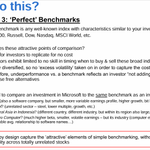
(27:33) Factor models as the "perfect benchmark" for every stock at every moment
(38:57) The old-school PM who calls factors bullshit — Rich's answer
(44:48) Treat factors like stock positions: limits, diligence, sizing
(55:29) Why concentrated "pure fundamental" books take the biggest factor bets
(01:05:34) Are junior analysts screwed? AI, mock books, & dispersion
(01:15:52) Contrarian take: SMA capital opening up beyond the Big Four
(01:19:42) The #1 new-launch killer: trying to do too many things at once
Rich Falk-Wallace retweeted
"Are junior analysts screwed?" Someone who worked inside most of the world's top hedge funds answers:
Rich Falk-Wallace — ex-Citadel PM, ran a $1B+ book as a Viking analyst, founder of Arcana — explains:
"I don't think so. It will be different, as all things will at every change of technology — well before any of the current waves of AI integration into everything we do.
This was true at every revolution. The job will change. Constantly. Lloyd Blankfein talks about writing the bond prices into the desk — in the early days of bond trading, paper slips. His job changed.
But what they were looking for then, and what every firm today is looking for, is somebody who can, in the end, generate that positive alpha hitting rate.
That's exceptionally hard. There is way less supply than there is demand for that person.
What people are looking for are people who can generate, or contribute to generating, or have an input to any part of that stack.
That is a scarce resource. Not that it's zero — there's an entire industry of people who on average mathematically do it.
So that pipeline of talent that has the capacity to scale into becoming that is super valuable."
Ex-Citadel PM Rich Falk-Wallace (@richfalkwallace) on why 90% of hedge fund blowups are portfolio construction — not bad ideas.
Rich Falk-Wallace (PM @ Citadel | Viking Global | Silver Point | Now founder & CEO of Arcana @ArcanaAnalytics — risk & portfolio software used by ~7 of the 10 largest multi-manager hedge funds)
"When they blow up, the story is never 'Shucks, I actually am not as brilliant as I was before.' What they got wrong was risk, portfolio construction."
We cover:
- Why 90% of PM failures come from sizing & portfolio construction, not thesis quality
- The only two ways to survive long-term: extreme hit rate/slugging, or managing ex-ante correlation
- The math of 10 pods long the same trade: factor bets compound, idio bets diversify
- Why LTCM is the classic backward-looking correlation failure — and why ex-ante is the whole job
- The paradox: "pure fundamental" concentrated funds take the biggest factor bets (up to 80% R²)
- Why the best PMs treat every factor exposure like a stock position — same limits, same diligence
- Sharpe ratio as a t-statistic against the null hypothesis that you have no skill
- The tiger cub who moved to a pod seat and said it felt like playing a video game
- Are junior analysts screwed? Dispersion, not extinction
- His contrarian take: capital is opening up beyond the Big Four via SMAs
Highlights:
(00:00) Intro
(01:10) The real job of a hedge fund PM: a product sold to allocators
(02:52) The 90% failure vector: risk leakage, not bad theses
(10:25) Two ways out: hit rate/slugging vs. managing correlations
(18:17) Factor bets compound, idio diversifies: why 80% idio becomes 60% at scale
(27:33) Factor models as the "perfect benchmark" for every stock at every moment
(38:57) The old-school PM who calls factors bullshit — Rich's answer
(44:48) Treat factors like stock positions: limits, diligence, sizing
(55:29) Why concentrated "pure fundamental" books take the biggest factor bets
(01:05:34) Are junior analysts screwed? AI, mock books, & dispersion
(01:15:52) Contrarian take: SMA capital opening up beyond the Big Four
(01:19:42) The #1 new-launch killer: trying to do too many things at once

Rich Falk-Wallace retweeted

With everything going on in AI from bottlenecks to Govt policy.. Frank is one of the top in the world at understanding + explaining it... Give this a re-listen because its very applicable to what is going on here and now @franklinkeller

LIQN Ep 7 | Frank Keller, Founder & CIO of Talos Eurisko Management (40m)
@franklinkeller
Frank has covered semiconductors from every angle…
Sell side. Balyasny. Millennium. Citadel’s Ashler platform. The CHIPS Program Office. And now Founder & CIO of Talos Eurisko, one of the top single manager launches of the last couple years
We talk boom & bust cycles, CHIPS Act inside baseball, industrial policy, and what he is doing differently with Talos
His line of the episode says it all: “Everything is a bottleneck.”
Enjoy.
Rich Falk-Wallace retweeted
The best hedge fund managers know their factor exposure will get them fired just as fast as a bad stock pick. So they treat it accordingly:
Rich Falk-Wallace (@richfalkwallace, ex-Citadel PM, founder of Arcana) explains:
"What I've seen people who nail the model do is they think of each factor bet as if it's a stock bet.
Whatever limits I put on single stock exposures, I'll put that same limit on a factor bet — and I'll almost diligence it.
Doesn't mean you spend your whole day thinking about how momentum is doing. But just mathematically, in truth, it is going to contribute to your P&L, your career, your hiring, firing, promotion — everything — as much as any individual stock bet you have.
They won't ignore it, but they won't over-index to it. They'll think carefully: 'I've got this exposure in my book. Here's what it's done historically. Here's what I think it might do in this environment.' Treat it like a view.
The most intense limiting firms will have people live anywhere from 80s to 90s percent idiosyncratic — 80 to 90% of the volatility they take is stock specific, with a remainder of 10 to 20% that's factor driven.
Some firms will let you go down to 60% idiosyncratic and 40% factor bet."
Ex-Citadel PM Rich Falk-Wallace (@richfalkwallace) on why 90% of hedge fund blowups are portfolio construction — not bad ideas.
Rich Falk-Wallace (PM @ Citadel | Viking Global | Silver Point | Now founder & CEO of Arcana @ArcanaAnalytics — risk & portfolio software used by ~7 of the 10 largest multi-manager hedge funds)
"When they blow up, the story is never 'Shucks, I actually am not as brilliant as I was before.' What they got wrong was risk, portfolio construction."
We cover:
- Why 90% of PM failures come from sizing & portfolio construction, not thesis quality
- The only two ways to survive long-term: extreme hit rate/slugging, or managing ex-ante correlation
- The math of 10 pods long the same trade: factor bets compound, idio bets diversify
- Why LTCM is the classic backward-looking correlation failure — and why ex-ante is the whole job
- The paradox: "pure fundamental" concentrated funds take the biggest factor bets (up to 80% R²)
- Why the best PMs treat every factor exposure like a stock position — same limits, same diligence
- Sharpe ratio as a t-statistic against the null hypothesis that you have no skill
- The tiger cub who moved to a pod seat and said it felt like playing a video game
- Are junior analysts screwed? Dispersion, not extinction
- His contrarian take: capital is opening up beyond the Big Four via SMAs
Highlights:
(00:00) Intro
(01:10) The real job of a hedge fund PM: a product sold to allocators
(02:52) The 90% failure vector: risk leakage, not bad theses
(10:25) Two ways out: hit rate/slugging vs. managing correlations
(18:17) Factor bets compound, idio diversifies: why 80% idio becomes 60% at scale
(27:33) Factor models as the "perfect benchmark" for every stock at every moment
(38:57) The old-school PM who calls factors bullshit — Rich's answer
(44:48) Treat factors like stock positions: limits, diligence, sizing
(55:29) Why concentrated "pure fundamental" books take the biggest factor bets
(01:05:34) Are junior analysts screwed? AI, mock books, & dispersion
(01:15:52) Contrarian take: SMA capital opening up beyond the Big Four
(01:19:42) The #1 new-launch killer: trying to do too many things at once
What risk models do is "predict future correlation" in your portfolio
That's important because all drawdowns (or benchmark underperformances if you are long) are correlational (1) --
-- and in the limit all correlation in your book drags your Sharpe ratio towards the market return/vol profile (2).
The quickest way to see this 'prediction' play out is to look at the historical residual return correlation of names in your own book.
Chart below is the avg pairwise total return correlation of names in the SPY (~30%) vs. avg residual return correlation (~0%) over the last 20yrs.
Average numbers might in theory hide subsets with greater correlation - but try the GVIP ETF if you want a simple measure of crowding, try sector/industry indices, or even try your favorite neutral ‘crowding’ index or factor portfolio if you have access to one.
Generally regardless of the book, in most solid models, you will find very low residual correlation, even in stress situations (3).
That is the easiest way to see that what factors do is isolate most ex-ante correlation.
This generally outperforms methods that use just returns (backward-looking correlations or betas, PCAs, ML models, etc) because pure returns methods are typically stuck partially conflating alpha with beta (e.g. a good unique thing happens to a company at the same time the market/factor is otherwise doing well will show up as higher ‘beta’ to that factor/PC).
There are many clever ways to model around these issues of course - but modern risk models try to capture the best of both by including fundamental company attributes and returns concepts and even transient thematics.
The binding constraint is more often the economic intuitiveness of the factors and the stability of the model itself, not the ability to fairly accurately predict future drawdown frequency & rough magnitude -- which is doable with a reasonably analytical approach to exposures and a little paranoia that some new source of correlation has crept in.
(1) Uncorrelated moves almost by definition don’t cause across-portfolio performance outcomes (except concentration, which is perfect correlation). You could also say it the opposite way: all correlation in your book is concentration risk, and all drawdowns are driven by concentration. The difference is that for risk factors, you are 'concentrated' in attributes that you likely don't have well researched/thoughtful views on.
(2) Unless you both (a) flip directions to time factor exposures constantly (very rare for fundamental investors to do actually - most have a tendency and stay long the same factors) and (b) generate P&L in most of those changing directions (even rarer).
(3) This is not to say you can't find certain models with certain stressors where correlations, particularly in subsets, step up beyond this. And in highly levered, particularly quant books that level of unmodeled correlation matters enormously. But here we are focused on fundemental books (across strategies - neutral, L/S, benchmark-relative LO, absolute return) where factor variance can be 10-90% of variance and the 1st-order problem is the major systematic sources of future correlation. Residual correlations in subsets in unique stressors are typically a smaller, 2nd-order problem in those scenarios.

Rich Falk-Wallace retweeted
10 market-neutral PMs, each 80% idiosyncratic. Put them in one book and the math quietly breaks:
Rich Falk-Wallace (@richfalkwallace, ex-Citadel PM, founder of Arcana) explains:
"Say you have 10 books with momentum exposure. They're long tech, long the latest exciting thing — but they're market neutral. Even if they each have 80% idio, at scale, that 80 comes down.
If every one of your PMs has a similar-ish exposure, that book average — even though you've gotten more breadth — is actually much lower. Your idio might be 60.
The reason is that factor bets compound on each other. They've been designed to be those things which are sources of correlation. So those things compound.
Whereas the remainder — whatever's not a factor bet — diversifies. It becomes like a loaded coin with a 52% hit rate. Take 10,000 coin flips, and the average reduces to the hit rate.
Those things diversify. The factor bets don't. You could add 100, you could add 10,000 — it wouldn't reduce the volatility driven by that similarly pointed factor exposure.
The independent, idiosyncratic bets diversify away at scale."
Ex-Citadel PM Rich Falk-Wallace (@richfalkwallace) on why 90% of hedge fund blowups are portfolio construction — not bad ideas.
Rich Falk-Wallace (PM @ Citadel | Viking Global | Silver Point | Now founder & CEO of Arcana @ArcanaAnalytics — risk & portfolio software used by ~7 of the 10 largest multi-manager hedge funds)
"When they blow up, the story is never 'Shucks, I actually am not as brilliant as I was before.' What they got wrong was risk, portfolio construction."
We cover:
- Why 90% of PM failures come from sizing & portfolio construction, not thesis quality
- The only two ways to survive long-term: extreme hit rate/slugging, or managing ex-ante correlation
- The math of 10 pods long the same trade: factor bets compound, idio bets diversify
- Why LTCM is the classic backward-looking correlation failure — and why ex-ante is the whole job
- The paradox: "pure fundamental" concentrated funds take the biggest factor bets (up to 80% R²)
- Why the best PMs treat every factor exposure like a stock position — same limits, same diligence
- Sharpe ratio as a t-statistic against the null hypothesis that you have no skill
- The tiger cub who moved to a pod seat and said it felt like playing a video game
- Are junior analysts screwed? Dispersion, not extinction
- His contrarian take: capital is opening up beyond the Big Four via SMAs
Highlights:
(00:00) Intro
(01:10) The real job of a hedge fund PM: a product sold to allocators
(02:52) The 90% failure vector: risk leakage, not bad theses
(10:25) Two ways out: hit rate/slugging vs. managing correlations
(18:17) Factor bets compound, idio diversifies: why 80% idio becomes 60% at scale
(27:33) Factor models as the "perfect benchmark" for every stock at every moment
(38:57) The old-school PM who calls factors bullshit — Rich's answer
(44:48) Treat factors like stock positions: limits, diligence, sizing
(55:29) Why concentrated "pure fundamental" books take the biggest factor bets
(01:05:34) Are junior analysts screwed? AI, mock books, & dispersion
(01:15:52) Contrarian take: SMA capital opening up beyond the Big Four
(01:19:42) The #1 new-launch killer: trying to do too many things at once
Rich Falk-Wallace retweeted

ex-Citadel portfolio manager, just explained why almost every fund actually blows up.
"90% of hedge fund failures, PM failures, analyst failures, it's bad portfolio construction, sizing, all those things."
the logic:
alpha is competitive. one good idea barely moves the needle, because the moment you build a book, correlation starts eating you.
"any amount of correlation in a portfolio drags your sharpe ratio toward the market's." and the market's sharpe you can buy for free from Vanguard.
so the entire game collapses to two things: generate a positive hit rate across enough independent bets, and kill the correlation between them.
the funds that survive run 80-90% of their risk in idiosyncratic, stock-specific bets. only 10-20% is allowed to be factor exposure. and they treat every factor bet, momentum, crowding, "long the AI trade", like a single stock position, with the same hard limits and the same diligence.
the ones who blow up almost always had the ideas. they just leaked P&L on risk they never meant to take.
"what they got wrong was risk and portfolio construction."
clip from "Odds on Open"
Rich Falk-Wallace retweeted
Every hedge fund is competing against a product that costs nothing. Most PMs don't realize how much of their book is secretly that product:
Rich Falk-Wallace (@richfalkwallace, ex-Citadel PM, founder of Arcana) explains:
"You're bounded on your ability to generate long-term Sharpe by your correlation.
Any set of very correlated bets ends up replicating the Sharpe ratio of a factor.
Think of the market factor. The market has roughly a .6 Sharpe. Something like a half Sharpe ratio is what the market gives you for free — you can go get that from Vanguard.
Any amount of correlation in a portfolio drags your Sharpe ratio towards that market Sharpe ratio.
In conjunction with that expected return is a volatility cost you're taking on to get that long-term compounding.
And crucially, for anybody trying to generate alpha — you shouldn't, in principle, get paid for that kind of risk-return ratio. You could just own the market for free.
Everybody's job is to compete with that very attractive alternative.
Anytime you generate correlation in a book, you're dragging your Sharpe ratio in rough proportion to the extent you're correlated to that market portfolio — which is free."
Ex-Citadel PM Rich Falk-Wallace (@richfalkwallace) on why 90% of hedge fund blowups are portfolio construction — not bad ideas.
Rich Falk-Wallace (PM @ Citadel | Viking Global | Silver Point | Now founder & CEO of Arcana @ArcanaAnalytics — risk & portfolio software used by ~7 of the 10 largest multi-manager hedge funds)
"When they blow up, the story is never 'Shucks, I actually am not as brilliant as I was before.' What they got wrong was risk, portfolio construction."
We cover:
- Why 90% of PM failures come from sizing & portfolio construction, not thesis quality
- The only two ways to survive long-term: extreme hit rate/slugging, or managing ex-ante correlation
- The math of 10 pods long the same trade: factor bets compound, idio bets diversify
- Why LTCM is the classic backward-looking correlation failure — and why ex-ante is the whole job
- The paradox: "pure fundamental" concentrated funds take the biggest factor bets (up to 80% R²)
- Why the best PMs treat every factor exposure like a stock position — same limits, same diligence
- Sharpe ratio as a t-statistic against the null hypothesis that you have no skill
- The tiger cub who moved to a pod seat and said it felt like playing a video game
- Are junior analysts screwed? Dispersion, not extinction
- His contrarian take: capital is opening up beyond the Big Four via SMAs
Highlights:
(00:00) Intro
(01:10) The real job of a hedge fund PM: a product sold to allocators
(02:52) The 90% failure vector: risk leakage, not bad theses
(10:25) Two ways out: hit rate/slugging vs. managing correlations
(18:17) Factor bets compound, idio diversifies: why 80% idio becomes 60% at scale
(27:33) Factor models as the "perfect benchmark" for every stock at every moment
(38:57) The old-school PM who calls factors bullshit — Rich's answer
(44:48) Treat factors like stock positions: limits, diligence, sizing
(55:29) Why concentrated "pure fundamental" books take the biggest factor bets
(01:05:34) Are junior analysts screwed? AI, mock books, & dispersion
(01:15:52) Contrarian take: SMA capital opening up beyond the Big Four
(01:19:42) The #1 new-launch killer: trying to do too many things at once