









rezaloo retweeted
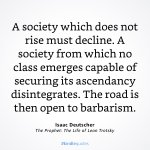
“our peaceful trading partners are not our enemies. they are our allies. we should beware of the demagogues who are ready to declare a trade war against our friends—weakening our economy, our national security, and the entire free world—all while cynically waving the american flag."
- president ronald reagan
rezaloo retweeted

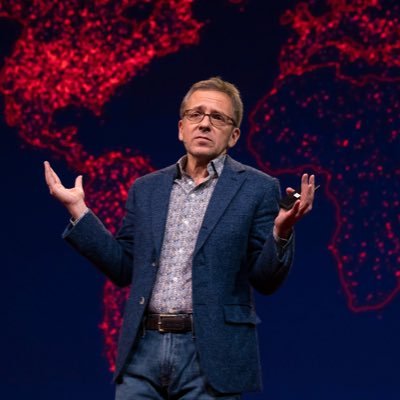
Attending a fabulous Keynote by Reza on Powering Modern Developer Platforms with APIs at the API Summit 2024 by @kong 🦍🚀
So cool to see his kid Alex join the stage too.✨
#platformengineering #APIs #platforms


rezaloo retweeted

I can't stop thinking about this...
Michael Caine on his defining philosophy on life:
Use the Difficulty
As a young actor, he was rehearsing a play scene when a chair got stuck in the door and blocked his path.
He told the other actor he couldn't get by the chair to enter the room in the scene.
The actor's response:
"Use the difficulty...if it's a comedy, fall over it, if it's a drama, pick it up and smash it."
This idea—of using the difficulty—became a defining mantra for Michael Caine's life.
"There's never anything so bad that you cannot use that difficulty...if you can use it a quarter of one percent to your advantage, you're ahead, you didn't let it get you down."
This idea hit me hard...
How can you use the difficulty you're currently facing?
How can you embrace the struggle?
How can you find flow through the friction?
How can you sow the seeds of your light during the periods of darkness?
As with everything in life, control the controllable:
The difficulty is already there, you can't control it.
You can control how you react to it.
You can control your response to it.
You can control your attitude towards it.
Lesson: Difficulty is inevitable. Use it.
rezaloo retweeted

I kept looking for living people who understood the dynamics of this conflict & found NONE as clear-minded as Villepin, former French PM & mostly chief diplomat.
I thought no living politician had the clairvoyance of Gaulle & Peyrefitte. I was wrong.

Absolutely masterful interview on Gaza of Dominique De Villepin, former Prime Minister of France, who famously led France's opposition to the Iraq war and who, IMHO is the best diplomat the West has produced in decades.
This is so important, so incredibly well argued, that I decided to translate it in full:
"Hamas has set a trap for us, and this trap is one of maximum horror, of maximum cruelty. And so there's a risk of an escalation in militarism, of more military interventions, as if we could with armies solve a problem as serious as the Palestinian question.
There's also a second major trap, which is that of Occidentalism. We find ourselves trapped, with Israel, in this western bloc which today is being challenged by most of the international community.
[Presenter: What is Occidentalism?]
Occidentalism is the idea that the West, which for 5 centuries managed the world's affairs, will be able to quietly continue to do so. And we can clearly see, even in the debates of the French political class, that there is the idea that, faced with what is currently happening in the Middle East, we must continue the fight even more, towards what might resemble a religious or a civilizational war. That is to say, to isolate ourselves even more on the international stage.
This is not the way, especially since there's a third trap, which is that of moralism. And here we have in a way the proof, through what is happening in Ukraine and what is happening in the Middle East, of this double standard that is denounced everywhere in the world, including in recent weeks when I travel to Africa, the Middle East, or Latin America. The criticism is always the same: look at how civilian populations are treated in Gaza, you denounce what happened in Ukraine, and you are very timid in the face of the tragedy unfolding in Gaza.
Consider international law, the second criticism that is made by the global south. We sanction Russia when it aggresses Ukraine, we sanction Russia when it doesn't respect the resolutions of the United Nations, and it's been 70 years that the resolutions of the United Nations have been voted in vain and that Israel doesn't respect them.
[Presenter: Do you believe that the Westerners are currently guilty of hubris?]
Westerners must open their eyes to the extent of the historical drama unfolding before us to find the right answers.
[Presenter: What is the historical drama? I mean, we're talking about the tragedy of October 7th first and foremost, right?]
Of course, there are these horrors happening, but the way to respond to them is crucial. Are we going to kill the future by finding the wrong answers...
[Presenter: Kill the future?]
Kill the future, yes! Why?
[Presenter: But who is killing whom?]
You are in a game of causes and effects. Faced with the tragedy of history, one cannot take this 'chain of causality' analytical grid, simply because if you do you can't escape from it. Once we understand that there is a trap, once we realize that behind this trap there has also been a change in the Middle East regarding the Palestinian issue... The situation today is profoundly different [from what it was in the past]. The Palestinian cause was a political and secular cause. Today we are faced with an Islamist cause, led by Hamas. Obviously, this kind of cause is absolute and allows no form of negotiation. On the Israeli side, there has also been a development. Zionism was secular and political, championed by Theodor Herzl in the late 19th century. It has largely become messianic, biblical today. This means that they too do not want to compromise, and everything that the far-right Israeli government does, continuing to encourage colonization, obviously makes things worse, including since October 7th. So in this context, understand that we are already in this region facing a problem that seems profoundly insoluble.
Added to this is the hardening of states. Diplomatically, look at the statements of the King of Jordan, they are not the same as six months ago. Look at the statements of Erdogan in Turkey.
[Presenter: Precisely, these are extremely harsh statements...]
Extremely worrying. Why? Because if the Palestinian cause, the Palestinian issue, hasn't been brought to the forefront, hasn't been put on stage [for a while], and if most of the youth today in Europe have often never even heard of it, it remains for the Arab peoples the mother of all battles. All the progress made towards an attempt to stabilize the Middle East, where one could believe...
[Presenter: Yes, but whose fault is it? I have a hard time following you, is it Hamas's fault?]
But Ms. Malherbe, I am trained as a diplomat. The question of fault will be addressed by historians and philosophers.
[Presenter: But you can't remain neutral, it's difficult, it's complicated, isn't it?]
I am not neutral, I am in action. I am simply telling you that every day that passes, we can ensure that this horrific cycle stops... that's why I speak of a trap and that's why it's so important to know what response we are going to give. We stand alone before history today. And we do not treat this new world the way we currently do, knowing that today we are no longer in a position of strength, we are not able to manage on our own, as the world's policemen.
[Presenter: So what do we do?]
Exactly, what should we do? This is where it is essential not to cut off anyone on the international stage.
[Presenter: Including the Russians?]
Everyone.
[Presenter: Everyone? Should we ask the Russians for help?]
I'm not saying we should ask the Russians for help. I'm saying: if the Russians can contribute by calming some factions in this region, then it will be a step in the right direction.
[Presenter: How can we proportionally respond to barbarism? It's no longer army against army.]
But listen, Appolline de Malherbe, the civilian populations that are dying in Gaza, don't they exist? So because horror was committed on one side, horror must be committed on the other?
[Presenter: Do we indeed need to equate the two?]
No, it's you who are doing that. I'm not saying I equate the faults. I try to take into account what a large part of humanity thinks. There is certainly a realistic objective to pursue, which is to eradicate the Hamas leaders who committed this horror. And not to confuse the Palestinians with Hamas, that's a realistic goal.
The second thing is a targeted response. Let's define realistic political objectives. And the third thing is a combined response. Because there is no effective use of force without a political strategy. We are not in 1973 or in 1967. There are things no army in the world knows how to do, which is to win in an asymmetrical battle against terrorists. The war on terror has never been won anywhere. And it instead triggers extremely dramatic misdeeds, cycles, and escalations. If America lost in Afghanistan, if America lost in Iraq, if we lost in the Sahel, it's because it's a battle that can't be won simply, it's not like you have a hammer that strikes a nail and the problem is solved. So we need to mobilize the international community, get out of this Western entrapment in which we are.
[Presenter: But when Emmanuel Macron talks about an international coalition…]
Yes, and what was the response?
[Presenter: None.]
Exactly. We need a political perspective, and this is challenging because the two-state solution has been removed from the Israeli political and diplomatic program. Israel needs to understand that for a country with a territory of 20,000 square kilometers, a population of 9 million inhabitants, facing 1.5 billion people... Peoples have never forgotten that the Palestinian cause and the injustice done to the Palestinians was a significant source of mobilization. We must consider this situation, and I believe it is essential to help Israel, to guide... some say impose, but I think it's better to convince, to move in this direction. The challenge is that there is no interlocutor today, neither on the Israeli side nor the Palestinian side. We need to bring out interlocutors.
[Presenter: It's not for us to choose who will be the leaders of Palestine.]
The Israeli policy over recent years did not necessarily want to cultivate a Palestinian leadership... Many are in prison, and Israel's interest - because I repeat: it was not in their program or in Israel's interest at the time, or so they thought - was instead to divide the Palestinians and ensure that the Palestinian question fades. This Palestinian question will not fade. And so we must address it and find an answer. This is where we need courage. The use of force is a dead end. The moral condemnation of what Hamas did - and there's no "but" in my words regarding the moral condemnation of this horror - must not prevent us from moving forward politically and diplomatically in an enlightened manner. The law of retaliation is a never-ending cycle.
[Presenter: The "eye for an eye, tooth for tooth".]
Yes. That's why the political response must be defended by us. Israel has a right to self-defense, but this right cannot be indiscriminate vengeance. And there cannot be collective responsibility of the Palestinian people for the actions of a terrorist minority from Hamas.
When you get into this cycle of finding faults, one side's memories clash with the other's. Some will juxtapose Israel's memories with the memories of the Nakba, the 1948 catastrophe, which is a disaster that the Palestinians still experience every day. So you can't break these cycles. We must have the strength, of course, to understand and denounce what happened, and from this standpoint, there's no doubt about our position. But we must also have the courage, and that's what diplomacy is... diplomacy is about being able to believe that there is light at the end of the tunnel. And that's the cunning of history; when you're at the bottom, something can happen that gives hope. After the 1973 war, who would have thought that before the end of the decade, Egypt would sign a peace treaty with Israel?
The debate shouldn't be about rhetoric or word choice. The debate today is about action; we must act. And when you think about action, there are two options. Either it's war, war, war. Or it's about trying to move towards peace, and I'll say it again, it's in Israel's interest. It's in Israel's interest!"
rezaloo retweeted

Hate is the path of the weak.
A good reminder from @Schwarzenegger in these difficult times.
I'm loving his book Be Useful.
rezaloo retweeted

On August 29, 2018, I met Ryan Holiday for the first time.
At the time, I was 2 years into a nomadic ski-bum phase & trying to figure out what to do next.
Standing outside the Four Seasons in Vail, CO, where he had just given a talk, I asked Ryan if he had any advice.
He said,
At an inflection point in his own life, he turned down some high-paying job offers to work as a research assistant for Robert Greene.
“Because Robert’s life,” he said, “resembled what I wanted for myself.”
He tried to call Robert, and, as he knew it would, it went straight to voicemail. Because Robert’s day, Ryan said, is spent reading, researching, thinking, making notecards, and engaging with ideas. That, he said, is what he wanted his typical day to look like too.
“So look at the people five to ten years ahead of you in whatever career you’re considering,” Ryan told me. “Does their life look like one you’d want for yourself? Are they who you want to be? Because that’s the trajectory you would be on.”
Takeaway 1:
There are many spokes on the career hub, Ryan told me.
When weighing opportunities, people tend to over-index on the salary/compensation spoke, he said.
But there's also the people spoke—the people you work for and with, as well as the people you meet through the people you work for and with.
There's also the knowledge and information spoke—the ideas you work on, the things you learn, and the skills you acquire.
There's also the trajectory spoke—the path you are put on and the life you will eventually carve out, the person you will eventually become as a result of the people you worked for/with, the ideas you worked on, the things you learned, and the skills you acquired.
There's a lot to consider, but the best thing to do is to look at the people five to ten years ahead, as Ryan told me, and ask yourself: Does their life look like one you want for yourself? Are they who you want to be? Because that’s the trajectory you're on.
Takeaway 2:
In a later conversation, Ryan told me that the most important spoke of all is the work itself.
“The work has to be the win,” he said.
Even if the compensation is good, even if the people are great, and even if the trajectory is one you're happy to be on, most of your time is spent doing the work. Like Robert, Ryan’s typical day is mostly spent reading, researching, thinking, making notecards, and engaging with ideas.
“So ultimately,” Ryan told me, “you have to love doing the work. You have to get to a place where doing the work is the win and everything else is extra.”
Follow @bpoppenheimer for more content like this!

rezaloo retweeted

🌟 #KongKonnect just dropped some 🌶️🔥 new features: https://xitter.cf/t.co/krTGBNtWNu
🚀Multi-protocol support with enhanced GraphQL policies
🔒Secure automation with System Accounts
🌐Enhanced Service Hub context for each service
📊Dynamic report creation via API analytics
#KubeConEU
rezaloo retweeted

“The state of open source software on GitHub” octoverse.github.com/2022/st…
rezaloo retweeted
🚨 Get an insider look into Kong Konnect on 𝟭𝟮.𝟭𝟱 ⬇️
🤩 @kong's VP of Product @rezaloo and Sr. Director, Product Management Ross Kukulinski are hosting a 𝗹𝗶𝘃𝗲 𝗱𝗲𝗺𝗼 with active Q&A to answer all your Konnect questions: ow.ly/BfUg50LYCy2
See you there! 👋


rezaloo retweeted

PM needs to be technology-literate.
But it's difficult without a tech background.
Top 6 free tech courses that will help you land a new job (or keep the existing one): 🧵
rezaloo retweeted
This is incredible! Iranian musician/singer Rana Mansour performs #ShervinHajiPour’s song, “baraye,” at #TheVoice in Germany, raising the voice of Iranians worldwide. This song is meaningful and beautiful in all languages.
#MahsaAmini #مهسا_امینی #IranRevolution @RanaMusic
rezaloo retweeted
In B2B, everyone talks about how you should be clear on “what problem you are solving”.
To make this work in practice, split this question into 3 components:
- Buyer problem
- Champion motivation
- User problem
This format forces rigor, creates clarity, and gets you buy-in.
rezaloo retweeted

Most PMs miss the daily activities to improve:
1. Study design
2. Observe other products
3. Use your product more than anyone
4. Think deeply about what makes other great products work
5. Create a circle of product designers and managers to chat with
rezaloo retweeted

In the forests and scrublands of Madagascar, there are tortoises covered in stars, yellow lines radiate from the center of each dark plate on their shells, hence the name- radiated tortoise
These tortoises are critically endangered


rezaloo retweeted

Problem solving at a startup xitter.cf/buitengebieden/status/…
rezaloo retweeted

Kong's Gateway open source technology powers the world with over 10 trillion API requests/month, 1000+ plugins across 40,000+ organizations. Can't be more proud of the work we have done, faster and more adopted than any other GW in the world. Learn more at konghq.com/blog/why-kong-is-…
