

Monitoring the planet's pulse by providing trusted & timely data for a sustainable future. #opendata #dataviz #datastories | @WorldResources initiative
Joined October 2015
- Tweets4K
- Following1.5K
- Followers2.5K
- Likes2.7K





Resource Watch retweeted

📉 The latest UNEP Emissions Gap Report warns that the world will exceed 1.5°C of warming.
But can we bring temperatures back down?
@WRIClimate’s Clea Schumer explains why reaching net zero won’t be enough, and why net-negative emissions are essential: bit.ly/4y9iMbh
Resource Watch retweeted

What is a ‘Super El Niño’? How might it affect food, forests and water? #WRIExplains👉 go.wri.org/super-el-nino
Resource Watch retweeted
💬Everyone is talking about data centers. But how exactly do they impact our lives? What can states do to deal with these impacts?
We examined seven ways data center growth is reshaping local conditions in the US: go.wri.org/data-center-tw

Resource Watch retweeted

The @WRIRossCities #PrizeforCities 🏆 recognizes bold initiatives sparking change in #cities around the 🌍.
One Grand Prize Winner will receive $250k. Does your project have what it takes?
Apply by Jan. 13, 2027 👉 PrizeforCities.org
Read more ➡️ bit.ly/4yXjeKC
Resource Watch retweeted
Data Lab, led by @EvanTachovsky, is the team driving innovation at WRI, turning research and data into tools that enable better decision-making.
During Climate Week NYC, we hosted an open science fair showing prototypes of the products we're currently building.
Curious? Check out bit.ly/4rIUlA4
Resource Watch retweeted
☀️🥗What if farms could produce food and clean energy at the same time?
Agrivoltaics involves incorporating solar panels onto agricultural land, enabling the simultaneous production of energy alongside crops or livestock.
Places like the community farm at Roundabout Meadows in rural Virginia are already generating clean, affordable power through this emerging practice. Read their story and learn about other #SolutionsInFocus happening around the world: go.wri.org/solutions-in-focu…
Resource Watch retweeted
🚨 New Data: #SystemsChangeLab, @unepwcmc, WRI and @BezosEarthFund just released new findings on transforming the global freshwater system.
📊 Explore the data and see what’s needed to transform the freshwater system: bit.ly/4fP6TBt

Resource Watch retweeted

The new @Enviro_Finance Sustainability Data Guide includes data from across the WRI family -- @WRIAqueduct, @globalforests, @landcarbonlab, @resource_watch, @SystemsChangeLb and more -- to help investors understand climate & nature, risk & opportunity.
environmental-finance.com/co…
Resource Watch retweeted
📱Launching during #LCAW2026: WRI’s new climate intervention calculator.
It helps policymakers, city planners, companies & institutions estimate the emissions impact of decisions that shape everyday choices at scale.
Explore it here: go.wri.org/insights-calc-x

Resource Watch retweeted
What can happen when temperatures rise in your city? Here are a few key impacts👇🌡️
Discover how 1.5 and 3 degrees C of global warming might affect your city: go.wri.org/heat-city-tw

Resource Watch retweeted
🌊One of the most promising areas for climate action has been largely overlooked and underinvested: the ocean.
Research commissioned by the @oceanpanel found that ocean-based climate solutions can deliver over a third of the annual emissions cuts needed in 2050 to limit temperature rise to 1.5 degrees C (2.7 degrees F), a globally agreed target to avert the worst outcomes from climate change.
Learn more about the seven key opportunities for ocean-based climate action👉 go.wri.org/oceanday-tw #WorldOceanDay
✅Follow @WRIOcean for more ocean-related content


Resource Watch retweeted
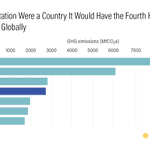
Carbon dioxide and other greenhouse gases are rapidly warming the planet. But where do they come from? Insights from #ClimateWatch explain which sectors emit the most GHGs: go.wri.org/ghg-emissions-tw
Resource Watch retweeted
With the war in Iran posing uncertainty in energy markets around the world, The New York Times asked WRI's President & CEO Ani Dasgupta if this means the world might begin to reevaluate its dependence on oil and gas.
🔗Find out how he responds➡️ go.wri.org/nyt-energy-war

Resource Watch retweeted
Iran is moving toward what experts call “water bankruptcy.”💧
WRI water expert, Liz Saccoccia explains Iran’s long-running water crisis, how conflict and water crises can reinforce each other, and what it means for the millions of people caught in between➡️ go.wri.org/iran-war-water-cr…

New data platform available!
Cool Cities Lab helps city planners estimate the cooling potential of planned heat-resilient infrastructure using robust data and map visualizations.

Introducing #CoolCitiesLab, WRI's 🆕 heat data platform.
Developed w/ support from @Googleorg, Cool Cities Lab helps #cities identify where heat risk is highest 🔥 & target cooling solutions where they’ll matter most 🌳.
Explore it now 👉 coolcities.wri.org
Resource Watch retweeted
Close to 40% of all data centers in the world are in the United States, and more are being built at breakneck speed.
In the country itself, 60% of all data centers are found in 10 states. How will they impact communities in the short and long run? We unpack seven ways: go.wri.org/data-center-tw

Resource Watch retweeted
New research shows annual cropland and pasture is replacing grasslands, wetlands & savannas at up to 4 times the rate of forests. Livestock production is the biggest driver.
See how 🌽, soy and other commodities are driving global ecosystem loss 🌍👉 go.wri.org/bcfrVe
Resource Watch retweeted
The energy transition is happening🌍
Find out how it will happen and who reaps the benefits at #StoriesToWatch👉 go.wri.org/stw-2026
Resource Watch retweeted
To limit warming to 1.5°C and get on track for 2030, we have to:
🏭Phase out coal more than 10x faster
🚉Expand rapid transit networks 5x faster
🌳Reduce deforestation 9x faster
🐮Lower beef and lamb consumption in high-consuming regions 5x faster
🎯Scale up technological carbon dioxide removal more than 10x faster
💲Increase global climate finance 4x faster
Learn more from #StateOfClimateAction: go.wri.org/SoCa-2025-tw
#SystemsChangeLab
New insights from @WRIFood: what food buyers need to know about beef emissions and sustainability labels 👇

There's no such thing as climate-friendly beef—despite growing "net zero" labels.
New @WorldResources research reveals why: it's about the land. Beef needs 3x more cropland per kg of protein than eggs, pork, chicken – and 7x more than beans.
Read more: bit.ly/3LkkDI6
