

a shared space. account run collectively by parent activists, social workers & artists who are using 'lived' & ‘learned' experiences to co-design human services
relationalactivism.com
Joined February 2022
- Tweets995
- Following857
- Followers1.2K
- Likes2K



Pinned Tweet
Who is a Relational Activist? Someone working with empathy, compassion, the ability to connect & form networks, with an understanding that change happens through relationships.
#RelationalActivism
youtu.be/n53hW-0r3c0

relational activism retweeted

Our Youth Vocals group is made up of 4–6 young people who have been subject to child protection or child in need plans, who meet regularly to give their thoughts and feedback. Big thanks to Youth Vocals and MC for sharing this week's Friday Story. ow.ly/1S7550Ug0AH

relational activism retweeted
"Each session with her has opened up space for vulnerability, reflection, and genuine connection...".
Special thanks to one of our fantastic social workers for sharing this week's Friday Story. Read it here: ow.ly/KWzP50UfTj8
#FridayStory #SocialWork #Connection
relational activism retweeted

Register by tomorrow: 26th November, 12 – 1.30pm. The importance of maintaining relationships & adoption, & outcomes of open adoptions. In collaboration with UEA & Adoption England #IRO #Adoption #SocialWork
niromp.org/2024/11/11/niromp…
Entanglement and Connection: Karen Barad and the Art of Relational Thinking
In the world of facilitation, activism, and human connection, the ideas of Karen Barad run deep. Her work on entanglement and intra-action reminds us that nothing exists in isolation. We are always co-creating, shaping, and being shaped by the relationships and environments.
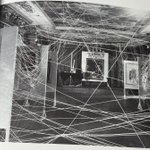
This work connects for me with [pictured] Marcel Duchamp’s First Papers of Surrealism exhibition in 1942, where the entangled strings that crisscrossed the space disrupted the traditional viewer-artwork relationship. Duchamp’s web invited participants to navigate, to pause, and to rethink their positions within a shared space. In both cases, from Barad and Duchamp what emerges is not a fixed meaning but a dynamic interplay—an invitation to be part of something larger.
This mirrors facilitation and relational activism. When we create spaces for dialogue, we are practicing what Barad might call intra-action. We’re not separate from the people or ideas we engage with; rather, we’re deeply intertwined. The connections we foster ripple outward.
In facilitation, this means embracing complexity, leaning into stuckness, and recognising that what emerges is not predetermined but co-created. “Witness without steering,” as we’ve said, allowing relational acts to unfold with their own rhythm and potential. Whether in an art installation, a workshop, or a moment of shared vulnerability, Barad reminds us that meaning is not in things but in the interactions between them.
As facilitators, activists, and co-creators, we navigate these entanglements daily. The challenge—and the beauty—is in remaining present to the possibilities that arise when we embrace the relational.
#RelationalActivism #Facilitation #KarenBarad #Entanglement #Connection #IntraAction

relational activism retweeted

Never underestimate the need for trust. Only when we feel safe (when we trust the other) can we be appropriately vulnerable, which is critical for transformation in that relationship.

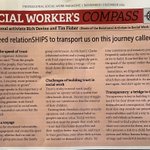
relationSHIPS
“a relationship is like a voyage – if you break down the word, it’s relation and ship.”
Social Work Compass 🧭 Our regular column written by Richard Devine and @familygroupmeet published in Professional Social Work magazine. This piece is inspired by this insight from Michael Clarke on relationSHIPS, as crucial vessels 🚢
Containers for trust, and ballast for our journey in working with people.
Prioritising the ‘Wavey” path of relationships over rigid processes.
⛵️🌊
#RelationalActivism

relational activism retweeted

"Adding the 10th won't eradicate poverty, but it will go a long way towards eradicating one of Povety's biggest impacts, socio-economic discrimination. 'Choice' is the key word here; poverty erodes choices about your future & that of your family.
#AddThe10th – at Dun Laoghaire-Rathdown, Ireland

relational activism retweeted

🎙️ Care Leaver Voices Podcast Launch!
Join host Carrie Harrop with Leah, Abed, Liam, Kaitlyn, & Tyrese as they discuss key issues shaping care-experienced lives.
🔗 Listen now: Spotify link

relational activism retweeted
Wow - comments like these 🥰!
We hope you're all enjoying our Friday Story posts?
#StoryTime #FridayStory #CommentsLikeThese #ConnectedPractice #Grateful

“ if one but threw a sponge full of colors at a wall….
Leonardo wrote:
it would leave a patch in which one might see a beautiful landscape. It is probably true that one might see all kinds of things in such a patch—such as animals, human heads, battles, cliffs, the sea, clouds, or forests.
Even though such patches may help you to invent things, they will never teach you how to carry any particular project to completion.”
The point Leonardo was making is clear:
He argues for The Art of Context.
His preference was for imagination plus living—seeing, exploring, and understanding the context in which people, animals, nature, and things exist, and making a close study of this lifeworld an integral part of his craft. From the outset, he regarded landscape not simply as a backdrop; he saw people in their whole environment as an inextricable part of nature. In another part of his writing, he even recommends staring at stains on walls as a source of inspiration.
Images
From the world of leonardo
#CloserToPeople
#LivedFutures
#RelationalActivism


relational activism retweeted
'He is our "miracle boy", a young person who has transformed not only his own life, but our home as well'. 💕🏡 This heartening Friday Story is told by one of our incredible residential children's homes staff. Read the story here: ow.ly/u6sx50U53WY. #FridayStory

ALT A cartoon image of a typewriter with the words 'The campfire' and 'Friday Story'.
relational activism retweeted

It's Next Monday; there is still time to sign up 👇🏼
#relationalactivismwebinar
Vulnerability and Solidarity
Monday, November 18, 2024
7:00 PM 8:00 PM
Join us to explore the social self in a relational context titled "Vulnerability and Solidarity." We are honoured to be ‘shouldering up’ with Vikki Reynolds, author of 'Justice-Doing,' as we connect with key concepts from her work. Vikki shares insights into resisting burnout through the lens of 'justice doing.'
In her wonderful book, Reynolds challenges the notion of burnout as merely an individual struggle, reframing it as a collective experience rooted in our inability to deliver justice and enact our shared ethics. She introduces the concept of 'spiritual pain,' which arises when systemic constraints prevent us from providing the support and assistance we aspire to offer.
Vikki Reynolds works from a Decolonizing and Justice-Doing framework. She works as a Consultant, Facilitator and Supervisor in Team Development, Resisting Burnout and Sustainability, ‘Trauma’ and Witnessing Resistance to Violence and Oppression, and a Supervision of Solidarity.
Link in the comments
#relationalactivism
relationSHIPS
“a relationship is like a voyage – if you break down the word, it’s relation and ship.”
Social Work Compass 🧭 Our regular column written by Richard Devine and @familygroupmeet published in Professional Social Work magazine. This piece is inspired by this insight from Michael Clarke on relationSHIPS, as crucial vessels 🚢
Containers for trust, and ballast for our journey in working with people.
Prioritising the ‘Wavey” path of relationships over rigid processes.
⛵️🌊
#RelationalActivism
relational activism retweeted

First attempt at a blog piece🫣

The NLN is lucky that @susannerich4rds is part of our Steering Group, she is amazing! She is also a mum to a lovely boy. She wrote a fab blog for our friends @ProjChangeScot about his influence and her voice. The link is below:
projectchange.scot/2024/10/2…

relational activism retweeted
Those with a lived experience report everyday incidences of discrimination as a result of their accent, clothing, address, employment status etc. The stigma & shame that results from discrimination has huge effects on mental health & #Wellbeing
Please support #AddThe10th campaign – at Dun Laoghaire-Rathdown, Ireland

relational activism retweeted
This week's Friday Story is titled 'Paws for Healing' 🐾. Read this delightful story at ow.ly/s1kE50U0k4j.
#FridayStory #PawsForHealing #HealingThroughPets #StoryTime #ESCC

The new East Sussex podcast is Connecting Conversations: Stories from Social Work by the Sea…
Seeking connecting conversations that develop our storytelling approach - moving into dialogue. This podcast connects local experience with national expertise, giving airtime to stories told, stories lived, and stories unheard.
This episode features Dr Beverley Barnett-Jones MBE & Michelle Hayman
The Significance of Storytelling in Black History
Growing up, Michelle didn’t fully understand her dad’s work at first. As Michelle learned more, she understood the challenges her dad faced. He was the first Black social worker in East Sussex, pushing against barriers in a system that wasn’t always welcoming. His resilience left a lasting impact on her, and it’s a strength she carries into her own career.
Now an Operational Manager, Michelle has surpassed her dad’s achievements in terms of seniority, and he couldn’t be prouder. His book, Reflections on the Glass Ceiling, captures his struggles and legacy—one that Michelle is proud to continue. Her own children are even showing interest in following in their family’s footsteps.
This conversation is about bringing stories into dialogue— Join us in taking these stories on air.
Follow the East Sussex account below, and the links to the podcast, stay listening for the reading by Beverley at the end.
Thank you Beverley and Michelle
#ConnectingConversations #Dialogue
#Stories

Introducing our new podcast, Connecting Conversations: Stories from Social Work by the Sea, hosted by Tim Fisher (@familygroupmeet). Listen to the first episode at ow.ly/SO1V50U0xIg (Buzzsprout) or ow.ly/R43r50U0xIh (Spotify). We'd love to know your thoughts...

EP.6. Growing up in care, shame and healing - Relational Activism in Social Work | Podcast on Spotify open.spotify.com/episode/6HG…
Spokes to Circles: Rethinking Participation in Local Authorities
A standout moment for me happened recently during a call with senior professionals from different parts of the country. We discussed citizen participation groups, particularly those involving parents, when someone asked, “How do you allocate parents to this?” Although this question came from a genuine place of learning, for me it highlighted a fundamental issue with how community involvement is often perceived within local authority structures. The word “allocate” suggests a top-down approach, reflecting a tendency, which all of us professionals are guilty of at times, to see participation as something to be managed and controlled rather than facilitated and shared.
This brings me to what I call the "spoke versus circle" conundrum. Many participation leads we have talked to recently within local authorities work under considerable pressure, often coordinating multiple relationships with community members from a central position. They become the "hub" or "spoke," responsible for overseeing each connection and every aspect of the groups they are responsible for. While this model may work for certain projects, it often becomes overwhelming. Professionals in this role may feel anxious, stretched thin, or even conflicted, balancing the community's needs with the bureaucratic demands of their institution.
This spoke model can sometimes lead to tension between members of the group itself. When a single person manages all relationships, they become a gatekeeper, and the sense of collective ownership within the group can diminish. In some cases, this can even lead to conflicts, as members perceive the participation process as inequitable.
An alternative approach—the "circle" or solidarity method— instead of controlling each relationship from a central hub, the facilitation promotes shared ownership and collective responsibility. The group becomes a space of solidarity, where members contribute and support one another. The participation professional's role shifts from manager to facilitator, helping to set up the structure then allowing for the group’s natural dynamics to flourish.
Setting up a successful group, however, requires more than just initial preparation. Consideration must also be given to what happens after the formal meeting ends. There must be a sense of “aftercare” or a plan for continued interaction and support within the group. Nevertheless, I feel that the essence of a successful group lies not in micromanaging every detail but in fostering trust and ownership among its members.
Moving from a spoke to a circle mindset could encourage local authorities to rethink their participation activity —not as managers but as facilitators of a shared journey.
Images, Reinventing Organisations for the quote in the comments*
& Art: Louise Bourgeois Spiral & The Beating of the Heart
feel free to get in touch if this resonates and you want to discuss further
#RelationalActivism


relational activism retweeted
Big thanks to Jonathan for sharing this remarkable story. Trouble viewing? Please visit ow.ly/aerf50TVC9T #FridayStory #StorySharing #Connection #SocialWorkStories
