

phd student @caltech | interested in quantum info, math education, watercolors, marine bio. also on 🦋
Cambridge, MA
Joined June 2016
- Tweets540
- Following392
- Followers736
- Likes4.4K





Pinned Tweet
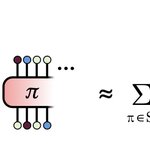
When can we use random unitaries to (efficiently) model physical dynamics? 💻 ⚛️
Excited to share a couple of works with Liang Mao, Fernando Brandão, @RobertHuangHY, Thomas Schuster in which we explore this question!
[1] arxiv.org/abs/2510.08448
[2] arxiv.org/abs/2510.08434
1/8


Laura Cui retweeted

Wise words from @JosephPConlon (and from Steve Weinberg): "Go for the messes - that's where the action is."

Laura Cui retweeted

Strongest and most unexpected recommendation yet for "Emily in Paris".

The great Terence Tao in the @NewYorker:
'Tao compared learning mathematics to watching “Emily in Paris,” a show that he and his wife enjoyed. “It’s completely ridiculous fluff, but it’s also fun. You learn the tropes, and you can kind of see how it’s going to go,” he said. “But if you’re just given a synopsis of the plot, like, ‘Here’s the premise, and this is what happens’—that’s not the point.” And, if you want to learn how to write your own show, “then it’s not helpful at all.”'
newyorker.com/magazine/2026/…

nice shoutout to free probability

NFL Player Turned Mathematician (@JohnCUrschel) Solves Problem that Eluded Scholars for Decades
On the growth factor for Gaussian elimination – great interview with Christiane @amanpour
youtu.be/W1uiG8rk2Eg?is=1neW… via @YouTube

Laura Cui retweeted

Two weeks ago, Rikhav Shah and I posted a preprint on the growth factor in Gaussian elimination, and settled a very old problem. It turns out complete pivoting and rook pivoting have quasi-polynomial growth. I’ve spent a decade thinking about this problem. math.mit.edu/~urschel/prepri…
to quote a version of this talk given at Stanford PAI26: "do the interesting thing, rather than the safe thing"
although I don't necessarily agree this is the last you'll see of us in the geological strata, there's tons of interesting practical advice here

Title: Advice for a young investigator in the first and last days of the Anthropocene
Abstract: Within just a few years, it is likely that we will create AI systems that outperform the best humans on all intellectual tasks. This will have implications for your research and career! I will give practical advice, and concrete criteria to consider, when choosing research projects, and making professional decisions, in these last few years before AGI.
This is my current go-to academic talk. It's mostly targeted at early career scientists. It gets diverse and strong reactions. Let's try it here. Posting slides with speaker notes...
--
The title is a play on a very opinionated and pragmatic book by the nobel prize winner ramon y cajal, who is one of the founders of modern neuroscience.
To get you in the right mindset, on the right we have a plot of GDP vs time.
That is you, standing precariously on the top of that curve.
You are thinking to yourself -- I live in a pretty normal world.
Some things are going to change, but the future is going to look mostly like a linear extrapolation of the present.
And the plot should suggest that this may not be the right perspective on the future.
This plot by the way looks surprisingly similar even if you plot it on a log scale. We didn't stabilize on our current rate of growth until around 1950.


Full post up (comments welcome!) at quantumfrontiers.com/2026/10…

Laura Cui retweeted

An unauthorized satire for modern problems
frogandtoad.ai

Laura Cui retweeted

Are you a computer scientist and don't know what an OTOC is, but want to understand the problem solved in the @Nature paper by @GoogleQuantumAI? We wrote a 2-page note that explains the motivation and presents a simplified version of the problem for arbitrary input size.


Today in @Nature, we published a breakthrough demonstration of verifiable quantum advantage using a measurement known as out-of-time-order correlator (OTOC), or Quantum Echoes. Performed on our Willow chip, it paves a path toward real-world applications → goo.gle/3Jqaqst
However, when this constraint is relaxed, we show it is possible to construct ensembles of quasi-local time-independent Hamiltonians which generate pseudorandom dynamics!
These ensembles can also be efficiently simulated assuming the existence of quantum-secure OWFs 💻
7/8

Laura Cui retweeted
The pioneering work of Clarke, Devoret, and Martinis showed that very cold electrical circuits behave in ways that exhibit fundamental principles of quantum physics. Building on this achievement, Devoret, Martinis, and many others are constructing quantum computers, powerful tools for exploring quantum science and solving very hard computational problems. Congratulations!

BREAKING NEWS
The Royal Swedish Academy of Sciences has decided to award the 2025 #NobelPrize in Physics to John Clarke, Michel H. Devoret and John M. Martinis “for the discovery of macroscopic quantum mechanical tunnelling and energy quantisation in an electric circuit.”

Laura Cui retweeted

7:16 PM: we forget the day must end. The colours turn once more, dragged into existence by the low sun, the late hour. Soon,

ALT A square pastel drawing of a late afternoon sky. There are grey and white clouds covering up most of the sky, and voluminous clouds rising, softly lit orange by the sunset. The bit of clear sky showing in a corner is a vibrant blue.