

The RASC services 30 Centres across Canada to bring you closer to the stars. Explore the universe with us and become a member today!
203-489 College St, To, Canada
Joined February 2011
- Tweets7.9K
- Following271
- Followers4.3K
- Likes4.6K




Nocturnal Preserves are areas specially managed to protect wildlife and ecosystems that depend on natural darkness.


With the current new moon, astronomers seek the opportunity to capture a multitude of astronomical phenomena! We want to take this opportunity to mention our beloved Observing Program here at the RASC. Learn more: rasc.ca/certificate-programs

☄️ Look up! The Draconids are coming!
The Draconid meteor shower is active from October 6 to October 10, with the best viewing expected on the evening of October 8. With the Moon close to new, skies should be nicely dark.

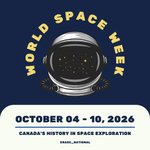
Did you know that Canada played a key role in space exploration? Including: launch of Sputnik 1 (1957), third Nation in Space (1962), first Canadian in Space (1984). And now, in 2026, Canadian astronaut Jeremy Hansen made history as the first Canadian to journey around the Moon.


HARVEST MOON ALERT! Keep an eye on the eastern horizon tomorrow evening, September 26th, to watch the Full Harvest Moon rise! As the full moon closest to the equinox, it famously rises just after sunset for several evenings in a row.

The September equinox occurs in September when the sun crosses directly above Earth's equator. It marks the start of astronomical autumn in the Northern Hemisphere and spring in the Southern Hemisphere, giving nearly equal day and night worldwide.

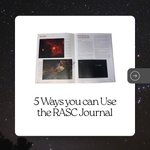
The Journal is a bi-monthly publication of The Royal Astronomical Society of Canada.
The online copy of the Journal is available for download for all members. Become a RASC member today: secure.rasc.ca/membership/ac…


Stellarium Level 1 (Evening): Tuesday, September 29, 2026 - 6:30 pm MDT
(2 hrs 15 min): us02web.zoom.us/meeting/regi…
Stellarium Level 1 (Afternoon): Tuesday, October 6, 2026 – 1:30 pm MDT
(2 hrs 15 min):
us02web.zoom.us/meeting/regi…
You must be a RASC member to register.

Join us today to experience member benefits!
Join here: secure.rasc.ca/membership/ac…

Did you know that we have a weekly Newsletter which goes out every Monday? Subscribe to get all the latest astronomy news, star parties, centre events, and promotions!
rasc.ca/newsletter


A 300-year-old instrument could have a surprising role in the future of space exploration. What once helped sailors navigate the oceans may offer astronauts a way to find their bearings if modern systems fail. Learn more: bbc.com/future/article/20260…


NASA successfully launched the Nancy Grace Roman Space Telescope aboard a SpaceX Falcon Heavy rocket from Florida on August 31, 2026! Learn more: youtube.com/watch?v=SfgSLkNN…

Thank you to everyone who volunteered at our booth at the Astro Fair 2026 and for those who came to say hello! Our Volunteers: Jim Shutsa, Andia Lian, Jackson Harris, Pranshu Majmunder, Izyan Khan, Rachelle Wang, Jaswinder Atwal, and Patricia Albo.


The Moon is receding from Earth at an average rate of about 3.8 cm per year due to tidal interactions between the Earth and Moon. Over geological timescales, this gradual change alters the Earth-Moon system and the length of our day.

