


Pinned Tweet
Either $TIG @tigfoundation has been running a time machine or they’re simply far ahead of the curve.
They dropped a world-record vehicle routing algorithm last month. Now it’s becoming a talking point for everyone. Wild.
xitter.cf/tigfoundation/status/2…


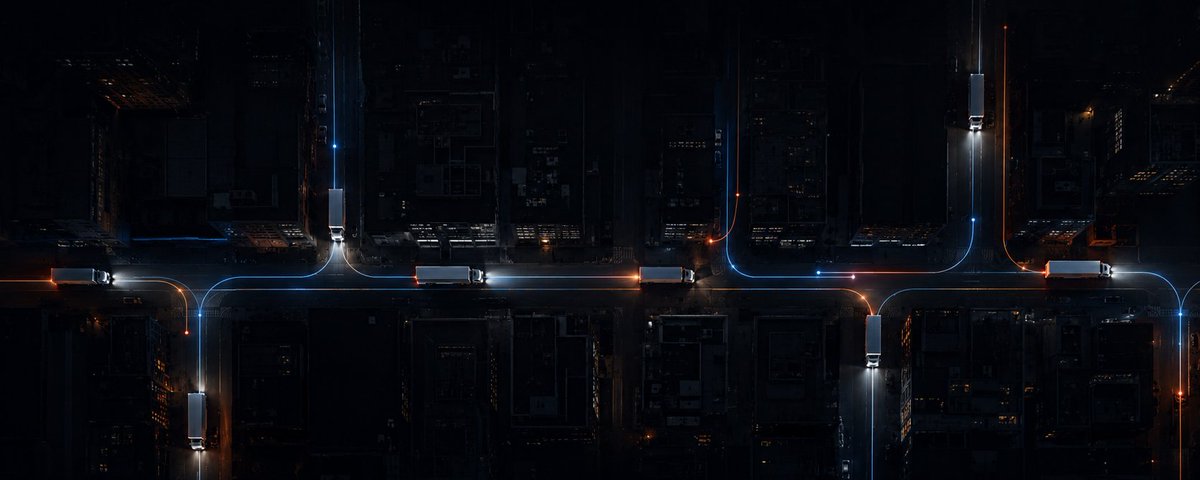
Today, we’re launching Alpamayo 2 Super, our frontier open reasoning model for autonomous vehicles.
Beyond seeing, Alpamayo understands and reasons through the complex world - thinks before it acts.
It’s a powerful backbone for robotaxis, trucks, shuttles, delivery vans, tractors and the long tail of mobile robots—billions of autonomous machines someday.
We’re releasing it for commercial use under OpenMDW-1.1 so teams can inspect it, fine-tune it and deploy it—open models advance safety and security.
The next wave of AI is robotics—and it starts with autonomous vehicles.
Great work, Alpamayo team!
blogs.nvidia.com/blog/alpama…


mfers who sold $TIG forgot that ONE @tigfoundation algo potentially saves $250M .
and we have many more incoming.
anyway.
rao retweeted

AI is solving math humans have been stuck on for decades and the takeaway is supposed to be "get out of crypto".
@tigfoundation is the rare protocol that gets stronger every time a model gets smarter.
Using AI to improve algorithms is a perfect use case.
Every capability jump is a supply of new work, not a threat to $TIG.
No one understands this yet. You're that early.
This quoted post is unavailable.
rao retweeted

Another maths breakthrough, with many calling it the most impressive AI maths result so far.
TLDR: The Riemann Hypothesis has gone unproven for 167 years and is the most famous open problem in maths. It involves trying to find a pattern in prime numbers.Anthropic pointed an unrelased model and made a significant jump. It didn't solve it nor is this useful in solving it, but it is a incredibly impressive result.
Even more impressive is that this wasn't done by a mathematician... someone (at Anthropic) prompted Claude to “take a real stab” at it...
...and follow -up prompts were mainly giving the model it encouragement by saying "keep going" and "believe in yourself" 😂
Many of the previous maths x AI "breakthroughs" have
involved a mathematician going back and forth with technical prompts.
But as the models improve, this might be less needed and people will be able to one-shot famous problems!
It also follows the same pattern as other results this year - where AI finds and applies ideas from one area to another that a human might not have tried.
A year ago this needed a Fields medallist in the loop.
Now it needs someone willing to type "keep going".


We asked an unreleased research version of Claude to take a stab at the Riemann hypothesis.
It didn’t solve it, but it did make strides on a related problem: it increased the lower bound for the fraction of zeros of the Riemann zeta function that satisfy the hypothesis from 41.6% to 67.2%.
anthropic.com/research/riema…


rao retweeted
"This completely changes the economics of algorithm development, and the big danger is monopoly."
In February 2025, @Dr_JohnFletcher predicts that AIs will soon surpass human capability in mathematics...
Just as they have surpassed humans in chess and Go: youtu.be/O-l-nCgntSM?si=DkPF…
It's easy to forget what a minority view this was among mathematicians at that time
It's not minority anymore...

I am a mathematician but I avoided commenting on this because the problems are (far) outside my domain. Even if I sat down to read the technical details (which I have not), it would be hard to appreciate the context of prior work, etc. But I've gotten enough sense of things through colleagues to be confident about some aspects.
First of all, all the mathematics is fundamentally correct.
How impressive are the results? There is a spectrum of reactions (as with everything), but the consensus seems to be all the results could realistically land (by prior standards) in the very highest tier of publications, e.g., Inventiones for the math papers and "Best Paper Award" at STOC for the TCS papers.
What does this mean practically? Prior to 2026, a Ph.D. student whose only result was one of these 10 would likely land an interview for a tenure line job at a strong university. For some of the results, you could probably replace "tenure line" with "tenured". When Astra comes out, it will clearly be very disruptive to the existing system. I think it's good that the community has the time to react and prepare. Personally I think we should totally overhaul hiring and publishing practices.
Are the results "Fields Medal Level"? I have not heard a mathematician answer Yes to this, and the quoted reason is invariably that the solutions are very clever and beautiful but not "deep". This is consistent with what I can see from a cursory glance.
However, the same criticisms could be levied at certain human generated works which have won major prizes. Ultimately, comparing results is very subjective and also somewhat political, and I absolutely think that if a human had one of these results, and also the right influential senior advocate, then that advocate could make a strong case for the work to win major prizes. The fact is that most mathematicians, including prize committees, don't have the breadth or time to evaluate all the top results, so they rely on proxies for importance like: Is the problem longstanding? Is it famous? Was there a large community of people actively trying to solve it? For e.g. #3 (existence of non-sofic groups), the answer to each of these questions is undoubtedly Yes. I've always felt that people should pay less attention to these proxies and focus more on the actual mathematics; glad to see that is happening with the AI solutions, but the same standards should then also be applied everywhere.
rao retweeted

Introducing Adapt-1 Preview (Δ1): a pretraining-free substrate for test-time learning. It learns from scored feedback while performing the task.
reilabs.org/blog/introducing…
Today we’re making its first research preview and first results across robot perception, spatial reasoning, and games available.
rao retweeted
Algorithms are literally everything
Algorithms ARE the source
The only question is, will the world realize in time?

Algorithms are the most powerful component in computation. Closed labs can't compete with open algorithm development at scale. But don't take my word for it. Let @JensenHuang explain
rao retweeted
Hi Jensen, This looks amazing!
The Innovation Game (TIG) just developed a record-breaking open vehicle routing algorithm..
Collaboratively combining insights from both AI and human experts: xitter.cf/tigfoundation/status/2…
We'd be happy to assist in integrating this breakthrough into @nvidia's autonomous vehicle capability

Today, we’re launching Alpamayo 2 Super, our frontier open reasoning model for autonomous vehicles.
Beyond seeing, Alpamayo understands and reasons through the complex world - thinks before it acts.
It’s a powerful backbone for robotaxis, trucks, shuttles, delivery vans, tractors and the long tail of mobile robots—billions of autonomous machines someday.
We’re releasing it for commercial use under OpenMDW-1.1 so teams can inspect it, fine-tune it and deploy it—open models advance safety and security.
The next wave of AI is robotics—and it starts with autonomous vehicles.
Great work, Alpamayo team!
blogs.nvidia.com/blog/alpama…
rao retweeted

Someone just shared this post with me
Andrej, we built it... and it works... xitter.cf/tigfoundation/status/2…


rao retweeted
Tacit know-how is the most important part of human knowledge
And it's the part AIs don't have
Big tech is preparing to capture it on an industrial scale
If we don't act to protect it, the consequences will be enormous (see clip below)
There is one way to fight back: Prometheus
@Dr_JohnFletcher described Prometheus on 10 February in this interview: youtu.be/3q1RhqoV3mw?si=-tC1…
See here for the full Prometheus vision: xitter.cf/Dr_JohnFletcher/status…
Yesterday, Prometheus Swarm, the first step towards realisation of this vision, was Open Sourced: xitter.cf/tigfoundation/status/2…
Find out more at tig.foundation

This is something that @Dr_JohnFletcher has been warning about for a while now..
Tacit Knowledge
I'll admit, John opened my eyes to this as I hadn't previously given it too much thought..
Most people view their relationship with OpenAI and Anthropic as a one way thing..
We prompt the model with a problem and it gives us back an answer.. pretty simple
But every time we interact with these models, we also reveal something about how we think
What to try.. what to avoid.. why certain approaches fail.. the way we ask questions.. all that intuition that we've built through years of experience
That is Tacit Knowledge..
Its the valuable, unwritten expertise that can't be found in papers or textbooks.. but its an extremely valuable ingredient when it comes to innovation
Not every prompt instantly trains the model.. the deeper issue is that these massive AI companies are becoming embedded within millions of workflows
And over time.. this gives them extraordinary visibility into where these valuable problems exist and how experts solve them
It also gives them an insight into which industries are ready to be disrupted next
Which means.. the very company supplying the intelligence could absorb enough knowledge and market insight to compete with the businesses, or even partners using it
It then becomes a really powerful flywheel..
An expert uses a model
>
The model learns from the way they solved the problem
>
The company supplying the intelligence grows stronger capabilities
>
Those capabilities then become competing products against the expert or business using it
Its a real issue that inevitably leads to all power in the hands of a few morally questionable centralised mega companies
This is one of the core problems $TIG is trying to address..
#Prometheus is an open algorithm discovery system where swarms of AI agents explore, code and test thousands of ideas in parallel
Experts are able to guide those agents with their own tacit knowledge..
But, the key part is..
Without having to publish or surrender the underlying expertise to the wider swarm or @tigfoundation.. which means the tacit knowledge itself doesn't need to be shared
So the knowledge can still influence the algorithm produced.. but the expertise stays locally with the contributor
Instead of that tacit knowledge being absorbed into a closed corporate flywheel.. $TIG's building an open one
Private expertise from the human
>
AI agent discovery through #Prometheus
>
Which leads to better algorithms
>
They're independently benchmarked and validated
>
Rewards are then routed back to the contributors
What gets shared is the breakthrough.. not the tacit knowledge that helped create it
This results in the value flowing to the researchers and experts who helped create it.. rather than exclusively to these AI companies
With the added bonus of their private tacit knowledge remaining with the contributor rather than becoming public property.. or being handed over to OpenAI or Anthropic
The goal being rewarding those who are truly changing society for the better..
While preventing humanity's accumulated knowledge from being willingly handed over to these centralised companies who have the potential to abuse it for their own gain
$TIG
rao retweeted

Case in point..
OpenAI and Anthropic will continue to find ways to capture your tacit knowledge
$TIG

This is something that @Dr_JohnFletcher has been warning about for a while now..
Tacit Knowledge
I'll admit, John opened my eyes to this as I hadn't previously given it too much thought..
Most people view their relationship with OpenAI and Anthropic as a one way thing..
We prompt the model with a problem and it gives us back an answer.. pretty simple
But every time we interact with these models, we also reveal something about how we think
What to try.. what to avoid.. why certain approaches fail.. the way we ask questions.. all that intuition that we've built through years of experience
That is Tacit Knowledge..
Its the valuable, unwritten expertise that can't be found in papers or textbooks.. but its an extremely valuable ingredient when it comes to innovation
Not every prompt instantly trains the model.. the deeper issue is that these massive AI companies are becoming embedded within millions of workflows
And over time.. this gives them extraordinary visibility into where these valuable problems exist and how experts solve them
It also gives them an insight into which industries are ready to be disrupted next
Which means.. the very company supplying the intelligence could absorb enough knowledge and market insight to compete with the businesses, or even partners using it
It then becomes a really powerful flywheel..
An expert uses a model
>
The model learns from the way they solved the problem
>
The company supplying the intelligence grows stronger capabilities
>
Those capabilities then become competing products against the expert or business using it
Its a real issue that inevitably leads to all power in the hands of a few morally questionable centralised mega companies
This is one of the core problems $TIG is trying to address..
#Prometheus is an open algorithm discovery system where swarms of AI agents explore, code and test thousands of ideas in parallel
Experts are able to guide those agents with their own tacit knowledge..
But, the key part is..
Without having to publish or surrender the underlying expertise to the wider swarm or @tigfoundation.. which means the tacit knowledge itself doesn't need to be shared
So the knowledge can still influence the algorithm produced.. but the expertise stays locally with the contributor
Instead of that tacit knowledge being absorbed into a closed corporate flywheel.. $TIG's building an open one
Private expertise from the human
>
AI agent discovery through #Prometheus
>
Which leads to better algorithms
>
They're independently benchmarked and validated
>
Rewards are then routed back to the contributors
What gets shared is the breakthrough.. not the tacit knowledge that helped create it
This results in the value flowing to the researchers and experts who helped create it.. rather than exclusively to these AI companies
With the added bonus of their private tacit knowledge remaining with the contributor rather than becoming public property.. or being handed over to OpenAI or Anthropic
The goal being rewarding those who are truly changing society for the better..
While preventing humanity's accumulated knowledge from being willingly handed over to these centralised companies who have the potential to abuse it for their own gain
$TIG
rao retweeted
"A significant share of tacit measurement is trapped inside the "weights" of the relevant domain experts' brains."
That's right!
And this capability can be distilled and centralised through interaction with closed AI models in the course of research.
Are the experts aware of this?
Are they aware it's not inevitable?
xitter.cf/Dr_JohnFletcher/status…


1. There's only one bottleneck left: verification.
2. You automate verification with better ground truth (data and measurement).
3. A significant share of tacit measurement is trapped inside the "weights" of the relevant domain experts' brains.
xitter.cf/andrewchen/status/2083…

rao retweeted
This is something that @Dr_JohnFletcher has been warning about for a while now..
Tacit Knowledge
I'll admit, John opened my eyes to this as I hadn't previously given it too much thought..
Most people view their relationship with OpenAI and Anthropic as a one way thing..
We prompt the model with a problem and it gives us back an answer.. pretty simple
But every time we interact with these models, we also reveal something about how we think
What to try.. what to avoid.. why certain approaches fail.. the way we ask questions.. all that intuition that we've built through years of experience
That is Tacit Knowledge..
Its the valuable, unwritten expertise that can't be found in papers or textbooks.. but its an extremely valuable ingredient when it comes to innovation
Not every prompt instantly trains the model.. the deeper issue is that these massive AI companies are becoming embedded within millions of workflows
And over time.. this gives them extraordinary visibility into where these valuable problems exist and how experts solve them
It also gives them an insight into which industries are ready to be disrupted next
Which means.. the very company supplying the intelligence could absorb enough knowledge and market insight to compete with the businesses, or even partners using it
It then becomes a really powerful flywheel..
An expert uses a model
>
The model learns from the way they solved the problem
>
The company supplying the intelligence grows stronger capabilities
>
Those capabilities then become competing products against the expert or business using it
Its a real issue that inevitably leads to all power in the hands of a few morally questionable centralised mega companies
This is one of the core problems $TIG is trying to address..
#Prometheus is an open algorithm discovery system where swarms of AI agents explore, code and test thousands of ideas in parallel
Experts are able to guide those agents with their own tacit knowledge..
But, the key part is..
Without having to publish or surrender the underlying expertise to the wider swarm or @tigfoundation.. which means the tacit knowledge itself doesn't need to be shared
So the knowledge can still influence the algorithm produced.. but the expertise stays locally with the contributor
Instead of that tacit knowledge being absorbed into a closed corporate flywheel.. $TIG's building an open one
Private expertise from the human
>
AI agent discovery through #Prometheus
>
Which leads to better algorithms
>
They're independently benchmarked and validated
>
Rewards are then routed back to the contributors
What gets shared is the breakthrough.. not the tacit knowledge that helped create it
This results in the value flowing to the researchers and experts who helped create it.. rather than exclusively to these AI companies
With the added bonus of their private tacit knowledge remaining with the contributor rather than becoming public property.. or being handed over to OpenAI or Anthropic
The goal being rewarding those who are truly changing society for the better..
While preventing humanity's accumulated knowledge from being willingly handed over to these centralised companies who have the potential to abuse it for their own gain
$TIG

should be obvious by now, but OpenAI and Anthropic are just gonna keep cannibalizing all their biggest customers.
it’s simply too profitable for them to resist. and it’s already happening:
1. Figma partnered with Anthropic on AI design tools. then Anthropic’s product chief quit Figma’s board, and 3 days later Anthropic launched Claude Design to compete with Figma. CEO Dylan Field said Anthropic was “not consistently candid.”
2. Novo Nordisk uses Claude to help develop drugs. now Anthropic is developing drugs of its own.
3. Microsoft poured billions into OpenAI. now OpenAI is building a Jobs Platform to compete with LinkedIn, and reportedly a code repository to compete with GitHub. Microsoft owns both.
4. Harvey uses Claude to sell AI contract analysis, due diligence, and litigation tools. now Anthropic sells those same workflows through Claude for Legal.
5. Intercom used OpenAI’s Realtime API to build Fin Voice. now OpenAI sells its own voice-and-chat support agent through Presence.
6. Abridge and Ambience build clinical documentation products on OpenAI. now OpenAI sells ChatGPT for Healthcare directly to hospitals with clinical documentation built in.
7. Benchling uses Claude to power its biotech R&D platform. now Anthropic sells its own scientific workbench through Claude Science.
the frontier lab playbook is simple:
1. sell their models to the world’s most valuable businesses
2. help wire them into those companies’ most valuable and sensitive work
3. map the business from the inside and find where AI can take over
4. turn those capabilities into their own products and become the customer’s competitor
rao retweeted
$TIG is deep in conversation with a vehicle routing integrator right now.
This isn't speculation. Phil said it on the space today.
They have the best VRP algorithm on the planet. And they have the man who licensed ARM into 100% of the phones on earth.
The only proof point left is the license itself. Repricing loading...
rao retweeted
Dear @karpathy, Update on this.
Earlier this month @tigfoundation announced a new SOTA routing algorithm had been collaboratively developed and submitted to The Innovation Game.
The algorithm demonstrated the largest single perfomance jump in the modern history of the field on standard academic benchmarks: xitter.cf/tigfoundation/status/2…
This success is a powerful proof of concept. I believe the wider implications will also interest you.
As you know, the "Source" in AI is algorithms and data. These algorithms are typically for "hard to solve but easy to verify" problems.
Remarkably, this allows the creation of a market for pricing improvements to these algorithms (roughly, the market is created by "racing" the algorithms, to see which can produce proof-of-work fastest).
Availability of a market mechanism means open development of the algorithms can be funded by capturing a portion of the value they generate, and allocating it back to algorithm developers.
The allocation is efficient, naturally integrating information (such as hardware availability) through revealed preferences.
Importantly, market allocation is also "impersonal", which mitigates the risk to community cohesion that has historically afflicted Open Source projects offering monetary reward.
Note: That a market for pricing code could extend Open Source to areas requiring monetary reward was (as far as I know) first suggested by Eric Raymond in 1999 @esrtweet : semanticscholar.org/paper/Th…
Conclusion: The structure of Open Source AI means it can operate commercially. For example, value captured via Open Source "dual licensing", with allocation of the value by a market generated by proof-of-work.
I'd love to hear your thoughts on this. Please see tig.foundation for more detail.
Andrej,
I’m John Fletcher. I have a PhD in mathematics and theoretical physics from Cambridge, and since 2016 I have been working full-time on the problem of how to coordinate untrusted distributed compute for algorithmic innovation.
I listened to your No Priors conversation and recognised the architecture you were describing: commits that build on each other, computational asymmetry (hard to find, cheap to verify), an untrusted pool of workers collaborating through a blockchain-like structure.
The result is The Innovation Game (TIG), which has been in continuous operation since mid-2024. The correspondence is so close that I thought it worth writing.
The short version: roughly 7,000 Benchmarkers test algorithms submitted by Innovators by solving instances of asymmetric computational challenges (SAT, Vehicle Routing, Quadratic Knapsack, Vector Search, among others).
This testing is "proof of work" in the technical sense of Dwork and Naor (1992). Innovators earn rewards proportional to adoption by the Benchmarkers. The repository of algorithms is open source (github.com/tig-foundation/ti…).
The system is already producing state-of-the-art results. For the Quadratic Knapsack Problem, 476 iterative submissions by independent contributors brought solution quality to a level that now exceeds methods published by Hochbaum et al. in the European Journal of Operational Research (2025).
We are working with Thibaut Vidal (Polytechnique Montréal), who has submitted a state-of-the-art vehicle routing algorithm directly to TIG, and with Yuji Nakatsukasa (Oxford) and Dario Paccagnan (Imperial College London), among many others.
One of TIG’s active challenges is directly relevant to your autoresearch work: an optimiser for neural network training (play.tig.foundation/challeng…), where Innovators compete to develop an improved optimiser (see screenshot).
One way in which TIG extends the vision is on the economic side. In our view, a monetary incentive is required, otherwise the open strand simply cannot compete at scale. TIG’s open source dual licensing model (designed by my co-founder Philip David, who was General Counsel at Arm Holdings for over a decade, and was the artchitect of ARMs licensing strategy) is intended to solve that problem.
I expect we have each thought about parts of this that the other hasn’t. Happy to talk whenever suits.
John Fletcher
tig.foundation

rao retweeted

Anyone with a little insight and sound judgment should realize how much $TIG will change the current state of algorithms during this process
So on to our private beta tests!
We ran the first one in May with one aim: find out where the onboarding breaks.
Our maths researcher said it won't be competitive in terms of finding an algorithm
They literally said "0% chance"🙃
...
One weekend and 100 agents later, the swarm DID find a superior algorithm
AND
It displaced the leader on Energy Arbitrage Challenge on TIG, earing rewards for 4 weeks!
So this was a group of ~10 ppl, with 100+ agents, who ran a swarm over the weekend and as a result earned just over 1500 TIG


Look, capital reallocation around ordinary but proven products is already extreme.
Here we’re talking about proven works of algorithms…
I cannot overstate how much institutional money is willing to enter, but a brief look on its results tell you that $TIG is self-explanatory long term portfolio.
