

Deep Tech VC - Co-Founder @SpecialeInvest. Previously: entrepreneur, product guy, developer. Enjoy Start-ups, Sports, Poker.
Bengaluru
Joined August 2008
- Tweets13.3K
- Following3.8K
- Followers2.2K
- Likes11.3K



Pinned Tweet
"This isn't where the story ends. This is where it gets interesting." ⚡✈️✈️

"The day you stop asking whether it's possible and start asking how... that's the day the work actually begins."
3 aircrafts. 1 hangar. Zero playbooks.
No one in India had walked this road before us. Just a problem worth solving, a team willing to do the work, and the quiet decision to keep going.
• ATVA (2021): Small, unassuming, but our first real proof that this wasn't just math on paper.
• e50 (2023): Scaling up the physics to 50kg and finding our rhythm in the sky.
• e200X (2026): 7 years of R&D, 10,000+ km of test flights, and a 2.2-ton full-scale electric aircraft built by hand.
PT-01 is the answer to every doubt along the way. We could. We did.
This isn't where the story ends. This is where it gets interesting. ⚡

Arjun retweeted

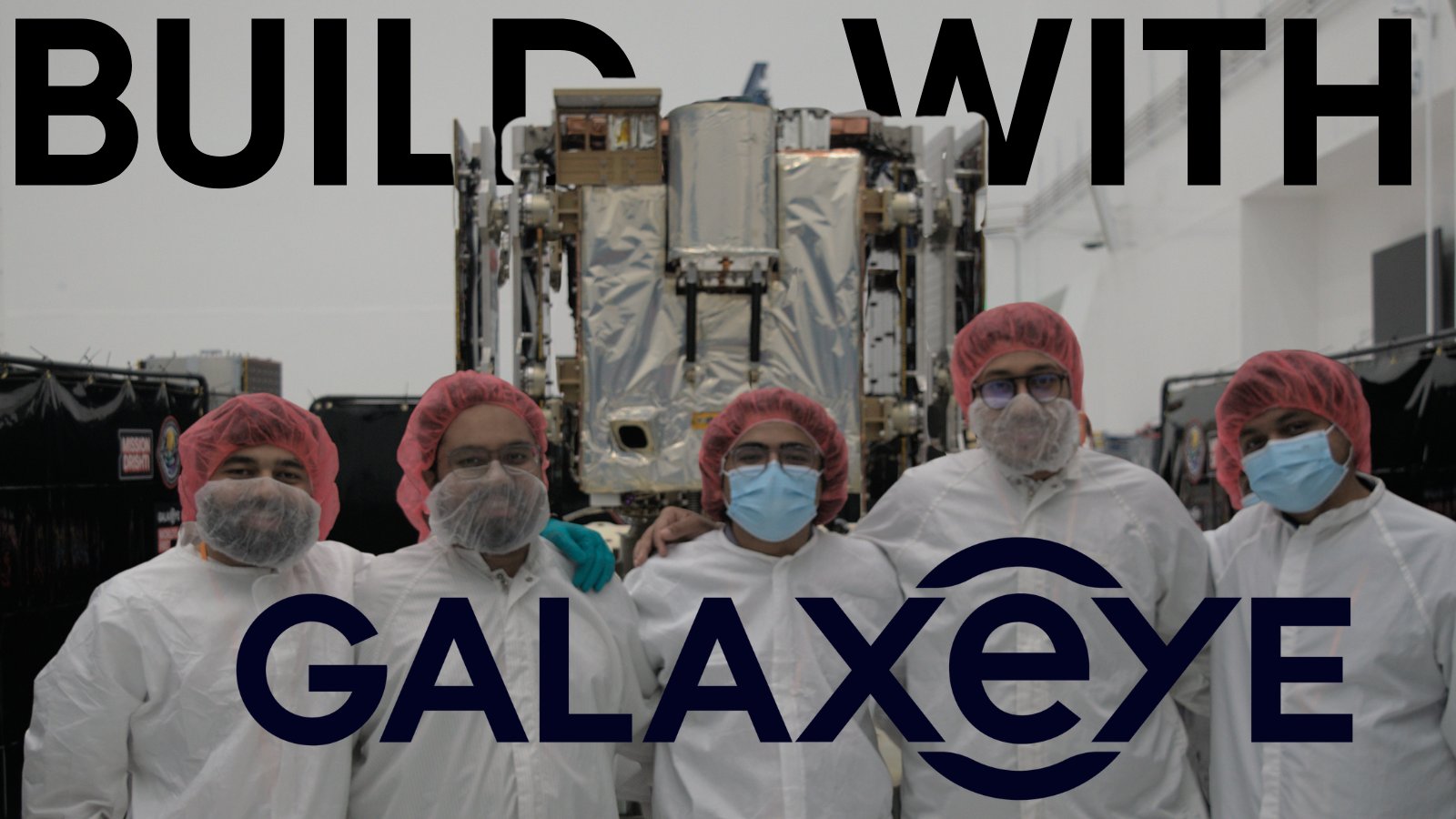
We’re hiring 🛰️
Build the world’s only OptoSAR satellites with us in Bangalore.
Opto-Mechanical Lead
GNC Lead
Sr. Spacecraft Software Engineer
Sr. Spacecraft Structure Engineer
Composite Structure Engineer
Sr. Hardware Design Engineer
Links below👇
#SpaceTech #Hiring #NewSpace
Arjun retweeted

Growth investors today are either dragging right, exponential surfing, or supply-side investing.
Each requires a completely different investing style and craft, and it's important to know which applies.
Dragging right is traditional growth investing. You take a business with an established, predictable, repeatable go-to-market motion based on either consumer acquisition or enterprise sales reps/quotas, and the investors' job is to figure out whether it can scale. "Okay, this company has twenty reps- can it hire another forty? Will the LTV:CAC hold?"
Greatness in evaluating this came down to understanding TAMs/market segments, the breadth of product-market fit, competitive dynamics (often gentle), and how to analyze spreadsheet data/customer calls for signs of potential weaknesses. This was effectively all SaaS investors had to do for the last ten years, and it was glorious. The entire growth investing industry as we know it today was built around this model of funding predictable g-t-m machines with a fairly narrow range of outcomes- and the skillsets that made someone great at it were all about g-t-m logic, TAM analysis, customer work, etc.
Exponential surfing has been the dominant growth investing strategy of the last two years. Consider Anthropic twelve months ago- if you had complete access to the traditional customer data/analytics and spoke to all of the customers, you would find nothing to predict the massive acceleration it saw from December 2025-April 2026. It is literally a completely different game, and most (not all) of the AI companies with material revenue are playing some version of it- not only is their revenue growth hard to predict for investors, it is largely out of their hands as well, dependent on whether the latest models have emergent, high-value, fast-propagating use cases.
Greatness here is still emerging, but as far as I can tell the two ways to have been early to the Anthropic inflection were to be using the products oneself (so you can feel the step-function in capabilities in real time) or obsessively tracking the coincident data (Openrouter, credit card panels, etc.) for signs of sustained acceleration. A strong silicon Valley practitioner whisper-network is perhaps the third way.
What is definitely NOT great is using SaaS terminology metrics (Y/y growth, gross retention, LTV:CAC, ARR, etc.) to characterize this wave of companies. Yes, many of them are "growing faster than SaaS ever did," but also the base rate of them stopping on a dime (or even shrinking) is much higher. It's just a fundamentally different business model, arguably with no clear precedent.
Supply-side investing has risen to prominence in the last 12-18 months. This involves investing in businesses that are pre-product, where the economic value of the product is crystal clear... if it can get built/produced at scale. Neolabs, semis startups, certain very ambitious agent starts, defense tech, robotics startups, etc. all fit this bucket.
Greatness here is about understanding technical challenges and unlocks in granular detail, studying talent flows, gauging which teams have the right combination of research and commercialization chops, etc. The rewards for getting it right are enormous (see: pre-revenue Anthropic investors), but the diligence is, again, completely different.
What is NOT great is talking to dozens of potential customers who all breathlessly assure you that they would love to buy chips 10x more efficient than Vera Rubins at half the price. That is about as useful as reading LOIs from those same customers to buy them by the billions- aka not useful at all. Referring to those LOIs as "CARR" is, well, fantastical. In supply-side growth investing, the demand side is obvious by definition.
Again- there are great investors who will find ways to make money in all of these styles, but it has never been more important to understand which version of investing you're doing and to apply yourself to being excellent at it in a way that fits the game you've chosen to play, not to apply the techniques of yesteryear.
Arjun retweeted

This reasoning is exactly right. I think the S&P or Nasdaq are fair benchmarks, and there should also be a premium-on-top of those given venture's illiquidity.
The percentile venture fund that beats those benchmarks is creeping higher and higher. Much worse, venture firms are increasingly, implicitly targeting returns that are lower.
At some point, they will achieve the returns they're implicitly targeting AND LPs will realize the appropriate hurdle.
At that point I think the venture capital cycle will turn aggressively

Arjun retweeted

This is not new, unfortunately. I remember meeting a hedge fund neighbor in SF who was commenting about another neighbor (who was an older prominent VC). He would comment that the VC was always so enthusiastic about every one of his companies that was about to IPO. The hedge fund guy would then put it on his list of ideas to short and claimed he did very well. This was 25+ years ago when I used to live in SF.
Arjun retweeted

Given the current concentration of capital into venture ‘megafunds,’ we wanted our next LP guest on Origins to speak to how they are investing into this market and what their return expectations are.
Welcome @Curiousjorge65, who manages @CarnegieMellon's $4B endowment
NEW Origins! 🧵
Arjun retweeted
So as one of venture’s sharpest critics… what keeps him so bullish??
Find out 👇👇👇
youtube.com/watch?v=aa_qXTif…

Arjun retweeted

About pre-seed/seed
Real Madrid can buy almost any established star in the world. That doesn’t mean they are automatically the best academy for discovering a 15-year-old before anyone knows his name. Those are different muscles.
Pre-seed and seed aren’t Series A with smaller checks.
But calling ourselves specialists isn’t enough. Only the best will survive!
Arjun retweeted

After a year of volunteering with CubbonWalks, I and friend Radha Rangarajan are starting a venture of our own! Slow, unhurried walks all over Bangalore


Arjun retweeted

I've watched a few really good founders raise big seed rounds this year, then struggle to raise their A, even as the business kept making progress. The seed valuation had set a bar they weren't ready to clear yet. And with everyone excited about the term sheet, it was easy to put off what they'd need to show at the next round.
One of them had about as strong a resume as you'll see in AI, and a team to match. Sub-$1M ARR would have been a fine A story at a normal seed price. At theirs it wasn't.
(For what it's worth, I write both seed and A checks, so I sit on both sides of this.)
The top of the seed market is a bit wild right now. Carta's 95th percentile seed valuation was about $72M in Q2 last year. This Q2 it was $200M. Meanwhile the share of seed companies that get to a Series A within two years has roughly halved since 2018.
During a raise almost all the attention goes to how much and at what valuation. The question I wish more founders asked is whether the company is actually set up to hit the growth the next round will expect.
If you're planning on a 2-3x step-up at the A, here's what that means. A $25M post means pitching a $50-75M A, which a company with real traction can get to. A $100M post means $200-300M, and at that price the A partner is comparing you to the handful of companies growing faster than almost anyone.
The bar right now is brutal. In the A conversations I'm in, a $15M seed (usually a $75-100M post today) means $2M+ ARR, growing 5-6x over the last year, with a believable path to another 5x.
None of this means raise less. Before you sign, work backward: what will we need to show at the A, and does this money and ~24 months get us there? If it does and the terms are good, take it.
If the honest answer is "only if everything goes right", that's worth knowing now rather than in month 20.
A big seed buys you runway and a higher bar. Most founders only count the runway.
Arjun retweeted

Seinfeld's reruns have made Jerry Seinfeld and Larry David hundreds of millions of dollars. Jason Alexander, who played George, says he has made less than $200,000 from them.
That gap is part of why the show ended.
In the video below, Alexander explains why George, Elaine and Kramer stopped wanting more seasons.
In 1997, Seinfeld was the biggest comedy on TV. NBC offered Jerry $5 million an episode, about $110 million, for a tenth season. He said no.
Every year before the Christmas break, Jerry asked his three co-stars if they wanted to keep going. In season 9, they all said it was done.
Alexander, Julia Louis-Dreyfus and Michael Richards were not partners in syndication. The reruns would pay Jerry and Larry for life. Not them.
"Seinfeld wasn't going to be the annuity for us that it was going to be for Jerry and Larry," Alexander says.
Every new season tied them tighter to one character. "We were going to contribute to our own eventual demise as actors."
The case for Jerry: he and Larry created the show and owned it. The cast signed their deals and were paid well, reportedly $600,000 an episode by the end.
Before the final taping, the four of them held hands backstage like every week. They called it the circle of power.
Jerry said: "For the rest of our lives, when anyone thinks of one of us, they will think of all four of us."
Alexander says they walked out looking like they'd been hit by a truck.
So should Jerry have shared the reruns with George, Elaine and Kramer?
Arjun retweeted

NEW: In 2021, Apollo acquired a massive internet business for ~$5B.
Just 5 years later, it's become *one of the fastest-returning deals in the firm's history.*
700M monthly users. Billions in revenue. And an enormous distribution advantage that would be nearly impossible to replicate today.
Apollo's Reed Rayman recruited Jim Lanzone (@jlanzone) to lead the turnaround.
The company? @Yahoo.
I sat down with CEO Jim Lanzone, one of the internet industry's most accomplished turnaround executives, to go inside @apolloglobal's PE M&A playbook for Yahoo, the economics of the acquisition, & why this may be one of the most underrated assets in tech.
The numbers:
› ~$5B acquisition
› 700M monthly users, including 100M+ each across Yahoo Finance & Sports
› 75% direct traffic, with ~75% of daily users logged in
› Hundreds of millions in annual ad-tech losses addressed through restructuring
› Major divestitures including AOL, TechCrunch & Edgecast
› One of Apollo's fastest-returning deals, with Jim saying they're now "playing with house money"
› Newer search companies valued at 6X Yahoo despite having a fraction of its users, revenue & profitability
But the most interesting part of this deal is the operator.
Before Yahoo, Jim helped drive a 50X stock increase at Ask Jeeves, grew CBS Interactive from 70M to 220M users, and led Tinder.
And unlike the traditional PE playbook of aggressive cost extraction, PE micromanagement, Apollo backed an experienced product executive to restructure the business, rebuild its leadership, & reinvest in growth.
Now Yahoo is moving from turnaround to comeback, with an entirely rebuilt product ecosystem, its own AI search engine through Yahoo Scout, and a potential path back to the public markets.
We get into what it's really like operating under Apollo, the leadership decisions behind the turnaround, the value of internet distribution at scale, and why some startups with less than 0.1% of Yahoo's users command higher valuations.
𝐓𝐈𝐌𝐄𝐒𝐓𝐀𝐌𝐏𝐒
(00:00) Jim Lanzone, CEO of Yahoo
(01:33) How Apollo bought Yahoo for $4.8B
(04:16) Taking over a company in the middle of COVID
(07:22) Is private equity really the villain?
(12:42) The mistake that handed Google the internet
(16:09) Where Yahoo's 700M monthly users come from
(17:07) Why Yahoo sold AOL & TechCrunch
(21:21) "You can't skip levels of the video game"
(27:58) Why people still trust Yahoo in the AI era
(30:26) How Yahoo Scout competes with ChatGPT & Perplexity
(33:48) Saying no to the AI gold rush?
(37:31) From turnaround to comeback
(39:42) One of the fastest paybacks in Apollo history
(42:50) The biggest mistake companies make at scale
(44:21) Silicon Valley startups are now worth more than Yahoo with 0.1% of its users
(46:25) Why Yahoo is ready for the next crash
(48:57) Barry Diller, Tinder & the tweet that predicted Yahoo
(54:36) Is Yahoo finally back?
Arjun retweeted

Larry David is one of America’s unlikeliest icons, and one of history’s purest founders.
In our latest profile, Correspondent-at-Large @blakejharrisNYC—who spent six years talking to Larry for his new book—explains what makes Larry so special, and why it took him so long to break through.
Larry was a mediocre student with a middling social life. His first two jobs—selling bras and driving cabs—ended quickly. At 25, he called his mother from a hotel room: “Ma, nothing good is ever gonna happen to me.” She urged him to become a mailman.
Soon after, he found what he thought would be his calling: stand-up comedy. His material was funny, but he rarely finished a set. If somebody in the audience looked at their watch, or didn’t laugh when he thought they should, Larry stormed off.
14 years later, aged 39, he got a break. He was asked to write his first sitcom script for a big new Showtime series. Only an eighth of what he wrote survived the edit, but the episode was still his. He was broke, and the writing credit could have sparked his career. But Larry refused to put his name on it.
Even with Seinfeld, Larry nearly hit self-destruct. The pilot performed worse than almost any other show NBC had ever tested. Still, the network ordered four episodes, one of the smallest orders in TV history. Larry barely made it through them.
When the studio installed a showrunner to oversee the scripts, Larry endured the man’s notes, then said “NO. I’m not doing one thing,” and walked out. In the summer of 1991, with the show finally starting to work, NBC wanted Jerry and Elaine to get married and have a baby. Larry quit in the parking lot and wished everyone good luck. Jerry stood with Larry, and NBC caved.
Larry’s friend and comedian Bill Scheft put it this way: “He doesn’t [act this way now] because he has fuck-you money. It’s the opposite. He has the fuck-you money because he’s always acted this way.”
Read the full profile by Blake, author of Emperor of Nothing: The Making of Larry David.
colossus.com/article/many-fa…

Arjun retweeted

VCs have always checked out when founders stop sending investor updates
But today I think even more so
The opportunity cost of investing time in a startup that can't be the next Cursor is high
If you don't even get monthly updates anymore, well, you just write it off
Send them. Especially when times are tougher.
Arjun retweeted

Unlucky Tendulkar, Brilliant Ponting.
The First Test Between India-Australia, Mumbai 2001
#FromTheArchives


Epic first 30sec or so, Kumble walks in and goes straight to the crease. No, glove tap or mid pitch discussion or even a cursory chat with his Karnataka buddy. Almost as if saying "namma ooru, nammage gottu yen madbeku antha"!!

Arjun retweeted

We’re delighted to announce that the one and only @tylercowen, our internet writing sensei, is joining Works in Progress as a regular contributor.
worksinprogress.co/issue/com…
His first column is about Brazilian food, and like everything Tyler writes, it’s packed with hidden gems that make it much more than a food story.
Some of the nicest tidbits: on her first trip to Brazil, his daughter declared she had “never had a banana before” – this is how good Brazilian bananas are, apparently.
And Tyler and a well-traveled friend from Modena (of all places) agreed that Brazil is the third-best country in the world for Italian food, behind only Italy and Japan. If an Italian says that, we’d better trust him!
But as always with Tyler, he manages to draw larger lessons from apparently mundane and object-level stories. So, in a short read, we learn much more than just the fact that Brazilian food is really good.
First, food can be seen as a progress story. Brazil’s agricultural yields rival, and sometimes beat, those of the US, even though Brazil is a much poorer country. Abundant fertile land, high productivity, and short supply chains make ingredients plentiful and fresh. Tyler’s regret is that the rest of Brazil’s economy hasn’t embraced technology the way its food sector has.
We also learn how immigration shapes Brazilian cuisine. Brazil has roughly 2 million citizens of Japanese descent, which makes it arguably the best place outside Japan for Japanese food. Tyler had a 15-course omakase at a Michelin-starred São Paulo restaurant for $110, booked just half an hour ahead. Brazil is also home to about 30 million people of Italian descent, the largest Italian diaspora in the world, which goes a long way to explain why his Italian friend was so satisfied with the food.
The whole column is a delight, so do read it in full!

Arjun retweeted

“Those Who Do Not Learn History Are Doomed To Repeat It.” - George Santayana
I was at a dinner with a more experienced GP (multiple time Midas lister) who explained this same dynamic to me with the dot com hosting providers. For all the knowledge and experience in the tech industry, I don’t know why more people don’t look to the past for answers on how the future would unfold as the comparison is remarkably striking and suggests the terminal outcome for almost every neo cloud will be zero (especially as we enter an accelerating interest rate environment). I try to read everything I can about past bubble cycles (epically GFC, 1999, clean tech bubble, stagflation in the 70s and the Great Depression) because they help unveil clues on what might happen in this cycle. I try to learn from folks who have seen these cycles before and how they navigated through them.
I understand the rational to spend scarce time/resources learning about the bleeding edge of AI (which is an equally acceptable approach), but seems like more have chosen ignorance out of the sake of arrogance, preferring to follow the mentality of the herd.
There are infinite distractions in this world, but the single greatest resource we have available as a society is the ability to access thousands of years of wisdom from millions of people who have experienced them and most of it will cost you less than a beer at a bar on audible.

Ben Horowitz explains why a16z doesn't invest in neoclouds after living through the dotcom bubble
"If you get into a pathological debt situation, that can wreck anybody. It's why, by the way, we're not invested in any of these neoclouds, for that reason. That whole thing scares me, having been through it."
"It can end up being a very dangerous arbitrage business where you can get upside down easily."
"You look at Loud Cloud just as an example, here's a simple thing that happened to us in 1999. Bandwidth was $1,500 a megabit. And you couldn't get it, it was very hard to get. And so you had to get a long-term contract, three years."
"By 2001 it was $50 a megabit. So if you were holding bandwidth, you were just dead."
"So that kind of thing is so out of the control of the entrepreneur. And so different than what we'd like to fund. That, you know, it just scared me to death."
Arjun retweeted

Quiz | The Bengaluru Uncertainty Principle
Join us for a quiz exploring the surprising connections between Bengaluru and the quantum world. From C.V. Raman and IISc to cutting-edge research and homegrown startups, discover how Bengaluru has been part of the quantum story.
📆 25 October 2026, Sunday
⏰ 5pm–7:30pm
📍 Science Gallery Bengaluru
For details and free registration, please visit the Programmes link in our bio or the URL quantum.scigalleryblr.org/pr…
@JahnaviPhalkey


