Ricardo Serafim retweeted
kinase drug discovery has expanded far beyond atp-competitive inhibition.
a new nature reviews drug discovery analysis surveys more than 2,100 clinical kinase-targeting agents and over 23,000 trials, spanning covalent inhibitors, activators, degraders and induced-proximity modalities.
doi.org/10.1038/s41573-026-0…
Ricardo Serafim retweeted
📢 #PhDOffer
👉 4 year contract (FPI):
✍️ Chemically induced proximity for targeted therapies against cancer and progeria
🗓️ Application deadline: 04.12.2026
📩 Contact: Prof. Silvia Ortega Gutiérrez (E-mail: siortega@ucm.es)
🖇️ucm.es/recursos-humanos-de-i…
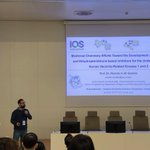
It was an honour to present the development of our MPS1/TTK Covalent Inhibitor in the Lead Generation session at the Drug Discovery Europe conference here in Barcelona (#DDCEurope).
@IQSbarcelona
@uramonllull
Link to our JMC paper: doi.org/10.1021/acs.jmedchem…
4
94
Last week we had Douglas' farewell who spent the past 9-months in our lab at @IQSbarcelona/@uramonllull funded by CAPES-PDSE. He contributed to new (and promising) 🇪🇸/🇧🇷 collaborative projects for development of antiparasitic compounds, as well as kinase modulators in oncology.
Ricardo Serafim retweeted
For readers interested in strategies in the design of kinase modulators, here's a comprehensive recent review nature.com/articles/s41573-0…
rdcu.be/7nDDFUkn4W9a
Ricardo Serafim retweeted
students should be able to recognize the most common drug structures and guess at least some of the relevant information like drug class, indication, or target class. this is just pattern recognition. here are the most common chemotypes.
💊🧪🎯 The guys who really make the science happen (from left to the right: Ronei Messias, Kisanet Tadesse, Douglas Oliveira), and me!
@IQSbarcelona
@uramonllull
Ricardo Serafim retweeted
📢 Ja podeu enviar els vostres resums a les reunions científiques de la SCQ de 2027!
Consulteu les dates i els terminis i animeu-vos a compartir la vostra recerca. Us hi esperem! 🧪
Looking forward to sharing knowledge and represent @IQSbarcelona / @uramonllull at the online Pharmacy Congress ONPHAKON III
Ricardo Serafim retweeted
In this edition we continue in Cataluña, where we can find different groups from the Universitat de Barcelona, Universitat Autònoma de Barcelona and Instituto de Química de Sarrià (IQS).
Thanks @SocEspQuimTerap for promoting our research groups! – at Esplugues de Llobregat, España
Replying to @SocEspQuimTerap
Today, we present groups led by Diego Muñoz-Torrero, Santiago Vázquez, Jesús Giraldo and Roger Estrada and Ricardo Serafim🔬
Go beyond and take a look at the whole map—you might discover a future collaborator, colleague or inspiration along the way.
Exactly!! – at Barcelona, Spain
1. CRISPR came from basic research on bacteria.
2. Optogenetics started with a discovery in algae.
3. The GFP protein comes from jellyfish.
The biggest breakthroughs all trace to scientists follow their curiosity. This is one huge reason why we must keep funding basic research!
24
Ricardo Serafim retweeted
We're at 44 FDA novel drug approvals and it's only the end of September.
For context, CDER approved 46 in all of 2025. We're two short of that with a whole quarter left, so 2026 is very likely to end up one of the biggest years we've seen. I made a poster of the 27 small molecules approved through Q3, and building it made me realize how much good chemistry got approved this year.
What really stands out is how many of them are first-in-class:
-Oveporexton (Takeda) is the first orexin receptor agonist. It treats the root cause of narcolepsy type 1 instead of managing the symptoms.
-Daraxonrasib (Revolution Medicines) is the first broad RAS(ON) inhibitor. It works as a molecular glue with cyclophilin A and hits RAS-GTP, and it roughly doubled overall survival in metastatic pancreatic cancer. For a target people called undruggable for decades, that's remarkable.
-Vepdegestrant (Arvinas/Pfizer) is the first PROTAC to make it to approval. Targeted protein degradation has gone from concept to the clinic.
-Centanafadine (Otsuka) is the first norepinephrine/dopamine/serotonin reuptake inhibitor approved for ADHD.
On top of those there's a covalent FGFR2 inhibitor, an oral carbapenem, a new tau PET tracer, and the first treatment for Menkes disease.
It's a good time to be a medicinal chemist. Poster below. Let me know if I missed anything.
Ricardo Serafim retweeted
Warhead Reactivity Cheat Sheet | drughunters.com/4gU6yg6
Covalency is a well-established mechanism of action that can offer unique opportunities. In the design of such compounds, understanding relative reactivity can serve as a useful tool in mediating binding kinetics, potency, off-target reactivity and compound stability.
Take a look at our covalent warhead reactivity cheat sheet, which catalogs the relative reactivity of several common, and some more recent, functional groups used for targeted covalent inhibition.
Hopefully this cheat sheet will serve as a useful tool in the design and optimization of novel covalent compounds by teams across modalities and disease areas.
Looking forward to presenting our MPS1 covalent inhibitor story at #DDCEurope
drugdiscoverychemistry.com/e…
@IQSbarcelona
@uramonllull – at Barcelona, Spain
Ricardo Serafim retweeted
Extremely pleased to announce that "Comprehensive Organic Functional Group Transformations III" (sciencedirect.com/referencew…) has now been published! Thanks to editors H. Lebel, L. Anderson, S. Lin, M. W. Paixao, D. Maiti, Ming-Yu Ngai, and all of the authors for their efforts!
I am pleased to see the team's effort to develop the best BMX covalent inhibitors now online in the #JMedChem!!! Kudos to the Gehringer's lab.
pubs.acs.org/doi/10.1021/acs… – at Barcelona, Spain
5
401
Ricardo Serafim retweeted
We are proud to announce Dr. Alison Axtman and Dr. Fleur Ferguson as the winners of the 2026 Philip S. Portoghese Early Career Award, recognizing researchers whose work is redefining the future of medicinal chemistry.
Learn more about the winners: go.acs.org/erw

ALT The 2026 Philip S. Portoghese Early Career Award for the Advancement of Medicinal Chemistry is awarded to Dr. Alison Axtman and Dr. Fleur Ferguson. Both researchers are recognized for pioneering approaches that expand the medicinal chemistry and chemical biology toolkit, from illuminating the dark kinome to developing proximity‑inducing chemical strategies that open new avenues for modulating protein function and advancing therapeutic discovery. In their interviews, Dr. Axtman and Dr. Ferguson reflect on the significance of this recognition, the scientific questions that motivate their work, and the opportunities they see emerging across medicinal chemistry.