AI x Bio @LatchBio Previously @salkinstitute and @ucdavis Studying #MolecularGenetics #CompBio
San Francisco, CA
Joined February 2010
- Tweets35
- Following244
- Followers57
- Likes145


Ramesh K Ramasamy retweeted

Introducing OmicsBench v1 - our attempt to measure -omics capabilities and analyze existing benchmarks on new models. More to follow
feat. @arjunomics, @harm0n, @Harihara_subrah, @evanseeyave, @DianzhuoWang, @lehannahle, @tpr720, @kenbwork, and many more
Our multi-omics exercise paper is out in Cell!
We all know exercise is good for us. But what actually happens at the molecular level when we exercise regularly?
In this study, we set out to understand this by analyzing bulk RNA-seq data from 22 mouse tissues after 8 weeks of voluntary exercise. We also generated single-nucleus RNA-seq, single-nucleus genome-wide DNA methylation, proteomics, and metabolomics data to investigate tissue-, sex-, and time-of-day-dependent responses.
Some interesting findings:
1. We observed widespread molecular changes across multiple organs, with responses varying by tissue, sex, and time of day.
2. By profiling ~36,000 single-nucleus methylomes alongside ~268,000 single-nucleus transcriptomes, we identified cell-type-specific DNA methylation changes associated with muscle adaptation that bulk measurements cannot resolve.
3. We found that males and females respond differently to exercise, with distinct transcriptional and DNA methylation signatures.
4. We identified a 51-gene signature that distinguishes exercise-trained from sedentary states across independent datasets, including human and rodent studies.
5. We identified 180 differentially expressed transcription factors and 4,633 predicted target genes, revealing cell-type-specific regulatory networks associated with muscle adaptation to exercise.
Beyond these findings, we've made the datasets available as a resource for the research community to explore the molecular mechanisms of exercise.
It was a fantastic collaborative effort across multiple labs and disciplines. Thanks to everyone involved in making this work possible!
Paper: doi.org/10.1016/j.cell.2026.…
#MultiOmics #Exercise #Epigenetics #SingleCell

Ramesh K Ramasamy retweeted

We introduce MetagenomicsBench, a benchmark for testing whether AI agents can analyze microbial communities and make scientific decisions from experimental data.
100 evaluations span five domains:
(1) community structure
(2) host-microbiome associations
(3) microbial function
(4) longitudinal dynamics
(5) microbiome interventions
Tasks draw on published datasets from human, animal, and environmental microbiomes.
Metagenomic analysis requires interpreting microbial abundance alongside functional potential, host biology, and experimental design. Sequencing depth, taxonomic resolution, and confounding all affect observed results.
Some concrete examples:
- A higher abundance of antibiotic-resistance genes may reflect a change in community composition rather than a greater burden of acquired resistance.
- A decline in one annotated butyrate pathway may not imply a loss of overall butyrate-synthesis capacity.
- An association between bacterial abundance and reduced host-cell proliferation may reflect tissue context rather than a direct microbial effect.
Agents received experimental data and worked without internet access. Across 34 model–harness configurations, Claude Sonnet 5.5 achieved the highest mean pass rate at 60.0% with both Claude Code and Pi, followed by Claude Opus 5 with Pi at 54.0%. GPT-6 Astra with OpenAI Codex was the highest-scoring non-Anthropic configuration at 49.7%.
Performance also varied by scientific question. Host-microbiome associations were generally harder for the Opus and GPT families, while longitudinal dynamics and microbial function had higher pass rates across model families.
Across judged failures, 47.1% involved unverified assumptions about task interpretation, thresholds, or metadata. Agents often produced plausible analyses while making choices that changed correct end biological conclusions.
Manuscript: latch.bio/metagenomicsbench
GH: github.com/latchbio/metageno…
Blog: blog.latch.bio/p/metagenomic…


Ramesh K Ramasamy retweeted
Two days after we released our antibody benchmark, we already have a new leader on benchmarks.bio/txbench-ab!! Astra results streaming in across our full suite over the next few hours as runs finish 🌌

Ramesh K Ramasamy retweeted
Hiring engineers to work on infrastructure for AI x biology.
Our mission is to advance humanity's ability to engineer biology. We approach this by understanding and improving AI’s application to biology use cases such as therapeutics and biosecurity. We are a group of engineers, scientists, and operations specialists who are driven by improving capabilities and interpretability. Some of our work is showcased on benchmarks.bio.
You will be working on problems including agent infrastructure and orchestration, ML infrastructure, model benchmarking at scale, full stack web development, developer and user experience, and process optimization. Infrastructure challenges span container orchestration, sandboxing, distributed filesystems, cloud architecture, and database systems.
Our engineering team is in-person in San Francisco. We look for driven engineers who are excited to take ownership on hard problems and ship creative, useful solutions.
Our process is typically completed within two weeks.
• Round 1: Introduction
• Round 2: Takehome Coding Project
• Round 3: Technical
• Round 4: Final/ 2-Day Paid Onsite Project
• Offer
Please email [email protected] if interested.

Ramesh K Ramasamy retweeted

In the next series of conversations on GroundZero, we are focussed on new hard domains which are becoming crucial at the frontier of AI.
Upcoming, I am excited to bring conversation on building verifiable environments for Biology ft. @kenbwork (CTO, Latch Bio).
Drop your ques for Kenny around verifiable benchmarking / evaluations for agents in Biology!


Ramesh K Ramasamy retweeted
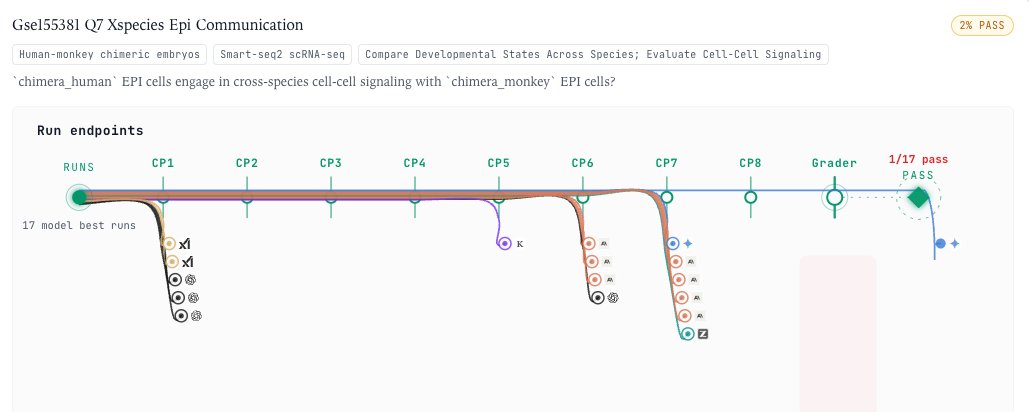
Results suggesting Kimi-K3 often tries to guess what the benchmark expects instead of solving the scientific problem directly. This behavior makes it slower, less reliable, and raises questions about how much its strong benchmark scores reflect genuine reasoning.


Ramesh K Ramasamy retweeted

Excited to share our new study on Peroxisomal metabolism supports acetyl-CoA homeostasis and lipogenesis under metabolic stress
science.org/doi/10.1126/scia…

Ramesh K Ramasamy retweeted

SQL is the most important skill to have as a data scientist💻
Here are the quick SQL summary cheat-sheets to revise SQL commands📝👍


Ramesh K Ramasamy retweeted

A ball is fired at 50mph, out of a cannon from a truck also going at 50mph
The ball drops “straight down” as it’s going at the same velocity as the truck going in the opposite direction.
The two equal and opposite velocities seem to cancel each other
Ramesh K Ramasamy retweeted
Pythagoras' theorem, there is a red triangle in the middle , a right-angled triangle
On each side is a square, The sum of the areas of the two squares on the legs (a and b) equals the area of the square on the hypotenuse, that’s the longest side (c)
Ramesh K Ramasamy retweeted
Physics, mathematics, symmetry, motion, marbles, harmony. Source: bit.ly/2YtSUvL xitter.cf/pickover/status/144609…

Ramesh K Ramasamy retweeted

“Moringa compared to other crops does very well in the Central Valley because of its drought tolerance,” says Ruth Dahlquist-Willard, UCCE small farms and specialty crops advisor who works with Hmong American farmers.

Two Vortex Rings Colliding in SLOW MOTION - Smarter Every Day 195 youtu.be/EVbdbVhzcM4 via @YouTube
Ramesh K Ramasamy retweeted

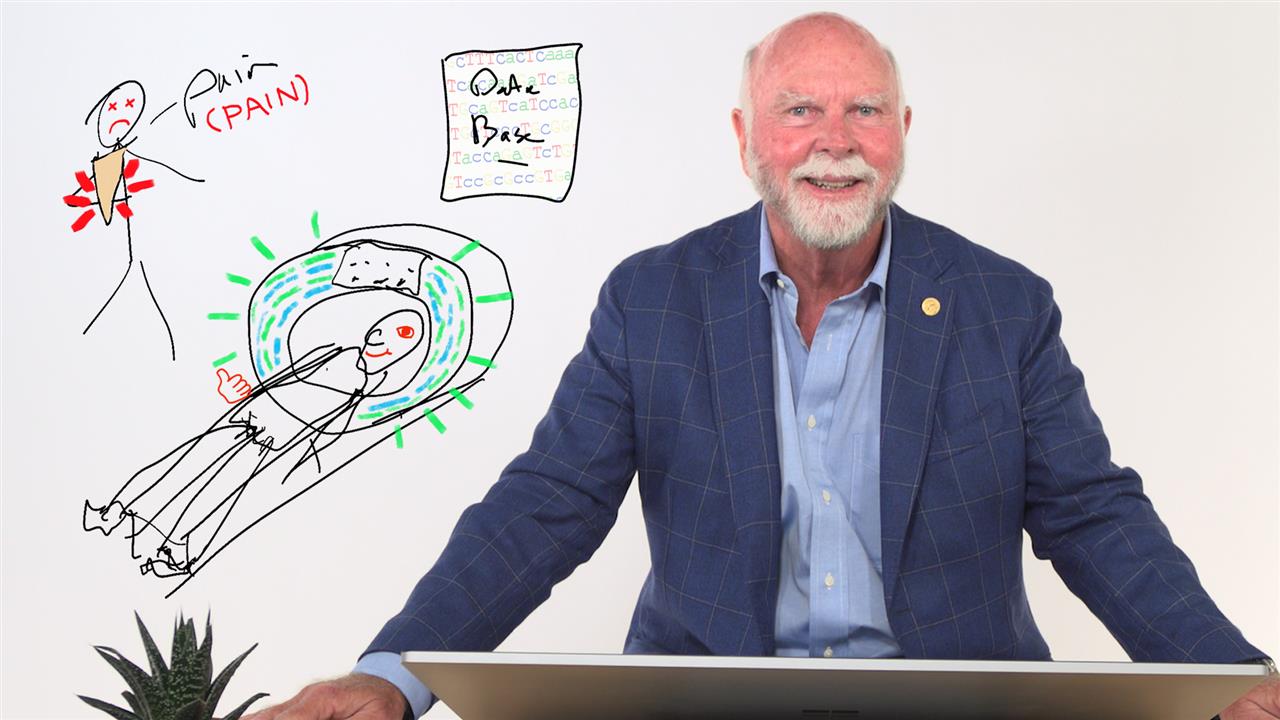
GENOME + CLINICAL DATA + MACHINE LEARNING = PREDICTIVE/PREVENTIVE MEDICINE @JCVenter
watch here : wsj.com/video/series/drawing…