Working on https://xitter.cf/t.co/mcZrmaI44i EV fellow @mercatus | @FounderUni @launch

Vai~kun~ta
Joined July 2018
Intraplex is literally ChatGPT for regulated industries & edge businesses. HIPAA-compliant companies to maritime ships with zero internet can query 100K+ docs, run deep research, and get all the rich ChatGPT features on-prem. Powered by Qwen Check it out: intraplex.ai
10
1,880
Love the design.... Good luck for the launch @NASA
Falcon Heavy’s looking sharp in the hangar before the real glow‑up begins with the launch of @NASARoman. Roman made its way to the hangar to meet its ride to space earlier this week.
77
sometimes its damn stressful working on ai, constantly running our of credits, money, aws suspending account, while claude kills your startup, we are so much of a bait. claude was an example, but, every gpu/compute rich company can easily scale, while I cannot even afford give free usage.
1
1
145
The ground engineering is incredible. The spacecraft side has its own miracle. At 24 billion km, Voyager's antenna only "sees" Earth as 0.002° wide. The spacecraft holds antenna pointing to within ±0.1° to keep the 23-watt beam on target. It's done this for 47 years on a sun sensor, a star tracker locked on Canopus, and finite hydrazine. When the hydrazine runs out, the antenna drifts and we lose Voyager within days. Found in NTRS: deepfield.intraplex.ai/share…
Voyager 1 is 24 billion kilometers from Earth. It communicates with us using a 23-watt transmitter. Less than a refrigerator light bulb. The signal takes 22 hours to reach us, traveling at the speed of light. By the time it arrives, it's 20 billion times weaker than the power of a digital watch battery. NASA's Deep Space Network picks it up using 70-meter dish antennas cooled to near absolute zero to reduce electronic noise. The engineering required to hear a 23-watt signal from 24 billion km away is arguably more impressive than the spacecraft itself. Launched 1977. Still transmitting. Still being heard. We built something that works perfectly, 47 years later, in conditions no one has ever tested in. That's what engineering for the long term looks like.
1
174
The follow-up makes this story. The Apollo debriefing later found Cernan's EVA was 4-5 more difficult than in ground test. @NASA's ground training had underestimated real workload by 5×. He came home, repeated the tasks in the Water Immersion Facility, reported it was "nearly identical" to space. Aldrin trained that way for Gemini XII and logged 6 hours of successful EVA. Every astronaut still trains underwater. 5 hours of pool per 1 hour of planned EVA. Found in NTRS: deepfield.intraplex.ai/share…
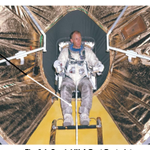
60 years ago today, NASA took a pivotal step toward mastering spacewalking. After Ed White’s groundbreaking spacewalk in 1965, NASA's next attempt pushed the limits of human endurance. On June 5, 1966, Gene Cernan undertook America’s ambitious second spacewalk, battling a stiff suit, limited maneuverability, and extreme heat. Though the EVA was cut short, the challenges he faced helped shape the future of spacewalk design and safety.
1
185
That came out of something I've been building, a natural language search over the full NTRS archive (108,448 reports). Every claim traces back to the source PDF. Still early, with a mission to accelerate aerospace research and engineering. Sharing with a few friends contracting with NASA for feedback. Would love yours too. deepfield.intraplex.ai
113
Before Surveyor I, NASA genuinely didn't know if the moon's surface could hold a lander. The Apollo LM was built around a guess: 1 psi static, 12 psi dynamic, less than 4" of penetration. If wrong, the LM sinks. Surveyor proved it. 3 years later Apollo 12 landed 535 ft from Surveyor III to confirm in person. Found in NTRS: deepfield.intraplex.ai/share…
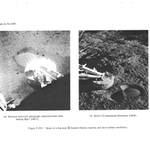
60 years ago today, Surveyor I made a three-point soft landing on the Moon—the first soft landing for America's space program—AND accomplished on its first try. Over the next 6 weeks it returned more than 11,000 images of the lunar surface including this one featuring its shadow. The mission was one of the great successes of NASA's early lunar program.
1
1
138
That came out of something I've been building, a natural language search over the full NTRS archive (108,448 reports). Every claim traces back to the source PDF. Still early, with a mission to accelerate aerospace research and engineering. deepfield.intraplex.ai
94
this is cool!
Starship Flight 12 - Cinematic Edit
70
This is exactly why I built Deep Field. The playbook Jared 's describing is sitting in 108k NTRS technical reports, incredible knowledge that's nearly unsearchable. Hope it helps engineers reach it faster, and accelerates the work ahead. deepfield.intraplex.ai
Sixty years ago, Surveyor 1 helped pave the way for Apollo by answering critical questions about operating on the lunar surface. Today, as we prepare to build the Moon Base, we’re dusting off the NASA playbook from the 1960s and beginning with the Science of Survival, learning what works and what doesn’t as we build the knowledge required so we never give up the Moon again.
129
Just mind blowing to see these updates from NASA. Everyday our understanding of the universe is changing, kudos to the team!
New data from @NASAWebb shows that supermassive black holes can grow to their current size without a much larger host galaxy to feed them. This helps to explain why some black holes in the early universe got so big so quickly. go.nasa.gov/4vhU5bt
1
88
Hey guys, I built Deep Field, an AI agent over 108,448 NASA technical reports. Ask a real engineering question, it finds the relevant reports, pulls the figures, and answers with citations back to the source. Right now NTRS is a goldmine, but the search is keyword-only, you ask a question, get hundreds of PDFs back, and spend hours opening them one by one to find the answer that’s actually in there somewhere. NTRS is 70+ years of NASA research, billions in tests, failures, and breakthroughs, given freely to the world. It's the foundation modern space companies like @SpaceX @blueorigin @Axiom_Space @RocketLab and many more build on as we go multi-planetary. I built Deep Field so engineers can reach that knowledge at the speed of thought. Free, no signup: deepfield.intraplex.ai Would love your feedback, ask it the hardest, most specific question from your own work and tell me where it falls short.
1
4
191
@elonmusk will this be useful for engineers at @SpaceX ?
87
Lets go 🚀
NASA just officially unveiled their master plan for a permanent Moon Base at the lunar South Pole This is not just about flags and footprints. NASA is moving to establish an enduring, sustained human presence, and they are heavily relying on commercial innovators to build it The roadmap is highly aggressive: • Phase 1: Heavy robotic missions and commercial payload deliveries • Phase 2: Semi-permanent infrastructure, including fission surface power and lunar drones • Phase 3: A sustained, permanent human outpost The most important takeaway is NASA explicitly stated this base is the ultimate proving ground to prepare humanity for missions to Mars While legacy aerospace companies are still struggling to reliably get a small capsule to the ISS, NASA is setting the stage for massive lunar infrastructure....which is exactly the kind of heavy-lift planetary deployment SpaceX’s Starship was designed for The multi-planetary economy is officially kicking off
84
Congrats @SpaceX team... Huge milestone ❤️ To the stars and beyond!
Liftoff of Falcon Heavy!
2
1
115
hey buddies… good morning… perhaps there is no day or night when the mission is to understand the universe, when you’re out there, being relative to space, constantly affected by the gravity of the nearby planet or the star, sometimes it’s fun, sometimes lonely, but hey, that’s the price to pay….
2
1
86
The planet can spell your name – literally. 🔤📷 Try it: science.nasa.gov/specials/yo…
84
Earth 💎
It's our home. This Earth Day, see our planet as our Artemis II astronauts saw it with these new images from the mission.
92