

AI Analyst @ Gartner. Views are my own.
New York Metropolitan Area
Joined July 2009
- Tweets2.9K
- Following330
- Followers1.1K
- Likes1.3K


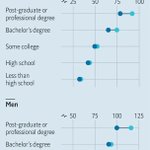


This is just a small part. Tech Giants Are Revising AI Product Claims That Faced Scrutiny. wsj.com/articles/tech-giants…

Most, if not all, of the Magnificent Seven are trying at the same time to figure out the threat of artificial intelligence to their kingdoms wsj.com/tech/ai/the-giants-o… via @WSJ

Rajesh Kandaswamy retweeted

It’s challenging to express how difficult it is for leaders to develop AI strategy in 2025. mitsmr.com/4cmwGgM

Rajesh Kandaswamy retweeted

TL;DR: We built a transformer-based payments foundation model. It works.
For years, Stripe has been using machine learning models trained on discrete features (BIN, zip, payment method, etc.) to improve our products for users. And these feature-by-feature efforts have worked well: +15% conversion, -30% fraud.
But these models have limitations. We have to select (and therefore constrain) the features considered by the model. And each model requires task-specific training: for authorization, for fraud, for disputes, and so on.
Given the learning power of generalized transformer architectures, we wondered whether an LLM-style approach could work here. It wasn’t obvious that it would—payments is like language in some ways (structural patterns similar to syntax and semantics, temporally sequential) and extremely unlike language in others (fewer distinct ‘tokens’, contextual sparsity, fewer organizing principles akin to grammatical rules).
So we built a payments foundation model—a self-supervised network that learns dense, general-purpose vectors for every transaction, much like a language model embeds words. Trained on tens of billions of transactions, it distills each charge’s key signals into a single, versatile embedding.
You can think of the result as a vast distribution of payments in a high-dimensional vector space. The location of each embedding captures rich data, including how different elements relate to each other. Payments that share similarities naturally cluster together: transactions from the same card issuer are positioned closer together, those from the same bank even closer, and those sharing the same email address are nearly identical.
These rich embeddings make it significantly easier to spot nuanced, adversarial patterns of transactions; and to build more accurate classifiers based on both the features of an individual payment and its relationship to other payments in the sequence.
Take card-testing. Over the past couple of years traditional ML approaches (engineering new features, labeling emerging attack patterns, rapidly retraining our models) have reduced card testing for users on Stripe by 80%. But the most sophisticated card testers hide novel attack patterns in the volumes of the largest companies, so they’re hard to spot with these methods.
We built a classifier that ingests sequences of embeddings from the foundation model, and predicts if the traffic slice is under an attack. It leverages transformer architecture to detect subtle patterns across transaction sequences. And it does this all in real time so we can block attacks before they hit businesses.
This approach improved our detection rate for card-testing attacks on large users from 59% to 97% overnight.
This has an instant impact for our large users. But the real power of the foundation model is that these same embeddings can be applied across other tasks, like disputes or authorizations.
Perhaps even more fundamentally, it suggests that payments have semantic meaning. Just like words in a sentence, transactions possess complex sequential dependencies and latent feature interactions that simply can’t be captured by manual feature engineering.
Turns out attention was all payments needed!
Huawei Technologies is gearing up to test its newest and most powerful artificial-intelligence processor, which the company hopes could replace some higher-end products of U.S. chip giant Nvidia wsj.com/tech/chinas-huawei-d… via @WSJ

Useful article on the difficulty in automating production. wsj.com/economy/trade/why-it… via @WSJ

OpenAI says newest AI model can 'think with images,' understanding diagrams and sketches cnb.cx/3GdIPZJ

CIOs: In this economic environment, many are paying extra attention to costs. Be prepared. Join @Gartner_inc's webinar to explore six use-cases that could cut help reduce costs: gtnr.it/4ll9Kmc
#GartnerIT #GenAI #CIO
Shows not just the power of science, but also the complex beauty of nature.
An Advance in Brain Research That Was Once Considered Impossible nytimes.com/2025/04/09/scien…

My review of "Material World" by Ed Conway. Useful.
goodreads.com/review/show/60…

Rajesh Kandaswamy retweeted

🆕 Presenting:
The 2025 AI Engineering Reading List
latent.space/p/2025-papers
1 paper/blog/model family per week for every week of 2025, for you to run paper clubs or binge over the break.

Such a well-written article - content and clarity. anthropic.com/research/build… @ErikSchluntz


Gemini 2.0 Flash is here - "Building on the success of Gemini 1.5 Flash, Flash 2.0 is twice as fast as 1.5 Pro while achieving stronger performance, includes new multimodal outputs, and comes with native tool use."
developers.googleblog.com/en… #geminiflash

Check out the latest article in my newsletter: Why AI Agents Matter (Part 2 of 2): Implications for Business linkedin.com/pulse/why-ai-ag… via @LinkedIn


I shared my post on AI agents this morning. Here are a few practical and detailed examples, without jargon, but somewhat long. AI Impact at Dow: Copilot Identifies Millions in Cost Savings microsoft.com/en-us/worklab/… #worklab #futureofwork

Check out the latest article in my newsletter: Why AI Agents Matter (Part 1 of 2): A Perspective for Business and Technology Leaders linkedin.com/pulse/why-ai-ag… via @LinkedIn

These are helpful short summaries. We read many books, but hard to remember everything. These are good refreshers. #BooksWorthReading


