

Māliki Shinqīṭī الفقير إلى من استوى على عرشه وعلا على خلقه
Joined May 2026
- Tweets505
- Following93
- Followers706
- Likes811




Imam Malik said: It has reached me that Luqmān said to his son:
“My son, let the first thing you acquire in this world, after a righteous friend, be a righteous wife.”
shamela.ws/book/96257/1985#p…

أبو يحيى retweeted

The Four Mad͟hhabs Under One Roof
ʾIbrāhīm bin Muslim bin Muḥammad al-Shāfiʿī, known as al-Ṣādī (d. 1073 AH), used to supplicate to Allāh to grant him four sons, each of whom would follow one of the four mad͟hhabs.
Allāh (سبحانه وتعالى) granted him four sons:
Muslim, who was Mālikī.
ʿAbdullāh, who was Ḥanbalī.
Mūsā, who was Shāfiʿī.
Muḥammad, who was Ḥanafī.
[Khulāṣat al-ʾAthar, 1/48]


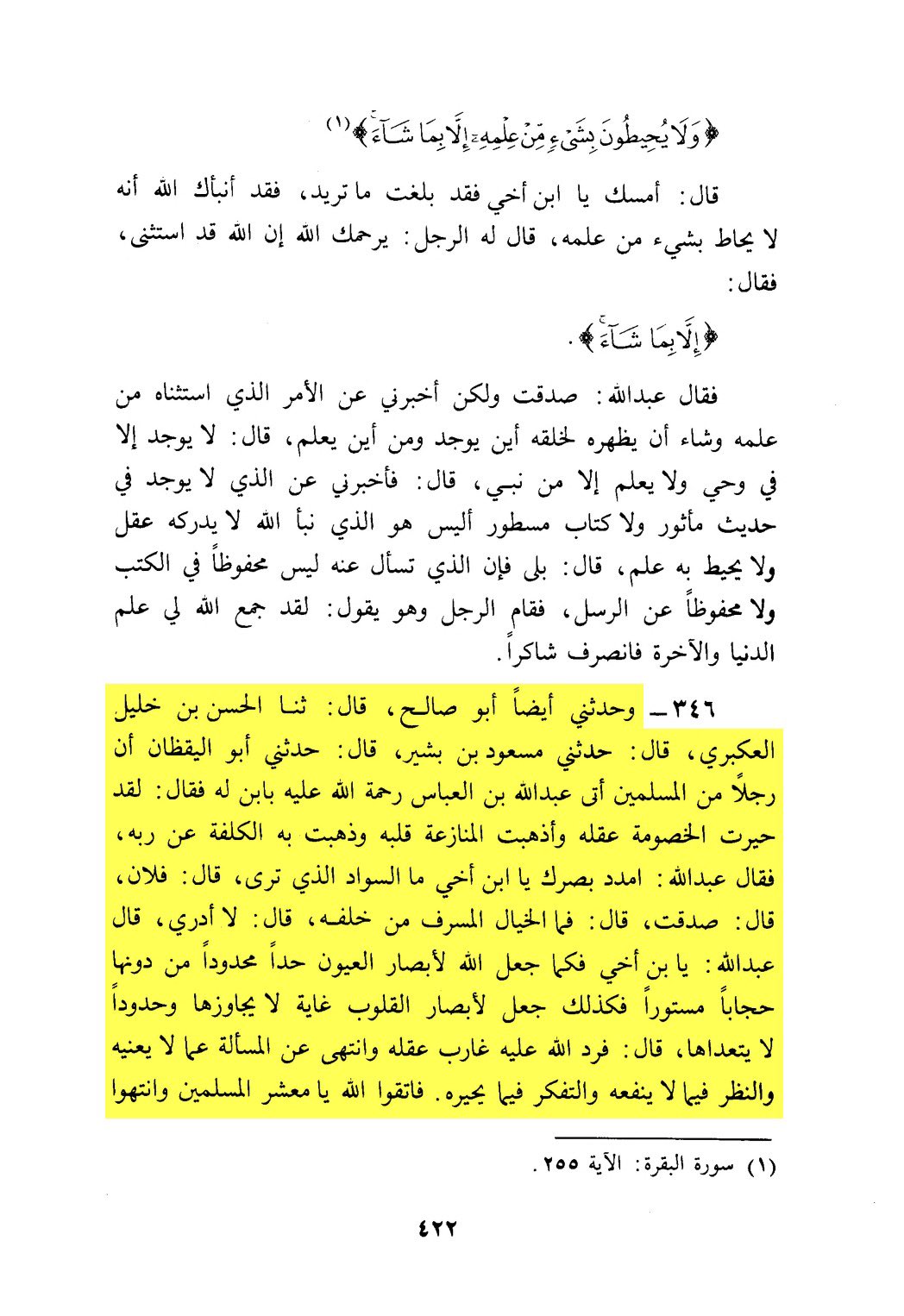
It is narrated that a man brought his son to ʿAbdullāh ibn ʿAbbās (may Allāh be pleased with them both) and said:
“Argumentation has confused his mind, disputation has taken away his heart, and excessive intellectual effort has led him away from his Lord.”
ʿAbdullāh said, “Look ahead, my nephew. What is that dark figure you see?”
He replied, “So-and-so.”
He said, “You have spoken correctly.”
He then asked, “And what is that indistinct image behind him?”
He replied, “I do not know.”
ʿAbdullāh said, “My nephew, just as Allāh has set a defined limit for the sight of the eyes, beyond which there is a concealed barrier, so too has He set a limit for the sight of the hearts, which they cannot surpass, and boundaries which they cannot transgress.”
The narrator said, “Thereafter, Allāh restored his sound judgment, and he refrained from asking about that which did not concern him, examining that which brought him no benefit, and contemplating that which only confused him.”
—al-ʾibānah 1/422-423


Ibn al-Qayyim:
However, the impurity of fornication and sodomy is graver than that of other forms of impurity, in that it corrupts the heart and severely weakens its Tawḥīd. 𝗙𝗼𝗿 𝘁𝗵𝗶𝘀 𝗿𝗲𝗮𝘀𝗼𝗻, 𝘁𝗵𝗼𝘀𝗲 𝗺𝗼𝘀𝘁 𝗮𝗳𝗳𝗹𝗶𝗰𝘁𝗲𝗱 𝗯𝘆 𝘁𝗵𝗶𝘀 𝗶𝗺𝗽𝘂𝗿𝗶𝘁𝘆 𝗮𝗿𝗲 𝘁𝗵𝗲 𝗽𝗲𝗼𝗽𝗹𝗲 𝗺𝗼𝘀𝘁 𝗱𝗲𝗲𝗽𝗹𝘆 𝗶𝗺𝗺𝗲𝗿𝘀𝗲𝗱 𝗶𝗻 𝘀𝗵𝗶𝗿𝗸. 𝗧𝗵𝗲 𝗺𝗼𝗿𝗲 𝗱𝗼𝗺𝗶𝗻𝗮𝗻𝘁 𝘀𝗵𝗶𝗿𝗸 𝗶𝘀 𝗶𝗻 𝗮 𝗽𝗲𝗿𝘀𝗼𝗻, 𝘁𝗵𝗲 𝗺𝗼𝗿𝗲 𝘁𝗵𝗶𝘀 𝗶𝗺𝗽𝘂𝗿𝗶𝘁𝘆 𝗮𝗻𝗱 𝗳𝗶𝗹𝘁𝗵 𝗮𝗿𝗲 𝗳𝗼𝘂𝗻𝗱 𝘄𝗶𝘁𝗵𝗶𝗻 𝗵𝗶𝗺. And the greater his sincerity to Allah, the further removed he is from them.
As Allah تعالى said concerning Yūsuf, the truthful one:
“Thus it was that We might avert from him evil and indecency. Indeed, he was among Our sincere servants.” (Yūsuf 12:24)
—ʾighāthat al-lahfān 1/106


Prostitution by the shrine of al-Badawī: A disgrace within Ottoman-controlled Egypt
After the destruction of the First Saudi State by the Ottoman Empire, many of the pioneers of the Najdī Daʾwah spent their time in exile in Egypt, recording and narrating the forms of debauchery they witnessed.
Sh ʿAbd al-Raḥmān ibn Ḥasan Āl al-Shaykh was one such person.
Sh ʿAbd al-Raḥmān Ibn Ḥasan Āl al-Shaykh said: “That people used to commit, at the mawlid of al-Badawī, acts of grave polytheism and corruption whose enumeration would be lengthy—believing that he bears the sins of fornicators and sodomites during his mawlid, meaning that he expiates their sins for them. Some of them would even prostrate at the door of his sanctuary.”
Sh Isḥāq ibn ʿAbd al-Raḥmān ibn Ḥasan Āl al-Shaykh (d. 1319 AH / 1901 CE) witnessed, during his journey to Egypt in pursuit of knowledge, an enormous gathering greater than the gathering of Muslims on the eve of ʿArafah at Jabal al-Raḥmah. He asked about it and was told: “This is the Mawlid of al-Badawī.” He also saw a long market of prostitutes who had dedicated their private parts on that day to al-Sayyid al-Badawī; immoral men would come and commit acts with them, offering that as a charitable act to him in that gathering.
Perhaps this matter continued thereafter until the mid-1300s AH / the mid-1900s century CE, as testified by Sh Sulaymān ibn Saḥmān, when he said: “The matter came to involve the commission of various kinds of reprehensible acts, including the offering of women’s private parts for three days every year at the mawlid of Aḥmad al-Badawī and his shrine in Ṭanṭā. Someone who personally witnessed this informed me of it orally: the young women would go out, recording that in his registers so that they might attain his blessing.”


أبو يحيى retweeted

In his commentary on verse 52 of Sūrat Maryam, Imam Mujāhid (d. 104 AH) said:
❝Between the seventh heaven and the Throne are seventy thousand veils. Mūsā continued to draw nearer [to Allah ﷻ] until there remained only one veil between him and Him. When he saw His place (i.e., the place of Allah ﷻ) and heard the creaking of the Pen, he said: ‘My Lord, show me [Yourself] that I may look at You.’❞
Imam al-Dhahabi commented: “This is authentically reported from Mujāhid, the great Imam of Tafsīr.”


Imām ʿUṯhmān b. Saʿīd ad-Dārimī said:
It was also narrated by Isḥāq ibn Ibrāhīm al-Ḥanẓalī from Ibn al-Mubārak that he said:
“The top of the minaret is closer to Allāh than its bottom.”
And Ibn al-Mubārak spoke the truth, because everything that is closer to the heaven is closer to Allāh. As for Allāh’s nearness to all of His creation, whether the farthest of them or the nearest of them, it is one and the same; nothing of His creation is distant from Him. Yet some of the creation are closer to Him than others, in the manner that we have explained regarding the matter of the heavens and the earth.
Likewise is the nearness of the angels to Allāh: the bearers of the Throne are closer to Him than all the angels who are in the heavens, and the Throne is closer to Him than the seventh heaven. Yet Allāh’s nearness to all of that is one and the same.
[Naqḍ Al-Imām Ad-Dārimī ʿAlā Al-Marīsī Al-Jahmī Al-ʿAnīd, p. 301]


Al-Ṭabarī narrated in his Tafsīr, with an authentic chain of transmission, from Rabīʿah al-Jurashī, who said concerning the statement of Allah:
“And the entire earth will be within His grasp on the Day of Resurrection, and the heavens will be folded in His Right Hand.” Al-Zumar 39:67
Rabīʿah said: “And His other Hand is empty, with nothing in it.”
—Tafseer Aṭabarī 21/324


أبو يحيى retweeted

Imām Ibn ʿAbd al-Barr al-Mālikī (d. 463 AH) on the Jahmī Taʾwīl of Istiwaʾ
Imām Ibn ʿAbd al-Barr says in al-Tamhīd:
“And in this is evidence that Allah عز وجل is above the seven heavens, over the Throne, as the Jamāʿah have stated. It is among their proofs against the Muʿtazilah and Jahmiyyah in their claim that Allah عز وجل is in every place and is not over the Throne.”
He then addresses the Jahmī reinterpretation of istiwāʾ:
“As for their claim of metaphor regarding istiwāʾ, and their saying in the taʾwīl of istawā that it means istawlā [‘took possession/dominion’], then this has no basis, for it is not the apparent meaning in the Arabic language.”


Join my telegram channel for benefits
t.me/qurashite


Ibn al-Jawzī:
“Whoever finds a woman who is righteous both in appearance and character should overlook her shortcomings. She should strive to please him, without being so close that he becomes bored with her, nor so distant that he forgets her.
She should make an effort to present herself well for him, so that he can gain both things he seeks from marriage: children and the fulfillment of his desires. Along with the precautions I have mentioned, this will help their companionship last and make him content with her, without needing anyone else.”
—Ṣayd al-K͟hāṭir (p.88)


2026, widespread grave worship, widespread taʿṭīl and apostasy and people still arguing about who tabdee’ed who and who reviled who, بالله عليكم lock in

A Testimony for Allāh: ʿArafāt al-Muḥammadī’s Revilement of ʿAllāmah al-Fawzān and Tabdīʿof Abū ʿIyaaḍ
by Muḥsin bin ʿAbd al-Razzāq al-Jabartī (وفقه الله)
English
abuiyaad.com/d/muhsin-testim…
Arabic
abuiyaad.com/d/muhsin-testim…
More info
abuiyaad.com/w/muhsin-testim…


Shaykh Muḥammad Salem ould ʿAddūd al-Māliki’s poem on the prohibition of eating European/Foreign meat (for example: France and American McDonalds):
“The conclusion required by the texts of the school (madhhab)
is the prohibition of canned European meat.
If you say, ‘They are People of the Book,’ I say: ‘Indeed, apostasy has become widespread among them.’
And even if we were to suppose they are [People of the Book], they neglect the ritual slaughter of what they eat.
And even if we were to suppose that they do perform it, then at the very least, they have become heedless, and eating carrion is permissible among them...”


Shaykh Muḥammad Salem ould ʿAddūd:
Time, brothers, is everything in a Muslim’s life. Through it, he enters Paradise, through it he joins the highest assembly, and through it he can become wealthy if he desires worldly wealth. Through it, he can become a scholar if he desires knowledge, and through it, he can become one of the devout and ascetic worshippers if that is what he desires.
Yet we regard time, which is the most precious thing we possess, as our enemy. We regard it as our greatest enemy, and so we try to “kill” it, while in reality, when we kill it, we are only killing ourselves.
—ahamiyyat al-waqt (p.17)


14
867
Staying Up Late and Missing Fajr
Ibn ʿUthaymeen:
“But people in our time have been afflicted with something that causes them not to pray Fajr, namely staying up late. You find a person staying awake until twelve or one o’clock, despite the nights being short. Then, when he goes to sleep, he is unable to get up. This is a serious mistake.
If the Prophet ﷺ disliked sleeping before ʿIshāʾ and engaging in conversation after it, then what about those who remain awake until midnight or even later?! Their staying up may be for something that brings them no benefit, and it may even be for something harmful.
My advice to such people is that they should go to sleep early, so that they can wake up feeling energetic and pray Fajr with the Muslims.”
—Mawqif al-Muslim min al-fitan (p.38)


Advice to Music Listeners
Ibn ʿUthaymeen:
“Nevertheless, we advise our brothers who have been afflicted by listening to these vile songs, which call to temptation and evil. We say: Fear Allah concerning yourselves, and stay away from these worthless things. Leave them and replace them with something that will benefit you, such as recordings of the Noble Qur’an, the Prophetic Sunnah, the words of the scholars, the words of preachers, the words of the people of knowledge and jurisprudence, or anything similar to that. In this way, Allah Most High may grant you goodness through what you listen to, both in the reward that awaits in the Hereafter and in the immediate benefit you gain in this life.”
—Mawqif al-Muslim min al-fitan (p.33)


Ibn ʿUthaymeen:
“So beware of falling into temptation when the means of committing sin become available to you, for this is one of the great trials which, in reality, serve to test a person: is he truly a believer, or is he a hypocritical believer? We ask Allah for safety.”
—Mawqif al-Muslim min al-fitan (p.14)


Shaykh al-Islam Ibn al-Qayyim:
“Your statement that “istiwāʾ has several meanings” is another deception. For istiwāʾ when governed by the preposition ʿalā has only one meaning. As for unrestricted istiwāʾ, it has several meanings.
The Arabs say istawā kadha when something reaches completion and maturity. This is found in His saying, Most High:
“And when he reached his full maturity and attained strength.” Al-Qaṣaṣ 28:13
They say istawā wa kadha when something becomes equal to another, as in their expressions:
“The water became level with the piece of wood,” and “The night and day became equal.”
They say istawā ilā kadha when someone directed himself toward something with elevation and ascent, such as: “He ascended toward the roof and the mountain.”
And istawā ʿalā kadha means that he rose above it and ascended over it. The Arabs know no other meaning for this expression.
Thus, istiwāʾ in this particular construction is an explicit textual expression that cannot bear any meaning other than its own, just as it is explicit in His saying:
“And when he reached his full maturity and attained strength.” Al-Qaṣaṣ 28:13
It cannot bear any other meaning. It is likewise explicit in the expression “The night and day became equal,” whose meaning cannot be understood otherwise.
So abandon this deception, for it will bring you nothing but the hatred of Allah and of those who believe.”


