

A London based company that produces and curates art events like performances, exhibitions, conferences, screenings and parties.
- Tweets89
- Following89
- Followers81
- Likes3




ALT Their work is informed by research into movement and dance as a tool for divination, decoding messages from an oracular body - on personal/structural/symptomatic/somatic/psychic levels - to be processed through the medium of choreography. Always thinking about the metabolic - impact and exchange through/in/as movement. Their shows are stage/dreamspace/battleground, decompositions, atmospheric landscapes created through the live unfolding of the tensions between things that produce meaning. SERAFINE1369 has a relational, cumulative and often collaborative practice, gathering and transmitting information through working in various constellations, at different scales and in different roles to build spaces for communing/attuning/communicating through dancing, performance, listening and conversation; spaces that might hold the complex, multiple and contradictory, spaces that consider movement and transformation as inevitable, working to be unsettling situations of non-dominance.

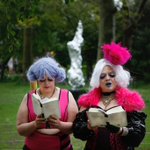
ALT InXestuous Sisters like to look alike. Daughters of the rave, they exist at the rhythm of techno and baroque tunes that only they can hear. The ultimate sex dream, they might be the material projection of your own desire. Indulging in black cherry jams, pink-coloured garments, laces, whips and lipstick, they are the newly born decadence. When they grow up, they would like to be artists, but for the time being, they are just very femme. They have performed in a variety of settings, from domestic milieus to night clubs and galleries, presenting short or durational live acts both in the physical or the digital realm. Most recently, they performed at Riposte (Grow Tottenham, London), Queer Art(ists) Now (Archive Gallery, London) and at @Disturbance (Ugly Duck, London). Galatea is produced and curated by Queer Art Projects in partnership with Every Woman Biennial and funded by Arts Council England. Photo: InXestuous Sisters, Kiss Me at Queer Art(ists) Now, by Orlando Myxx, 2020.

ALT Ebun Sodipo works across film, performance, installation, sound, poetry and fiction, to devise new languages and tools with which to imagine and speak about the body and the past, specifically for future black trans people. Through an archival practice, they collage moving and still image, sound and text from social media to form rich, affective illustrations of contemporary black subjects living under the legacy of slavery and colonialism. In Sodipo’s performances, these video collages are combined with text, installation and movement, focusing more directly on the black trans-feminine body through their presence and narration of the projected images. Opacity and fragmentation are crucial strategies in their work, used to resist the enforced transparency of the colonised subject and their culture, and prioritise diasporic cartographies and references over western modes of knowledge production and subjectivity.
