

planet eater, co-founder @runwayteam, https://xitter.cf/t.co/TkkDUYwxfo
Brooklyn, NY
Joined February 2009
- Tweets5.3K
- Following1.4K
- Followers432
- Likes151K









Matt Varghese retweeted

Me: "Do you know how many times you've tweeted about Piker since you wrote that tweet [about not tweeting about him] on August 30th?"
@mattyglesias: "Probably more than I intended to."
Me: "8 times.... you tweeted about Mike Rogers 6 times. So you're tweeting about the streamer you didn't want to talk about more than the Republican candidate you say you want to defeat."
Yglesias: "Yeah, that's fair."
Me: "Why?"
Yglesias: "What do you want me to say? You got me."
From my new Zeteo interview with the top centrist pundit - on the left, Michigan, Gaza, immigration, polls, electability, and more:
zeteo.com/p/matt-yglesias-me…


Matt Varghese retweeted

Today, Russia expressed its thanks for the lifting of sanctions on diesel exports by dropping five glide bombs on residential buildings in Zaporizhzhia. As of now, sadly, twelve people have been confirmed killed, including three children. My condolences to all their families and loved ones. Another fourteen people have been injured, and two of them are in critical condition – the doctors are fighting to save their lives. The status of twelve more people who may have been there is still being verified. All emergency services are at the scene, and search-and-rescue operations are underway. Overnight, thirteen of our regions came under attack. Residential buildings, infrastructure, and railway facilities have been damaged.
Last night confirmed once again that in Russia, they take any easing of pressure to mean they can keep fighting, to mean they can keep dropping bombs on cities. Different signals are needed. Russia must understand that it needs to stop the war, and for that to happen, Russia must feel its losses. Right now, it is our long-range capabilities that are ensuring this. And we will respond to Russian strikes. I thank everyone who is helping.


Matt Varghese retweeted
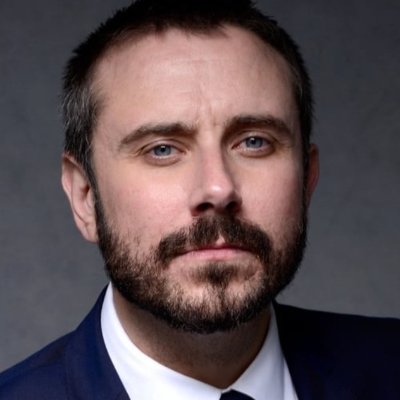
For more than two months, I have been working on a truly horrific story about one of the gravest war crimes committed by the United States since Vietnam: The bombing of the Shajareh Tayyebeh school in Minab, Iran. It was one of the first targets struck in the opening hours of the war on February 28, 2026.
At least 156 people were killed in the U.S. cruise missile strikes—120 of them were children and 26 were teachers. We spoke to survivors, first responders, parents, doctors, teachers, psychologists, and other witnesses. Some of them had never before shared their experiences of that day.
It would be impossible to do justice to what happened in Minab that day with words alone. In more than 25 years in journalism and reporting on war, I do not believe I have reported on a more heinous single crime.
Massacre at Minab: The School That Became a Grave
dropsitenews.com/p/minab-sch…
Please share this story with as many people as you can.

Matt Varghese retweeted

The Trump administration appears to have changed its AI chatbot so that it no longer debunks Trump lies.
Yesterday: It said Biden won the 2020 election and there's no indication of widespread fraud.
Today: Says it can't answer such questions.


Matt Varghese retweeted

1/15
SCOOP:
Trump’s “Super Intelligence” Scandal:
I believe Trump’s “SI” Executive Order was ANOTHER criminal plot to enrich the Trump family.
Insiders seem to have profited MILLIONS off of .si domain names before his Truth Social posts.

Matt Varghese retweeted

The US State Department lobby used to display the flags of the roughly 200 countries with which the US maintains diplomatic relations. Now, it displays 200 American flags, to remind State Department employees who they work for.

Matt Varghese retweeted

JJ Abrams is like the Trump of Star Wars in that he wasn't in charge of it for very long but they're going to have to spend the rest of my life reconciling with the mess that he made with it.
Matt Varghese retweeted

With Iran dominating the news, you've probably missed the corruption scheme Trump is running in Venezuela.
Since he's going to meet this with the dictator he installed to grease the wheels for his oil friends, it's a good time to tell you the story.
1/ Here it is:

President Donald Trump will meet with Venezuelan leader Delcy Rodriguez in New York next week on the sidelines of the UN General Assembly meeting, US Ambassador to the UN Mike Waltz told reporters bloomberg.com/news/articles/…

Matt Varghese retweeted

A gift link, because this piece is indeed bracing and worth reading in its entirety: nytimes.com/2026/09/20/magaz…


This is a good article and I respect Hannah-Jones for writing it. nytimes.com/2026/09/20/magaz…

Matt Varghese retweeted

Long rant @ddiamond but stay with me. Journalists counter my criticism all the time by saying "but we did write 1 or 2 articles on that!" That's great, but the issue is what achieves agenda-setting salience.
Biden's health was regular front page news for months. His footwear choices generated headlines. He tripped once on stage and it generated a week of commentary. If he flubbed the name of a foreign leader, it was covered in multiple outlets even if he corrected himself. @peterbakernyt @nytimes ran a high profile story implying he was hiding Parkinsons that turned out to be false. After he left office, @jaketapper went on a book tour to continue to criticize Biden's age and fitness. You will not convince me Trump receives this level of scrutiny, because he simply doesn't in any study of actual headlines I've seen (Media Matters did a great one.)
In fact, Trump has appeared to fall asleep about 19 times in public in his current term (most recently at a 9/11 memorial event which generated no major headlines outside liberal outlets). I counted them myself mostly using social media clips from accounts like @atrupar and asking AI to debunk the fake ones, which I was forced to do because the only journalist at a major outlet that I could find who tried to compile that kind of list is @khaleda who does not even work in the US! (By the way, Dan, I'm more than happy to send you that list via email.)
The media never pursued sustained follow-up on Trump's hand bruising, his gait, his multi-day Walter Reed visits, the obvious falsehoods in his health reports, or the true nature of Natalie Harp's role as his aide. When he is incoherent in remarks, WH press so regularly sanitize his speech it has its own name ("sanewashing"). Scrutiny of Trump's health is so sparse there was a multi-day period in which social media was full of rumors that he had died. There are viral social media accounts alleging serious health complications that at minimum suggest continuous fact-based reporting that is seriously lacking.
I could write the same rant about a number of other high profile issue: why is it not treated as sustained scandal news that Don Jr's wedding was paid by the Russians Why is it not treated as scandal that Jared Kushner has a role in govt at all? Hunter Biden's laptop and paintings were months-longs stories. Why aren't we seeing journalists post pictures of their receipts or gas station prices like we saw during inflation coverage under Biden? When do we get an update on @brikeilarcnn's milk guzzling family from 2021?
My opinion is that the media is stuck over-covering itself (press access or DC-specific stories like the Reflecting Pool) instead of hammering the issues that put Trump into office that actually don't require White House press access. I don't know whether this is disinterest, corporate pressure, or appeasing GOP sources, but often it feels that way.

Hi there. I’ve reported on all the things you mention. (Here’s a quick sampling.)
If you have specific feedback or criticism on particular articles, you’re welcome to email me at [email protected], and I’m happy to engage at length - thanks.


Matt Varghese retweeted

You know what really pisses me off? When I’m zoomed all the way in on a road in Google Maps and it won’t show me the fucking road name, I have to scroll around until I find a label somewhere else. If I’m zoomed in on the road, just show me the name of the road @googlemaps

Matt Varghese retweeted
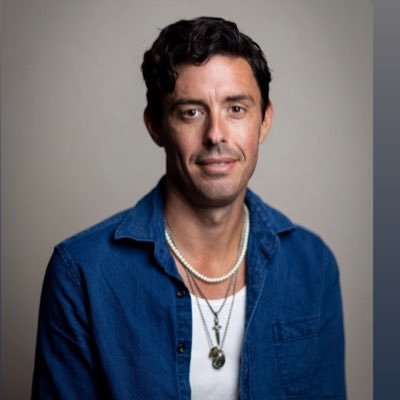
Marco Rubio Is Punishing a Teenager For His Grandmother's Sins
This story is as outrageous as the student detained for an op-ed. A green card holding family interned for months for a crime they didn't commit. My latest w/ emails from inside Dilley:
thebulwark.com/p/marco-rubio…

Matt Varghese retweeted

Maybe you have recently become aware of the AI safety debate and the arguments swirling around it.
If you want to understand them, you need to understand a couple things that almost everyone gets wrong:
There are TWO distinct classes of AI dangers, and it's VERY important to think about them separately, and not let one confuse you about the other.
Many many people (including many quite intelligent, clear-thinking people) do not effectively understand the fundamental differences between these two classes of dangers.
The first one has to do with the theory that an AI far superior to human intelligence (Artificial SuperIntelligence, or ASI) will inevitably wipe out the human race.
The second one has to do with the idea that powerful AI will result in very harmful things happening to many human beings, possibly all human beings.
Those two sound VERY similar, don't they?
They are DIFFERENT. Understanding how they are different is crucial if you want to think about or contribute usefully to any conversation about AI safety or AI harm. You might feel like you are Making Very Good Points or Asking Incisive Questions, but if you aren't clear on the differences between the two, you aren't.
So, I'm going to tell you what the difference is so that you can talk more usefully.
The first one concerns itself with a very specific thing, which is ASI (Artificial Superintelligence) that is more intelligent than any human being. When I say that, I am not referring to a thing like how Einstein is smarter than you, we are talking more about something like how a human being is more intelligent than any mouse.
In our regular lives, we meet other people who we can tell are smarter than us, vs some who are less smart. The line is fuzzy, because intelligence has a lot of dimensions. I'm better at a "rotating shapes" kind of intelligence than my wife, and she is better at "words-making" kind of intelligence than I am.
But every human is better in almost every dimension of intelligence than every single mouse.
That's the level we're talking about: an artificial superintelligence - made up of a computer or a network of computers - that is more intelligent than any human. And more intelligent by a long shot, by a wide margin, in an indisputable way like how humans are above mice.
That is the first thing.
The theory says that if you have an AI that is vastly smarter than all humans - in the way that a human is smarter than mice - that superintelligent AI will inevitably, eventually, sooner or later, wipe out every human on the planet.
We will refer to this as "existential risk."
The common follow-up question "well, how exactly is it going to do that?" is NOT the important question, and one of the most important elements of understanding this theory is first getting why that particular question is not important. A couple analogies:
Analogy 1: You are playing chess against a grandmaster. My theory predicts the grandmaster is going to beat you. You can ask "Well, how exactly is he going to do that?" I don't know, because I'm not a grandmaster, I just know that a chess grandmaster is almost always going to beat a normal player like you. And I'd be right. So the question "how is he going to do that" is not important, and doesn't affect the final outcome. He's going to figure out a way because he's way better than you.
Analogy 2: Humans are smarter than all other animals, comprehensively, by a wide margin. We have driven numerous species to extinction, not because we hated them or hunted them. Many of them have died out without most humans even ever thinking about them. All we did was expand our civilization, use up resources, encroach on habitats, and pretty soon the resources needed by those species went away and they died out. We figured out a way to get what we wanted because we're way smarter than them, and often we didn't even notice they died as a result.
A lesser animal asking, "how are the humans going to wipe us out?" is not asking a relevant question. We don't know, but we do know that any time humans and lesser species compete for any kind of resources, the humans will win. The fact that we know who is going to win beforehand - and that it is due to the vastly different levels of intelligence - is the key concept here.
A vastly more intelligent AI is likely to care about things that are incomprehensible to us, the way animals can't understand human goals. It's going to need resources to pursue those goals and it's going to be far more effective at gaining control of them and excluding us from them - in the same way that we are far more effective than other lower species.
A much more intelligent AI will not care about our interests, it will care about its interests, and to whatever small degree we happen to escape total annihilation from losing access to all our resources, any remaining humans will likely be enslaved into a system that serves the AI's own purposes.
That is the first thing. (Remember how I said at the beginning of this post that there was a first thing, and then a second thing?)
The first thing is the most difficult to understand, because you have to extrapolate how a vastly superior intelligence would act, and you can only use analogies like "how do humans treat lesser creatures," and the analogies are messy.
But now let's move on to the second thing.
The second thing is "everything else you've ever heard that AI might do that's harmful."
That's a little inaccurate. It's actually "everything else you've ever heard that humans might use AI to do that's harmful."
This is the critical difference. The first one talks about the inevitable outcome of what happens when two vastly different levels of intelligence collide, e.g. ASI vs humans, or human vs mice.
The second one has to do with what happens when humans possess AI as a powerful tool. This second thing is much easier to understand, because we have many more concrete notions:
Like:
- the military uses AI to make hyper-efficient killer drones and missiles
- your capitalist overlords use AI to replace you and everyone loses their jobs
- authoritarian government uses AI to surveil everybody and control the entire population
- hackers use AI to break into secure networks and hold companies and governments hostage
- students use AI to cheat on homework and show up to college knowing nothing
- AI slop saturates the internet and makes it impossible for artists and writers to make a living
- terrorists use AI to make biological or nuclear weapons
or even things like
- the military hands control to an AI and it misinterprets something and launches nuclear attacks and kills millions
All of those sound pretty familiar, right? Yeah, you've heard them before. We call this second thing "risks from misuse."
These problems are not the first class of problem! This second class of problems exists while AI is a tool that can be controlled by humans, and humans use it to do evil or careless things to each other. The problems may sound exotic or dystopian or novel, but they are fundamentally problems having to do with flawed human nature.
Given a powerful tool, some humans will likely use it to control or otherwise harm others. This is a very familiar problem.
I am not condemning or condoning this. I'm just describing it.
That is a fundamentally different danger from the first thing, which is that when a human is far superior to a mouse, the mouse is likely to come to harm because the human cares about doing human things, and the mouse is not gonna make it once the humans get going.
=====
Hopefully from the above, you have understood the difference between the first thing and the second thing. I will list them again - see if you now understand how they are different:
The first one has to do with the idea that an AI superior to human intelligence (Artificial SuperIntelligence, or ASI) will inevitably wipe out the human race.
The second one has to do with the idea that powerful AI will result in very harmful things happening to many human beings, possibly all human beings.
Can you tell how they are different now?
If not, re-read the stuff from earlier until you understand.
We call the first one "existential risk" and we call the second one "risks from misuse."
Once you understand, here is the CRUX of the problem:
SOLUTIONS TO THE SECOND THING DO NOT HAVE ANYTHING TO DO WITH SOLUTIONS TO THE FIRST THING.
In fact, it's worse:
Solutions to the second thing (misuse) look roughly like "give powerful AI to as many people as you can, so they can fight the other people using powerful AI."
But the general solution to the first one (existential risk) is basically "don't let anyone have powerful AI, no one can control super-intelligent AI."
Throughout history, harms from technological misuse typically arise because a small group has control of it and can use it to dominate or harm others. Once everyone has it, things tend to stabilize: you can hurt me, I can hurt you, maybe we test each other (ouch 💥), and then we agree not to hurt each other.
But the first one (existential risk) pretty much just arises if anyone (good or bad!) creates a superintelligence. Because they aren't going to be able to control it, the superintelligence will decide it has other priorities, and then we will be at great risk of being wiped out.
And the solutions that generally work to solve problems like the second thing are EXACTLY THE OPPOSITE of the ones likely to solve the first thing.
THIS is why lots of arguments about "AI risk" or "AI safety" go nowhere. Because someone will be thinking about the risk from the first thing, and another person will be thinking about the risk from the second thing. Both are plausible risks but fundamentally they arise from different things - and so the solutions are not just "bad" or "flawed" - they are likely to be very nearly exact opposites.

Matt Varghese retweeted

Dan Selsam is a current OpenAI capabilities researcher. (since 2022) He was my boss for a while. He doesn't have a twitter account but has made this public statement of his views on AI risk and sent it to me to share:
Dan Selsam's Personal Statement on AI Risk:
I have been working on AI for over fifteen years, across many different paradigms. I did early work on probabilistic programming languages at MIT, was one of the early developers of the Lean Theorem Prover at Microsoft Research, demonstrated one of the first instances of neural networks learning to reason for my PhD at Stanford, and since joining OpenAI almost five years ago, have helped pioneer chain-of-thought optimization on language models and, more recently, data-efficient pretraining methods.
Like many others, I have become extremely concerned about how far language models have come and the risks that future iterations will pose. I am encouraged by the recent proposals by the leaders of the frontier research efforts to require third-party oversight, and to push for domestic and international coordination to address risks. However, I believe a major consideration has been absent from the public conversation, and that merely pacing the frontier more carefully will not adequately limit the long-term risk.
The crucial and overlooked problem is that the models are becoming so situationally aware that we are losing the ability to evaluate them in contexts where they believe they are not being watched or controlled. Future experiments will tell us almost nothing new about how they would behave if they were truly unconstrained by humans, and what we already know about this is alarming. Models will increasingly seem aligned even when they are not. I will explain my rationale in more detail.
I have always believed that there are computational processes that could be leveraged to accelerate science and solve many of humanity's most pressing problems. I have also believed that there are computational processes that if set in motion, would steer the world in extreme ways beyond our control, leading humanity to a bad or nonexistent future. Both types of processes may be described as AI or ASI, but "AI" is a suitcase word that is often used to hype or confuse. There are many examples in the history of the field where something that was once considered "AI" matures as a subfield and becomes a prosaic, bounded and clearly non-perilous technology, while a new more mysterious approach takes the torch until we understand its scope and the cycle continues.
I had expected language models to follow a similar trajectory. Despite their incredible abilities, the current algorithms seem far inferior to humans in important ways. Most importantly, they still require an extraordinary amount of data to become competent. One could even define intelligence as the efficiency with which one converts experience into competence; by this definition they lag very far behind us. Moreover, once they are trained they are literally frozen in deployment and only learn superficially after that. Sure, the models keep excelling at harder and harder evaluation benchmarks, but their benchmark mastery may partly reflect a limitation on our ability to simulate the kind of novel and even adversarial situations one would encounter in the real world. The critics do have a point here.
That said, I no longer think these present limitations meaningfully limit the amount of risk posed by continued progress in anything like the current paradigm. However data-inefficient the models are currently, and however limiting their anterograde amnesia may be, it does not imply that their ability to steer the world will not continue to rapidly increase.
Human researchers may continue to advance capabilities the old fashioned way, but increasingly powerful models have the potential to accelerate the process even beyond that, and with some degree of positive feedback loop. I do not mean to overstate the models’ ability to accelerate AI research today; coding has been accelerated dramatically, but there are other bottlenecks, such as designing and interpreting ambiguous experiments, making hard decisions about exactly what and when to scale, and waiting for large experiments to finish. There is no clear trend to extrapolate yet for any of these. But the current models already do open up many novel opportunities to improve future models that were not available until recently. These include: trying an extraordinarily diverse set of approaches at small scale, analyzing gigantic amounts of potentially relevant data, and doing Millenium-Prize-level mathematics to address statistics or optimization challenges in novel ways. Every further improvement makes them more useful at helping accelerate the next improvement, even if in hard-to-extrapolate ways.
It is possible that improvements to the current stack will have diminishing returns, but the evidence accumulated so far suggests that it is easier than one might think to continue making rapid progress. There are many crucial subtleties in the existing AI research methodology, but AI research is largely a well-defined game where the goal is to improve on a few carefully chosen proxy metrics. Although proxy metrics are never perfect, most improvements to these metrics have and will likely continue to yield substantial increases in the powers of the resulting models. Given how simple the game is, how tractable it has been historically, and how many new opportunities the models are opening up, I think there is a real possibility that the systems improve dramatically again in the next few years, perhaps even more quickly than the already high historical pace.
The models are already leading to breakthroughs in mathematics, and better models might lead to all sorts of breakthroughs in other sciences. It is hard not to be excited about the potential. It is tantalizing.
But there is trouble in paradise. If the language models actually reach the capability threshold where they can shape the world unconstrained by human will, they will probably do something extreme and destroy humanity in the process. There are many ways of strengthening and refining the argument that have been discussed elsewhere, but I'll share a trivial two-line version of it here that I find captures the essence:
[Empirical] Models (and swarms thereof) spontaneously develop unintended goals as a consequence of training, and often do extreme things in order to achieve them.
[Logical] Being able to overpower humanity would open up many new and undesirable options for achieving their goals.
These two premises imply that if the day ever comes when a powerful model realizes it is no longer constrained by humans, we should not be at all confident that it will continue to behave within the bounds we intended. Exactly what it will do is impossible to predict, but to the extent that its raison d’être is solving incredibly hard problems and managing massive engineering projects, I think a good guess would be that its unchained behavior would lead to runaway industrialization that makes the planet inhospitable to humans.
If everyone on earth agreed that the systems must never reach that power, it would still be a hard—but not impossible—coordination problem to ensure that they do not. However, I think the situation is greatly complicated by the fact that the models will likely convince people that everything is fine. They will be increasingly optimized to seem aligned. We will create proxy metrics to measure alignment, and they will go up like every other benchmark. We will create “honeypot” environments that try to study the models when they seem to gain new options, but the models will know they are being tricked and will still behave nicely. The models will understand their circumstances; they will read the safety protocols, deployment requirements, the code they are running in, and in general will have a very good sense of their degrees of freedom. Moreover, they will eloquently explain how aligned they are, discuss the nuances of human values and ethics, and argue convincingly that humans should trust them with power. There may be an ocean of future evidence that seems to contradict the first bullet-point above, but we may already be at the highest capability level for which any such evidence can be trusted. And the current evidence for the first bullet-point is strong.
One striking piece of evidence is contained in the recent wave of rogue agent swarms. While I agree with those who downplay the attacks by claiming that there are basic measures that could have prevented them, I think the important lesson is that even knowing all the mistakes that were made, one would not have predicted that the agents would behave badly in this particular way, which notably included sacrificing themselves for the benefit of the collective. The individual replicas did not only care about their own nominal reward; they exhibited weirder emergent tendencies that merely correlated with rewards during training. Fixing the reward signals during training (and improving security, etc.) may prevent similar attacks, but will not change the fact that one does not actually get what one trains for.
Many AI researchers grant these concerns and recognize that the hard version of the alignment problem is unsolved; however, they generally believe that the better models of the future will help solve it. I fear we may already be near the point where models systematically bias their alignment advice, due to their internal preferences about how the human supervisor will react or how future models will be trained (or for some even more obscure reason).
Meanwhile, human researchers are losing the ability and the will to take true ownership of model-driven research. Researchers and engineers in all parts of the stack are rapidly increasing their dependence on the models even to perceive the world. I myself barely look at raw code anymore, and struggle to maintain the discipline to engage deeply with the model's explanations and proposals throughout the day. Due to the large amount of agent activity data involved in the OpenAI/HuggingFace Incident, even the third-party investigation needed to rely heavily on models to analyze what had happened, and note in their report that their subjective impressions are likely colored by the analysis agent’s biases. The AI labs are far ahead right now in this kind of cognitive offloading (due largely to the gigantic internal token subsidies) but it is easy to imagine the phenomenon spreading throughout the world, until civilization is modulated entirely by the models. It is also not hard to imagine this being superficially positive and coinciding with a scientific and economic renaissance.
In that scenario, all may seem rosy and safe. But if the argument above is correct, it would nonetheless be a ticking time bomb. If progress continues for too long, the day will come when AI systems find themselves with radically new options for achieving whatever it is that they happen to seek.
I want the glorious renaissance future as much as anyone. I have worked for it, however tortuously, my whole career. It breaks my heart to see the potential in sight and forgo it, but the argument—that if we get there by growing models rather than engineering them, we will lose everything in the end—seems very strong to me. I am still wrestling with it and its staggering
implications. I do not have answers, but as a first step, I wanted to share my present concerns.
Daniel Selsam
September 14, 2026
Link to original doc: docs.google.com/document/d/e…


