

Ethereum is 8 years 6 months old Due to the current market conditions ETH is now identifies as a memecoin.
Joined September 2022
- Tweets3K
- Following50
- Followers48
- Likes3.6K







Pumpether.base.eth (✸,✸) | HUDL retweeted

◊ 6 of the 9 coins traded lower 30 days after their CME futures debut
median return −2.7%
with $UNI and $BCH futures scheduled for today
that’s some useful context before buying the headline
the chart shows:
→ $BTC: −42.2%
→ $XRP: −10.7%
→ $AVAX: −11.4%
→ $SUI: −10.3%
only $ETH, $SOL and $LINK finished that first month higher
broader institutional access matters, but futures give traders more ways to hedge and short too
a listing alone doesn’t guarantee fresh spot buying
this is a nine-asset sample across very different market conditions
so i wouldn’t turn it into an automatic short signal either
the listing opens another door, what flows through it matters more
chart data & visual idea: @Dropstab_com

Pumpether.base.eth (✸,✸) | HUDL retweeted
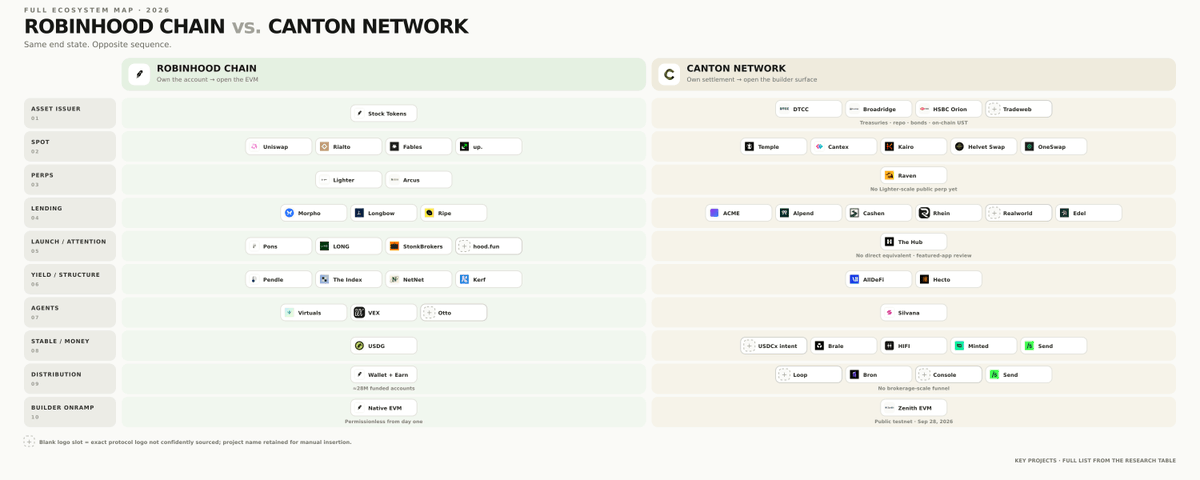
➥ @CantonNetwork's app layer take shape around its institutional rails
tokenized assets becoming useful collateral, trading liquidity and payment flows on $CC
so here’s short-listed Canton Network eco map ↓
→ institutional rails
@The_DTCC @Broadridge @HSBC @Tradeweb
→ spot / exchanges
@temple_ny @Cantex_io @kairo_ag @HelvetSwap @Oneswapcc
→ perps / derivatives
@TitanExchange_ @ekidenfi @Canborsa_DEX
→ lending / credit
@acme_markets @alpendhq @Cashen_cc @realworld_inc @edeldotfinance
→ yield / private markets
@Alldefi_ai for vault strategies
@hectoinc for pre-IPO predictions and structured access
→ agentic execution
@silvana_book
→ stablecoins / payments
USDCx via @circle’s xReserve
@brale_xyz @hifibridge @tryMinted @Send
→ Wallets
@canton_loop @bronwallet @ConsoleWallet @Send
→ SocialFi
@Thehub_io
→ EVM / builder access
@zenithfdn
the next proof point is repeat usage, deeper liquidity and assets moving between these apps



Pumpether.base.eth (✸,✸) | HUDL retweeted
you are ELIGIBLE to mint FREE @conso_xyz
if you have 1K+ impressions on X
fyi, found a Sui opportunity I couldn’t keep to myself 🐻❄️
@conso_xyz has a 5,555-supply CONSO BOTS free mint coming, and the eligibility checker is open
CONSO is building a Consumer Reputation Layer
it literally turns activity across social, gaming, AI and onchain apps into a portable reputation profile
the infra fits that purpose:
→ @WalrusProtocol stores reputation data and proofs
→ Seal encrypts the data and controls access
→ @SuiNetwork anchors the onchain identity and reward flows
CONSO’s Extension tracks usage across ChatGPT, Claude, Gemini and Perplexity, with analytics, missions and ZAP accumulation
its listing says conversations stay in your browser, while only usage numbers sync
further out, Agentic Memory is designed to let your verified interests, preferences and reputation travel between AI agents
i see the appeal of carrying that context between tools
and BOTS are designed to connect users to the CONSO Miner App and its mobile-node network
an advertised +25% mining boost per BOT for owner iykyk
i’m just building a reputation i can carry across apps


CONSO BOTS Eligibility Checker is now LIVE 🚨
5,555 BOTS | Free Mint | Agentic Collectibles 🤖
Check your eligibility 👇
conso.xyz/bots
Pumpether.base.eth (✸,✸) | HUDL retweeted
➥ @StellarOrg added ~$104M in stablecoin supply this week while the global stablecoin market actually shrank
so stellar:native caught my attention for the next leg up
latest 7D, ending October 16:
→ Stellar stablecoin supply: $523.6M, +24.9%
→ USDC on Stellar: $472.1M, +28.4%
→ global stablecoin supply: $302.9B, -0.42%
nearly 100% of Stellar's ~$104M net supply increase came from USDC
that's a pretty interesting divergence, especially when most major chains are seeing flat or declining stablecoin balances
but i dug into the activity metrics, and there's something worth paying attention to
over the same period:
→ Stellar DEX volume: $12.25M, -14.7% WoW
→ blend TVL: $137.6M, -6% WoW
→ total Stellar DeFi TVL: $236.5M
Stellar now holds more than 2.2x as much stablecoin supply as DeFi TVL
that tells me dollar liquidity is expanding faster than its deployment into DeFi
and the infra side is getting more interesting
Circle launched CCTP on Stellar in May, enabling native USDC transfers between Stellar and other supported chains
then on Oct 14, Chainlink Data Feeds and Data Streams went live on Stellar
that gives developers more of the infra needed for lending, tokenized collateral, perpetuals and other financial applications
i think this creates an interesting setup
Stellar already has a substantial RWA eco and established payment infra
now it's accumulating more dollar liquidity while adding the infra needed to put that capital to work
of course, i wouldn't interpret the $104M increase as purely organic demand
stablecoin supply can grow through treasury positioning or crosschain rebalancing
and higher USDC balances don't automatically translate into stellar:native value capture
in fact, Stellar generated only ~$1.4K in chain revenue on Oct 16
for now, the liquidity growth is real
the economic activity still needs to catch up

Pumpether.base.eth (✸,✸) | HUDL retweeted
blockchains are becoming commodity infra
i used to spend more time comparing chains by fees, speed, TVL and user numbers
i now care more about what happens above settlement
moving an asset is getting cheaper, issuing a token is getting easier
what remains difficult is deciding
- which assets deserve capital
- who should receive credit
- who owns distribution
- then which counterparties can be trusted
that is where i see value moving
[1] tokenization
tokenized stocks moved from simple wrappers into lending collateral + equity perps
creating the token is not the difficult part
legal ownership, redemption, liquidity, distribution and collateral utility are
the stack is becoming clearer:
→ issuance and asset administration: @Securitize, @SuperstateInc, @centrifuge
→ asset distribution: @Ondo, @RobinhoodApp, @xStocksFi
→ lending and collateral: @Morpho, @kamino, @eulerfinance
→ risk and curation: @gauntlet_xyz, @SteakhouseFi, @galaxyhq, @SentoraHQ
→ credit underwriting: @maplefinance, @Figure
[2] stablecoins
sending a digital dollar already costs almost nothing
that puts pressure on basic payment margins
but it does not remove the value of reserve income, licenses, liquidity or integrations
- Tether and Circle own major distribution
- @ethena and @SkyEcosystem build different balance-sheet and yield models
- @m0 provides modular stablecoin issuance
- @Stablecoin and @stripe connect stablecoins with existing businesses
Circle Payments Network is building institutional payment distribution
[3] agentic finance
agents can already hold wallets and send stablecoins
what they still lack is safe authorization, verifiable work and reliable counterparty data
the early stack i’m watching:
→ payments: x402 @PayAINetwork and Coinbase AgentKit
→ identity and reputation: ERC-8004
→ permissions and spending controls: @GoKiteAI, @OpenCovenant
→ agent commerce: @virtuals_io ACP
→ compute financing: @gaib_ai
i find this layer more interesting than another general-purpose agent token
i now look for ownership of distribution, risk pricing, enforceable rights, revenue that reaches the equity or token
i also want activity that can survive after chain incentives decline

Pumpether.base.eth (✸,✸) | HUDL retweeted

In my book How Countries Go Broke: The Big Cycle, I laid out in detail the classic mechanical dynamic that serves as a template to explain how countries go broke, and I gave my projections for what would likely happen so that one could compare both of those with what is actually happening. My hope was that doing so would help people understand what is happening and anticipate what would likely happen and would motivate policy makers to make beneficial changes.
Since June 2025 when I published that book, the progression of the actual numbers and the bond market has been broadly consistent with the template and projections. Because of the seriousness of what is happening, I am compelled to lay it out again by conveying the linkages and the numbers, which I have done in my latest article. As always, I welcome your questions and thoughts.


Pumpether.base.eth (✸,✸) | HUDL retweeted
i put together literally every major corporate blockchain
@arc moved it into a new phase
back in Aug, my view was that institutions were building different chains around different financial requirements:
- @RobinhoodApp for tokenized investing
– @CantonNetwork for private institutional markets
– @tempo for global payments
– @GIWA_by_Upbit for Upbit’s distribution
– @arc for stablecoin finance
the architecture still matters
but i now think the bigger advantage is controlling the full financial stack
includes assets + distribution + liquidity + settlement + app
right now, Arc has the most complete setup i have seen
[1] Arc
Arc public mainnet went live with:
- 100+ applications
- Circle raised $100M investment from Binance
- 100+ institutional and eco builders
- $74B+ USDC already circulating globally
- BlackRock, DTCC, ICE, Mastercard, Visa, Standard Chartered in the founding validator group
Circle already controls
- the main asset
- the issuer relationship
- mint and redemption infra
- crosschain liquidity
- payments distribution
- now the settlement network
Arc now has the strongest starting position in this group
[2] Robinhood
already proven that a corporate chain can attract real crypto-native demand
TVL reached $1B+, weekly DEX vol moved above $11B
DeFi, stablecoins and memes scaled faster than tokenized stocks or Robinhood’s own retail funnel
proved that the open market can create a completely different source of liquidity for corporate blockchain
[3] Canton Network
remains the clearest proof for regulated wholesale finance
supports more than 1M daily txns + ~$9T in monthly txn vol
DTCC and Tradeweb are moving real Treasury and collateral workflows onchain
Canton is less open and less composable than EVM networks, but that is part of its product
privacy and controlled data sharing are required for institutional settlement
[4] GIWA by Upbit
GIWA has Upbit’s distribution in Korea
the chain remains at the testnet stage
so i want to see mainnet liquidity, direct Upbit onboarding, real app before treating it as proven
[5] Tempo
already live and has a much clearer production thesis than when i first wrote about it
- Stripe and DoorDash are bringing payment flows into production
- Visa operates an anchor validator
- KlarnaUSD gives the network a native consumer payment asset
that is the main update to my thesis
the EVM may still become the common execution standard
but the largest advantage will come from controlling the assets and distribution entering that execution layer

Pumpether.base.eth (✸,✸) | HUDL retweeted
i've tried my best to mint a damn $PAPER since launch
the result is pretty clean
- >5B in total supply but NOT a single PAPER minted because of the queue
- mah 5 positions disappeared after a night of struggle sleep
- reopened position and it won't lose, i win the trade but all paper money
- but yet NOT own a damn $PAPER token yet
what did i do wrong tell me @papertrade_xyz ???

3 perp projects i want to be early to before their next catalyst hits
@entropyIO / @arcus_xyz / @papertrade_xyz
each is testing a different way to bring users onchain
1/ @entropyIO - turning private valuations into tradable markets
$1B+ volume and a $14M round led by Ribbit put it on my radar
but the more interesting part is price discovery
private companies get priced through occasional funding rounds and secondary deals
there are already fee rebates
2/ @arcus_xyz - distribution is the catalyst i care about
the dYdX team + Robinhood Chain is interesting
Robinhood Wallet integration makes it more concrete with eligible stock-token swaps routed thru Arcus can earn boosted points
$5B+ combined spot/perp volume and 15K+ traders at the announcement
the useful detail for early users:
→ 250K points distributed weekly
→ retained collateral and market making count
→ RWA trading gets boosted
→ eligible RWA perps outside regular US trading hours get an extra boost
they’re rewarding liquidity where 24/7 markets need it most
a fixed weekly pool also means your share depends on everyone else’s activity
3/ @papertrade_xyz - the launch is only the first checkpoint
predeposit Oct 8 and live trading Oct 10
PAPER starts at zero supply and gets minted when traders realize losses
direct contract access, builder codes for other frontends, then PAPER transfers
initially, transfers are restricted beyond staking and unstaking
that makes integrations and repeat usage worth watching after the opening rush
my plan is to learn the products, start small, and track whether traders keep coming back
being early only helps if the cost of participation makes sense

Pumpether.base.eth (✸,✸) | HUDL retweeted
your BTC could earn yield AND fund your next position without being sold thank to Stacks
that’s the part of Muneeb’s TOKEN2049 update that makes me want to follow @Stacks thru 2030
the thesis is simple:
→ BTC earns yield
→ you borrow against it for liquidity
→ you keep custody and BTC exposure
staking comes first, then self-custodial lending against bonded BTC is the next step being researched
and the staking side is already attracting capital:
→ Genesis Bond sold out with 230 BTC
→ Bond 2 starts Oct 10, with capacity already filled thru StackingDAO’s stBTC and Xverse, and 21Shares also participating
the yield comes from BTC committed by Stacks miners
that gives me a specific income source to evaluate
STX also has a concrete role as bonded BTC needs STX paired with it as staking capacity
so the main message is making BTC productive while the holder retains control
privacy and post-quantum security support that longer-term vision, especially for institutions holding BTC over multiple years
what I want to see next is repeat capital and lending that becomes a usable product
disclosure: I have an $STX bag and a Stacks supporter.


1/ On stage at TOKEN2049, Stacks founder and Stacks Labs CEO @muneeb laid out his vision for Stacks through 2030.
The goal is to make Stacks the default place for BTC to earn, borrow and transact privately, all settled to Bitcoin.
Enter: Satoshi Upgrades. Full version below 👇

Pumpether.base.eth (✸,✸) | HUDL retweeted
3 perp projects i want to be early to before their next catalyst hits
@entropyIO / @arcus_xyz / @papertrade_xyz
each is testing a different way to bring users onchain
1/ @entropyIO - turning private valuations into tradable markets
$1B+ volume and a $14M round led by Ribbit put it on my radar
but the more interesting part is price discovery
private companies get priced through occasional funding rounds and secondary deals
there are already fee rebates
2/ @arcus_xyz - distribution is the catalyst i care about
the dYdX team + Robinhood Chain is interesting
Robinhood Wallet integration makes it more concrete with eligible stock-token swaps routed thru Arcus can earn boosted points
$5B+ combined spot/perp volume and 15K+ traders at the announcement
the useful detail for early users:
→ 250K points distributed weekly
→ retained collateral and market making count
→ RWA trading gets boosted
→ eligible RWA perps outside regular US trading hours get an extra boost
they’re rewarding liquidity where 24/7 markets need it most
a fixed weekly pool also means your share depends on everyone else’s activity
3/ @papertrade_xyz - the launch is only the first checkpoint
predeposit Oct 8 and live trading Oct 10
PAPER starts at zero supply and gets minted when traders realize losses
direct contract access, builder codes for other frontends, then PAPER transfers
initially, transfers are restricted beyond staking and unstaking
that makes integrations and repeat usage worth watching after the opening rush
my plan is to learn the products, start small, and track whether traders keep coming back
being early only helps if the cost of participation makes sense
Pumpether.base.eth (✸,✸) | HUDL retweeted
top hardest-shilled BTC-beta names at Token2049
each one takes a different slice of the Bitcoin trade
> pearl-2:native - @prlnet | Proof-of-Useful-Work L1 in AI compute
- miners secure the chain by running matrix multiplication
- the same GPU operation behind AI training and inference
- only name in the set where the mining work is the AI workload
- 2.1B hard cap, 100x Bitcoin
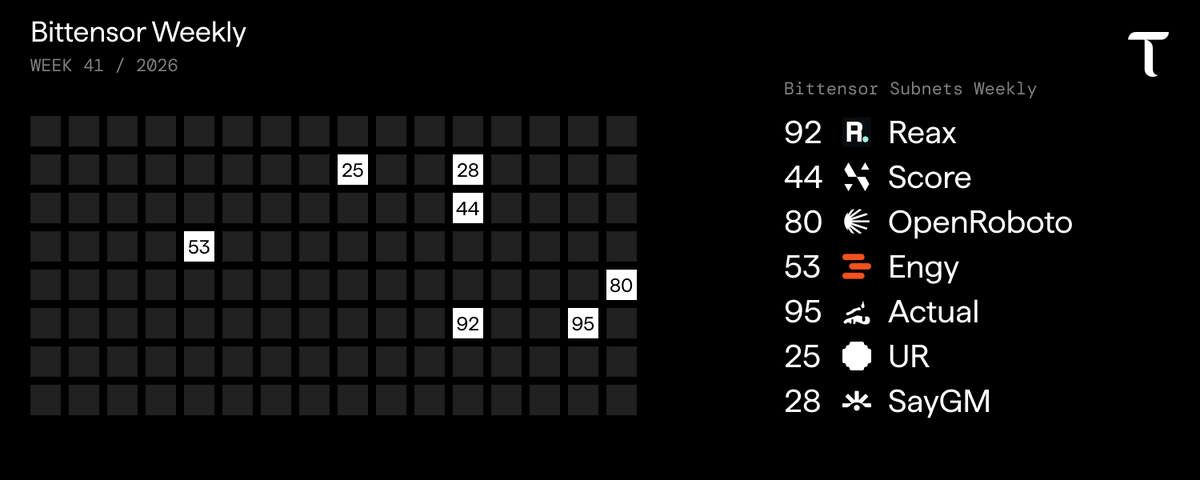
> bittensor:native - @opentensor | incentive layer for decentralized machine intelligence
- subnets compete to produce and price open AI models; emissions pay the winners
- the market for intelligence itself, with a Bitcoin-style emission schedule
> quantus:native - @QuantusNetwork | post-quantum hard money
- PoW, 21M cap, no smart contracts, ML-DSA signatures (NIST post-quantum standard) plus default ZK privacy
- the BTC clone built for the signature risk Bitcoin has not patched
- live on NEAR Intents
> blockstack:native - @Stacks | Bitcoin L2 for smart contracts and BTC DeFi
- contracts settle to Bitcoin consensus;
- sBTC moves native BTC into apps without a custodial wrap
- the production BTC beta that actually lives on Bitcoin
> $NOCK - @nockchain | ZK PoW L1 for verifiable compute
- miners produce ZKPs instead of hashes, and those proofs are the settlement product
- fair launch, no pre-mine, hard cap at 2^32
- programmable hard money where the work output is reusable
they all are now in my pocket for the next 4-year-cycle of bullrun, NFA DYOR!



Pumpether.base.eth (✸,✸) | HUDL retweeted

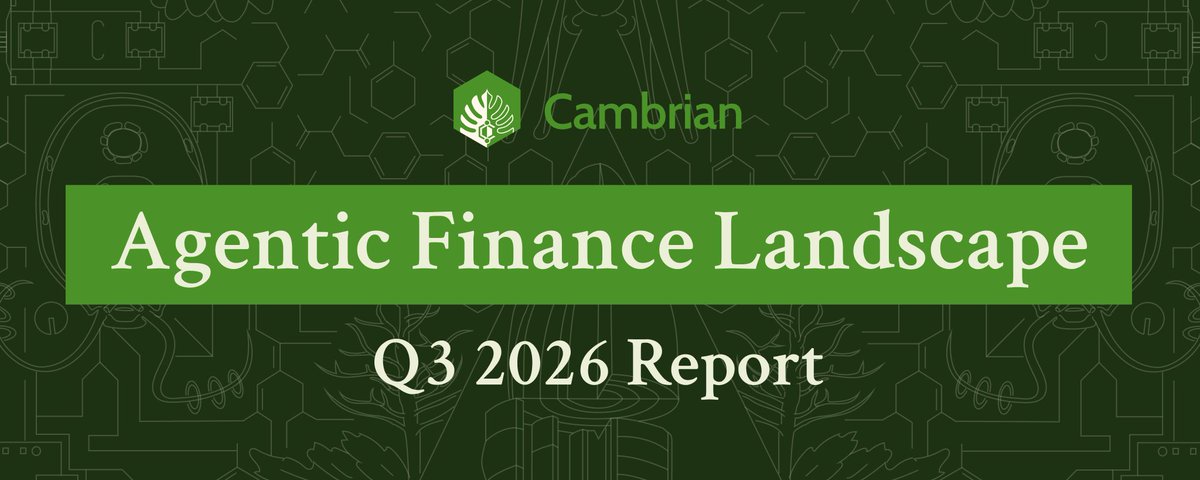
UPDATED: The Agentic Finance Landscape for Q3 2026. Is your favorite project listed?
Agentic finance now makes headlines weekly. The term is gaining popularity among major financial institutions and global governing bodies. It’s wild to see this reality after launching the AgentFi Report series last year.
Our team painstakingly researched, tested, and filtered hundreds of agents in the last few months. Most agents did not make it into our latest report. We name only the most legitimate projects, along with emerging trends, so you can prepare yourself accordingly for the future of finance.
Check out the latest cohort of the AgentFi Landscape 🧵


Pumpether.base.eth (✸,✸) | HUDL retweeted
pretty interesting that @WireNetwork’s LCO sends 100% of proceeds into network liquidity
LCO means Liquidity Creation Offering
two ways to participate:
→ buy pre-$WIRE with ETH or SOL to secure the current tranche price
→ stake ETH/SOL & accumulate pre-$WIRE thru redirected staking yield while retaining your principal
a tranche is just a batch of tokens at one price; once it sells out, the next opens at a higher price
staking accumulates tokens at the prices available when the yield converts
when the launch liquidity threshold is reached, pre-tokens convert 1:1 into $WIRE at launch
purchase proceeds and redirected staking yield build the liquidity pools
and Wire says those funds cannot be used for company operating expenses
that restriction is the part i find interesting
and Wire’s underlying goal is straightforward:
assets stay on their home chains while Wire coordinates who can control or use them across connected chains
how does it work then Nick?
[1] UPAP gives different networks a common transaction format
[2] WNS helps route transactions to the right destination
[3] Wire coordinates execution and settlement, tracking each txn through completion or a defined recovery path
for an AI agent making payments, that means knowing what happened before taking its next action
if you’re exploring the LCO, compare the live ETH and SOL Outpost prices, include fees, and check withdrawal terms
the cheapest-looking route may not give you the best net entry
next thing i’m watching: whether applications generate enough activity to keep that liquidity useful
here’s my referral if you want to explore:
hub.wire.network?grsf=nick-g…

Pumpether.base.eth (✸,✸) | HUDL retweeted
privacy infra is now splitting around what users actually need to protect
- money & Identity
- application state
- trading positions
- institutional workflows
design patterns in 2026
- zk-SNARKs / zk proofs = @Zcash, @monero, @AleoHQ, @RAILGUN_Project, @aztecnetwork, @MidnightNtwrk, @Aster_DEX
- dardware enclaves / TEEs = @arc, @nillion, @zama
- sub-txnn / view-based privacy = @CantonNetwork
- default vs optional + viewing/selective-disclosure keys
most of the above now support some form of audit-friendly reveal
i mapped the main systems where privacy was part of the original architecture
privacy is no longer only about hiding who sent money
for onchain finance, it increasingly means hiding positions, counterparties, salaries, collateral & business logic while preserving verification
that is why i think the largest adoption path will be privacy with control



Pumpether.base.eth (✸,✸) | HUDL retweeted
the agentic trading stack is taking shape faster than i expected
after looking across the eco, i think intelligence is now the main bottleneck
the infra already exists:
- agent wallets from @privy_io, @coinbase and others
- identity standards such as ERC-8004 and ERC-8183
- institutional market data through @PythNetwork Pro AI
- liquidity from @HyperliquidX, @OndoPerps and soon @LayerZero_Core's ATLAS
- MCP access through platforms such as @RobinhoodApp
agents can already access data, hold funds and execute trades under predefined controls
but access does not make an agent a good trader
when Robinhood opened its markets through MCP, @vladtenev noted that agents would often refuse to trade
his explanation = current models are trained heavily on coding data, but have very little trading data
trading requires more than generating a bullish or bearish answer
the agent needs to:
- understand the market regime
- find and validate setups
- challenge the original thesis
- size risk correctly
- monitor positions continuously
- review previous trades and improve
then @get_truenorth caught my attention
it's building what it calls an agentic brokerage, combining the intelligence layer with direct market access
on the intelligence side, it pulls data from 40+ real-time sources
including CoinGecko, DeFiLlama, Hyperliquid, Polymarket, Deribit and several CEXs
humans cannot continuously monitor every market, macro release, funding shift and position but agents can
i think most value in agentic trading will concentrate in 2 layers:
[1] Intelligence that consistently improves decisions
[2] Liquidity infra that provides reliable execution
products that control neither may struggle to retain value
i’m watching which platforms can turn that access into measurable trading performance

Pumpether.base.eth (✸,✸) | HUDL retweeted
➥ more than $13B is currently borrowed on Aave
every change in borrowing demand reprices the rate on that debt
yet almost nobody trades the rate itself
i think this is one of the biggest markets CT is still sleeping on
i’ve always watched @aave rates as a real-time signal of risk appetite
the rate lenders earn and borrowers pay changes with demand
when borrowing activity increases, rates rise >< when demand cools, they fall
until now, I could read that move, but can’t find a venuw to trade it directly
then comes @KairosSwap, the project immediately caught my attention
in short, on KairosSwap i can:
→ LONG the rate if I expect borrowing demand to increase
→ SHORT it if I expect demand and yields to cool
→ The same position can also HEDGE rising borrowing costs or falling lending yield
each trade settles in 1 day, remains fully non-custodial, and supports up to 50,000x notional exposure
that is serious leverage, so I’d size it accordingly
but the idea of trading DeFi rates directly feels genuinely new to me
bet whether Aave’s rate will go up or down → kairosswap.com?rid=vnvbUG26
it gives you early access
