

big webseries indulger I love to dine in - they/it please 🎶🎷🐛 - I like to repost stuff space / nasa / 17776 adjacent hi @BreadedCalamity hi @rotunderwood❤️
pfp @ polybiusplayer (insta)
Joined February 2021
- Tweets2.6K
- Following29
- Followers850
- Likes30K







Pinned Tweet
𝓳𝓸𝓲𝓷 𝓶𝔂 𝓼𝓮𝓻𝓿𝓮𝓻
discord.gg/ZhGvCPctUY

; pax #586 🛰️ retweeted

NGC 1365: A Giant Barred Spiral Revealed by Webb
Just 56 million light-years away in the southern constellation Fornax, the barred spiral galaxy NGC 1365 stretches an immense 200,000 light-years across — twice the size of our own Milky Way. This is no ordinary spiral. Its bold central bar acts like a cosmic conveyor belt, channeling gas and dust inward and driving some of the most intense star formation in the nearby universe.
In this striking mid-infrared image from the James Webb Space Telescope’s MIRI instrument, we peer deep into the galaxy’s dusty heart. The view spans roughly 60,000 light-years, capturing the glowing core and brilliant clusters of newborn stars. Along the spiral arms that unwind from the bar, young stars have sculpted an intricate web of filaments and bubbles, their fierce radiation and winds carving the surrounding clouds into dramatic, lace-like structures.
Astronomers believe the bar’s powerful gravitational pull is key to the galaxy’s evolution. It funnels vast quantities of material into a swirling star-forming maelstrom and ultimately feeds the supermassive black hole lurking at the center — an active galactic engine that may be quietly growing even as new stars ignite around it.
In one breathtaking frame, Webb shows us both the birth of stars and the slow, relentless feeding of a black hole, all playing out inside one of the most magnificent spirals in the nearby cosmos.
Image Credit: NASA, ESA, CSA, Janice Lee (NOIRLab)
Processing: Alyssa Pagan (STScI)


; pax #586 🛰️ retweeted
💥 This is what a galaxy merger looks like!
The galaxy NGC 5256 consists of two spiral galaxies that are currently in the process of merging.
The distance between the centers of these galaxies is only 13,000 light-years.

; pax #586 🛰️ retweeted
The peculiar galaxy NGC 7098.
This galaxy is notable for its spiral arms, which form two distinct rings. It also features a double-barred structure at its center. NGC 7098 has developed formations known as "ansae" (Latin for "handles"), which appear as small, bright streaks near the edges of the central region. These ansae are visible areas of increased density. The galaxy is located 95 million light-years away from us.

; pax #586 🛰️ retweeted
💥 This is what a galaxy merger looks like!
The galaxy NGC 5256 consists of two spiral galaxies that are currently in the process of merging.
The distance between the centers of these galaxies is only 13,000 light-years.

; pax #586 🛰️ retweeted
Webb Unmasks the Cartwheel’s Cosmic Collision
NASA’s James Webb Space Telescope has cut through the dust and chaos of the Cartwheel Galaxy, exposing a spectacular ring-shaped wreckage from a long-ago smash-up. In this infrared view, the galaxy’s bright outer ring blazes with newborn stars, while the inner regions hint at the restless black hole at its heart. Two smaller companion galaxies appear nearby, all set against a glittering field of distant galaxies. The image captures a frozen moment in a billion-year drama of collision, recovery, and rebirth.
Image Credit: NASA, ESA, CSA, STScI

; pax #586 🛰️ retweeted
An island universe of about 100 billion stars
Meet M74 — a breathtaking, perfectly face-on spiral galaxy floating 32 million light-years away in the constellation Pisces.
Its graceful, symmetrical arms stretch roughly 30,000 light-years across, studded with sparkling clusters of young blue stars and glowing pink nurseries of newborn suns. From our vantage point we look almost straight down into its luminous heart, as if the galaxy is turning its face toward us across the cosmic dark.
Image Credit: NASA, ESA, Hubble, HLA; Processing: Mehmet Hakan Ozsarac

; pax #586 🛰️ retweeted
This striking Hubble image shows a rare type of stellar nursery known as Free-floating Evaporating Gaseous Globules.
Within it are dense, dark pockets of gas and dust, some of which are actively forming low-mass stars.
(Credit: ESA/Hubble & NASA, R. Sahai)

idk how i could advertise this better uhh hit send buy my stuff heres my acggoods thyere all 12 bucks each
psychalite.acggoods.com/
#17776football


; pax #586 🛰️ retweeted

The photo I'm sharing tomorrow almost looks like an abstract painting, but it's a real photo of a real scene in the sky. The longer you look, the more you see.
Join my email list here if you want to read the whole write up tomorrow! cosmicbackground.io/pages/ne…

; pax #586 🛰️ retweeted
In the southern sky’s constellation of Horologium — the Pendulum Clock — a barred spiral galaxy named NGC 1356 spins 550 million light-years from Earth. Stretching roughly 350,000 light-years across, it is a graceful intermediate spiral of type SAB(r)bc, with a bright central bulge, a weak bar, sweeping arms laced with dark dust lanes, and ongoing star formation along those arms.
British astronomer John Herschel first recorded it on December 23, 1837. Today its light is faint (about magnitude 14 in the B band), so it remains a target for professional telescopes rather than casual backyard viewing. The photons arriving now left the galaxy half a billion years ago, when complex life on Earth was only beginning to take hold.
What makes NGC 1356 especially captivating is the optical illusion it creates. In Hubble Space Telescope images it appears almost to touch LEDA 95415, yet the two galaxies are separated by roughly 300 million light-years in depth. IC 1947, visible nearby in the same frame, is actually much closer to NGC 1356. The image is a perfect demonstration of how a flat photograph compresses vast three-dimensional distances into a single plane — a reminder that the universe’s architecture is far more layered than any snapshot suggests.
(Picture credit: Wolfgang Promper / ESA/Hubble)

; pax #586 🛰️ retweeted
An image of the Milky Way center captured by the MeerKAT radio telescope array

; pax #586 🛰️ retweeted

Gamma Cass and The Ghost Nebula
Nov 26th, 2026
30 x 300 sec, ASI2600MC Air, AT60EDP, ToupTek duo-band 5nm, Wave 100i mount. Bortle 8/9, clear, below avg. transparency, 49 °F, waning moon 91%.
Marginal conditions that got worse as the night progressed. I stopped at 9:30 PM.

; pax #586 🛰️ retweeted
The Birth of a Star System at Orion Source I: Vaporizing Rock 🌟
Around the young protostar Orion Source I, located 1,500 light-years away, researchers have, for the first time, definitively detected vaporized rock—specifically, titanium oxide molecules. This serves as direct evidence of how, under extreme temperatures, refractory dust "grains"—the building blocks of future rocky planets—evaporate.
Titanium oxide (TiO) was discovered closer to the star, at the base of its jets, where the heat is intense enough to cause vaporization 🔥. In 2019, "salt" molecules were observed in the outer disk. These findings, published in *ApJ Letters* (2026), shed light on the chemical origins of young star systems.

; pax #586 🛰️ retweeted
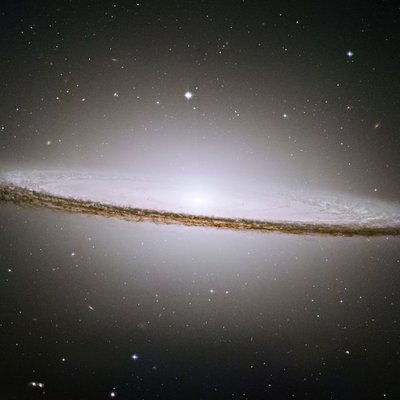
This is NGC 5134, a spiral galaxy in Virgo, seen 65 million light years away.
The light in this image began traveling to us around the time the last T. rex vanished...
(Credit: ESA/Webb, NASA & CSA, A. Leroy)

; pax #586 🛰️ retweeted

This spectacular @NASAHubble image depicts the cosmic tangle that is MCG+05-31-045, a pair of interacting galaxies located about 390 million light-years away.


; pax #586 🛰️ retweeted
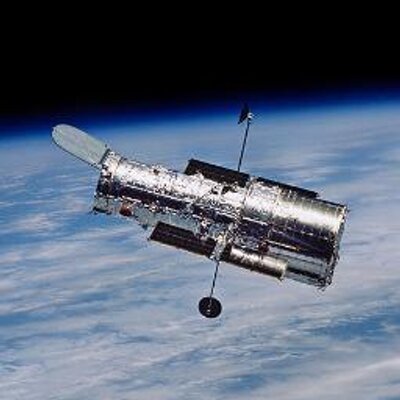
Freewheeling galaxies collide in this Hubble image, igniting a firestorm of starbirth.
An edge-on galaxy, seen as the dusty spiral structure, pinwheels into the bright background galaxy at a speed of 6+ million mph, triggering the formation of new stars: go.nasa.gov/4jfW9wt

ALT Seen on-edge, a dusty spiral galaxy pinwheels into a bright galaxy seen at top left. A bright foreground star shines at lower left.
