

Founder @MobiLoud – ecommerce mobile app builder for Shopify, Salesforce, and BigCommerce. Helping brands grow retention and repeat sales with push.
Joined January 2007
- Tweets4.1K
- Following2.8K
- Followers3K
- Likes2.5K


The future of software is more open and fluid than ever before. You can code and build anything yourself. Whether you're a business or a solopreneur, there's no SaaS that does anything you can't do internally with a Claude subscription.
That doesn't mean software businesses are going to be obsolete.
Everything you build needs to be maintained. And every product, feature launch, tweak, or bug fix takes more attention than you plan for. You can't skip this. You'll always end up creating more problems down the line.
Many businesses don't have the time or the headspace for this. Some do. They'll code their own software, build their own workflows, and they'll be happy with it. Many more will gladly pay another company to do it for them.
Once upon a time, you were paying for the code. Someone built a product that you could never build yourself, a CRM, an email marketing platform, a website builder, and you paid for access to that software.
Now, you're paying for someone to own it, to be responsible for keeping it maintained and running smoothly. You're paying for them to think about it, so you don't have to.
The same reason a CEO has an assistant. They can make their own coffee. But it's worth something to have this (and other things) handled for you, so you don't need to think about it.
That's software in the near future. You're not selling code anymore. You're selling peace of mind. You're selling freedom. "We take care of this, so you don't have to".
A lot of software businesses will die because of AI and vibe coding, because the "moat" they had no longer exists.
But the category as a whole is still going to be there. You just need to understand what your customers are really buying from you.
Your app should move at the speed of your website.
Most mobile apps don't. They're a separate channel, a separate platform, and by definition, they lag behind your site, because every change you make on your site needs to be repeated again, for the app.
It varies in scale. If you have a complicated custom app, built natively in its own codebase, it can be weeks, maybe months, before updates or new features get pushed to your app.
Every new feature comes with 2x the time and cost projection, because you're thinking about having to build it for two different channels.
If you build your app with a no-code app builder, it's likely not going to be that severe. But it's still a drag on how fast you can move. And the more you want to do, the more you feel the constant pull of having to manage two separate storefronts.
The problem is only going to get worse, because ecommerce brands are able to move faster than ever on the web.
Shopify's AI tools, Claude, Codex, and everything else that's possible with AI means your site is constantly evolving. Your app needs to keep up.
If not, you're serving an out of date experience to your app users... who are supposed to be your BEST customers. They should be getting the best experience, not one that's always lagging behind your site.
At MobiLoud, we let your app and site move in sync. Your app is powered by your site, it's not a completely separate product. That means if you want to move at the speed of light, constantly shipping new things on your site, perhaps even building agentic experiences that adapt to each shopper, guess what... your app does this too.
In 2026 (and 2027 too most likely), it's a better way for ecommerce brands to launch a mobile app. A custom app experience, powered by the same cutting edge as your website.
2
181
BFCM last year was huge. It's going to be huge again this year.
A few predictions:
1. More than 60% of sales come on mobile
2. There's a massive lift in visits coming from AI assistants
3. The lift in sales from AI assistants is much lower
4. Shopify sees a much bigger lift in sales than other platforms
One more prediction, which won't be so widely publicized:
Most brands will lose most of the customers they acquire over BFCM.
People come, see a big discount, buy, and then forget about you.
That's because they bought from 100 other brands over the weekend too.
You got a sale, but it doesn't mean that much if the customer never comes back.
Brands with apps do it differently. They make their app the hub for their sale. Higher discounts, exclusive offers, built not just around getting someone to buy, but getting someone to download the app and buy through the app.
When the holidays end, the app is still there. You have a durable connection to the customer, and a much better chance of turning them into a loyal, long-term buyer.
Mobile apps are the BFCM cheat code for ecommerce brands. And it might not be too late to launch in time for this year.
We've helped brands ship apps in just a few weeks (or less) before - we might be able to do the same for you.
If not - it's still worth thinking right now about launching your app, so 2027 can be all about building a user base of tens of thousands of app customers, which will be an incredible asset to have for next year's BFCM.
Get a free preview of your app at mobiloud.com to see what your app could look like.

BFCM 2025 was a record year for ecommerce.
And there's nothing to indicate that 2026 won't continue the trend.
Here are the top 6 stats from BFCM 2025, and what to look forward to this year:
1. $44.2B spent online in five days, Thanksgiving to Cyber Monday. Up 7.7% on 2024, and more than double 2017.
2. $14.25B spent on Cyber Monday, the biggest online day ever. Spending peaked at $16 million per minute.
3. 56.4% of online holiday sales were made on phones. Up from 40% in 2020. On Thanksgiving, mobile passed 60% for the first time.
4. 693% more visits to retail sites from AI assistants. And those shoppers converted 31% better than other referral traffic.
5. 80 to 115% higher conversion rates in apps than on mobile web. App shoppers also spent 25 to 35% more per order.
6. Brands sent 8.6 push notifications, on average, in BFCM week. Up from 3 to 5 in a normal week. Yet nearly 1 in 4 brands sent none at all.
And what we expect to see this year:
→ $47.3B spent online over Cyber Week, up 7%. A little slower than recent years, as fuel prices and slow wage growth squeeze budgets.
→ $15.2B on Cyber Monday, the first $15B day ever.
→ +28% for Shopify brands over the BFCM weekend, more than six times higher than 2019.
Read our full BFCM 2025 Statistics Report, with trends going back to 2017, plus our predictions for BFCM 2026 here: mobiloud.com/reports/black-f…


6
5
199
Vercel and Shopify just launched storefronts built for agentic shopping.
Vercel Shop is an open-source Next.js storefront template for Shopify. It's built on Shopify's Hydrogen SDK, designed so AI agents can read product pages directly, as well as searching products and building carts.
They describe it as "one product URL, two readers." A shopper sees a normal product page. An agent sees structured data on price, stock and options.
This comes right after Shopify's Shop MCP, which opened Shop Pay checkout to AI agents.
Two really interesting things at play here.
One is the agent-optimized front end. First time so far I've seen a major player launching something truly built for agents - not a regular store adapted for agentic shopping. Feels in a way like the desktop-mobile shift, where brands moved from building desktop and adapting it for mobile, to actually building mobile-first.
To be fair, I don't think this is necessarily going to be the norm right now. But a sign of things to come.
Second is the backend approach. Which I think is going to have a lot more of an immediate impact.
More and more brands are going to start building custom websites, rather than the standard out of the box Shopify stores.
Shopify even knows this, and is planning for it. They're not fighting against it. They're working with the likes of Vercel to give stores what they need to ship custom storefronts with AI, powered by their backend.
I think apps are going to be the same way. Pull from your backend, deliver a custom, frontend that looks and feels unique, native - but still runs on the same platform as your website.
We've been working on something exactly like this at MobiLoud. I think it's the future of what mobile apps will look like for ecommerce.
The future is agility. Moving fast, being able to build custom experiences without the tech debt of managing separate codebases.
3
10
331
Mobile apps aren't just for Nike and Amazon anymore.
There's still a disconnect with ecommerce brands, from what I see and hear. Not everyone's aware that you don't need to spend hundreds of thousands to have your own app today.
That's the biggest reason more brands don't have an app. The perception is it's a major engineering project, potentially something you need to add headcount for, and a significant risk to take.
That's not what an app is these days.
It's not nothing either; don't expect to launch a good app from a prompt, and not have to spend any time or money on maintaining it.
But the investment is reasonable enough that any moderately successful brand can (and should) have an app.
You're getting a channel that lives on your customer's phone. Push notifications, like a free version of SMS with no carrier restrictions or inbox. The level of connection you get from those two things, alone, is worth what it costs to build and maintain your app.
And the upside is so much more. We see many brands grow their apps to the point where it contributes anywhere from 10-35% of their online revenue.
That could be a million dollar sales channel, that's much more reliable than sales coming anywhere else, because there's no ad spend, no algorithm or LLM deciding whether you show up.
At MobiLoud, we're helping brands launch apps, as risk-free as it gets, particularly by minimizing the operational tax of having your own app, which is the biggest cost (and the cost you don't recognize until later).
Built on the same tech stack as your website, minimal duplicate work, team behind you to keep it fast and clean.
Just about every brand today should have an app. Go to MobiLoud.com to see if we're the right option to launch yours.
1
3
115
A growing number of major websites are choosing to block AI agents from making purchases or taking actions on behalf of customers.
Amazon was in the news a couple of weeks ago for blocking Meta's Muse agent. The new story is Delta not allowing third-party agents to book flights. JPMorgan and Charles Schwab are also restricting agents from accessing customer accounts.
Yet at the same time, Shopify, Meta, Google and other heavyweights are rolling out new features to support agentic shopping.
I can't think of a much clearer signal that we're in the middle of a major shift than seeing some of the world's biggest companies pulling in opposite directions.
There's always pushback when the status quo is threatened.
The way I see it there are three possible reasons why these companies are resisting agentic commerce.
1. Control - This is primarily the Amazon angle.
They don't want to hand over control of the customer relationship to Meta, OpenAI or anyone else. True to form; Amazon has always been fiercely protective of their customers. They're not about to let that go.
They're investing heavily in AI shopping itself. They're not against the concept. They just want to be the ones in charge.
2. Security and trust - I feel this is more of what's driving the restrictions from Delta and the big banks.
There's still a lot of uncertainty around whether AI agents can reliably handle transactions, particularly when they're dealing with sensitive information or large amounts of money.
And if an agent screws something up, who's left to deal with the fallout?
It's probably going to be the airline or bank, not Meta or Anthropic.
For businesses with high levels of liability, there's a pretty obvious incentive to be cautious.
3. This one is a little more of a conspiratorial view, but I think there's something to it.
AI agents have the potential to bypass a lot of the CRO tactics, upsells and other techniques businesses use to get customers to spend more.
An agent doesn't necessarily care about a beautifully optimized landing page, urgency tactics or a carefully placed upsell.
It's there to complete a task, as efficiently as possible.
You have to wonder whether airlines and hotel booking sites and other businesses that rely heavily on these tactics are worried about what happens when their customers are represented by purely utilitarian shopping agents.
Like I said earlier though, I don't think this is a sign that AI shopping is dead. Quite the opposite.
This kind of resistance is further evidence that it's becoming a serious enough possibility for major businesses to feel threatened by it. Just perhaps not everywhere, not just yet.
If you're in ecommerce, I'd prepare as though this shift is coming.
That means making your store easy for AI agents to discover, understand and buy from, rather than optimizing exclusively for human shoppers.
But it also means investing in direct, convenient touchpoints with your customers, like mobile apps, so you're not entirely dependent on third parties to mediate those relationships.
Especially when it comes to your most valuable customers.
15
8
382
Your app shouldn't be a second storefront.
This is the biggest mistake ecommerce brands make when launching an app, and the biggest reason mobile apps "fail" for these brands.
It's because the app is built separately from your website, either with an app builder or a custom codebase, and ends up needing to be run as a second storefront.
You still have things like products, pricing, orders synced between both channels. But the UI, layouts, overall shopping experience are all completely separate.
The app has its own design system, its own CMS. You launched another website, essentially, just this one isn't on Shopify, it runs on a new tool your team needs to learn or, worse, a new framework you need to hire staff to manage.
I hear about this regularly. Brand launched an app, they're happy with the app, but the ongoing work it takes to manage it in parallel to your website just weighs you down too much. Not only the hours themselves, but the mental load on your team of switching gears, and the work to keep both channels from drifting apart in experience.
I've also seen it in a decent number of apps in the app store from well-known brands. Especially when BFCM comes around. You'll find some where their Black Friday sale is suspiciously absent from their app, I'm guessing because it's not being actively maintained.
Here's how we do it differently at MobiLoud.
We don't build your app as a separate codebase, or from templates that need to be managed on their own. We build it using the same code, same tech stack, same wiring as your website.
It's a unique, native app, and we can build just about any custom app-only features you need. But it runs from the same code as your website.
For most parts of the app, when you update your website, your app updates as well. And the other parts (like app-only pages) are managed through the same CMS or publishing workflow as your website (you build in Shopify -> publish to the app. Same with other platforms).
It solves the biggest blocker most brands have with launching their own app: that it's just too much time, too much effort, so it's not seen as a priority.
Removing that operational overhead makes launching an app a no-brainer.
If you're curious to see what's possible, head to MobiLoud.com, and you can book a demo where we'll put together a live preview of your app to give you an idea of how custom it can be, while still being in sync with your site.
3
8
210
Black Friday is the #1 day of the year for shopping app installs.
It's been that way for more than a decade, according to Airship (who have data from over 63 million app users).
There are 40% more installs during Black Friday week than an average week in October. Black Friday itself is double October's daily average.
So it's not just that your customers are buying more over BFCM. They're taking other important actions too. Signing up for things, downloading things.
It's all part of the BFCM hype. People are more biased towards action.
It's also that they're seeing brands in their feed promoting app-exclusive sales and other VIP perks and thinking "I want to be in on that".
This is extremely relevant if you've been thinking of launching an app for your brand. At this point, if you don't have an app, you probably think it's too close to BFCM for it to be worth doing.
Yes, it's better if you have a good number of users on your app before Black Friday. That makes it an amazing channel to get past the crazy noise everywhere else, and message your best buyers directly.
But that might not even be the best reason to have an app for BFCM. It could be the influx of new users on your app.
The benefit of getting someone on your app, having your brand's logo on their home screen, one tap away from opening your store, is huge. And it's not a fleeting win, like a sale on Black Friday. It's a long-term connection that's worth something.
So here's how I'd play it:
- If you don't have an app yet, think about pushing ahead with this (get in touch with us at mobiloud.com to talk about it now; we may be able to get it done for you)
- Run your BFCM campaigns as normal, but give a little something extra for app users (30% off on the site / 35% off in the app)
- Make your promos available slightly earlier for app users - i.e. 8 hours early access through the app only
- Add extra deals over the course of the weekend, only available through the app. "For the next 6 hours, app-exclusive: 25% off leading styles."
- Tease the extra benefits available in the app when promoting your BFCM sales. Let people know they get more through the app
You can also do this any time of the year, not just BFCM. App-exclusive sales are always a winner. People love exclusivity, and these app-driven promos are great at getting more uptake on your campaigns, on top of making your app users feel special (which means stronger loyalty, retention, repeat behavior).
Brands that get it understand the value of app downloads, and this is what they chase during BFCM, not just a ton of heavily discounted sales.
2
3
38,888
One of the best ways to increase profitability for an ecommerce brand is to stop paying twice for the same customer.
Just about every brand does this. You acquire a customer, do what it takes to get them to buy, celebrate the win...
And then for their next purchase, it all happens again.
It's getting harder to get through to people, even people who have already bought from you before, without having to double-dip on ad spend.
That's opportunity. It shouldn't take another ad to get through to someone who bought from you already.
It's where having an app can make a big difference.
An app gives you push notifications, which reach customers with zero per-send cost. It's also a persistent fixture on their home screen, which they'll come back to on their own (not just when they see one of your ads).
Having an app won't eliminate the need for retargeting ads/SMS/other channels altogether, obviously. You won't get every single buyer to download your app as well.
but getting the app on a good number of your repeat buyers' home screens can make a noticeable difference. Especially because you're not just cutting out ad spend for the people who have your app, but you'll end up driving MORE repeat sales through the app, each one at higher margins.
That's money you can reinvest into acquisition; getting more customers, a percentage of whom will get your app, contributing more profits and LTV, creating a compounding flywheel.
It's surprising to me that more brands don't have this working for them. The sooner you build an app, the more time it has to grow, the longer this flywheel can grow and compound.
And with how we do it at MobiLoud, it doesn't take a whole new team to run the app, either.
Just means more opportunity to get ahead for brands who do have one.
1
2
232
Shopify keeps shipping features that let brands move faster (with less effort) than they ever could before.
You can redesign your PDPs, collections, or your whole store, with a few words and one click.
And the way many brands run their mobile apps isn't built to keep up.
While your site is faster and more agile, your app is often built separately. Its own UI, managed and maintained in its own dashboard.
If you want your app and website to have a consistent look and experience, that's a problem.
Every change you make on your site means either:
a) extra work to recreate the change in your app
b) leaving it, accepting a growing gap between what people see on your site and what people see in your app
This is the nature of building separately from your website.
At @mobiloud, we do it differently. We build your app on top of your website, not alongside it.
That means features like Canvas work for your app as well. Ship a site-wide design change, have it go live on your app at the same time. recreate how your PDPs look, it carries over to your app.
You can build app-specific pages or layouts, through your Shopify store, and use Sidekick or Canvas (or your AI tool of choice) to update these just as fast.
Every new Shopify feature goes further for you. It works for your app and your site. It doesn't create more work or a wider gap between each of your channels.
With the speed of innovation on the web and from platforms like Shopify right now, I really believe the case for building "native" (ie: separately from your website) has never been smaller.
Brands need an app that moves as fast as their website does.

AI shopping agents are coming.
Every week when I put together our weekly newsletter, The Retention Edge, there are typically 4-5 new stories I find about AI agents on this platform or that platform.
They might not become 100% mainstream. But I don't have much doubt that they will be a thing.
The trendy thing is to warn you that you need machine-readable product data, clean catalogs, a site AI can crawl and understand, etc etc.
That's not really a big issue for most brands though. AI can probably read your site fine. And if you're on Shopify, they do most of the technical AI stuff for you automatically, making your catalog available in GPT, Muse, etc.
The much bigger danger, that most aren't really thinking about:
Each of these platforms wants to own your customer.
The platforms don't care which brand someone buys from. They care that people come back and buy from them.
They want to own the relationship, the questions asked, the customer data.
It's been a huge part of Amazon's strategy since forever. Anyone who sold on Amazon or worked with Amazon sellers know how little control brands have over their customers on the platform. Amazon owns the customer's details, the right to follow up with them, and will kick you off the platform if your try to circumvent that.
And funnily enough, it was Amazon this past week who said they don't want Muse going on their site and buying things for people.
That's because Amazon, of anyone, knows the value of owning the customer relationship. They don't want another platform taking control of that.
Now OpenAI, Meta, TikTok, Google... they all want that control.
For a brand, this should be somewhat concerning. And enough to make you want to double down on your customer relationships.
You need to build a brand people want to come back to, directly. Channels where you own the conversation.
It's one reason a mobile app will soon become a must-have channel for any brand built on repeat purchases. It's just about the only channel AI agents and the tech companies behind them don't touch.
An app won't cover all of your audience. But it covers a majority of your best customers, your most valuable customers, those who it matters more to retain.
Channels like this; direct, owned channels; are what brands need to focus on right now, in preparation for the agentic shopping apocalypse; not turning your site into a product feed designed for agents.
They can already understand your site. You don't need to overhaul everything to do that.
The value is in building AWAY from this, in the channels where you're not praying a piece of software decides your product is the best one to buy.
7
9
945
The best Shopify mobile app builder is the one that works with your website.
It's easy to overlook this when your build an app. You see an app as a new channel, a new experience.
You forget that it's all your brand. And your brand experience should be consistent across all the places your customers shop.
It doesn't have to be the SAME; you can add app-exclusive features, perks that make the app worth having; but it should be CONSISTENT.
The problem is that traditional app builders can't always do this.
They can build something that looks really nice, has some cool new features, sends push notifications, and integrates with some of the things you use on your site.
But there's almost always a gap between what you've built on your site and what you're able to do in your app.
The more custom your site, the harder it is. If you've got a complicated tech stack, a custom theme, a ton of apps you rely on, custom implementations within these apps - a lot of this doesn't make it into your mobile app.
Your app looks good. But it doesn't really look like your brand.
And that's not to mention the extra work you have to manage two distinct storefronts.
These app builders can work. The end result is fine, and it can have a positive impact for your business.
But there'll always be a little something lacking.
MobiLoud is a different kind of app builder. We build on top of your site, not alongside it.
That means everything from your website works in your mobile app. Every app, integration, theme customization, feature, every eccentricity about your brand.
If you want a mobile app that's its own thing, with its own CMS, its own UX and UI, there are a ton of great mobile app builders out there that can do this for you.
If you want an app that's 100% your brand, in step with your website no matter how custom the build, MobiLoud is really the only option that makes sense.
The app-exclusive sale is one of the most underrated ways to run a promotion.
With BFCM and the holidays coming up, it's about to be very relevant. Every brand is fighting for attention with the same 30% off promo.
An app-exclusive is so much more powerful, for a number of reasons.
- It's different. That alone is valuable when most brands look the same.
- "Exclusive" carries a special feeling. Your customers aren't just getting a discount. They're getting status, the feeling of being in your inner circle.
- It's stickier. An app-exclusive sale gets customers into your app, where they come back more often, buy more, and stay longer.
Think about a normal promo. You keep increasing the discount to hold the customer's interest. It cuts deeper into your margins, and it still looks like every other brand's promo.
Now think about an app-exclusive. It's unique. You still offer a discount, but it can be smaller, because exclusivity does some of the work.
And the best part: after a regular promo, it's hard to re-engage buyers and get them to buy again at full price.
But after an app-exclusive promo, the app is still on their phone(sure, a few people will install it for the deal and then delete it, but they're a small minority).
You can re-engage buyers with push notifications (for free), and they're far more likely to buy again.
Some customers download the app for the promo, and you instantly get a stickier touchpoint.
Others already have the app. The promo rewards their loyalty, makes it stronger, and makes them better customers going forward.
It's a retention-first, long-term approach to promotion. You optimize for return over years, not a short spike that fades right away.
App-exclusive promos alone probably aren't reason enough to build an app. But it's close.
Between stronger uptake on your promos and the retention and LTV gains over regular % off deals, BFCM and the holidays alone could pay for the cost of building your app.
1
101
Every grocery brand should have their own app.
For a brand built on retention, it's the strongest channel you have.
An app puts your brand closer to the customer. It makes repeat purchases easier, and it makes your brand the default choice.
Think how you usually shop from physical stores. You tend to shop at your local store - the one that's near where you live.
When someone downloads your app, you become their local online grocery store. You're the neighborhood store for them. Whatever they need, it's easiest to pull out their phone, open your app, and buy from your app.
It's a massive advantage to be there, in your customer's pocket, on their phone.
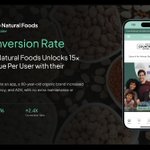
We helped Country Life Natural Foods do just this. They launched an app that became a loyalty hub, as well as a meaningful retention driver.
Customers who shop in the app contribute 15x more revenue than those who shop on the web. They spend more in each order, and visit 5x more often.
There's also a key inflection point in terms of purchase frequency, around the third or fourth purchase, where the Country Life team notice that customers who hit this mark typically become customers for life.
The app drives more of their customers to get to this point. So the increase in retention has a compounding effect. The more regularly customers come back, the stronger the bond is, the more likely they become the kind of habitual shopper that grocery businesses rely on.
It's just a no-brainer for brands in grocery, F&B, or any vertical really where repeat business matters.
You're making it easier for high-intent buyers to come back... which is the simplest possible way to grow your bottom line.

2
2
101
Read more about Country Life's app journey here mobiloud.com/customers/count…

21
There's a lot of talk about the death of software.
Anthropic or OpenAI launches a new feature that does what dozens of companies have been building for years.
Businesses code their own SaaS alternatives. A company moves their website off Webflow or WordPress to a site build with Claude. A Shopify brand replaces their apps with their own internal versions.
It's happening. There's no doubt that the moat of software is eroding heavily. The sweat equity of working for months to code a working product isn't worth close to what it once was.
But software/SaaS isn't dead, or dying, or in danger of dying.
Not the category as a whole. Some are in danger, though - those where owning a majority of the market is a success condition.
You're a SaaS company with multiple funding rounds, hundreds of employees, HQ in SF and New York. OpenAI announces a new feature in ChatGPT that does basically what your product does, and it's going to ring alarm bells.
But if the same company is lean, efficient, profitable at a lower scale, the risk of getting taken out by a big company is much, much lower.
There's always room in the market for multiple players. And when you're building something, there's usually an advantage to being smaller, more focused, more accessible to your customer, when the alternative is a company with thousands of employees, none of whom will ever interact with a customer.
The problem just comes when you need to own a huge piece of your target market just to stay alive.
People will tell you that indie hacking is dying. Small SaaS are about to get eaten up by what ChatGPT and Claude can do with an MCP.
I think it's the opposite. It's never been a better time for a small, sustainable company, with a product that does one or two things very well, and a focus on retention and customer service.
3
7
302
When we helped XCVI launch their mobile app, they were coming already with an app from another platform.
It wasn't broken, as such, but it wasn't ideal. There were two fundamental issues.
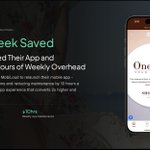
One - it took too much work to maintain. They ended up saving 10 hours of work per week when they moved to MobiLoud. That doesn't sound like a huge amount, but it adds up, especially when it's drawing your team's focus away from other things.
Two - it couldn't really carry over everything they had on their site. Their features, apps, integrations. The platform had integrations for everything. It was built on Shopify's API. But they couldn't do everything in the app exactly as they could on their site.
Both are minor quality of life issues on first glance, but grow to be significant limiting factors as time goes on.
The core problem: their app existed separately from their website.
It was its own product, which needed its own updates (most of which was double work of things already done on their site), and its own feature set and limitations.
This might have made sense if their goal was to build a standalone surface, unique from their website. But it wasn't. They just wanted to extend what they were already doing on their site into a new channel.
The app builder they were working with was an overcomplicated way to get there.
MobiLoud helped them get the app they needed, without the double work and limitations. A new channel, fully consistent with their website, with minimal work to maintain.
We also helped them transition smoothly to the new app, without disrupting their existing users.
There's a case for traditional app builders - if you want your app to be a fundamentally different experience from your website.
But in my experience, I've found most brands don't need this. Consistency between their website and app is more important; and a channel that you don't need to babysit.
That's the case for MobiLoud.

68
Ecommerce brands have traditionally had to deal with a fundamental trade-off when launching a branded mobile app.
You've got a choice: use a no-code tool that, by nature, limits what you can build. They put limitations on your design, as well as the features and integrations you can take into your app.
or, to get past those limitations, you need custom development (whether it's building from scratch, or customizations on top of one of these no-code app builders). This adds cost, complexity, and a lot of risk. Building custom means building another product you need to maintain, for the product's lifetime.
So it's a trade-off. No-code with limitations? Or no limitations, with higher overhead and more risk?
It's not a great choice, which is why a lot of brands still don't have their own app.
At MobiLoud we sit in the middle of this.
Very few limitations. We turn your existing site into a mobile app, which means you can do anything in your app that you can do on the web. Which, today, is basically everything.
At the same time, you don't have the cost, overhead and risk of building out a separate product. The app is powered by the same system powering your website - Shopify, SFCC, WooCommerce, custom code, whatever.
Your web team controls the app too. And all the core work you do to your site is synced across app and web, so there's none of the double work you get when your app is a standalone product.
And it's actually ideal for ecommerce brands, because a mobile app usually doesn't need to be fundamentally different from their site.
It's just a smoother, more convenient way for regular customers to come back and buy again - one that lives on their phone, instead of in a browser.
That doesn't necessitate a complete rebuild of your site. MobiLoud's approach is a much more effective way to get there.
Is it the best option for 100% of brands? No. But I'd say it is for the majority of ecommerce apps.
You probably don't need to choose between a limited app and an app that needs a whole team to keep it running.
We're trying to help more ecommerce brands realize this.
4
4
282
"Transactional" ecommerce brands are at real risk from AI right now.
LLMs like ChatGPT aren't quite there yet, but soon they'll be a viable way for people to find and reorder staples; the things you buy without thinking about.
And that's dangerous for any brand selling these kind of products. Because now you're pinning your survival on an LLM that's a black box, personalized to each user, and has the potential to flip their algorithm at any time and change which products get recommended to customers.
It's not like Amazon or Google, where you can see where you rank and work on building/maintaining rank. Visibility is a real problem. So is volatility, with these new platforms constantly changing how they choose and rank things.
You might be the winner. You might not. You don't really control it.
There are two ways for these brands to survive (two "moats" left):
One, you build a brand stronger than the product. So that people don't put on their shopping list that they need to buy more tissues - they say they need to buy more Kleenex.
Two, you give customers an experience that's more convenient than ordering from AI.
This is a great case for why brands should have an app. You become the default way for customers to reorder. They buy through the app in a couple of taps, instead of from AI. You give them the added convenience of shipping notifications, reorder reminders, exclusive discounts, to give your customers a real reason to have the app.
And with this, you get a much more durable connection with your customers. A kind of control over your customer relationships that every other channel is trying to take away from you.
Don't ignore AI visibility. You want your products to show up in LLMs, and it's worth investing in what you need to do to make this happen.
Don't let this be the success or failure of your brand, though.
109
We talk to a lot of brands who tried a custom mobile app years ago, and it didn't work.
They're convinced about the value of an app itself. That's why they're talking to us. But it's the custom development model that was broken.
Most probably thought it would be a one-time project. Invest, build once, then we have an app.
But apps don't really work that way.
For ecommerce especially - apps need constant maintenance. Your store is always changing. Your app has to as well.
When you have a custom-developed app, that means going through developers each time you need to make a change. And that means an in-house development team (multiple full-time staff) or an agency on retainer (and annoying long lead times to get things fixed).
Sometimes it works out. You hire the right people, get lucky.
But most ecommerce brands don't want to turn into a software company, managing a team of developers and spending their time juggling code.
So that's what happened with most of these brands that come to us. The app looked great when it launched. They just underestimated the long-term cost of owning a custom mobile app. At some point, years ago, they cut their losses and stopped working on it.
It's always good when we get someone from one of these brands on a call, because I know it'll be easy for us to help them.
They've already validated the case for an app. And they've probably got the user experience there already - on their site.
For us, it's no sweat to help them relaunch their app. We build a new version, powered by their website. Not separate to their website.
This means it's not going to fall behind, like their old app. It's not going to take up a huge amount of dev resources. They can manage it and update it with their existing team, through their existing web platform.
If you're in this camp, and you tried a custom app and just realized it was too much work to manage, I wouldn't give up on the channel.
Apps are just becoming stronger and stronger for ecommerce brands. If you can launch without creating all that operational overhead, it's one of the best assets you can have.
And if you want help launching, head over to our website and book a free demo to talk about it.
217
Around a year ago we helped global streetwear brand Cold Culture launch a mobile app. It's probably one of my favorite launches we've done.
Two reasons why.
One - it makes a great case for why brands should have an app.
Cold Culture run on limited drops and community. They put out new products and collections in limited numbers. Their success depends on building hype, selling out fast.
The problem is it's getting harder to reach people today - even your own customers. Especially not at the pace they needed, and with their market (mobile-first, 16-30 year olds).
With the app they get the word out faster. Their VIPs get a push notification, instead of an email they see a day later (or not at all). It builds community. And their customers actually want the app.
They barely even promoted it at first. The idea was to do a soft launch. They ended up with over 250K downloads, organically.
That's validation.
And two - it goes against the idea that, with our approach to building apps at MobiLoud, you can't build something new and unique.
People assume that because you're building from your existing website, you're not going to end up with anything meaningfully different from your site.
With Cold Culture's app, we helped customize the experience specifically for the people using it: repeat customers who already know the brand and just want the fastest possible path to purchase.
Web shoppers still get an introduction to the brand. The site's optimized for discovery. On the app, we stripped that all away, sending app users straight to new arrivals. The product page is stripped down now, making as easy as possible to buy. All-up it takes just 2-3 taps from opening the app to buying.
You've got an experience optimized for your best buyers, plus push notifications, but it still runs from their existing website. They don't need app developers. All the content still comes from their Shopify site.
Today, you really don't need a custom build. Your site is good enough to power 90% of your app. The extra 10% isn't worth rebuilding everything from the ground up.
You can get the app your customers want (yes, for most brands, there's a segment of your customers who WANT to be able to shop in your app), without the hassle of managing another storefront.
I'll drop the link to the case study in the comments. If you want to see what your site could look like as an app, head over there and book a free preview and we'll show you what's possible.

2
4
88,461
Check out the case study here: mobiloud.com/customers/cold-…

76