

Fractional-Full-Stack CIO/CTO → Scaling Businesses from $0 to $3 Billion | I build solutions and teams that deliver | Technical Ghostwriting | Dad humor too
Greenville, SC
Joined April 2011
- Tweets5.8K
- Following1.6K
- Followers447
- Likes47.9K






Everybody's building their own.
That's what I keep hearing about AI in small and mid-sized companies. Their own tools, their own skills, their own models. Not much gets shared across the organization, and that's the people using it well.
It still seems early, and fragmented.
The bigger chance is getting more people to use it, in a structured way.
Especially companies that don't write custom code but need to tweak the software they already run. They need more than QuickBooks or FreshBooks, and better analytics, but they aren't ready for an ERP.
At one company, we standardized on one AI provider and shared the accounts, so what one team built carried to the next.
When one of your people figures something out with AI, where does it go?

1
19
The backlog had thousands of tickets in it. Some hadn't been touched in two years.
I was in a fractional CTO engagement. My job was to look at how things worked now and suggest what to change, and the backlog was a big part of how things worked now.
The development team was small for the work in front of it. Someone still had to decide what they'd build next.
So I used AI to compare three things, quickly. The backlog. What customers had been asking for recently. And what the system already did.
Then I prioritized all of it together.
What came out was a short list of features we could actually build. Each one came with its justification: which customers had asked, and how many times. That gave us a way to weigh what the team should work on, and to get the most out of the people we had.
Then we trimmed the backlog down to a group the team could get through. We deleted about 75% of the tickets.
They fell into three piles. Features the people who asked for them didn't need anymore. Features the product already had. And requests from customers who weren't customers anymore.
That middle pile: customers were asking for things the product already did.
In my experience, the biggest low-hanging fruit with AI is large-scale analysis across all the available data sources inside an organization. This was a small version of that. Three sources, side by side, and an answer fast.
If your team's backlog has gotten too long to read, how much of it is asking for something the product already does?
➕ Follow me (Phillip R. Kennedy @prokennedy ) for how I use AI inside the business, not just inside the code.

1
2
47
We built an order system nobody had to touch. For a while, people touched it anyway.
This was a few years ago, at a company selling to big retailers. Before, most orders came in by fax or email, and the customer service team typed them in by hand.
Some came as text files. Some had to be downloaded from a retailer's portal, keyed into our system, then updated back in the portal.
We took it to no-touch. Items, ship-to locations, and ship methods were all mapped, so each retailer's codes already matched ours.
An order arrived, got its share of the inventory, went to the warehouse, and printed its pick ticket. If it came in before 2 pm, it shipped the same day. Nobody keyed anything.
Then the checking started.
As I remember it, the customer success team wanted to make sure everything was right. So they double-checked the orders. Then they triple-checked them.
The warehouse folks wanted to make sure too. Double. Triple.
When an order did need a person, it was usually something new: an item or a location that wasn't in the mapping yet. Someone mapped it on the fly, and the order kept going. It wasn't a big deal.
People spent enough time with the system to understand they could trust it, and that it was going to work. That definitely took a while.
It's been the common theme in my order-to-cash work: getting the operations folks to trust the automations.
If your team is still double-checking something you automated, how much time have they actually spent with it? And what do they see when it hits something new?
Eventually, the checking stopped.
➕ Follow me (Phillip R. Kennedy @prokennedy ) for what I've learned about the people side of order-to-cash automation.

15
Who signs the technology contracts?
The answer says a lot about a company.
At one company, I never saw a contract at all. An outside development partner built the product for most of a year on a handshake. When it soured, they kept the code.
At another, it was the CFO. The controller who'd built the systems had left, there was no IT department, and the CFO inherited all of it.
At a third, a $100K dispute over the cellular bill had sat for almost two years. It belonged to no one until a collections letter forced it onto the new guy's desk.
A system with no owner is still a decision. It's just being made for you.
Who signs yours?

12
One job started as EDI consulting. It lasted eight years.
They brought me in for the EDI. It turned into "come in and kind of take over all the tech."
It wasn't the first time. At another company, I came in as a consultant on a few of their systems. I wrote a sales report. I built their CRM and rolled it out. Then the CEO recruited me.
Most of my full-time jobs started that way. It was consulting, which technically wasn't full-time, until it was.
At the executive level, people feel like they have to have someone full-time. They're generally against fractional, and I think it's because they don't know what it would mean.
Fractional isn't the big consulting firm. They come in, they leave, and you never see them again. On the way out, there's a report that says, "This is what you need to do. Have a nice day. Give me my money."
I came in for the EDI and stayed eight years.
Fractional is: stay as long as you need us, as long as you still need us.
At a third company, the controller who'd built all the systems had left, and there was no IT department. The CFO called me in for the short term. It turned into a full-time job: IT in shape, the systems in shape, then a team built to run them.
What turned each of those into a job was more than the technology.
It started with a foot in the door: a sales report, an EDI program.
After that, it was being able to talk across the organization about what was going on, not just the tech. That means knowing order to cash, inventory, and accounting, and being able to read the financial statements.
After thirty years of that, I can come in, get up to speed quickly, and start adding value, even part-time. That's for the company that can't afford a full-time CTO, or doesn't really want to pay for one.
If a full-time technology executive isn't in the budget, what's the one piece of work you'd hand someone first?
One of mine was a sales report.
➕ Follow me (Phillip R. Kennedy @prokennedy ). I'm writing about fractional versus full-time for the next few weeks, from someone who's been both.

1
27
Less than two months into a new role, the AP manager called me on a Monday morning.
She couldn't open any of her files. Every one of them had been renamed to a string of odd characters.
Three sleepless nights of round-the-clock work later, we had the systems back. It took a combination of skill and sheer luck. I'd like to tell you it was mostly skill.
That's when I made myself a promise. Every organization I work with gets a business continuity plan from the start. Not after its first bad Monday.
I've kept it. I'm still not sure luck would show up twice.
If every file in accounts payable were renamed tomorrow morning, who would you call first?

4
On one ERP implementation, operations was ready and finance wasn't.
Operations was good at it and very efficient. Finance had a rocky time, in the lead-up and again at go-live.
Part of it was the people. They weren't as strong or as engaged on the finance side, and I don't think they'd ever driven an implementation at that level before.
That isn't a knock on them. Most people don't get many chances to practice an ERP.
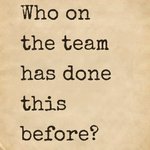
If I were starting one now, I'd ask every department the same question early. Who here has done one of these, at this size?
The department with no answer is the one to staff up before go-live, not after.

2
18
"Why are orders taking longer to ship?" is a simple question. Getting an answer everyone trusts is the hard part.
Claude Data lets you ask it in plain words against your own numbers. It runs the query, draws the charts, and shows the query behind each one, so a figure can be checked instead of taken on faith.
I put together a 50-second walkthrough using a made-up 40-person distributor. Orders grew 22%. Picking and packing kept pace. The wait before an order got keyed in went from 0.3 days to 1.4. One question in, one bottleneck out, and a page the team can check every Monday.
Three questions worth asking of your own data:
What should I look at every Monday, and how does it compare with a quarter ago?
Which stage of our sales pipeline got slower?
Which support issues are eating the most hours?
How to get it: Claude Data is on every paid Claude plan. It needs a connection to where your numbers live, such as a database or a CRM. That connection is the real work, and the part worth getting help with.
The walkthrough, with prompts you can copy: claude.ai/artifact/TXwUCQtyq…
➕ Follow me (Phillip R. Kennedy @prokennedy ) for plain-English ways past a tech bottleneck.
2
30
Three questions a growing company should be able to answer in a minute. What software are we paying for? Who owns each tool? What renews next?
Claude now builds spreadsheets from a plain request. Tabs, formulas, formatting and drop-downs included.
I put together a 50-second walkthrough using a made-up 40-person distributor. The founder attaches card statements and asks for a tracker. Claude builds twelve rows, adds totals and a status drop-down, then flags what needs a look: four renewals inside 60 days, two overlapping tools, and one tool nobody owns. It outlines every cell it edits, so you can see what changed.
Three sheets worth making in your own business:
Software spend and renewals, one row per tool.
A hiring budget for your first tech hires, month by month.
A vendor scorecard with weights you set yourself.
How to get it: Sheets is in beta on every paid Claude plan, and on by default for Team plans. Enterprise admins switch it on under Organization settings, then Artifacts. It covers the basics for now. For full Excel features, download the sheet as an .xlsx file.
The tool with no owner is usually the one worth a conversation.
The walkthrough, with prompts you can copy: claude.ai/artifact/4axdSZ3hJ…
➕ Follow me (Phillip R. Kennedy @prokennedy ) for plain-English ways past a tech bottleneck.
1
70
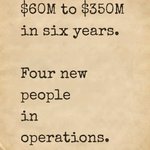
The company grew from $60 million to $350 million in six years. Operations hired four people.
Four, total. Across order management, accounting, AP/AR, and collections.
Most of them went to customer service and to AP/AR and collections processing. Mainly, it was the volume of transactions that justified them.
Part of that growth came from acquisitions, and none of their people came with them. We bought brands from larger companies. The brands and the data, not the staff.
We never had to say no to a hire. We just didn't need them.
In most operations I've seen, people get added to fix things. The order that came in wrong. The map that broke when a retailer changed a rule. The deduction nobody caught until it was old. Each fix is small, so each hire looks reasonable, and the problems compound as you grow.
At that company, most of the fixing never had to happen.
The EDI maps did the translating between our systems and our customers'. When a customer changed a rule, the people in operations could change it themselves, on the fly, without waiting on a developer. A lot of the reporting ran through EDI too.
We didn't make mistakes, so the system didn't mess up. We didn't often have to stop and resolve problems, which really helped.
So the hires followed the volume.
It wasn't free. Somebody had to build those systems and keep them running. I can't tell you four would hold at the next size up, either.
But it left me with a question I'd put to any request for another person in operations. What will that person spend the day on? More orders is a real reason to hire. Fixing the same kinds of mistakes is a system problem with a salary attached.
What would your next operations hire actually spend the day doing?
➕ Follow me (Phillip R. Kennedy @prokennedy ) for what I've learned growing order volume without growing the back office to match.

1
26
Phillip R. Kennedy retweeted

Now in beta: Businesses in ChatGPT.
Claim your business, manage your information, and get insights on how people engage with you.
Eligible businesses can also build a Business Agent to answer customers’ questions and help them explore what you offer.
openai.com/index/introducing…
Ask a founder how an order moves through the business and you get a sentence. Ask them to draw it and you get a meeting.
Claude just added whiteboards. You describe the process in plain words and it draws the board: every step, grouped by team, with the hand-typed steps marked.
I put together a 50-second walkthrough using a made-up 40-person distributor. One paragraph of description becomes a map. A box dragged around the office steps, plus one question, finds the jam: every order is typed in three times. One more sentence turns the fix into a 90-day plan with owners and dates.
Three boards worth making in your own business:
How one order, invoice or new customer moves, and where it waits.
A retro after a rough software rollout, with the notes grouped by theme.
A system switch, laid out as a timeline with owners and dates.
How to get it: Whiteboards is in beta on every paid Claude plan. Team plans have it on already. On Enterprise, an admin switches it on under Organization settings, then Artifacts. Then ask Claude to put your process on a whiteboard.
The tool draws the map. Deciding which step to fix first is still your call.
The walkthrough, with prompts you can copy: claude.ai/artifact/6LTU1wfVi…
➕ Follow me (Phillip R. Kennedy @prokennedy ) for plain-English ways past a tech bottleneck.
1
2
63
The inventory valuation never matched what we had actually paid. We kept chasing it anyway.
A purchase order went in with the wrong cost. It got posted that way when the goods arrived. Somebody changed the cost later and never carried the change through. Now a layer of inventory sat in the system at a price nobody had paid.
So we made a pricing adjustment to bring it back in line.
And the next one popped up somewhere else.
I have decades of stories like that. None of them end with it tying.
The purchasing side didn't always feel the need to enter POs and costs correctly, or to post them correctly once the goods were received. Standard cost against actual, on FIFO, made it harder. Add real lot tracking and it was a mess.
The quantities tied. We knew what was on the shelf. The valuation was the part that swung up and down when we calculated it at expected cost.
And it wasn't a mystery. We could track down every transaction behind it. Getting them to settle was the problem, because people kept entering wrong information.
It just seemed like whack-a-mole. You couldn't get it actually correct.
People get so hung up on numbers tying to the penny. I understand why. A number that doesn't tie feels like a number you can't trust.
But for real-time inventory valuation, even if it's directional, it's fine.
Other numbers are different. Sales, invoice, and transaction dollars are easier to tie. When one of those is off, it's usually a formula error, and somebody should find it.
There are limits to directional, too. I once worked with a company that believed in its margins until an ERP and strict processes showed they barely had any. Close enough was never going to be fine for that.
I still haven't seen a clean way to make real-time valuation tie when lot tracking is in the mix. If you have one, I'd like to see it.
Which number is your team chasing to the penny, and is it broken or just moving?
➕ Follow me (Phillip R. Kennedy @prokennedy ) for what I've learned keeping the numbers honest between the order and the cash.

1
11
Everyone was on board with the new ERP. At first.
We were on a burning platform. The old system had to go, and it had to go soon.
Then it went live. Operations loved it. New efficiencies everywhere.
Finance and accounting got a very different system. Same software, and problems they had never had before.
It was like running two separate projects inside one.
Admitting our successful ERP project was failing for some of us was the hard part.
Here's what I do now. If it isn't going well, I scream as loudly as I can to anyone who will listen. Bad news counts as a status update.
Nobody should carry an implementation on their back. If it's failing for part of the business, say so out loud, even after go-live. Especially after go-live.
Who on your project is carrying something they should be screaming about?

1
1
14
Every acquisition came down to a question about item numbers.
We mostly bought brands from larger companies. Each one arrived as data. Items, vendors, years of transactions, all set up for someone else's systems.
Before anyone decided anything, we got access to the database and dumped it out. The master data. The transactions. Then we ran analytics on all of it.
Then came the questions.
Do we keep their item numbers, or map them to ones we already have? Do we keep their vendors as they are, or map them to ours? Every brand, every time.
Each answer reaches further than it looks. It changes what operations sees on the screen, what the EDI maps have to translate, and which reports still line up next quarter.
We made those calls with everyone who would live with the answer looking at the same datasets. Not a summary of the data. The data.
There isn't one right answer. Keeping their numbers is faster on day one. Mapping them to yours is cleaner a year later. We went brand by brand.
We got really good at it. It's part of how the company went from $60 million to $350 million in six years without the back office growing to match. More on that Thursday.
If I were looking at an acquisition now, I'd want one question answered before close. Who decides whether their item numbers survive, and when do they get to see the data?
➕ Follow me (Phillip R. Kennedy @prokennedy ) for what I've learned about the technology decisions that come with growth.

1
1
17
When my son was four, he had a way with frustration I still envy.
He got it out fast and loud. Then it was nothing more than an afterthought.
When his favorite toy broke, he didn't dwell on it. He found something else to do.
His focus lasted about thirty seconds at a time. But while it lasted, nothing could break it.
Kids are natural Stoics in ways the rest of us can only hope to copy. I'm still working on the loud-then-done part. Grown-ups tend to skip the loud and keep the frustration.
What are you still carrying from last week that a four-year-old would have yelled about and dropped?

1
15