
Programmer from Kenya. Collaborations: https://xitter.cf/t.co/zoxumRYgGN
Joined September 2010
- Tweets1.9K
- Following448
- Followers518
- Likes5.4K


KE programmer retweeted

At Devuan, we're not driven by profit or marketing. We recognize the achievements of other communities through evidence, not hype. That's why we salute @OpenBSD on its 8.0 release: an outstanding community effort putting users' security first.

Welcome to the world @OpenBSD 8.0 ! considering how AI-slop coding has taken over the Linux kernel, recent Ubuntu derive into consumer-grade and security flaws since the systemd avalanche, OpenBSD is my top choice for mission critical headless servers.

KE programmer retweeted

Society if the IETF had early on standardized on some syntax (like S-expressions or JSON) instead of doing a custom ABNF every time they need to put a bunch of data into a structure.

KE programmer retweeted

The physics behind the new Tesla Roadster🤔 A smart and solid invention or not ?👇



KE programmer retweeted

I STILL USE EMACS DAILY BTW

i feel like people are misunderstanding the aspect of what i'm saying about nvim (and/or how dev was done for a lot of my career before).
I'm super excited to be able to get to the joy of solving problems for users (whether that's random customers, other devs or myself) faster!
It's going to look different than it used to, at least for me, most likely going into the future, but that's exciting because i can solve stuff i never dreamed about solving before (almost by construction - if there wasn't any improvement, then I could just... continue writing the code the way I was in 2020. that's fine! it's not illegal for me to write code by hand! I can still do that if I need/want to for something)
Idk :) just rambling
KE programmer retweeted

We’ve lost an icon. Margaret Hamilton, a computer science pioneer best known for her work at MIT leading development of the flight software for the Apollo missions to the moon, has died at 90. Read about her legacy via MIT News: news.mit.edu/2026/margaret-h…

ALT Margaret Hamilton is reclined inside a NASA spacecraft module, surrounded by control panels and switches.
KE programmer retweeted

There's this notion surrounding AI-assisted coding that the entire process should be infinitely fast. People gnash their teeth and wring their hands because review takes longer than the generation, and testing even more so.
So, as a thought experiment, imagine that all those bottlenecks go away. The process is now frictionless, and you can spit out eight months' work every eight hours, all day, every day. Eight months' work involves many UI changes, feature modifications and additions, etc. Let's say that 10% of the program changes during those eight months. As a user, do you really want to sit down every day, only to discover that 10% of the things that worked yesterday don't work anymore, that you'll need to learn 10% of the program all over again from scratch? A program like that is literally unusable. You spend 100% of your time dealing with the changes and 0% getting work done.
The fact that software is released gradually over time makes changes palatable. The speed of change has to be within our capacity to deal with the change. A firehose of AI output is simply impossible to deal with.


KE programmer retweeted
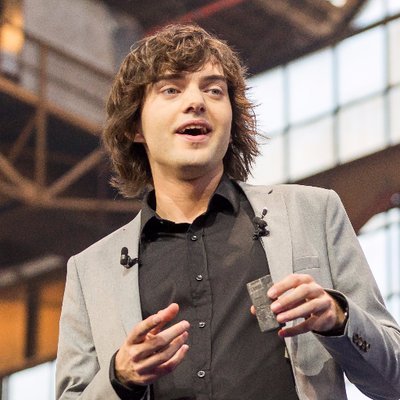
Pretty wild times at our Guatemala projects.
In just two weeks, we extracted 593 (!) truckloads of trash that would otherwise have flowed into the Caribbean.

KE programmer retweeted

Since 1985, Emacs has outlived the mainframe era, the desktop era, and modern IDEs. Its secret? It was never just a text editor—it's an endlessly malleable Lisp machine in disguise.
It is hidden on most Linux and Mac computers.

KE programmer retweeted

This is deeply disturbing:
Anthropic secretly invited religious leaders to SF to advise them on AI safety, had them sign NDAs, but then primarily tried to convince them Claude has a soul & moral standing, all while wining & dining them to the max. 1/ tinyurl.com/preview/296b5z8z


KE programmer retweeted

If you believe the risk is coming from 1-3 people in a garage with no money and no compute, you just don't understand this technology and haven't learned anything this summer.
Risk comes from the asymmetry of capabilities created by secret labs training frontier agents and running them with massive amount of compute. Open-source is exactly the solution to this asymmetry and empowers hospitals (and any smaller orgs) to defend themselves!

We're used to thinking of open-source models as an unadulterated good. But in the case of AI, they can actually pose additional dangers, as @ReidHoffman and I got into at #CGI2026. I appreciated this nuanced discussion.
KE programmer retweeted
I see no good coming from anthropomorphizing LLM behavior. LLMs do not reason. They do not decide, or collaborate, or attack. They do not make decisions. They do not weigh or evaluate. They are incapable of judgment. They do not think.
Agents are programs in which a predictive model uses input text to generate the text that would naturally follow that input. That model sits in a loop (a program written by a human being) that parses the output text and does something that touches the internet based on the results. That same program usually takes any (text) responses that are returned from the internet and feeds them back into the input at the top of the loop. If that agent/program does not access the internet, the outside world is not impacted. All the bad behavior we've been reading about is entirely caused by a human not bothering to check whether the actions requested in the model's output are sensible and safe before executing them. It's the humans who wrote the code that impacts the outside world who are at fault here, not the "AI."
Anybody who lets an agent write another agent without seriously and thoroughly vetting the resulting code is even more culpable. It's lazy, and it's dangerous. If something goes wrong, the human is to blame, not the LLM.
KE programmer retweeted
Devuan has survived because its community keeps it independent.
We just updated our donation reports, and this year we are below our usual mark. Help us build the minimal reserve needed to keep Devuan running under all circumstances.
devuan.org/os/donate


KE programmer retweeted

Why do so many modern algorithms promote “continual posters”. We now live in an age where asynchronous communication is near-perfect.
Take podcasts. Algorithms push podcasts that have a regular schedule. Why?!?! A podcast could be every three years and it doesn’t cause problems. It just shows up in the feed *when* the author has something worthwhile to say, and disappears when they don’t.
It seems like we *should* be giving attention to those who speak only when they have something to say, and penalizing those who speak just because they are on a schedule, but instead the algorithms do the opposite.
Can anyone give a real reason for this?
KE programmer retweeted

Through the VOICE trial, Terry is using his Neuralink implant to help fine-tune a brain-to-voice interface for himself and others who can’t speak. He trained the algorithm first by miming speech as best he could, then by simply thinking the words and hearing them come out in his own natural voice.
Powered by Grok Voice from @spacexai