

Prof. of Public Policy. Dynamic Pattern Synthesis - "There are different paths to get to your destination, but no 100 % guaranteed arrival"
Chichester, Brighton, Sussex
Joined May 2012
- Tweets5K
- Following489
- Followers512
- Likes5K



Pinned Tweet
Fabulous group of PhD students, for the ESRC @SouthCoastDTP training in Quantitative Case Based Methods at Winchester this week. Covering cluster analysis, heat maps, #QCA , #DPS , & Q-Sort using R and MS Excel. Co-leader/trainer @alemna

Philip Haynes retweeted

🇪🇺 The Digital Omnibus revises EU AI Act implementation: simpler compliance, adjusted high-risk AI rules, and stronger safeguards against harmful AI uses.
How can Europe balance innovation and fundamental rights?
Read @profpdh’s analysis for #ALFIE:
alfie-project.eu/eu-ai-act-i…
Philip Haynes retweeted
🌍 ALFIE partners from UAB and Catalink joined IEEE CBMI 2026 in Toulouse, sharing research on ethical and inclusive AI.
From gender and cultural diversity in AI datasets to accessibility and fairness, the focus was clear: AI must work for everyone.
#ALFIEProject #CBMI2026
The Indian workers filming their work to train AI bbc.co.uk/news/articles/ckvg…

Philip Haynes retweeted
1/2 🔄 Cluster-Based Drift Detection for Efficient AI Adaptation
Does AI really need constant retraining as data changes?
Researchers contributing to the #ALFIEProject propose a cluster-based approach to detect changes and retrain models only when necessary.
Philip Haynes retweeted
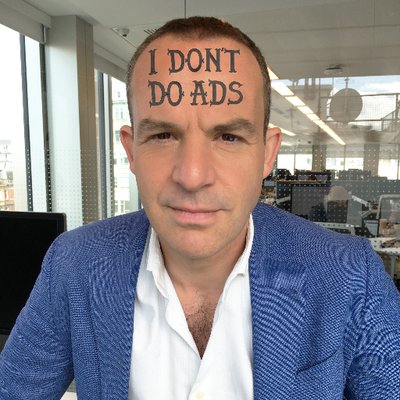
When I met Angela Rayner to campaign for change to overly aggressive council tax debt collection, with its unprecedented rapid escalation to balliffs, she nodded like most politicians do.
I explained it was destructive for individuals, councils and the economy. She listened more then said she'd change it. I was sceptical. Yet a consultation was launched within weeks and delightfully the change announced within 18mths (its in place from next April) - bullet train pace for politics.
I've a rule that if I campaign for a politician (of any party) to do something, and they do it, I say thank you. Its important to recognise it. So thank you so much Angela Rayner for listening and more importantly acting. The changes coming are a great start.

I promised we'd make council tax fairer, and I’m getting on with the job.
Too many working people have seen council tax debt spiral before they had the chance to get help.
That's why we're introducing more time to pay, clearer warnings if you miss a payment and more support from councils.
Thanks to @MartinSLewis and @mmhpi for their tireless campaigning to make this change happen.
Here's everything you need to know ⬇️
Philip Haynes retweeted
The ALFIE AutoML Engine brings together:
🔹 Automated classification for text, audio & images
🔹 Data quality checks & bias detection
🔹 Explainable AI (XAI)
🔹 Ethical and responsible AI
🔹 An AI-powered assistant to guide users
#AutoML #ResponsibleAI #AI
Philip Haynes retweeted
Making AI easier to build and understand!
In our latest blog, Subhaditya Mukherjee from TU/e explores how the #ALFIEProject AutoML Engine makes AI development more accessible and responsible.
🔗 Read the full article:
alfie-project.eu/building-th…
Philip Haynes retweeted

15) My forthcoming book The Gods That Failed (Bloomsbury, 2027) challenges five foundational myths of modern monetary and financial economics—and explores the alternatives.
bloomsbury.com/us/gods-that-…
Philip Haynes retweeted
14) Finally, its worth remembering that the 'economics Nobel' wasn’t established by Alfred Nobel, but by Sweden’s central bank, the Riksbank, in 1968-which still funds it today. Some irony, then, in the prize this year celebrating the theories underpinning modern central banking
Philip Haynes retweeted
13) None of this denies Woodford’s enormous intellectual influence.
But New Keynesian economics has narrowed how we think about money, inflation and monetary policy and not been sufficiently challenged. It looks increasingly ill-suited to today's world of supply-side shocks.
Philip Haynes retweeted
12) Inflation subsequently fell sharply as many of those pressures eased.
Inflation is multi-causal: supply constraints, market power and distributional conflict matter alongside demand and expectations as we set out in this paper.
ucl.ac.uk/bartlett/publicati…

Philip Haynes retweeted
11) The 2021–23 inflation exposed these weaknesses.
CBs repeatedly underestimated inflation, then rapidly raised rates as fears grew of de-anchored expectations and wage-price spirals.
Yet much of the original inflationary impulse came from commodity supply-chain shocks.
Philip Haynes retweeted
10) US inflation expectations, for example, swing dramatically around presidential elections depending on political affiliation.
And research suggests many households pay remarkably little attention to central-bank policy announcements.
nber.org/papers/w33858

Philip Haynes retweeted
9) What about inflation expectations?
New Keynesian models place enormous weight on forward-looking expectations and central-bank credibility.
But survey data show household expectations appear heavily influenced by past inflation, everyday prices and political affiliation.
Philip Haynes retweeted
8) And r* itself can’t be directly observed.
Estimates are model-dependent, highly uncertain and frequently revised.
Yet central banks use this elusive theoretical construct to help judge whether monetary policy is “tight” or “loose”.
ft.com/content/3c206a67-cd31…

Philip Haynes retweeted
7) Post-crisis, ultra-low rates and QE did little to revive consumer-price inflation, but helped fuel major increases in financial and property prices.
The same monetary stance can therefore have radically different effects on consumer and asset prices.
Philip Haynes retweeted
6) Interest rates are also a remarkably blunt instrument.
Their effects depend on liquidity preferences and where bank credit flows.
Lower rates might stimulate consumption and productive investment—or mainly increase demand for existing property and financial assets.
Philip Haynes retweeted
5) Woodford’s framework is more sophisticated than Wicksell's but retains a natural real rate determined by equilibrium conditions in an economy in which money & banks play limited roles.
NK models used by central banks based upon it were heavily criticised after the GFC.
Philip Haynes retweeted
4) Hence, savings and investment are not independent variables. They cannot be equilibrated by a single interest rate.