

Economist @McGillU, working to understand what subjective well-being can teach us about society, communities & sustainability. Former physicist. Climate hawk.
Montreal
Joined April 2011
- Tweets2.3K
- Following320
- Followers623
- Likes1.5K





This is the one I've been waiting to for (to see, not compete, alas!). Thank you @XPrize!
"First contact" with cetaceans is in our near future...
c

The new XPRIZE on Interspecies Communication, with a $10M purse will launch next month.
It will challenge teams to demonstrate ethical, verified two-way communication with wild animals, advancing coexistence and cooperation.
Dr. Irene Pepperberg spoke to us today about her pioneering work with grey parrots, training them in English to perform many tasks at 6-year old human skill level.
“Clearly, animals know more than we think and think a great deal more than we know.”
It wasn’t easy when she started. The feedback to her first grant review: “what are you smoking?”
And now, her parrots ask questions and learn from the answers. They ask for what they want.
She has taught her parrots 100 English labels for objects and materials, exact quantities up to 8 (and addition and subtraction), colors, shapes, materials, concepts like same/different, absence, a zero-like concept (absence of a set, on his own, with no training), relative size comparisons, optical illusions, and they make new word combinations (calling the banana chip “banacker” for a banana cracker). They have a visual working memory (tracking moving cups) that beats adults with 4 swaps. They do inference by exclusion (when you show where food is not located, they figure out where it is).
Bird brains look very different at first, a smooth unfolded organ with no cerebral cortex, but further research found a relatively large cortical area similar to non-human primates in relative size and connectivity. They have a dense processor, doing same thing as human children.
“Bird brain should be a complement,” she concluded.

C Barrington-Leigh retweeted

🌍 Beyond GDP: Are we measuring what truly matters? In ISQOLS's 30th Anniversary Special Edition, researchers, including the late Ruut Veenhoven, explore why subjective well-being should be central to measuring human progress.
📖 link.springer.com/article/10…
@SpringerSocSci
🤖 Made with AI

C Barrington-Leigh retweeted

📍 City of the Day: Dakar, Senegal (pop. 3.2M)
SNDi: 2.03 — Well-connected.
Dakar's street grid is anchored by its pre-1975 core — that era alone is 63% of today's network and scores a well-connected 2.00 on its own. Disconnectedness climbed until 1976-1990, before easing off, leaving today's score at 2.03. More connected than 89% of cities we track.
Link in bio.
C Barrington-Leigh retweeted
🌍 Applications OPEN for the 2027 ISQOLS Valerie Møller Fellowship!
🎓 Early-career researchers in developing countries: Apply for travel support to Athens 2027, free registration, membership & mentorship!
📅 Deadline: Nov 15, 2026
🔗 isqols.org/VMFellow

C Barrington-Leigh retweeted
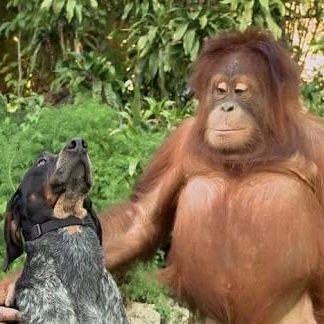
Rare red sprites captured above a village in Corsica during thunderstorms near Spain
Photographer Florian Riou captured this rare phenomenon, in which red flashes appear high above thunderstorms and last only a few milliseconds


C Barrington-Leigh retweeted
🎓 Applications OPEN for the 2027 ISQOLS Post-Doctoral Research Fellowship!
💰 $5,000 stipend
🌍 Free 2027 conference registration
🤝 1-year ISQOLS membership
Research in happiness, well-being & quality of life.
⏰ Deadline: Nov 15
🔗 isqols.org/Fellowship


... though many of those skills could be taught in advance, in public school, and many non-cognitive skills are under-emphasized in public schools. They should also be part of core curriculum, across disciplines, in post-secondary.
Right on script. You're truly a wonder.
It's not in the mandate as written, but I'd love to see gov'ts expand "public education" to the rest of the life course. Adults need short-courses throughout the lifespan, especially in non-cognitive skills relevant to life phases.
C Barrington-Leigh retweeted
📍 City of the Day: Seattle, United States (pop. 1.9M)
SNDi: 4.03 — Sprawly.
Seattle's street grid is anchored by its pre-1975 core — that era alone is 72% of today's network and scores a moderately connected 3.27 on its own. Development since 1975 has been less connected than the older streets, pushing today's score to 4.03. More disconnected than 74% of cities we track.
Link in bio.
And here's @Stanford's apology and reversal, too many days later to be helpful for me. And given that they had prepared instructions for the transition, and call this a mistake only based on the response, I'd guess it was their intentional choice. Bizarre.

@StanfordAlumni was this really how you meant to roll this out?

Way to piss off your alumni, @Stanford @StanfordAlumni !
Did any other Stanford alumni get a zero-notice bricking of their entire Google Drive today?
With no prior notice, I got this.
There's some grace time for email, but not my files: nothing in my Drive can be edited anymore!!

Yeah, you try getting a word in edgewise speaking to John. Leading questions is typical for him, but I think this dominating the interview with his own diatribes and constantly cutting off his guest is downright rude.
Bookmark this series: Coming this autumn: six more hours of reality, as beautiful as film gets:
It'll be a chance to turn off your AI slop (which honestly already won't really be slop by then)...
youtube.com/watch?v=LvjlkoWk…
C Barrington-Leigh retweeted

How fast is AI's research taste improving?
We find that the experimental research taste of frontier models has doubled every ~3 months since December 2025. The best model, Opus 5.5, now exceeds our expert human baseline. Our human experts are experienced researchers, but most haven’t worked at a frontier lab.
Why measure research taste? In the AI Futures Model, it largely determines how quickly artificial superintelligence is reached once coding is fully automated.

And there's no way to get it out cleanly. Stanford Alumni does not allow transferring ownership of Google Drive material to personal accounts. Google Takeout may facilitate copying everything, but it will be copies -- and it will lose all the sharing relationships /info!!
Way to piss off your alumni, @Stanford @StanfordAlumni !
Did any other Stanford alumni get a zero-notice bricking of their entire Google Drive today?
With no prior notice, I got this.
There's some grace time for email, but not my files: nothing in my Drive can be edited anymore!!
Germany to go fossil-free by 2045:
bundesumweltministerium.de/e…
Meanwhile, only one of the major parties in tomorrow's Quebec election promises to phase out fossil-powered light-duty vehicles by 2035 (a goal from which CAQ has walked back).


Germany Pledges To Phase Out Fossil Fuels By 2045
cleantechnica.com/2026/09/30…
