

I do NLP related stuffs.
Fairfax, VA
Joined April 2011
- Tweets2.9K
- Following277
- Followers500
- Likes8K






Pinned Tweet
Can thousands of LLM agents live in a city and move like real people?
We study this in UrbanLLMind—accepted at #COLM2026—a city-grounded simulation of persistent LLM agents validated on real travel data.
Joint work with @anas_ant @dpfoser @smreia
📄 openreview.net/forum?id=jaK0… 🧵👇
🤖 Made with AI

UrbanLLMind agents also adapt when conditions change.
During a simulated severe storm—without storm-specific behavioral rules—agents travel less, shift away from optional activities, and preserve necessary trips.

And the framework scales: 10,000 agents powered by a 120B open-weight LLM with distributed vLLM inference.
We also study fine-tuning, multi-day consistency, planning, memory & reflection.
📄 openreview.net/forum?id=jaK0…
💻 github.com/prabin525/UrbanLL…
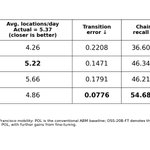
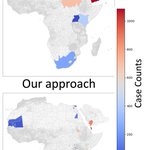
Epidemiological data is crucial for public health, but extracting and geotagging it from documents is challenging. Our work to be presented at #EMNLP2024’s 3rd NLP4PI Workshop, “From Text to Maps: LLM-Driven Extraction and Geotagging of Epidemiological Data”, tackles this. 🧵

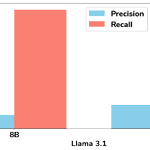
Our geotagging results show that LLMs with access to global region databases enable precise geotagging to finer administrative levels.

Work done in collaboration with @Harrod_Karlyn and @anas_ant .
Read more in our paper: aclanthology.org/2024.nlp4pi… 📄
Travel survey data are vital for urban mobility assessments—but they’re often costly and difficult to collect.
Could LLMs help us synthesize such data?
Our latest work, in collaboration with @anas_ant and @dpfoser, and the Best Paper Winner🥇at #SIGSPATIAL24, shows they can! 🧵👇

One key insight?
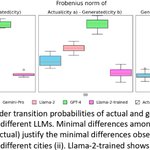
Open source LLMs such as Llama-2, when trained even with a limited amount of actual travel data
(Llama-2-trained in the plot), can generate quality synthetic travel surveys to facilitate urban mobility assessment.

More Details and analysis in the paper:
arxiv.org/abs/2409.00063
Code and Data: github.com/gmuggs/Urban-Mobi…
Llama-2-trained model: huggingface.co/prb977/Llama-…
Prabin Bhandari retweeted

One of THE largest personas datasets dropped in @huggingface 🤯
21 Million rows and 142GB 🤯
FinePersonas contains detailed personas for creating customized, realistic synthetic data.
So now you can integrate unique persona traits into text generation apps.
-------
What's a Persona?
A persona is a detailed description of an individual’s characteristics, background, and goals, designed to reflect diverse identities and experiences. In the context of FinePersonas, each persona represents a unique set of attributes that can enrich synthetic data.
For example, a persona might describe:
A network engineer with a focus on routing protocols and preparing for Cisco certification exams, particularly CCNA.


Prabin Bhandari retweeted

Today, with @Tim_Dettmers, @huggingface, & @mobius_labs, we're releasing FSDP/QLoRA, a new project that lets you efficiently train very large (70b) models on a home computer with consumer gaming GPUs. 1/🧵
answer.ai/posts/2024-03-06-f…

