
Software Engineer (Identity)
San Francisco Bay Area
Joined December 2007
- Tweets8.9K
- Following327
- Followers2.8K
- Likes2.1K


prabath retweeted

The evolution of the human brain may owe as much to fruit and honey as to meat, according to a new #ScienceAnalyticalReview.
The findings challenge one of the dominant ideas about our ancestors' diet. scim.ag/4gaz4ed




prabath retweeted

some takeaways from @sama today at @ycombinator startup school
• this is one of the best times in history to start a company. ai is lowering costs, shortening build cycles, and expanding what’s possible.
• the next 6 months of model progress could be comparable to the last 2 years.
• the best startups often start with ideas experts think are bad.
• develop conviction despite conventional wisdom, and be willing to wait.
• vision can be clear even when the first steps aren’t.
• if everyone believes your idea, that’s a bad sign. if no one believes it, pay attention to that too.
• be mildly helpful to lots of people. it compounds.
• the best cofounder relationships are often built years before the company starts.
• earnestness beats cynicism. spend your energy building, not taking cheap shots online.
• startups help prevent the concentration of economic and technological power.
• demand for high-quality, low-cost intelligence is still largely untapped.
• have the ambition to build, but be a little happier along the way.
prabath retweeted

Richard Feynman, Nobel Prize in Physics, gave a free 1-hour class on physics and imagination that made it clear most people know many things but don't know how to think.
Bookmark & watch today, no matter what.
prabath retweeted
Erwin Schrödinger on Nirvana and karma ✍️
Nirvana is a state of pure blissful knowledge... It has nothing to do with the individual. The ego or its separation is an illusion. Indeed in a certain sense two "I"'s are identical namely when one disregards all special contents — their Karma. The goal of man is to preserve his Karma and to develop it further... when man dies his Karma lives and creates for itself another carrier.
-- as mentioned in A Life of Erwin Schrödinger (1994) by Walter Moore

prabath retweeted

Most engineers learn fast in years 1–5.
Then growth slows dramatically.
Not because the job gets easier, but because the learning loop breaks.
Here's why it happens and how to fix it:
WHY THE PLATEAU HAPPENS
You stop encountering new failure modes.
In your first years, everything fails in ways you've never seen. You learn by being wrong.
By year 5, you've solved most problems in your domain. You stop being wrong as often.
Less failure = less learning.
You stop reading outside your field.
Civil engineers stop reading mechanical engineering papers.
Software engineers stop reading manufacturing research.
The best ideas in your field are often translations from adjacent ones.
You optimise for delivery, not understanding.
Experienced engineers know how to solve the problem without fully understanding why the solution works.
Fast delivery is valuable. But it's the enemy of depth.
HOW TO BREAK THE PLATEAU
1. Take on projects where you're the least experienced person in the room.
Deliberately uncomfortable. Deliberately unfamiliar domain.
The fastest learning always comes from being the person who doesn't know.
2. Teach what you know to someone junior.
Teaching reveals the gaps in your understanding faster than any other method.
If you can't explain it simply, you don't fully understand it.
3. Read the original papers, not the summaries.
The textbook compresses 20 years of argument into one settled answer.
The original paper shows you the uncertainty, the dead ends, and the assumptions.
That's where the real understanding lives.
4. Do a project in an adjacent field once a year.
Structural engineer? Learn one concept from geotechnical. Software engineer? Read one manufacturing process paper.
Cross-pollination is where innovation happens.
5. Track your own predictions.
Before a project starts, write down what you think will be the hardest part.
After it ends, compare.
Engineers who track their own predictive accuracy improve faster than those who don't.
The plateau isn't inevitable.
It's a sign that the learning environment needs redesigning.
prabath retweeted
On a cloudy day in January, historian Ivan Malara sat in Italy’s National Central Library of Florence poring over seven 16th century printings of the ancient world’s most influential astronomy text. The pages belonged to The Almagest, in which second century polymath Claudius Ptolemy described his vision of an Earth-centered cosmos.
As Malara flipped through the pages, he spotted something out of place. Someone had transcribed Psalm 145 on an otherwise blank page—in handwriting reminiscent of a very, very famous Tuscan astronomer.
That book, Malara came to realize, had been extensively annotated by none other than Galileo Galilei.
Malara’s discovery, described in a paper now under review, promises new insights into one of the most famous ideological transitions in the history of science: the moment when Earth was thrust from the center of our universe.
Learn more: scim.ag/4rHLWvG

ALT Galileo’s handwritten notes found in ancient astronomy text Discovery sheds new light on how famed astronomer came to lead a scientific revolution
prabath retweeted

Billionaire Brunello Cucinelli on his love for books:
"I am in love with books. I love them for the knowledge they bestow, for the fragrance they release, for the rustle of their pages turned, which seems to caress the soul. Like Voltaire, I have a fondness for ancient volumes, and I cherish the words of their authors, whose wisdom is confirmed by the long endurance of their thought. Montesquieu once observed that until we have read all the old books, there is no reason to prefer the new; and sincerely, if I could always decide upon my own time, nothing would delight me more than to walk through the beautiful park of Solomeo in the evening, at sunset, when the air is finer and the Spirit more inclined to wonder, strolling through what, to me, is a kind of paradise whilst reading passages from a beloved book. I cannot truly say which, among the many, is my most loved; yet it matters little, for any good book, as Montaigne believed, is the best provision for the human journey. And so, it is enough for me to hold a book—one that speaks directly to the heart, with simple words—where it is clear at once that the passage from the mind to the pen of the author was authentic."

prabath retweeted
The first principle is that you must not fool yourself — and you are the easiest person to fool.
- Richard Feynman


prabath retweeted

Smart Tiered Cache is now smarter for public clouds. If your origin is behind anycast (AWS, GCP, Azure, Oracle), add a region hint to stop traffic hairpinning and maximize cache efficiency. Available now for free on all plans. cfl.re/4yeJtMU

prabath retweeted
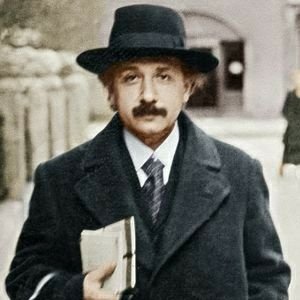
"I have no special talents. I am only passionately curious."
-- A. Einstein (1879 - 1955)
prabath retweeted

Research suggests that re-reading with a highlighter is nearly useless.
So I pulled together 63 techniques that actually move the needle, ranked by how much each one improves retention.
These protocols can help anyone whose work depends on absorbing, remembering, and using information every day.
Full guide in the newsletter.
(1/4)

prabath retweeted

MIT's "Introduction to Computational Thinking and Data Science"
Slides: ocw.mit.edu/courses/6-0002-i…
Videos: ocw.mit.edu/courses/6-0002-i…



prabath retweeted

The World’s First Computer Programmer: Ada Lovelace
The world’s first computer programmer is widely considered to be Ada Lovelace. She is often credited for her work on Charles Babbage’s early mechanical general purpose computer, the Analytic Engine.
In 1842, Ada translated an article by Luigi Federico Menabera about Babbage’s Analytic Engine from French to English. However, she went beyond translation, these notes are now considered the first published algorithm for implementation on a machine.
Her work laid the foundation for the concept of a machine that could be programmed to perform a variety tasks, anticipating the fundamental principles of modern computing

prabath retweeted
Galileo Galilei’s first sketches of the moon in 1609 after observing it through his telescope

