







* Proelumnia * retweeted

“Every living being is an engine geared to the wheels of the universe. Though seemingly it may engine only influences from its immediate surrounding, the realm of external effects extends to infinity.”
― Nikola Tesla


* Proelumnia * retweeted

When Disney originally released the Silly Symphony short “Three Little Pigs” in 1933, the Big Bad Wolf’s door-to-door peddler disguise relied on a heavily stereotyped Jewish caricature, complete with a Yiddish accent, a large fake nose, and a beard.
By the late 1940s, growing awareness of offensive tropes and changing censorship standards prompted Disney to re-animate the scene. The Wolf was redrawn as a generic salesman, and his line was re-dubbed to the far less controversial “I’m working my way through college,” creating the version most audiences recognize today.
* Proelumnia * retweeted

"I cannot show you a tesseract because I, and you, are trapped in three dimensions."
- Carl Sagan
X had tombstoned me .... Vive la liberté !! @elonmusk
No freedom of speech in Europe...
* Proelumnia * retweeted
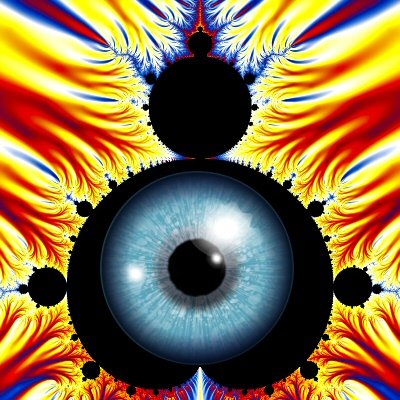
From ox heads to alphabets: the long memory of symbols.
By Matt Baker, @usefulcharts, usefulcharts.com/blogs/chart…, With permission.
Every letter seems to be a fossil of human thought. Maybe, the alphabet is civilization’s longest-running collaboration. Your keyboard is 4,000 years old.

* Proelumnia * retweeted

The circular diagram presents the C major scale, its seven diatonic triads (I–vii°), and the corresponding relative modes in a single, integrated view. At its center lies C, from which the primary triads radiate outward:
CM (I), Dm (ii), Em (iii), FM (IV), GM (V), Am (vi), and Bdim (vii°),
each formed by stacking every other note of the C–D–E–F–G–A–B scale. Encircling these are the seven modes:
Ionian, Dorian, Phrygian, Lydian, Mixolydian, Aeolian, and Locrian
aligned with their respective parent roots and annotated with their characteristic scale degrees and interval patterns.
This unified layout enables musicians to quickly visualize harmonic relationships, making it a practical reference for composition, improvisation, modulation, and transposition across keys.


* Proelumnia * retweeted
Pascal's triangle arranges binomial coefficients row by row.
Slanted lines mark the rising diagonals whose entries add to the Fibonacci numbers placed on the left: 1, 1, 2, 3, 5, 8, 13.
Each new Fibonacci number equals the sum of the two before it, and the same addition rule appears when the diagonals are totaled because binomial coefficients satisfy the recurrence
C(n, k) = C(n-1, k-1) + C(n-1, k).

* Proelumnia * retweeted

Thales' Theorem.
It explains how a simple circle can quietly guarantee a perfect right angle, almost like geometry setting up an invisible rule. Imagine drawing a circle and picking any two points on its edge to form a diameter. Now, choose a third point anywhere else on the circle and connect all three points to form a triangle. No matter where that third point sits, the angle opposite the diameter always locks into a perfect 90°.
It’s as if the diameter acts like a rigid frame, guiding the triangle into shape. The lines stretch and shift as you move the point around the circle, but the right angle never breaks. This happens because the arc of the circle balances the angles in a precise way, keeping everything in harmony.
Mathematicians use this property as a reliable tool,whether to construct exact right angles or to verify them with confidence,turning a simple circle into a powerful geometric guide.

* Proelumnia * retweeted

Binet's Formula is a mathematical equation that gives the nth Fibonacci number directly. Instead of adding each previous term one by one, it uses the golden ratio and its conjugate to calculate the answer in a single expression.
Formula:
Fₙ = (1/√5) × [((1 + √5)/2)ⁿ − ((1 − √5)/2)ⁿ]
Where:
• Fₙ = the nth Fibonacci number
• n = the position in the Fibonacci sequence
• √5 = the square root of 5
• (1 + √5)/2 = the golden ratio (φ)
• (1 − √5)/2 = the conjugate of the golden ratio
It is a remarkable example of how a simple recursive pattern can also be described by an exact closed form equation, revealing the deep connection between number theory and the golden ratio.


* Proelumnia * retweeted

Mathematics is the language in which God has written the universe.
- Galileo Galilei
* Proelumnia * retweeted

The "Mind of God," which Einstein wrote eloquently about, is cosmic music resonating throughout hyperspace.
— Michio Kaku
* Proelumnia * retweeted
The butterfly-shaped trajectory shown is the Lorenz attractor, generated by these three coupled differential equations modeling atmospheric convection.
x represents the stream function amplitude, y the temperature difference, and z the vertical temperature deviation. σ is the Prandtl number, r the Rayleigh number, and b a geometric parameter. The nonlinear terms lead to chaotic behavior with sensitive dependence on initial conditions.
It is used to study deterministic chaos in convective systems relevant to weather forecasting.
