

santiago, chile.
Joined November 2011
- Tweets2.7K
- Following1.8K
- Followers279
- Likes11.9K










paula vidal mohr retweeted

El MIT ha presentado un informe histórico, que suscribo, elaborado por su Comité Ad Hoc, sobre el uso de la IA en la enseñanza, el aprendizaje y la formación en investigación, en el que propone una reorganización profunda de su modelo académico/educativo ante el avance de la IA generativa, entre lo que destaca, entre muchos otros aspectos:
– Diseño inverso (Backward Design): Se insta a los profesores a definir primero qué deben saber, comprender y valorar los estudiantes, para luego decidir en qué puntos específicos la IA suma o resta al aprendizaje.
– Enfoque de aumento, no de automatización: La meta no es prohibir la IA, sino rediseñar los programas y cursos para que la tecnología apoye el pensamiento crítico sin permitir la rendición cognitiva (cuando los estudiantes recurren a la IA antes de intentar resolver por sí mismos un problema difícil).
– Nuevos métodos de evaluación: Se desaconseja el uso de detectores de IA, por considerarlos poco fiables y propensos a generar desconfianza. En su lugar, se propone un mayor uso de exámenes orales, evaluación continua, proyectos prácticos, portafolios con revisiones presenciales y componentes sociales en cada área temática.
El informe propone 8 principios medulares para guiar la integración de la IA generativa en la educación superior:
· Sé humilde (Be humble): Reconocer que el ritmo del cambio tecnológico es demasiado rápido como para establecer reglas permanentes, lo que requiere flexibilidad constante.
· Sé audaz (Be bold): Afrontar la situación de forma proactiva mediante el rediseño profundo de los planes de estudio, en lugar de aplicar parches defensivos.
· Pon a la humanidad en el centro (Put humanity front and center): Priorizar las relaciones interpersonales, el florecimiento humano y el valor de la educación residencial (de humanos enseñando a humanos).
· Sumérgete en el aprendizaje / Preserva el esfuerzo constructivo (Lean into learning): Entender que el esfuerzo cognitivo y la dificultad son esenciales para aprender; obtener una respuesta rápida de una IA no equivale a adquirir conocimiento.
· Enseña con intencionalidad (Teach with intentionality): Diseñar las clases con propósitos claros, evitando tanto las prohibiciones reflexivas como los mandatos ciegos de la IA.
· No hay una solución única para todos (No one size fits all): El nivel de formación importa; una política o herramienta adecuada para un doctorando puede resultar perjudicial para un alumno de primer año que aún está construyendo sus bases conceptuales.
· Aumentación, no automatización (Augmentation, not automation): Utilizar la IA para elevar el nivel de los problemas que un estudiante puede resolver (potenciar el pensamiento), en lugar de delegar por completo la capacidad humana de pensar.
· Piensa más allá del aula y del campus (Think beyond the classroom and the campus): Considerar el impacto de la IA en el desarrollo integral de los estudiantes como personas y ciudadanos en el mundo exterior.
PUEDE LEER EL REPORTE EN INGLÉS EN: bpb-us-e1.wpmucdn.com/sites.…

paula vidal mohr retweeted

Demanding economic growth has become unfashionable among some people in Europe.
Instead they speak of a “cost of living crisis”.
But it’s really one and the same.
Economic growth means that incomes rise relative to prices.
Economic growth means that the things we need become more affordable.
paula vidal mohr retweeted

Across the country, people will claim "roundabouts will be dangerous because people don't understand them."
The truth is that roundabouts have an incredible success rate, both in lowering speeds and reducing severe crashes.
Carmel, IN is our country's roundabout capital. They replaced 120 stop lights with roundabouts and this happened:
🚨 90% drop in fatal crashes
🚨 40% drop in total crashes
🚨 $21.6 million saved in long-term maintenance
(That doesn't even include the enormous financial savings of preventing crashes.)
paula vidal mohr retweeted

En route to become one of my favorite stories to explain how messy the energy transition is proving:
Coal mine shifts to EV trucks to save on diesel.
📄: wsj.com/world/asia/these-tru…

paula vidal mohr retweeted

We need a 100%+ sin tax on elective plastic surgery.
Not only would it raise extremely progressive revenue, but it'd gradually steer medical resources back toward necessary medical care.

Hollywood actress Jennifer Lawrence appears ‘unrecognizable’ on magazine cover while claiming to have only ever undergone one plastic surgery procedure.
The ‘Hunger Games’ star has admitted to having a breast augmentation surgery and ‘baby botox’ while saying she wants to get a facelift in future to be a “sexy mom.”
“I want to be a sexy mom. At drop-off, I want to look like a woman that has her s**t together even when I’ve just woken up and don’t have my s**t together.”
Fans have speculated she has undergone more procedures after they branded her ‘unrecognizable’ during her appearance on the cover of ‘The Cut’ magazine.


paula vidal mohr retweeted

EU gas is above €90/MWh, its highest since Dec 2022. Brent is above $115, its highest since June 2022.
The EU has already paid €100bn+ extra for oil and gas since Hormuz closed. Not one extra molecule.
Best defence: electrify.
janrosenow.substack.com/p/eu…

paula vidal mohr retweeted
What most people don't know: when you fill up a petrol car most of the energy never moves it.
Petrol car: 13–21% of the crude oil's energy reaches wheels.
Electric car on today's UK grid: 43–45%.
Electric car on wind+solar: 77–80%.

paula vidal mohr retweeted

Introducing Demonstration House 2.
Our first home built with our completely redesigned building system, engineered for automated manufacturing and rapid assembly.
Demo 2 – Proto Town, TX
- 2 Bed
- 1.5 Bath
- 1 Office nook
- 1,100 sqft
How we got here... 🧵

paula vidal mohr retweeted

Today, Canada announced $2 billion in heat pump rebates for everyday people.
This is the kind of leadership we need from PM Carney! You love to see it!!
cbc.ca/news/politics/heat-pu…

paula vidal mohr retweeted

A new piece in the Financial Times created a great visualization of the results from this study.
TL;DR: Rent control helps people whose rents get limited, but it hurts everyone else. It pushes up rents, pushes down new building, and makes cities worse.
It is horrible policy.


paula vidal mohr retweeted

California just made it legal to turn balconies into tiny power plants grist.org/solutions/californ…
The state is the biggest to approve solar panels that plug into walls, giving residents a cheaper way to generate their own electricity.

paula vidal mohr retweeted

David Bravo dijo que crisis de empleo es “autoinflingida” y apunta a las 40 Horas, salario mínimo y reforma de pensiones latercera.com/pulso/noticia/…

paula vidal mohr retweeted

One reason EVs are better, is that they waste much less energy than ICE vehicles.
Electric motor: 85-95% efficient.
Internal combustion engine: 20-30% efficient.
In an ICE, most of the energy you paid for becomes waste.
In an EV, most of it actually moves the car.
That’s why comparing the energy used by an EV with the energy contained in petrol can be eye-opening.
ICE engines are basically very sophisticated heaters that happen to turn the wheels.

paula vidal mohr retweeted

Electricity Already Powers More of the World Than Oil
>While electricity is now 23% of final energy, combustion engines and boilers waste massive heat
>Because EVs, motors, and heat pumps waste far less, electricity already delivers 40% of the world’s useful energy, providing more actual energy and work than oil!
Count the energy that actually does work: Electricity powers 45% of global GDP
Electrification is unstoppable
Wires chewing pipelines
iea.org/reports/electrificat…

paula vidal mohr retweeted
Check out the speed (EV sales growth, YOY):
>Colombia: +304% (Apr 26)
>Brazil: +196% fully electric (H1 26)
>Uruguay: +147% (Aug 26), EVs now 51% of new car sales
>Latin America overall: +74% (Q1 26)
>Mexico: +22% (H1 26)
Now the rest of the world:
>Europe: +29% (Jan–Aug 26)
>Global average: +4% (Jan–Aug 26)
>China: -12% (Jan–Aug 26), yet EVs hit a record 65% share because petrol sales fell even faster
>North America: -21% (Jan–Aug 26)
The world grew EV sales 4%. Latin America grew 74%. North America is going backwards.
The next EV boom isn't in Detroit or Stuttgart. It's in São Paulo, Montevideo, and Bogotá.
Wires chewing pipelines

paula vidal mohr retweeted
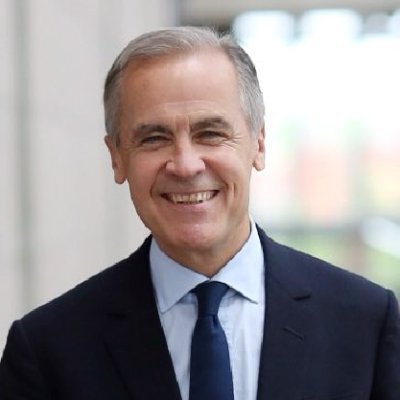
Chile is one of Canada’s closest partners in Latin America. We are their largest foreign investor.
At the UN, President Kast and I focused on where we can build an even stronger partnership. In critical minerals. Defence and aerospace. Antarctic research. Protecting our oceans and biodiversity.
Two Pacific nations unleashing more opportunity together.

ALT Prime Minister Carney meets with the President of Chile, José Antonio Kast, in New York City, United States of America.
paula vidal mohr retweeted

Chile emerge como ganador del “Sell America”: extranjeros elevaron 42% sus tenencias de deuda local este año, hasta un récord de US$21.040 millones, atraídos por disciplina fiscal y reformas. bloomberg.com/news/articles/…


paula vidal mohr retweeted

Yesterday I was in Austin, TX to announce the Airbnb Housing Accelerator, a $250 million commitment to help get more homes built.
Airbnb started because of a housing problem. My roommate and I couldn’t afford our San Francisco rent, so we rented out airbeds in our apartment. Today, housing is unaffordable for millions of people around the world.
If you step back and ask why housing has become so expensive, the biggest problem is pretty simple: we don’t build enough of it. America is short more than five million homes, more than all the housing in New York City and Los Angeles combined. We build fewer homes today than we did in 1950, even though the population has doubled.
Airbnb has been part of the housing debate, and we understand why communities have concerns. Dedicated Airbnb listings are a small share of the housing supply—about 0.5% here in Austin and 0.3% across the U.S. Restricting short-term rentals is an understandable response, but the evidence shows it doesn’t address the underlying problem.
New York City effectively banned Airbnb, and rents have risen about 30% since then. Austin took a different approach and passed reforms that made it easier to build more housing. Rents there are down 18%. Every city is different, but Austin is a clear success story.
We believe building more homes is essential to making housing more affordable. So we asked ourselves: what can Airbnb can do to help? We found a few places where we can.
Today, around 750,000 homes in the U.S. are ready to break ground, but are stuck because they can’t get the final piece of financing. That’s where we can help.
We’re doing four things:
1. Putting $250 million behind housing projects that unlock $5 billion in development.
2. Supporting local housing advocates working to modernize zoning, speed up permitting, simplify building codes and reduce unnecessary costs.
3. Creating a $5 million Housing Innovation Prize for technologies that can make homes faster and cheaper to build.
4. Launching the Airbnb City Index to make it easier to see which cities are building housing, becoming more affordable and adopting policies that work.
Our first project is in Austin. We’re investing $6.4 million to help build 201 affordable apartments in St. John, a neighborhood where the land has sat empty for nearly 20 years. The community fought to turn this lot into affordable housing and won. But construction stalled for nearly five years because the developer was a few million dollars short. Airbnb came and played a small part to unlock this project.
None of these Austin apartments will ever be on Airbnb. Short-term rentals aren’t permitted. We’re investing anyway, because the goal is simple: help build more housing.
We’re starting in the U.S. because it’s the market we know best. I want to prove this works here before taking it further. But housing affordability is a global problem, and I hope we can eventually take what we learn here and apply it globally.
This is new for us. We’ll get some things wrong. And $250 million won’t close a five-million-home gap on its own.
I know there will be skepticism about this, and that's okay. Airbnb only works if communities trust us and feel good about our presence in them. We can’t ask people for that trust. We have to earn it. The best way to do that is to help solve problems in the communities where we operate.
That’s what the Housing Accelerator is about.
Brian
