

Co-founder & CTO at NOFire AI · Prev Distinguished Engineer / SRE at Elastic
Athens, Greece
Joined July 2014
- Tweets2.2K
- Following1.6K
- Followers1.8K
- Likes4.2K



Pinned Tweet
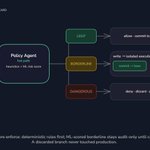
At @NOFireAI we 'design for breach'. The AI agent in production is untrusted by default. nofire.ai/blog/design-for-br…

Panagiotis Moustafellos retweeted

We are back in London next week for Observability & SRE in Enterprise?
Join and @spirosoik and @pmoust for a private roundtable about L1/L2/L3 support, coding agents and production reliability.
October 22 · London
Panagiotis Moustafellos retweeted
brig v0.4.0 gives new sandboxes their own networks by default on Linux and on macOS.
Run coding agents for different projects on one machine, while keeping their dev servers and test APIs separate.
In this demo, one sandbox tries to reach a web server in the other. The connection times out.
We then start both with --network shared, and the same request works.
You can run unrelated tasks side by side and enable network sharing when agents need to work together.
#OpenSource #Sandboxing
Panagiotis Moustafellos retweeted

@typesafeai achieved 46% higher GPU throughput while training Jev using @zymtrace’s cluster-wide, continuous profiling and agentic optimization platform.
See how they did it in the link below 👇
Panagiotis Moustafellos retweeted
brig v0.4.0 limits where your coding agent can send your code and credentials.
This release brings egress policy enforcement on Linux! If brig cannot enforce the policy, then the run is refused.
Allow the services you need for the job. Then brig enforces your network policy outside the sandbox, so the rules also apply to the scripts and dependencies the agent runs. In this demo, an example domain works. Requests to Github API and a direct connection to 1.1.1.1 are blocked, even from a root shell inside the sandbox.
#OpenSource #Sandboxing
Panagiotis Moustafellos retweeted

Just accept it, AI writes better code than you on average. It's fine.


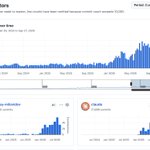
For experts, GenAI assisted software development is a superpower. The screenshot shows what happens when Alexey, @ClickHouseDB CTO went all in with it.
You'd rightfully argue commits/time say nothing about all the other metrics. But just check what that expert is doing at CH..

Also, kudos to Peyton Kennedy of @EndorLabs for responsibly disclosing a CWE-59 symlink path traversal Expl. scenario required an agent planting a symlink dir in a shared volume in guest, and then another run of Brig mounting the planted symlink to get r-w access. Fixed in v0.3

Panagiotis Moustafellos retweeted

thoughts on Typesafe/Jev: I'm surprised that a general-purpose classifier (or discriminative model) can be just as interesting to the public as a general-purpose generative model. I've worked on search and discriminative models for years, so maybe I should have called this upfront, tbf I never thought about making them general-purpose beyond search. Typesafe also positions Jev really well as "System 1", a complement to the generative models we already have. Humble, unassuming, and sidestepping the frontier-lab warzone.
Jev's success could be disruptive to today's agentic systems in many ways, such as tool-calling and routing patterns. Over the last three years the consensus was to use a small generative model for routing, tool calling, MCP etc. Time to pause and rethink such architecture, because we'll probably see tool calling and routing move back to discriminative models. Whoever ships the next Jev-like open-weight base model will likely win the community.
Jev (RLCD) opens exciting opportunities. A general purpose classifier is what many usecases are after. LLMs are the wrong or expensive choice for many of the problems they are used for today.
Top open Qs? Training data set, what is it? shape/origin? How's the model eval'ed?

Get started with: `brig run claude`
Check it out at brig.sh
Panagiotis Moustafellos retweeted

This is true. It wasn't actually possible before 2010 because datacenter networks would bottleneck. We used to design coupled storage/compute where you brought compute close to "big data". But research on "full bisection bandwidth" networks made it possible to essentially just talk from any machine to the storage system at full speed. The disaggregation started then! Databricks and Snowflake started soon after many others followed. Now "Put it on the object store" is the way to go.

While working on Ravel we noticed arrayef getting yanked, see: github.com/NOFireAI/ravel/co…, decided to keep the 0.3.9 pin. Now assessing.
This is why we develop in our #sandbox solution.
We are soon announcing the FOSS release of our sandboxing solution to the public.
Stay tuned.


SELECT * FROM logs - but watch where it actually goes.
Turned #Ravel's codebase into a city you can explore. Every crate's a block and its height is LoC.
Press play and see: push the time range and blooms down -> decode RLOG blocks -> stream batches, etc.
github.com/NOFireAI/ravel

What if S3-compatible object storage was enough for most of your #observability / #SIEM stack?
We’re testing that with Ravel: logs, metrics, traces, PromQL, SQL + distributed search.
Still early, not prod-ready. Try to break it:
github.com/NOFireAI/ravel

Other flows in there: an OTLP export becoming an immutable object plus a commit record. PromQL query_range. The maintenance cycle (retention before compaction, orphan breaker), etc.
Idea from @fleetingbits