

Roman Catholic; Irish
Joined April 2021
- Tweets22.1K
- Following875
- Followers4.4K
- Likes44.4K


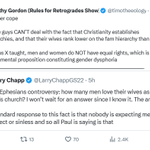


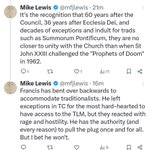


“Last I checked I was a Catholic in good standing who … believes everything that the Church teaches.“
Yes Mr Lewis, and you’ll publish something that undermines Church teaching, when it suits you.
It’s the obsession of obsessions for Bergoglians.
What’s telling is, Bergoglio himself didn’t really care what missal people used.
If his perceived enemies used the Novus Ordo, he’d have encouraged the Old Rite just to aggravate them.

A good decision.

🚨FATHER CHAD RIPPERGER SILENCED BY HIS BISHOP
"Denver Archbishop James Golka has ordered Fr. Chad Ripperger to cease all public ministry — no talks, no preaching, no writing — for one year."
🎩 @LifeSite @CatholicSOTC
lifesitenews.com/news/breaki…

NubesPluantIustum retweeted

I really am proud of my friend @nicospuntoni for revealing the real Parolin so completely in just a few lines.

The Secretary of State’s comment on “recalibrating” the pontificate has provoked unease within the Vatican, Nico Spuntoni reports.
buff.ly/vjhZ2Ch
NubesPluantIustum retweeted

I would more than welcome an attempted canonical process for the removal of office as a pastor on the grounds that I “prayed with my people after Mass.”
The absurdity would be astounding.
Given the joke theology education is, finding entirely orthodox members for the ITC is tough.
What are trads to do? Easy. Next time someone tells you to be “obedient to the normative liturgy,” tell them to go lecture all the disobedient theologians with Roman jobs.
NubesPluantIustum retweeted

It’s Chicago.
As long as these gals don’t pray a Latin mass, they should be fine.

Women defy Catholic hierarchy to be ordained as priests: 'What the church needs to be' chicagotribune.com/2026/10/1…


Because of course Bergoglio is the forever pope.

Stika was a terrible bishop.
But if parishioners want to do this after Mass, a new bishop shouldn’t substitute one form of bad management for another.

NubesPluantIustum retweeted

Bishop Mutsaerts on the Catholic Response to a (Synodal) Church in Crisis
In a recent talk at the Catholic Identity Conference, Dutch Bishop Rob Mutsaerts outlined the nature and extent of the crisis in the Church and mapped out a way forward grounded in Christian hope.
edwardpentin.substack.com/p/…

NubesPluantIustum retweeted

It is a pity that someone who is not only in favour of women's ordination (at least to the diaconate) but who is also under the impression (contra Trent) that deacons could confer the Sacrament of Anointing/Extreme Unction has been appointed today to the ITC. 😕


NubesPluantIustum retweeted

Sorry but this is not possible most places. I’ve seen more than one parish with a solid liturgical program get obliterated because a new pastor is appointed who still lives in 1976. And liturgical reform at all is largely impossible when your bishop bans…

With respect to actual liturgical renewal, the trad slop program is over and should be considered over.
Going forward, those seeking liturgical renewal in union with the Church should proceed as follows:
1. Stop making the liturgy, especially very specific particulars of the liturgy, the rallying banner around which you gather the community you need to support liturgical renewal.
Intentional communities are extremely important and are the base camp of local activism of any kind, but making your red line the St. Michael prayer, the Latin Mass, such and such a kind of homily, or whatever external you want to pick presents an obvious problem. Not only is there the possibility of these things being restricted or taken away, which clearly some of these communities cannot endure even the slightest possibility of, but this also creates a nonstrategic weak point in the community itself.
Nobody's going to like trying to partner with a group when the whole group is founded on a bunch of guys who don't care about you and only care whether or not they get their particular liturgical thing. You have to have an intentional community that has solidarity among its members and with the wider Church, and that also has a project of liturgical advocacy, rather than one whose entire existence depends upon obtaining or retaining particular liturgical arrangements. This is activism of any kind 101, but we are clearly too stupid to think this through.
2. There should primarily be a spirit of liturgical improvement and renewal, not a checklist of nonnegotiable liturgical preferences. It's fine to introduce an idea of increased reverence and intentional liturgical piety. But if that's going to mean that you have to do this or that or it's a bad community, not only are you going to be unintentionally divisive, but you also create concrete and trivial points of attack.
It's like educational reform. It's not whether or not the children get to see sodium thrown into water or read Pride and Prejudice; it's whether or not you have standards and concerns high enough that you might end up reading classical literature, doing concrete chemistry, becoming interested in systematic mathematics, or developing any general attitude of investment and improvement that might lead to an indefinite number of concrete improvements.
We have half a dozen or more books about what improving the contemporary liturgy would look like, and it is not necessary to tie ourselves down to this or that particular thing as long as we have intentional, concrete, and constant efforts toward improvement. This does not mean abandoning particular proposals or demands, but subordinating them to a general project of liturgical renewal rather than making each of them a test of fidelity.
More importantly, if it's an attitude and a set of shared principles, it is a community approach. If it's merely a set of nonnegotiable demands, it's an external condition that can be rejected. Very different.
3. The space you make for advocating in the Church has to be durable, independent of particular discretionary concessions, and difficult to take away. Is what you're doing dependent on some priest's personality? Wrong. Stupid. Don't do that. Is it dependent on some particular liturgical practice? Wrong. Stupid. Don't do that.
If the thing you're doing is sustained by the community, and if the community is capable of sustaining itself, the withdrawal of some particular permission or arrangement need not destroy it. Even if they shut down the parish, you can move and continue your work elsewhere, within the legitimate structures of the Church.
But if you cannot maintain some permanent, self-sustaining community to advocate for something, you have no hope of sustaining a serious project of reform. You are a complainer and an annoyance.
Next --->
NubesPluantIustum retweeted

This is correct. An ‘intentional community’ with no stable, shared liturgical life is a mirage.

The maniacs who trashed and destroyed the Old Rite certainly were hyper-specific about what elements of the liturgy they found absolutely intolerable.
With respect to actual liturgical renewal, the trad slop program is over and should be considered over.
Going forward, those seeking liturgical renewal in union with the Church should proceed as follows:
1. Stop making the liturgy, especially very specific particulars of the liturgy, the rallying banner around which you gather the community you need to support liturgical renewal.
Intentional communities are extremely important and are the base camp of local activism of any kind, but making your red line the St. Michael prayer, the Latin Mass, such and such a kind of homily, or whatever external you want to pick presents an obvious problem. Not only is there the possibility of these things being restricted or taken away, which clearly some of these communities cannot endure even the slightest possibility of, but this also creates a nonstrategic weak point in the community itself.
Nobody's going to like trying to partner with a group when the whole group is founded on a bunch of guys who don't care about you and only care whether or not they get their particular liturgical thing. You have to have an intentional community that has solidarity among its members and with the wider Church, and that also has a project of liturgical advocacy, rather than one whose entire existence depends upon obtaining or retaining particular liturgical arrangements. This is activism of any kind 101, but we are clearly too stupid to think this through.
2. There should primarily be a spirit of liturgical improvement and renewal, not a checklist of nonnegotiable liturgical preferences. It's fine to introduce an idea of increased reverence and intentional liturgical piety. But if that's going to mean that you have to do this or that or it's a bad community, not only are you going to be unintentionally divisive, but you also create concrete and trivial points of attack.
It's like educational reform. It's not whether or not the children get to see sodium thrown into water or read Pride and Prejudice; it's whether or not you have standards and concerns high enough that you might end up reading classical literature, doing concrete chemistry, becoming interested in systematic mathematics, or developing any general attitude of investment and improvement that might lead to an indefinite number of concrete improvements.
We have half a dozen or more books about what improving the contemporary liturgy would look like, and it is not necessary to tie ourselves down to this or that particular thing as long as we have intentional, concrete, and constant efforts toward improvement. This does not mean abandoning particular proposals or demands, but subordinating them to a general project of liturgical renewal rather than making each of them a test of fidelity.
More importantly, if it's an attitude and a set of shared principles, it is a community approach. If it's merely a set of nonnegotiable demands, it's an external condition that can be rejected. Very different.
3. The space you make for advocating in the Church has to be durable, independent of particular discretionary concessions, and difficult to take away. Is what you're doing dependent on some priest's personality? Wrong. Stupid. Don't do that. Is it dependent on some particular liturgical practice? Wrong. Stupid. Don't do that.
If the thing you're doing is sustained by the community, and if the community is capable of sustaining itself, the withdrawal of some particular permission or arrangement need not destroy it. Even if they shut down the parish, you can move and continue your work elsewhere, within the legitimate structures of the Church.
But if you cannot maintain some permanent, self-sustaining community to advocate for something, you have no hope of sustaining a serious project of reform. You are a complainer and an annoyance.
Next --->
NubesPluantIustum retweeted

"The risk of remaining in an irregular situation is that of growing accustomed to irregularity and of turning it into a norm of Catholicity. Unfortunately, that is the posture of those who reject any possibility of canonical regularisation."

Exclusive interview with the only bishop in communion with Rome whose mission is the TLM
In an AdVaticanum exclusive, Bishop Fernando Rifan discusses the future of the Traditional Latin Mass, his reconciliation with Rome, his successor and the challenges facing the Church in Brazil
✍️ @NiwaLimbu1988
advaticanum.com/article/excl…

NubesPluantIustum retweeted

Fidelity to Catholic tradition and fidelity to the See of Peter are not competing loyalties.
That is the clear message from this interview with Bishop Fernando Rifan. As the only bishop in communion with Rome whose particular jurisdiction is dedicated to the Traditional Latin Mass, Rifan occupies an extraordinary position. His experience offers an important corrective to the increasingly polarised debate about the Church's liturgical inheritance.
His warning about the danger of becoming so accustomed to canonical irregularity that it begins to be regarded as the norm of Catholic fidelity is particularly pertinent. Having lived through the reconciliation of the traditionalist community in Campos with Rome, he understands what is at stake. Equally significant is his recollection that Bishop de Castro Mayer taught him to follow the Church rather than individuals who establish themselves as a kind of parallel magisterium.
Yet Rifan is equally forthright about the theological richness, reverence and doctrinal precision of the ancient Roman liturgy, which he regards as a treasure of the Church deserving preservation.
Perhaps the most important lesson here is that the preservation of tradition must never require separation from the Church, just as genuine ecclesial communion should never require Catholics to abandon their legitimate liturgical inheritance.
Rome ought to recognise what the experience of Campos demonstrates: attachment to the traditional liturgy, acceptance of Vatican II and wholehearted communion with the Roman Pontiff can coexist. Indeed, this is precisely the sort of reconciliation and liturgical peace the Church should be encouraging, rather than frustrating through increasingly restrictive legislation.
An interview from @NiwaLimbu1988 here which is well worth reading 👇
Exclusive interview with the only bishop in communion with Rome whose mission is the TLM
In an AdVaticanum exclusive, Bishop Fernando Rifan discusses the future of the Traditional Latin Mass, his reconciliation with Rome, his successor and the challenges facing the Church in Brazil
✍️ @NiwaLimbu1988
advaticanum.com/article/excl…
NubesPluantIustum retweeted

Mental health alert:
With respect to actual liturgical renewal, the trad slop program is over and should be considered over.
Going forward, those seeking liturgical renewal in union with the Church should proceed as follows:
1. Stop making the liturgy, especially very specific particulars of the liturgy, the rallying banner around which you gather the community you need to support liturgical renewal.
Intentional communities are extremely important and are the base camp of local activism of any kind, but making your red line the St. Michael prayer, the Latin Mass, such and such a kind of homily, or whatever external you want to pick presents an obvious problem. Not only is there the possibility of these things being restricted or taken away, which clearly some of these communities cannot endure even the slightest possibility of, but this also creates a nonstrategic weak point in the community itself.
Nobody's going to like trying to partner with a group when the whole group is founded on a bunch of guys who don't care about you and only care whether or not they get their particular liturgical thing. You have to have an intentional community that has solidarity among its members and with the wider Church, and that also has a project of liturgical advocacy, rather than one whose entire existence depends upon obtaining or retaining particular liturgical arrangements. This is activism of any kind 101, but we are clearly too stupid to think this through.
2. There should primarily be a spirit of liturgical improvement and renewal, not a checklist of nonnegotiable liturgical preferences. It's fine to introduce an idea of increased reverence and intentional liturgical piety. But if that's going to mean that you have to do this or that or it's a bad community, not only are you going to be unintentionally divisive, but you also create concrete and trivial points of attack.
It's like educational reform. It's not whether or not the children get to see sodium thrown into water or read Pride and Prejudice; it's whether or not you have standards and concerns high enough that you might end up reading classical literature, doing concrete chemistry, becoming interested in systematic mathematics, or developing any general attitude of investment and improvement that might lead to an indefinite number of concrete improvements.
We have half a dozen or more books about what improving the contemporary liturgy would look like, and it is not necessary to tie ourselves down to this or that particular thing as long as we have intentional, concrete, and constant efforts toward improvement. This does not mean abandoning particular proposals or demands, but subordinating them to a general project of liturgical renewal rather than making each of them a test of fidelity.
More importantly, if it's an attitude and a set of shared principles, it is a community approach. If it's merely a set of nonnegotiable demands, it's an external condition that can be rejected. Very different.
3. The space you make for advocating in the Church has to be durable, independent of particular discretionary concessions, and difficult to take away. Is what you're doing dependent on some priest's personality? Wrong. Stupid. Don't do that. Is it dependent on some particular liturgical practice? Wrong. Stupid. Don't do that.
If the thing you're doing is sustained by the community, and if the community is capable of sustaining itself, the withdrawal of some particular permission or arrangement need not destroy it. Even if they shut down the parish, you can move and continue your work elsewhere, within the legitimate structures of the Church.
But if you cannot maintain some permanent, self-sustaining community to advocate for something, you have no hope of sustaining a serious project of reform. You are a complainer and an annoyance.
Next --->
Bishop Rifan’s flock has been a true success story.
While I’m sure the Dr Ivereighs and Mr Lewises of the world would smugly tell them, “go to normal Mass with the rest of us,” rigid ideologues on both the left and the right could learn much from them.
advaticanum.com/article/excl…