

Asst Prof Environ and Energy Economics @UniLeipzig @UFZ_de | Working on sustainable energy transitions Bluesky: @plehmann.bsky.social
Leipzig, Deutschland
Joined March 2019
- Tweets11.7K
- Following937
- Followers2.4K
- Likes9.6K





Pinned Tweet
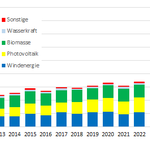
To manage spatio-environmental impacts of renewable energies, their deployment is often restricted by exclusion zones (e.g., setback distances, forest bans). Our new open access paper in @ResEnergyEcon analyzes the trade-offs of this policy. Thread 👇 1/9
sciencedirect.com/science/ar…

Noch mal etwas ausführlicher zum Thema Akzeptanz und Sozialverträglichkeit eines CO2-Preises. Die mögliche Rolle des Klimageldes dabei kann man nämlich durchaus differenzierter sehen als ich in meinem Tweet letzte Woche. 1/18

18/18 Ein solches Hin und Her lässt eben gerade Zweifel aufkommen, wie ernst es die Bundesregierung mit Akzeptanz und Sozialverträglichkeit meint - und gefährdet damit auch die Umsetzung einer effektiven Klimapolitik durch steigende CO2-Preise. xitter.cf/edenhofer_jacob/status…

Paul Lehmann retweeted

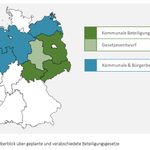
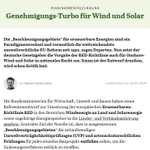
Immer mehr Bundesländer regeln die finanzielle Beteiligung von Gemeinden und Anwohner:innen am Ausbau erneuerbarer Energien. Die #EnWG-Novelle wollte das vereinheitlichen, ließ den Passus aber aus – aus gutem Grund, so @pleh_mann (@UniLeipzig, @UFZ_de) 👉 lmy.de/GMDrq

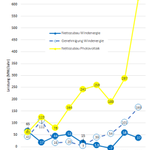
10/11 Wrap-up I: Scrapping subsidies often only have a short-term economic stimulus effect, which is later on compensated by lower sales. Environmental benefits may well be negative. If they are positive, they are small.
11/11 Wrap-up II: Importantly, all studies lack a counterfactual analysis: What would have been the benefits of alternative ways of government spending? What would have been alternative (possibly cheaper) policies to reduce emissions?
Paul Lehmann retweeted
Can anyone recommend textbooks or other material to teach environmental management to business and economics students at bachelor level? Thanks also for reposting. #EconTwitter
Can anyone recommend textbooks or other material to teach environmental management to business and economics students at bachelor level? Thanks also for reposting. #EconTwitter
Paul Lehmann retweeted

Der Photovoltaik-Ausbau in Deutschland boomt, während die hiesige Solarindustrie schrumpft. Kann eine zu starke Importabhängigkeit zum Problem für die Energiewende werden? Die fossilfrei-Hosts @WPSchill & @roth_kohl haben sich umgehört: diw.de/de/diw_01.c.910588.de… (1/3)
Paul Lehmann retweeted

Heute in der @faznet ein Aufruf von 12 Energieökonom*innen:
Der deutsche Strommarkt braucht lokale Preise !!
Mit @LionHirth A.Ockenfels, @andreasloeschel @mar_bichler @maurerchr @KarstenNeuhoff @felixmatthes O.Edenhofer @AchimWambach K.Pittel @GeorgZachmann & mir


Paul Lehmann retweeted

🚨 New @PNASNews study out in this week’s issue with the brilliant @jgrunau3 and @MoritzDrupp 🚨
Discover how the European carbon market contributes not only to reducing climate damages for future generations but also to boosting your health today!
🧵⬇️

Paul Lehmann retweeted

Our new @cepa_unipotsdam Discussion Paper on integrating Carbon Removal (#CDR) in Emissions Trading Schemes (ETS) is out: doi.org/10.25932/publishup-6…
We show how a modified 🇪🇺 ETS can enable a phase of net-negative emissions, increase ↗️climate ambition and reduce ↘️costs 1/n


Paul Lehmann retweeted

Sweden canceling new transmission to Germany (sigh) reportedly on concerns it would lead to higher and more unstable power prices in Sweden + complaints the German power market is not sending "correct price signals".


Paul Lehmann retweeted

Warum eine ortsabhängige Kompensationslösung beim Klimageld, wie in Österreich und Kanada, nicht sinnig ist und wir weniger auf Mobilität und mehr auf Wohnen blicken müssen.
feire.isqd.de/papers/

Paul Lehmann retweeted

Bleibt nur zu hoffen, dass es die Union schafft, ein Kompensationsschema auszuarbeiten, das sich einerseits schnell implementieren lässt und andererseits der vertikalen sowie horizontalen Ungleichheit Rechnung trägt.


Paul Lehmann retweeted

📄💡 New paper published in @NatureEnergyJnl showing that the ten-fold surge of carbon prices in the #EUETS over the last five years was not only due to tighter emission caps, but also to increased political commitment, which made firms more farsighted 🧵
nature.com/articles/s41560-0…


Paul Lehmann retweeted

Ich freue mich sehr, wenn wir morgen mit "Zukunft KlimaSozial" @ZKS_KlimaSozial offiziell an den Start gehen:
zukunft-klimasozial.de/
xitter.cf/ZKS_KlimaSozial/status…

Große Vorfreude 😃: Am 13. Juni starten wir offiziell mit "Zukunft KlimaSozial" @ZKS_KlimaSozial, unserem wissenschaftlichen Thinktank zur Verbindung von #Klima- und #Sozialpolitik. Unsere Vision ist eine #klimaneutrale und sozial gerechte Zukunft. @BrigitteKnopf
Paul Lehmann retweeted

NEW – Experts: What do the European elections mean for EU climate action? | @DrSimEvans w/comment from @fgenovese__ @Tagliapietra_S @lucaberga @vincentbrussel @niredeker @LindaCulture
Read here: buff.ly/45jFTTG

ALT The European Parliament buildings in Brussels. Credit: grough.co.uk / Alamy Stock Photo
Paul Lehmann retweeted
The German Greens' valence advantage on climate policy has declined precipitously over the last five years.
Not sure what explains this, but let me collect some possible explanations.
1⃣ For a fair share of the electorate, climate policy remains a luxury good (demand rises,
This quoted post is unavailable.
Paul Lehmann retweeted

🚨New working paper on distributional effects of climate policy: We build a new dataset covering >1.5 M households from 88 countries, analyse why households are affected and how they could be compensated effectively using detailed HH level information&ML
👉hdl.handle.net/10419/296491

Paul Lehmann retweeted

1/3 "Demand-side strategies key for mitigating material impacts of energy transitions"
New paper out in Nature Climate Change.
Here the free access:
rdcu.be/dJSse
