

Professor at @unicampoficial, Researcher 🔬 in #Ecology and #Evolution. Ecological interactions, networks, extinction and macroevolution.
Campinas, Brazil
Joined April 2016
- Tweets1.3K
- Following639
- Followers1K
- Likes5.4K




Pinned Tweet
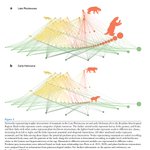
I just realized that the final version of my review on the "Restructuring of Ecological Networks by the Pleistocene Extinction" published in @AnnualReviews is now available in open access at:
annualreviews.org/content/jo…
#megafauna

Happy to share our new paper published in @Oikos_Journal. Here we modeled seed dispersal by the lear's macaw and show that population recovery may contribute to the expansion of its main food resource. This is part of @GAlthmann MSc dissertation.
nsojournals.onlinelibrary.wi…


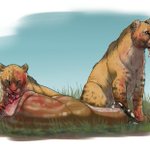
Matéria da @AgenciaFAPESP sobre alguns estudos recentes mostrando como interações podem moldar padrões de extinção
agencia.fapesp.br/reducao-na…
arte de @felipecapoccia

Another paper by João Nascimento whose thesis aimed to answer how predator-prey interactions can shape diversification. Here we show that Antilocapridae has a complex diversification history shaped by environmental changes, competition and predation.
doi.org/10.1093/evolut/qpaf0…

In this paper, which is another output of the thesis by (now) Dr. João Nascimento, we present evidence that 'Variation in prey availability over time shaped the extinction dynamics of sabre-toothed cats'.
doi.org/10.1093/jeb/voaf043
art by @felipecapoccia

MathiasPires retweeted

Qual o papel do seu pet na sua vida? E os animais, como interagem com a vegetação e auxiliam a floresta? É isso que os pesquisadores do IPAM querem saber em mais um dos estudos da Estação de Pesquisa Tanguro. Gostou do tema? Acesse o site da iniciativa. ipam.org.br/tanguro/
Happy to share this study where we used exclosure experiments in the Amazon to quantify the extent to which defaunation can disrupt ecosystem functions of large vertebrates.
A collaboration with LABECON @ufopa, funded by @BiotaFAPESP and @fapespa
sciencedirect.com/science/ar…

MathiasPires retweeted

Home to species found nowhere else on Earth, the vast ecosystem of Brazil's Cerrado requires urgent attention as its landscape is increasingly transformed for economic growth—here's what happens when progress outpaces preservation. 🔗 on.natgeo.com/4kozspJ
I'm thankful to Juan Li for inviting me to collaborate on this paper. Using the Tibetan Plateau as a study system we show how to combine indices ranking species as umbrella, flagship and keystone to determine conservation surrogates
sciencedirect.com/science/ar…

Very happy that our paper on how to estimate seed dispersal interactions (doi.org/10.1111/oik.10521) is featured on the cover of @Oikos_Journal illustrated by this shot I took from this gorgeous Red-legged Honeycreeper (Cyanerpes cyaneus) 🤠


Our most recent paper in Oikos 🤠

🦜🌱Estimated missing interactions change the structure & alter species roles in one of world's largest seed-dispersal networks
vist.ly/3miztpm
📷 Black-fronted piping guan © Mathias Pires
@NordicOikos @WileyEcolEvol #seeddispersal #ecologicalnetworks #networktopology


!!!

There's #drought, and then there's mind-blowing levels of drought. That's what we're now witnessing across much of South America. No wonder the entire region has become a tinderbox. The new #Climate worsens in #Brazil #Argentina #Venezuela #Colombia

MathiasPires retweeted

🌳O Brasil perdeu 33% das áreas naturais até 2023, de acordo com a nova coleção de dados do MapBiomas. Áreas naturais englobam as classes: floresta, vegetação herbácea e arbustiva, praia, duna e areal, e rio, lago e oceano. Metade dessa perda ocorreu na Amazônia.


MathiasPires retweeted

Brasil já perdeu um terço de sua vegetação nativa, mostra MapBiomas ⬇️
Destruição de áreas naturais atingiu marca histórica em 2023. Nova coleção de dados mostra que 33% da conversão de áreas ocorreu nas últimas quatro décadas
oeco.org.br/noticias/brasil-…

Congratulations Andre Martinez for publishing the first chapter of your thesis in @Oikos_Journal.
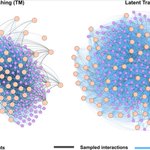
In this paper we explore two methods to estimate missing plant-frugivore interactions and show how those interactions can change network structure.
nsojournals.onlinelibrary.wi…

In this paper I first briefly describe the extinction event that resulted in the loss of the Pleistocene megafauna between 50 and 10 thousand years ago.


I just realized that the final version of my review on the "Restructuring of Ecological Networks by the Pleistocene Extinction" published in @AnnualReviews is now available in open access at:
annualreviews.org/content/jo…
#megafauna
