

Mom of 3. Assistant Prof. #VirginiaTech CS. Formerly #MIT #Purdue #Bogazici. #Emmy Nominated Creative Director, #Fulbright Fellow. Contact: pinary@vt.edu.
United States
Joined July 2007
- Tweets1.4K
- Following923
- Followers4.9K
- Likes1.4K



Pinned Tweet
Thrilled to receive an NSF CAREER Award! Excited to push the frontiers of video generation toward controllable, cinematic tools for creating dynamic worlds. Grateful to my students, mentors, collaborators, and NSF. nsf.gov/awardsearch/show-awa…
Excited to share our work showing RL post-training in diffusion models is secretly activation steering! Led by my amazing PhD student Tuna with fantastic collaborators at fal, IBM Research, Georgia Tech @kaan_oktay @atakankara__ @alec_helbling @PoloChau

What if we could recover most of RL post-training’s gains in diffusion transformers without changing the weights?
We froze the model and learned input-agnostic steering vectors.
Across 8 RL-tuned image and video models, these vectors recover at least 89.8% of the reward gain.🧵
22
1,035

First work: pmd-distillation.github.io
Second work: rl-is-steering.github.io
Also, for the papers we are going to present next month at NeurIPS, please visit: gemlab-vt.github.io/neurips
3
283
Pinar Yanardag retweeted

🔥 Check out Posterior Matching Distillation (PMD), a new distribution matching method that:
✅ doesn't require fake score estimation
✅ has high diversity
✅ uses a clever tilt-and-shift identity for distillation
Kudos to Hidir @d_yesiltepe, Julius @julberner & Pinar @PINguAR!
🌐 Project page: pmd-distillation.github.io

We introduce Posterior Matching Distillation (PMD), a new member of distribution-based distillation for few-step generation. PMD trains a stochastic student whose samples reproduce the teacher's exponentially tilted means, each obtained from a single frozen-teacher evaluation at an input shifted along the tilt direction.
We prove that matching these tilted means over a neighborhood uniquely determines the teacher’s full posterior over clean images. The result is exceptional diversity across seeds for the same prompt.
w/ Julius Berner (@julberner), Arash Vahdat (@ArashVahdat), and Pinar Yanardag (@PINguAR).
🧵 1/5
Pinar Yanardag retweeted

PMD turns diffusion/flow models into fast few-step generators that produce diverse outputs from the same noisy state! ⚡️
The student learns the teacher distribution by matching exponentially tilted means:
- Student: weighted avg. of predictions (using additional noise inputs)
- Teacher: single denoiser evaluation at shifted input
This new way of distribution matching distillation connects sample-based moment matching (MMD/Drifting) with teacher-denoiser supervision (DMD2), requiring neither learned fake-scores nor positive samples.
Since PMD enables fast, stochastic conditional generation, it's also a promising starting point for RL!
We introduce Posterior Matching Distillation (PMD), a new member of distribution-based distillation for few-step generation. PMD trains a stochastic student whose samples reproduce the teacher's exponentially tilted means, each obtained from a single frozen-teacher evaluation at an input shifted along the tilt direction.
We prove that matching these tilted means over a neighborhood uniquely determines the teacher’s full posterior over clean images. The result is exceptional diversity across seeds for the same prompt.
w/ Julius Berner (@julberner), Arash Vahdat (@ArashVahdat), and Pinar Yanardag (@PINguAR).
🧵 1/5
Excited to introduce Posterior Matching Distillation (PMD), led by my amazing PhD student Hidir, with fantastic collaborators Julius @julberner and Arash @ArashVahdat at #NVIDIA! 🚀
PMD is a new approach to distribution matching distillation that generates diverse outputs in just a few steps. The student learns through tilted mean matching, where its samples are trained to reproduce the teacher's tilted means. Tilting the teacher's posterior turns out to be the same as shifting its input, so each target comes from a single call to the frozen teacher and no fake score model is needed!
We also show that matching these tilted means is enough to recover the teacher’s full posterior, which is why PMD keeps so much variety across seeds. Check out Hidir's post for more details!
We introduce Posterior Matching Distillation (PMD), a new member of distribution-based distillation for few-step generation. PMD trains a stochastic student whose samples reproduce the teacher's exponentially tilted means, each obtained from a single frozen-teacher evaluation at an input shifted along the tilt direction.
We prove that matching these tilted means over a neighborhood uniquely determines the teacher’s full posterior over clean images. The result is exceptional diversity across seeds for the same prompt.
w/ Julius Berner (@julberner), Arash Vahdat (@ArashVahdat), and Pinar Yanardag (@PINguAR).
🧵 1/5
Pinar Yanardag retweeted

🔍 Simulators often check whether a scene is physically valid, but not whether it will help the policy improve, wasting budget on scenes that are too easy to teach anything new or too hard for the policy to learn from yet.
CoDA closes the loop using a shared memory.
✨Build targeted training worlds.
⚡Guide learning with subgoals + dense feedback.
🔮Robot progress shapes the next round.
Failures improve both the training environments and the way the robot learns from them.
🧵👇 2/7

Pinar Yanardag retweeted

SPAWN got accepted to #NeurIPS2026 🎉 In this work, we study controllability in interactive world models by injecting custom concepts.
Many thanks to my advisor @PINguAR for the guidance and support, and @fal for providing the compute resources that made this project possible!

Pinar Yanardag retweeted

Huge thanks to the professors at @SanghaniCtrVT! Dr. @jiamingcui1997 #muratkantarcioglu @PINguAR and @Ismini_L for their invaluable guidance and support in realizing these projects. Many thanks to my collaborators @yusuf_dalva @phylo_GENETIC #saadamin!
Pinar Yanardag retweeted

AdaState is accepted to #NeurIPS2026 🎉
I'm deeply grateful to my advisor @PINguAR for giving me the freedom to pursue this idea and for her support throughout!
Thanks also to the Amazon–Virginia Tech Initiative (@AmazonScience, @virginia_tech) for supporting this work, and to @fal for the compute support. Congrats to @kavanav2912 on the acceptance of RAVEL too!
As I approach the end of my PhD, I feel fortunate to have presented at CVPR, SIGGRAPH, ECCV, and NeurIPS as an author, all this year. None of it would have been possible without my amazing collaborators, and I'm thankful to every one of them.
See you at NeurIPS (probably Atlanta 🫠)

RT @d_yesiltepe: Super excited to share that VideoMLA has been accepted at #NeurIPS2026!
We studied the transition from Multi-head Self-At…
This quoted post is unavailable.
5 papers from our lab accepted at #NeurIPS2026! 🎉 So proud of our team! Our work spans video generation (AdaState, VideoMLA), controllable world models (SPAWN), and physics-aligned video generation (HiPhy). See more details at: gemlab-vt.github.io
🤖 Made with AI

Huge kudos to all the students and collaborators behind these papers! So proud of what we’ve accomplished together, and grateful to work with such a wonderful team! 💎 @d_yesiltepe @yusuf_dalva @TKazimi415 @akdemir_kiymet @tunahansalih @kavanav2912 @kaan_oktay @akaan_akan
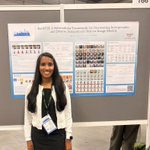
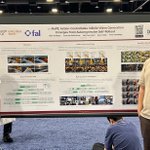
GEMLAB is at #ECCV with two papers! 🎉 Find Yusuf (@yusuf_dalva) presenting at poster #125 and Ritika (@ritika1729) at poster #166. Stop by to check out our work and say hello!

Ritika @ritika1729 is presenting her paper on interpretable and diverse semantics for t2i models!

Pinar Yanardag retweeted

Enter Sandman is a 25 year old Virginia Tech tradition and the reason Metallica added the school to their last tour.
Virginia Tech’s Geosciences department measured the equivalent of a magnitude 1 to 2 earthquake when the band played the song at that concert.
Our NeurIPS rebuttals is currently peer-reviewed by this tumbleweed. #NeurIPS @NeurIPSConf
1
13
1,940
If you are at #SIGGRAPH2026, please check out my PhD student @yusuf_dalva's talk at 9:40AM today!
Happening this morning at #SIGGRAPH2026! I’m presenting Canvas-to-Image in the Image Generation session (9–10:30am PDT, Room 408 B), my talk’s at 9:40. Come through if you’re into multimodal / compositional control.