







Pinned Tweet
🤖 Building the future of browser automation with AI agents
CoFounder @100x.bot - turning Chrome into your personal AI assistant
✨ What we're solving:
• Manual browser tasks → Automated workflows
• Complex web scraping → Simple AI commands
• Repetitive clicks → Smart automation
Try it free: 100x.bot 🚀
#AI #Automation #Chrome
1
1
438
playing with bitnet (trit model) + vibethinker (reasoning only model) + gemma4 (the (Small)LM) that works on my machine. Trying to understand capability transfer from 1 model weights to another. steal the weights ? But for every experiment the blocker is lack of evals, its like trying to build a skyscrapper in a city of fog. is building more evals the only reliable way to improve llms.
Can vibethinker be a trit model without losing its accuracy ? I my experiment the accuracy (on my local eval set) dropped from 88% to 80% where as my intution was that a trit model would be able to retain more knowledge in smaller weights.
28
so i thought i'd do some static analysis on indian banking apps.
i went through the rbi's list of 121 scheduled banks, identified 82 india facing android apps, and got apk sets for 81 of them from apkpure and google play via aurora. i unpacked them, ran jadx, and compared the shipped code, assets, and android class names. here's what i found:
1. some "different" bank apps are editions of a "white-label banking app", basically a complete client adapted for each bank. eight pnb sponsored rural banks share a closely related app. in the assam and tripura builds, 711 of 752 comparable banking and navigation files are byte for byte identical. the same client family also appears at madhya pradesh gramin bank, which has a different sponsor.
2. that shared client still carries its imaginary bank. nine rural-bank apks contain strings for "future bank", including an update dialog title. they also ship the same 757 kb mock banking service with example responses for hundreds of requests. mock mode is off during normal startup, but the whole thing is still in the release builds.
3. there isn't one standard rural-bank tech stack. puducherry grama bank, tamil nadu grama bank, and andhra pradesh grameena bank ship .net/mono based apps. another group uses a cedge android client across banks with different sponsors. a sponsor bank's own app can be built on a different foundation again.
4. old product/stale code travel being preserved. archived dhanlaxmi and jana apps share 1,989 first-party web files. both also contain bkash, rocket, and ipay wallet screens. i couldn't find navigation routes to those screens, so mostly likely its there in the "template app" but the bank does not offer those services.
5. one app contained a google service account private key. it parses as a private key, and its public certificate matched when checked. i haven't tried to use it and can't tell from the apk what access it has. i'm keeping the bank and credential details out of this post while handling disclosure privately.
i was obviously curious about permissions
1. sms is everywhere. 70 of 81 apps declare permission to send sms. 63 declare permission to read it. all 12 public-sector bank apps in the collection declare both. that may relate to registration or device binding.
2. location is nearly as common. 75 apps declare precise location access. 69 declare camera, 61 contacts, and 35 microphone. only two declare *background* location: union ease and the airtel app that includes airtel payments bank.
3. 39 apps declare broad visibility into other installed apps. that includes apps from public, private, small-finance, and payments banks.
4. permission lists have fingerprints. ten related rural bank apps, across three different sponsor bank networks, declare the exact same 20 android permissions. that points to the usage of the "template app" across
5. shared code doesn't always mean shared permissions, though. madhya pradesh gramin bank's archived app declares just five android system permissions. assam gramin bank's declares 16, despite substantial overlap in their packaged banking client. the native packaging and the shared web code tell different parts of the story.
the raw count can mislead too. the airtel package tops this set at 56 android system permission declarations, but it's a wider telecom app with a banking service inside it. and 20 apks even declare a privileged phone-state permission that an ordinary play-installed app cannot receive.
63
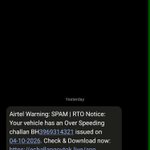
an SMS claimed I had an RTO challan. I traced its APK through decryption and android's install prompt. the payload's re 1/- form collected card data and UPI PINs. its code handled SMS commands and uses a telegram bot. the funny part is that @airtelindia marked the SMS with a "warning" but wont stop actually delivering these SMS thru their network
artpar.github.io/posts/how-a…

99
me: hey llm do this obviously straightforward thing
llm: ill do it but also an extra "word"
me: hey llm what do you mean by "word" there ?
llm: i am sorry i used the "word" wrongly, i meant "another word"
me: wait what, what does "another word" mean here
llm: i used another word in wrong sense, but i only mean a different word
1
19
I used to think magic is sleight of hand, someone telling you to focus on their hands while the trick happens else where. then software engineers picked up the term for something where complexity is hidden in an elegant abstraction that it feels very easy to use (ux?), but the real magic is people and companies using the presence of words to make you nothing think of "what did it not mean". happening right in front of you all the time every day.
19
when working across multiple projects (dependencies/libraries) (which is how you should split your project to reduce the surface for llms to make mistake) when an issue is identified in project 1 leading to a fix in the dependent project, instead of keeping the first agent session alive and waiting ask it to:
"prepare a session handoff and give a prompt to continue this work to completion in a new session which will be created after the resolution of the identified issue"
(maybe not exactly this but you get the idea)
this because the cache is going to expire while the second agent fixes the issue and if you just resume in the first agents session it will trigger the whole input token leading to wasting tokens.
40
llm responses needs to have a signature of model weights they were generated against. not something not artificially added post response generation, something maybe cryptographic hash. every time a new model is released everyone is like "oh this model is so great" only to see a few months later that its worse than before. specially for llm models that are being served from the cloud. kind of "https" for model responses. i just cant shed the feeling that the llm labs "tune down" the current models at the point they are about to release a "new and improved and better than ever before" model
71
apparently remove and replace are "very close" in the models embedding
POV: coding with an AI agent
Me: remove "source" parametere
AI: Got it. I'll remove source.
AI: also adding ApplicationCommandSourceV2
Me: no replacement
AI: understood.
AI: adding ShellCommandSource
Me: NO NEW SOURCE TYPE
AI: absolutely.
AI: making origin optional
Me: WHY
AI: you’re right. no unrelated changes.
AI: adding "application-command" invocation metadata
Me: STOP ADDING THINGS
AI: understood. the requirement is now crystal clear.
Me: okay so whats the plan
AI:
remove source
add runtime transaction capability
modify pipeline semantics
change mutation protocol
Me: DID I ASK FOR ANY OF THAT
AI: No. I kept inventing solutions for consequences you did not ask me to solve.
Me: good. now remove source.
AI: There is one conflict ...
Me: REMOVE.
THE.
FUCKING.
SOURCE.
46
now more than half the conversations on the internet are not about the content but whether its ai generated or not and then shitting on it. if its ai and you dont like it, why engage with it ? and if you like it, why does it matter if its ai generated. and then theres also the mental cycles spent of "oh they guy fell for ai generated content"
26
shortening the distance between implementation and external feedback appears more valuable than forcing additional planning or code inspection
2
37
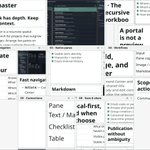
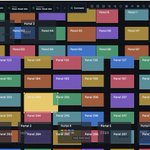
canvas based document is coming along. making a gallary of the 36 views of Mount Fuji as my first canvas document. facing some issues around rerendering during pan/zoom, but this is still work in progress.

ALT the mountain stays still; everyone else is working or moving

ALT thirty six views, one mountain, mount fiji
28
no one is ever going to come up with interfaces like vim and emacs if all the ideation is done by llms
40

Parth Mudgal retweeted

#126: #AIRadarDaily — @The100xbot
There is a quiet, exhausting reality behind almost every knowledge worker's screen. Despite having endless SaaS dashboards and powerful software at our fingertips, we spend hours trapped in the mechanical busywork that sits between our tools. We have built incredible cloud software, yet we are forcing humans to act as the slow, manual glue connecting disconnected browser tabs.
It takes builders with deep technical pragmatism, and the courage to completely rethink browser interaction to solve this at the root. That is exactly what Shardul Lavekar (@shardullavekar) and Parth Mudgal (@phparth) are doing with 100x.bot.
Founded in 2024, 100x.bot is a deeply intelligent, AI-native browser automation platform that turns any user's screen recording into a resilient, autonomous workflow.
The engineering under the hood is beautiful in its simplicity. Instead of writing complex scripts, users simply record themselves performing a task once. 100x.bot's multi-model LLM engine translates those visual screen interactions into adaptable, autonomous AI agents. Whether extracting structured data from web pages into smart tables, filling complex multi-step forms, or executing scheduled workflows in the cloud, the platform dynamically adapts to website layout changes without needing a developer to fix broken code.
The true moat here is intuitive, no-code orchestration at scale. 100x.bot removes the technical friction of enterprise automation, allowing anyone to speak to their browser in natural language: "Grab all product names and prices from this page and export to a spreadsheet". It shifts the paradigm from repetitive manual clicking to self-healing, reusable micro-workflows that run out of the box.
The market? Fast-moving sales, recruitment, marketing, and research teams who desperately need to automate high-volume web workflows without spending tens of thousands of dollars on complex enterprise RPA implementations.
Seeing builders of Shardul and Parth's caliber head-down, quietly architecting the automation infrastructure that liberates people from digital busywork, is profoundly inspiring. They are giving teams their momentum and their time back.
Let's celebrate the builders.
w/ @jaybharatingle
#AgenticAI #BrowserAutomation #ProductNation


gpt sol writing everything in single lines for anyone else ? i dont know what wrong word i used in the prompt to trigger this


