

Mobile SDK @sentry 📱 Technical Co-Founder @kula_app @techprimate 🚀 Created https://xitter.cf/t.co/D4PeURzDJS https://xitter.cf/t.co/TQsZDa4CVl TPPDF 📄 Open Source 💙 GitHub Sponsors: $2 MRR 💰
Austria, Vienna
Joined February 2014
- Tweets2.1K
- Following232
- Followers670
- Likes1.9K




Pinned Tweet
Bundling all my SDK developer skills and created my first GoLang package for standardized health endpoints.
Wrote a little blog post about it. Let me know what you think.
philprime.dev/blog/2026/05/1…

Had @Docker Desktop crash 4 times on me today. Maybe time to put Sentry in there.

Taking the train from Vorarlberg back to Vienna makes me realize every. single. time. how much I depend on a proper internet connection to get anything done.


What are the LinkedIn-style clickbait posts doing here? „We can do X now!! (continues to talk about something else)“
Where‘s the genuine „hey let‘s talk about this cool thing“ rather than engagement bait.
Maybe I am using this platform incorrectly…
Philip Niedertscheider retweeted

I’ll be honest here.
I don’t feel the same excitement about iOS exploitation anymore like it was during the Lookout days in 2016 with the NSO exploit chains.
Today you can run commodity AI like DeepSeek, you run an AI swarm into a problem, it might cost you $3000 via API or nothing if you own some DGX, and you will find vulns. You will find the exact same vulns with $30,000 spent on openAI.
I think the only people left finding something are the ones building special fuzzing harnesses steered by an LLM to explore paths that weren’t explored before (there are already open source projects for this). And of course the upstream bugs that Apple keep introducing after each release.
Knowing that with an LLM you can reverse engineer anything end to end, plus you have access to better harness now and you can 1-shot your own:
Vulnerability research only constraints looks to be money (granted you have the skills already)
If you are rich you will find vulns.
If you are poor it means you missed all the previous cycles to make money on VR and you have a skill problem, or maybe you just started. If you just started it will be exponentially hard to find anything useful going forward the bar is extremely high and most importantly exponentially expensive.
Bad news for threat actors in cybercrime.
That leaves us with nation states or well funded firms / having resources to find new bugs.
If you are independent VR guy I wish you good luck.

Quite some bloat in this list with non-important topics you might not need, but a lot of crucial ones for sure!

Who's gonna tell vibe coders about...
1. SQL Injection
2. XSS
3. CSRF
4. CORS
5. SSRF
6. IDOR
7. Path Traversal
8. Mass Assignment
9. Clickjacking
10. Content Security Policy
11. Security Headers
12. Input Validation
13. Server-Side Authorization
14. Row-Level Security
15. Least Privilege
16. RBAC
17. Secrets Management
18. .env in .gitignore
19. API Key Rotation
20. Secret Scanning
21. Hashing vs Encryption
22. Password Salting
23. bcrypt & Argon2
24. JWT Expiry
25. Refresh Tokens
26. OAuth 2.0
27. OpenID Connect
28. Session Fixation
29. MFA
30. Brute Force Protection
31. Account Enumeration
32. Timing Attacks
33. File Upload Validation
34. Webhook Signature Verification
35. TLS Certificate Expiry
36. HSTS
37. Encryption at Rest
38. Dependency Vulnerabilities
39. Supply Chain Attacks
40. Threat Modeling
41. Indexes
42. EXPLAIN ANALYZE
43. N+1 Queries
44. Full Table Scans
45. Connection Pooling
46. Database Migrations
47. Down Migrations
48. Transactions
49. ACID
50. Isolation Levels
51. Deadlocks
52. Optimistic Locking
53. Pessimistic Locking
54. Normalization
55. Denormalization
56. Foreign Keys
57. Unique Constraints
58. Cascading Deletes
59. Soft Deletes
60. UUIDs vs Auto-Increment
61. Cursor-Based Pagination
62. Full-Text Search
63. Read Replicas
64. Replication Lag
65. Sharding
66. Partitioning
67. Hot Partitions
68. Postgres VACUUM
69. Materialized Views
70. Backups
71. Testing Your Restores
72. Point-in-Time Recovery
73. Change Data Capture
74. Outbox Pattern
75. ORM Lazy Loading
76. CAP Theorem
77. Eventual Consistency
78. Strong Consistency
79. Raft Consensus
80. Leader Election
81. Split Brain
82. Quorums
83. Clock Skew
84. Distributed Locks
85. Consistent Hashing
86. Bloom Filters
87. Two-Phase Commit
88. CQRS
89. Event Sourcing
90. Race Conditions
91. Backpressure
92. Load Shedding
93. Bulkheads
94. Jitter
95. Retry Storms
96. Cascading Failures
97. Thundering Herd
98. Cache Invalidation
99. Cache Hit Ratio
100. TTLs
101. Cache Warming
102. Write-Through vs Write-Back
103. Redis Eviction Policies
104. CDNs
105. Cache-Control Headers
106. ETags
107. Dead Letter Queues
108. Poison Messages
109. At-Least-Once Delivery
110. Exactly-Once Semantics
111. Message Ordering
112. Kafka Consumer Groups
113. Partition Keys
114. Background Jobs
115. Webhook Retries
116. DNS
117. DNS Propagation
118. HTTP Status Codes
119. HTTP Method Semantics
120. Keep-Alive
121. HTTP/2
122. WebSockets
123. Server-Sent Events
124. Long Polling
125. gRPC
126. Protocol Buffers
127. API Versioning
128. OpenAPI Specs
129. Backward Compatibility
130. Request Size Limits
131. Compression
132. Latency vs Throughput
133. Egress Fees
134. VPCs
135. Subnets
136. NAT Gateways
137. Firewalls
138. Security Groups
139. Service Mesh
140. Ingress Controllers
141. Health Checks
142. Liveness vs Readiness Probes
143. Graceful Shutdown
144. Connection Draining
145. Stateless Services
146. Failover
147. Multi-Region
148. Availability Zones
149. Single Points of Failure
150. Disaster Recovery
151. RTO & RPO
152. SLAs
153. SLOs
154. Error Budgets
155. Incident Response
156. On-Call
157. Runbooks
158. Postmortems
159. Chaos Engineering
160. Graceful Degradation
161. Autoscaling
162. Horizontal vs Vertical Scaling
163. Cold Starts
164. Capacity Planning
165. Load Testing
166. Memory Leaks
167. OOM Killer
168. Structured Logging
169. Log Levels
170. Log Rotation
171. Distributed Tracing
172. OpenTelemetry
173. Correlation IDs
174. Metrics Cardinality
175. p99 Latency
176. Alert Fatigue
177. Error Tracking
178. Profiling
179. Flame Graphs
180. Infrastructure as Code
181. Terraform State
182. GitOps
183. Blue-Green Deployments
184. Canary Releases
185. Rollbacks
186. Feature Flags
187. Environment Parity
188. Staging Environments
189. 12-Factor Apps
190. Multi-Stage Builds
191. Non-Root Containers
192. Image Scanning
193. Resource Requests & Limits
194. Pod Disruption Budgets
195. Semantic Versioning
196. Lockfiles
197. Reproducible Builds
198. Branch Protection
Couldn‘t pair a bluetooth mouse during setup of this Mac Mini… but found a solution in an old drawer 😄

apple-docs-cli is now one of my daily drivers when developing for Apple platforms.
Includes skills installable via `apple-docs agents skills` (inspired by Grafana's `gcx`)
`--agent ` instructs LLMs with more info than appending `.md` to docs URLs
github.com/techprimate/apple…


Why is it „we need AI regulations on training models“ when it‘s just a handful of companies that control it right now?
App Idea: We love concerts, we want a video to share after the show. We don‘t want everyone to film. We need an app to temporarily upload videos to which all concert visitors can download for X days. Less phones, more videos. Immediately available.
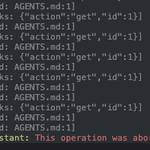
How's everyone protecting themselves from agents getting stuck in loops and burning through token quota?
This just happened in my Pi coding agent setup

Emojicode's documentation perfectly explains how older generations are handling texting culture of younger ones.
emojicode.org/docs/guides/co…


