





Pinned Tweet
🚨 New paper out!
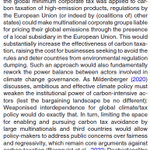
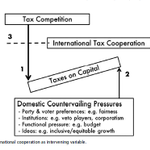
Excited to share this, where I take a 'weaponized interdependence' view at explaining historical failure and recent success in global tax policy - and how that view can help fight climate change and inequality🧵👇
#OA @Global_Policy:
doi.org/10.1111/1758-5899.13…

Jeg har snakket med @MadsOlrik om hvad Trump (ikke) kommer til at betyde for det globale (skatte)samarbejde.
Læs med, hvis du er til den optimistiske side - og hvis du ikke er!
zetland.dk/historie/sJeBLgf5…

Rasmus Corlin Christensen (ghost account) retweeted
Glad to have contributed to today’s @FT on the threat of global tax war under Trump II:
on.ft.com/3C0IWpL

Glad to have contributed to today’s @FT on the threat of global tax war under Trump II:
on.ft.com/3C0IWpL
Efter Sanjay Shah-dommen, og fordi jeg har "udtalt mig kritisk" om udbytteskat-systemet, har jeg fået en masse spørgsmål om hvad man så burde gøre i stedet. Det svarede jeg på for to år siden, her:
politiken.dk/debat/debatindl…

Rasmus Corlin Christensen (ghost account) retweeted

Fascinating paper on how network effects may be the key to changing international tax policy:

🚨 New paper out!
Excited to share this, where I take a 'weaponized interdependence' view at explaining historical failure and recent success in global tax policy - and how that view can help fight climate change and inequality🧵👇
#OA @Global_Policy:
doi.org/10.1111/1758-5899.13…
Rasmus Corlin Christensen (ghost account) retweeted
Well, I did a thing. Link dead. Here's the right one:
doi.org/10.1080/09692290.202…

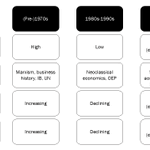
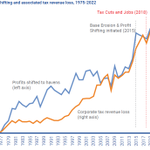
Why did research on 'corporate escape' fade in the 1980s–90s, just as profit shifting and tax haven use surged?
With unique data, @mattiylonen and I argue losing trans-disciplinary knowledge and supportive institutions had severe consequences.
🧵👇
#OA: doi.org/10.1080/09692290.202…

Rasmus Corlin Christensen (ghost account) retweeted
Why did research on 'corporate escape' fade in the 1980s–90s, just as profit shifting and tax haven use surged?
With unique data, @mattiylonen and I argue losing trans-disciplinary knowledge and supportive institutions had severe consequences.
🧵👇
#OA: doi.org/10.1080/09692290.202…
Rasmus Corlin Christensen (ghost account) retweeted
I've authored today's op-ed in Danish business newspaper Børsen, calling for calm among the doomsayers who believe Trump will inevitably kill the global minimum tax:

I've authored today's op-ed in Danish business newspaper Børsen, calling for calm among the doomsayers who believe Trump will inevitably kill the global minimum tax:
For the non-Danish readers, it's basically a slightly more elaborated version of this thread:
xitter.cf/phdskat/status/1856384…
Well, I did a thing. Link dead. Here's the right one:
doi.org/10.1080/09692290.202…
Why did research on 'corporate escape' fade in the 1980s–90s, just as profit shifting and tax haven use surged?
With unique data, @mattiylonen and I argue losing trans-disciplinary knowledge and supportive institutions had severe consequences.
🧵👇
#OA: doi.org/10.1080/09692290.202…
Why did research on 'corporate escape' fade in the 1980s–90s, just as profit shifting and tax haven use surged?
With unique data, @mattiylonen and I argue losing trans-disciplinary knowledge and supportive institutions had severe consequences.
🧵👇
#OA: doi.org/10.1080/09692290.202…
Our narrative (a goldmine of quirky historical bits) informs disciplinary history, re-introduces MNEs as study objects, and warns of the risks of 'forgetting' pioneering research on critical topics such as corporate power and inequality.
Full paper: tandfonline.com/doi/full/10.…
It was an absolute joy to work on this; I'm so glad it's out.
Tons of people to thank, and many have been already, but for me, most of all my brilliant co-author @mattiylonen, who is truly the brains (and the brawn) behind this paper. /ends
Couple of research-informed reasons why, structurally, it might not be as easy as some tax observers think for Trump II to impose his will on global tax policy: 🧵👇
7) Add to that: Even lower-income countries, on the back of effective regulatory capacity and collaboration, are increasingly able to influence global tax policy-making against the interests of US/OECD, who are structurally constrained.
doi.org/10.1080/09692290.202…