





Dave H. retweeted

Odious.
In their morally inverted world, a tyrannical mass murderer is "a humanitarian."

Dave H. retweeted

Is this supposed to look bad?
I’d love a corner store or restaurant I could walk to in my neighbourhood.
This quoted post is unavailable.
Dave H. retweeted

I love this video, it's teeming with vitriol and rage but you can't place where it's directed.
The video has no homeless, a normal amount of diversity, subway is clean and modern, it's not overcrowded.
I'd love to know what she saw, I've watched it like 10 times.

Dave H. retweeted

Years ago, my lifelong Conservative father-in-law was holding his grandson when he said supervised consumption sites “just enable drug use.”
I replied, “That's a dumb comment to make while holding your grandson. He might not be alive if one hadn't saved my life and connected me to recovery.”
You should have seen his face when I said that. 😳
“Whoops. I didn't think that through.”
So I arranged a tour.
He met the nurses, saw the care, the detox upstairs, and the connections to recovery.
He walked in believing these places enabled addiction, he walked out understanding they save lives.
Today, he's one of their biggest supporters.
Not because he abandoned his Conservative values, but because he realized compassion, dignity and keeping people alive were never at odds with them.
He didn't just change his opinion. He became an advocate for the very people he'd once dismissed.

Dave H. retweeted

Le nom du lac Ontario tire son origine du mot wendat « Ontari’io », qui signifie « le lac est beau, le lac est grand ».
Ce nom remonte à plus de 400 ans, bien avant la Confédération canadienne et la Déclaration d’indépendance des États-Unis d’Amérique.
Nous savons que les États-Unis sont en train de changer. Leurs relations commerciales, leur politique étrangère, leurs monuments nationaux, leurs hydronymes.
Les Canadiennes et les Canadiens savent aussi qu’il faut appeler les choses par leur nom, et ce lac se nomme Lac Ontario – aujourd’hui et pour toujours.




Dave H. retweeted

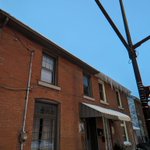
I'm interested in "trapped buildings": those that couldn't be built today (because of zoning and code changes) but also can't be substantially modified or demolished (because of historic protection rules). One of those phenomena that really makes one wonder what exactly we're trying to do.
Has anyone ever estimated what fraction of buildings in major cities fall into this category?
When I asked Claude about San Francisco, it concluded: "If forced to give a single number with a single confidence rating: roughly 100,000 buildings — about two-thirds of San Francisco's physical structures — sit in the trap as a practical matter. Confidence: moderate. The number could be 70,000 or 130,000 depending on how strictly you operationalize "can't be substantially modified.""


Dave H. retweeted

"Only very sick kids should die from measles"
No, Secretary Kennedy
NO child should die from measles.
Because there's a vaccine to prevent it.


Dave H. retweeted

Skeptics: the number of murders is only falling because the health-care system is better at treating trauma, saving lives that would have been lost 20 years ago
Reality: Violent crime is trending down too
More reality: Property crime is falling too!


Dave H. retweeted

An hour after announcing his resignation, the US Army Chief of Staff says: "A madman is about to lead the great US military to ruin."

Dave H. retweeted

Ahora sí hablemos en serio de la foto. Este es un trino para interesados en fotografía, astrofotografía y el que quiera ¿Por qué esta foto es increíble? Algún conspiranóico, dándoselas de suspicaz, preguntó que por qué esta foto tomada por el comandante del Artemis II se veía más opaca que la foto tomada por la tripulación del Apolo 17 en 1972. Bueno. Acá viene lo emocionante. Esta fotografía hubiera sido imposible tomarla con una cámara análoga; y no cualquier cámara digital puede tomarla. El archivo original de esta foto está disponible para su descarga en la página de la NASA. En las propiedades del archivo se puede ver con qué cámara fue tomada y los ajustes de exposición que se usaron. Hasta el serial de la cámara. Esto, primero que todo, garantiza que la foto que estamos viendo no fue creada digitalmente, ni con IA, sino capturada por una cámara real por un humano. Sé que no es suficiente argumento para los conspiranóicos, pero ni modos. Esa que está ahí es la Tierra. Ahora sí lo interesante. ¿Por qué se ve como más opaca que la del 72? porque resulta que en la cara de la tierra que vemos en esa foto, está de noche; si hacen zoom pueden ver el brillo de la iluminación nocturna. Pero ¿cómo, si es de noche, puede verse como si fuera de día? Porque la foto se hizo con un altísimo ISO de 51200! El ISO es la sensibilidad del sensor a la luz. Con la mayoría de cámaras digitales, con ISOs de más de 6400, el ruido es tanto que la foto se ve prácticamente ilegible. Pero la cámara que tiene el comandante Reid Wiseman es una NIKON D5, que no es una cámara muy nueva; tiene 10 años de haber sido lanzada. Pero su sensor es reconocido por garantizar una calidad decente de imagen con ISOs altos. Y eso, para los que siempre preguntan cómo se hace una buena foto del cielo, es fundamental ¿Por qué? Pues para poder tomar fotos de los astros sin tener que bajar mucho la velocidad de exposición. Porque si bajas mucho la exposición apra que entre más luz, queda capturado el movimiento de los astros y de la rotación de la Tierra, cuando estás en la Tierra. Así que un iSO tan alto hizo posible que Wiserman pudiera disparar a una velocidad de 1/4 de segundo. Que es baja, pero no tanto. Es digamos, el límite para la astrofotografía. Por eso esta foto tiene ruido, porque de todas formas es un ISO altísimo.
Pero lo que más me emociona a mí, es que la tomó con un lente 14 -24mm F2.8. Es decir, en terminos coloquiales, que esta foto no tiene zoom. Para que lo dimensionen: cuando uno quiere tomar una foto de la Luna desde la Tierra que salga así de "cerca" tiene que usar un lente de unos 400mm de distancia focal. Wiserman usó un ¡gran angular de 22mm! Es decir que él estaba viendo la Tierra asi de grande frente a sus ojos. Porque la foto no fue recortada en edición y eso lo sabemos porque en las propiedades del archivo siempre aparece cuando una foto fue editada. El archivo está limpio, tiene la resolución original de la cámara. La tierra era inmensa frente a su mirada. Hermoso.
Pero para mí lo más mágico de esta foto, incluso más que las auroras boreales, es que se ve como la luz de sol, que está del otro lado de la tierra, ilumina nuestra atmosfera. Y eso es magia pura, porque esa atmosfera tiene una composición milimétricamente perfecta para permitir que la vida, tal y como la conocemos, sea posible. Esta foto, es un regalo precioso para la humanidad.
Les dejo al link para que descarguen la foto en alta resolución y el pantallazo de las propuedades del archivo.


Dave H. retweeted

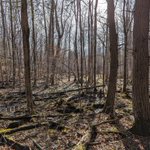
Let me explain exactly why every new subdivision in America looks like the top photo, because the math is wild.
A mature tree increases a home's value by 7 to 19 percent. On a $400,000 house, that's $28,000 to $76,000. A single shade tree produces the cooling equivalent of ten room-size air conditioners running 20 hours a day. One tree on the west side of a house cuts energy bills by 12 percent within 15 years. The bottom photo is worth more, costs less to live in, and sells faster. This has been documented by the University of Washington, Clemson, Michigan State, and the USDA. The data is not in dispute.
Removing those trees saves the builder roughly $5,000 per lot. Concrete trucks need twice the dripline radius of every standing tree. Utility trenches need flat ground. A bulldozer flattens 200 lots in an afternoon. Preserving trees adds weeks and thousands per home.
So the developer pockets $5,000 in savings and the buyer eats $50,000 in lost value for the next two decades. The person making the decision and the person paying for it have never been in the same room.
The Woodlands, Texas is the proof of what happens when they are. George Mitchell bought 28,000 acres of Houston timberland in 1974 and preserved 28% as permanent green space. He forced McDonald's to build behind the tree canopy. That McDonald's became one of the highest-volume locations in Texas. The first office building, designed to reflect the surrounding forest so you couldn't see it from the street, leased completely.
The Woodlands median home price today: $615,000. Katy, a comparable Houston suburb that clear-cut: $375,000. Named #1 community to live in America two years running.
Fifty years of data. The trees are worth more than removing them saves. Developers clear-cut anyway because they sell the house once and leave. You live in it for 30 years.


